Innovation: Biomass Cooking Stoves

In this article, we write about the Biomass Cooking Stove innovation that is being nurtured by the Villgro foundation.

Context and problems with LPG

Micro and small establishments that provide boarding services to 40 – 100 individuals in rural and semi-rural areas face the three pronged problem of not having the access, both financially and in terms of availability , to LPG, having to incur the costs of large amounts of biomass required to run their relatively inefficient stoves and dealing with the associated health impacts that inefficient, outdated stoves generate.
Unlike small households, micro and small establishments rely on purchasing fire wood and not on collecting biomass. These costs average around 2000 Rs. / ton. As such the inefficiency of stoves used by this category of users has a direct impact on their expenditure and thus on their income and savings. When compared to households these establishments utilize their stoves for much longer (upto 10 hours a day when catering to 100 customers) and thus the impacts on wood consumption and health issues are
exasperated.

Burning wood creates CO2 and other greenhouse gases. Establishments, based on size, generate between 20 – 80 tons of co2 a year. While small when considered at a national or global scale, this contributes to climate change in its own way.

Enter Biomass Cooking Stove, an innovation by Svati Bhogle of SustainTech India Pvt. Ltd.

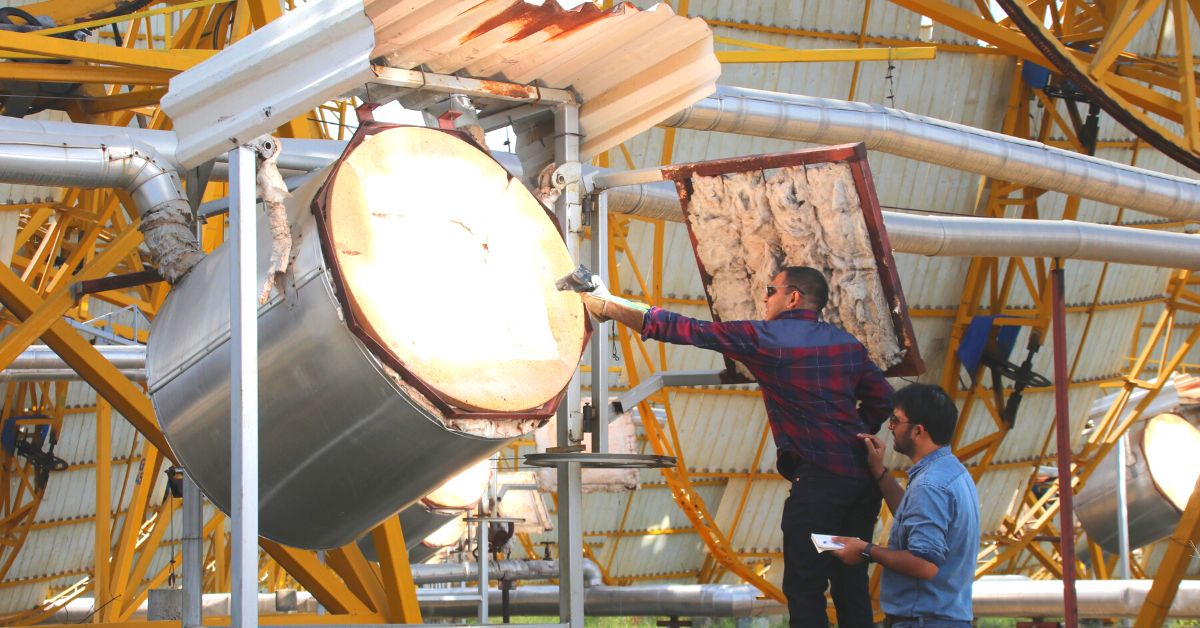
The Biomass Cooking stove is an application specific high efficiency wood burning stove specifically designed for a range of cooking needs. The innovation offers to the end user: saving in fuel costs, by being up to 50% more efficient than conventional stoves and improved health impacts. The features that make the stoves innovative are, optimum air fuel ratios controlled by efficient vents, well designed combustion chamber volume resulting in high combustion and heat transfer efficiencies, good insulation to prevent losses to the walls and an optimally designed chimney to vent the flue gases away from the breathing zone of the cooks and designed to reduce heat losses to the atmosphere.

Salient Features

  • High efficiency because of controlled burning, good air fuel ratio
  • Ability to regulate air supply and hence the fuel burning rate
  • Use of grate for good combustion
  • Good insulation and a uniform temperature profile across the plate because of staggered finning of the tava (flat plate). This has been designed so that one side of the tava uses preferentially radiative heat and the other side convective heat obtained by burning of wood on a grate.
  • Increasing the velocity of the flue gases towards the end of the plate, good insulation and an optimally designed chimney

Who is impacted and how?

Owners of micro and small boarding establishments, including semi-portable food vendors will be impacted. This covers a range of individuals with daily revenues between 500 to 5000 rupees per day. A market survey revealed that the total number of tea shops, small & medium hotels and street food vendors to be 73,650 in the state of Tamil Nadu alone.
On the lower end of the economics scale – this includes street side food vendors who spend considerable amounts of their income on firewood. These individuals were shown to spend upto 30,000 Rs. annually on firewood with monthly take home incomes of around 7000 Rs. On the higher end of the economics scale – this includes proprietors of small size ‘hotels’ catering to the needs of approximately a 100 customers a day.

Environmental, social and economic benefits


SustainTech India Pvt. Ltd. (SIPL) is reaching out to the needs of a fuel stressed segment of society – initially the street food vendors, who operate on push carts and where cooking is done inside the cart or on railway platforms, roadside shops and small hotels who with a roof and some seating capacity.
A survey conducted shows that these stoves are in operation for about 10 hours every day and each unit caters to about 100 clients every day. The 65,000 fuel efficient wood burning stoves (considering only the tava, frying stoves and tea kettles) that would be sold by SIPL in the first five years would therefore offer a safer, cooler and healthier working environment to at least 65,000 cooks and 6.5 million people who would eat
around these stoves every day. India has a high incidence of respiratory ailments and a smoke free working environment would reduce the medical expenses of the affected people working around wood fires.
The survey data also shows that 38% of the street food vendors and tea shops use kerosene for their cooking needs. Very limited kerosene is available in fair price shops and this is inadequate. Very often the sector uses unfair means to procure kerosene creating stress and tension besides eroding the profitability.

A Frying Stove Biomass based


Moving to a biomass stove would reduce the stress associated with procurement of kerosene, improve profitability of the business and show that it is possible to replace a fossil fuel with a renewable energy source.
At the global level the movement to a fuel efficient wood stove would significantly abate CO2 emission. A survey conducted in the project area shows that stoves are in use for about 8 -14 hrs every day and for 300 -350 days in a year. Data has also been collected about fuel consumption patterns in conventional stoves and performance of improved stoves tested and some of them certified. With a projected stove life of 5 years, the carbon abatement potential of the venture through installations in the first 5 year planning period would be 3.7 million tons of CO2. (1 kg of firewood saved = 1.5 kg of CO2).
Firewood is purchased by the end users of SIPL products at Rs 2000 / ton. The saving in fuel costs, because of energy efficiency should enable the end user to payback the cost of the stove without financial stress in 12- 18 months. Each stove purchased would on an average save Rs 20,000 – 30,000 of fuel cost every year.

The enterprise projects that through its intervention and in their life time, the stoves installed in the first
5 years period, it would conserve Rs 4000 million in fuel costs thus creating wealth for a very needy community.

SustainTech is now being incubated by Villgro. Villgro is a not-for-profit company empowering rural development by identifying and incubating innovations that could be translated to market based social enterprise models thus impacting thousands of lives. In efforts to impact rural life, VILLGRO actively promotes social entrepreneurship and works with different stakeholders to create and support an eco-system that empowers social entrepreneurship by means of seed funding, mentoring, networking and recognition. Villgro has impacted over 360,000 rural users with technology & solutions reaching the grassroots. Villgro has identified and activated more than 2000 social innovators.

Jhansi Jan Suvidha Kendra: Improving governance

Jhansi Jan Suvidha Kendra (JJSK) comes as a pleasant surprise to those who have been thinking that public grievance redressal systems are highly incompetent or non-existing in India.

JJSK is a quick and reliable telephone based e-governance initiative which has resulted in an easily accessible platform for addressing public grievances anytime of the day, throughout the year!

As soon as the complainant calls on the toll free number 1077, the grievances are recorded automatically on an audio file and stored in a software program. The complainant gets a Unique Grievance Number (UGN) and the concerned officers are intimated on their mobile phones via SMS instantly.

Grievances are categorised as one of A/B/C according to the severity and the time within which they should be resolved. Various reports are generated by the software for weekly monitoring and the quality of redressal/disposal is finally confirmed by the District Magistrate. Reports are continuously uploaded on the website and the concerned person can check the status of the complaint anytime by just calling JJSK.

JJSK‘s attitude towards complaints lies in their line “Grievances are jewels to be treasured.”

Here’s hoping other districts of the country take a leaf out of JJSK’s approach, and help realize a dream of good governance through better use of technology.

JJSK’s website (mostly in Hindi): http://www.jhansi.nic.in/jjsk.htm

AVAZ Giving Voice to Children

Introducing ‘AVAZ’ – a product created by Invention Labs, Chennai. AVAZ provides a ‘voice’ to a non-verbal child with Cerebral Palsy, allowing him/her to communicate with friends, family and teachers. By enabling speech-impaired children to communicate easily, this device is helping them become much more independent and free from their existing barriers.

AVAZ The Product

AVAZ The product

Cerebral Palsy – The Problem

Cerebral palsy (CP) is a congenital condition in which the motor cortex of the brain is damaged. People with cerebral palsy are unable to achieve muscle control and coordination. Cerebral palsy is non-progressive, non-contagious and permanent. The incidence of Cerebral palsy is 2-2.5 persons per 1000 live births, and the estimated population of CP cases in India is approximately 25 lakhs (cited from publicly available information).
Approximately 40-55% of people with CP are affected in all muscles below the head (quadriplegia and diplegia). In most of these cases, these include the muscles that produce speech, and such persons are consequently non-verbal. In conjunction with their inability to move their hands or feet in a coordinated manner, this impairment means that they do not have access to any of the traditional ways of communication.

Most children with CP are of normal intelligence, and are handicapped in education and employment primarily due to their lack of communication abilities.

AVAZ

AVAZ is an Augmentative and Alternative Communication (AAC) device for children with Cerebral Palsy (CP). AVAZ is a portable speech synthesizer which can be controlled by gross motor movements of a child with CP, such as approximate movement of the head or of large muscle groups. These movements are captured by the use of a touch-screen or an external switch to allow the child to create text sentences on the device using predictive software, and this text is read out by the device. AVAZ is thus an artificial voice for the child.

How did AVAZ achieve this?

Invention Labs began engaging with IIT Madras and Vidya Sagar to develop commercially viable Voice Output Communication Aids in 2008. Sustained research and development on the device began in May 2008 in collaboration with Faculty of Electrical Engineering and Computer Sciences Departments at IIT Madras. Invention Labs received a grant of Rs 10 lakhs under the Technopreneur Promotion Programme (TePP) from the Department of Scientific and Industrial Research, Government of India, in February 2009, which was used to fund the development of AVAZ in part.

Invention Labs continuously engaged with Vidya Sagar’s teachers and students to validate the usability and impact of the prototypes of the device. After a couple of rounds of prototyping and based on feedback from children as well as teachers, the design was finalized, and the beta version of the device went into production. AVAZ was launched in February 2010 and has been warmly welcomed by the community of special educators as a step in the right direction.

The Details

AVAZ consists of two components – a wheelchair mountable speech synthesizer and text prediction software that runs on this synthesizer. The speech synthesizer has been designed to be usable by children with different abilities and has the following features:

  • Large 7” LCD display with Touchscreen
  • Speakers and Audio Jack – for voice output and audio prompts
  • USB port – to connect non-contact switches that get activated when they sense motion
  • Mono Jack port – to connect contact switches that get activated when pressed
  • Rechargeable battery (in-built)
  • Wheelchair mount (optional)

The text prediction software helps children do two things – creating sentences and speaking them out. Sentences are created in AVAZ using a technique called ‘scanning’. The user can select an option by pressing anywhere on the touchscreen or by using any contact or non-contact switch that is connected to the speech synthesizer. In order to speed up text creation, AVAZ features learning and prediction. It is able to remember sentences and words used by the child in the past, and it accelerates the entry of commonly used templates. AVAZ currently supports nearly 10000 words in the English language, and many more can be added by the child if needed.

The text prediction software comes with many options to enable children to customize the device to suit their needs:
a. Scan speed can be modified to suit the child’s comfort
b. Audio mode is available to help visually impaired children hear the current position of the highlight
c. New words can be added by the user to the in-built dictionary of AVAZ.
d. Frequently used sentences can be added as a ‘template’ for quick retrieval

Benefits to the Children

Avaz Used by a Child
AVAZ provides a ‘voice’ to a non-verbal child with Cerebral Palsy, allowing him/her to communicate with friends, family and teachers.

  • AVAZ enables these children to express themselves – children can convey virtually any thought in their minds by creating messages dynamically and using the speech synthesizer to ‘speak’.
  • AVAZ helps them become independent – children can interact with the device based on their ability. A number of interaction switches, contact as well as non-contact, are compatible with AVAZ and can be used to operate the device.
  • AVAZ allows them to communicate easily – the software adapts to the child’s vocabulary, using words that are most frequently used by him/her as well as allowing the child to create ‘template’ messages for daily use.
  • AVAZ is also portable, allowing the child to carry it around and even mount it on a wheelchair.

Future Thoughts

Communication plays a very important role in our lives and enables people to make friends, influence others and interact with their communities in meaningful ways. Our goal is to enable non-verbal persons with different abilities to overcome the barriers in communication that they face with the help of assistive devices like AVAZ. Just like a person with mild visual impairment wears spectacles to correct her/his vision, we envision that most non-verbal persons will have access to and use a portable assistive device like AVAZ to ‘speak’ and communicate.
Invention Labs plans to leverage the many features of AVAZ to extend its use to an educational environment, where the children could be taught using AVAZ. Special-purpose applications could also be built that work in specific employment opportunities to help such children take up gainful employment when they graduate. AVAZ could also be interfaced to a PC or a mobile phone in order for non-verbal CP children to use these devices.
Since a child can interact with AVAZ in multiple ways, the same principles used by a child with CP to communicate can be extended to help other non-verbal children. Children with lower levels of CP, Autistic children, children with learning disabilities and children with multiple disabilities could all benefit from having an assistive device that suits their needs. With the appropriate application, AVAZ could potentially be useful by adults who have been temporarily or permanently impaired by accident, stroke, disease or even old age.

About Invention Labs

Invention Labs is a startup based out of Chennai and incubated at IIT Madras. Voted one of the hottest startups in India by Business Today in 2009, Invention Labs was founded by alumni of IIT Madras. With a diversity of experience gained from working for multinational corporations at different locations worldwide, the founding members of Invention Labs returned to India in 2007 to set up Invention Labs as an organization that invents products for the unmet needs of the Indian consumer.
Invention Labs Team

Read more about Avaz (and watch their video) here: http://www.inventionlabs.in/avaz/aboutAVAZ.html

Rose Computer Academy

Logo_Rose_Academy

Amit Kataria comes from a humble background. Brought up in Choma village, Gurgaon, Haryana by his father, a farmer and mother, a housewife, he always dreamt of making a change in the society. Never having let his walking disability come in the way of his dreams, today he has successfully transformed the lives of many in his village by imparting computer literacy and in the process, setting a precedence worth following.

Amit’s journey began in 2007, “I completed my primary education in Choma but beyond that level of education, there was no opportunity there so I decided to study at a school in West Patel Nagar and passed my tenth and twelfth class there. In my final year, I came back to my village in 2006. I realized that most villagers owned land and money but they had little or no literacy especially in computing. They were ignorant of the need for computer skills. I found that this was the biggest need of my village and its future generations. That was when I decided to start a computer learning institute in my area.”

Students in Rose Computer Academy

Students in Rose Computer Academy

With a vision to spread computer literacy throughout India, especially in rural areas, Amit started his venture ROSE Computer Academy in 2007, when he was only nineteen years of age. Having learnt computers, he realized its potential in making his community independent and in the long run, in contributing to strengthening of the economy and the nation at large. At no point of time did Amit lose heart in the face of difficulties even when finances were few and far between, he persisted. “I still remember September 7, 2005, the day when I had earned my first hundred rupees. When I set out to start my institute, I had twenty-three thousand rupees of savings. My maternal uncle agreed to lend me one lakh rupees and I could start my computer lab.”

Amit’s academy has so far trained 300 students from his village, offering courses such as Basic computing, Java, Graphic Designing, Tally, C++ and many others. His is the only academy in Palam Vihar, Gurgaon which offers different kinds of computer courses under one roof, working 18 hours a day. Some of his students have also gone ahead and opened their own enterprises, while others have taken up jobs. Some start working at the academy itself.

One of the students at ROSE Academy is seventeen year old Ashok Silwal. Born in a small village of Nepal, Ashok came to India in 2007. His father is a bus driver at a school in Gurgaon and had no money to support his education so he went back to Nepal and enrolled for a correspondence course in India. “In Gurgaon, my father met Amit Kataria sir. Sir needed an office boy, so I started working with him at the Academy. I soon developed an interest in learning computers. I completed a Certificate Course in Computer Application and Desk Top Publishing and also completed my schooling here. Then I started teaching at the ROSE Academy and earned salary also. Now I am able to contribute to my family too,” Ashok smiles, gleaming with pride.

ROSE COMPUTER ACADEMY
(Behind Sangam Sweets) H. Block Mkt. P.O.
Palam Vihar, Gurgaon – 122017
Haryana
INDIA
Landline: 91-124-4387843
Mobile: 91-9868573124 / 91-9312605558
Website – http://www.rosecomputeracademy.com/index.aspx

ROSE Academy has provided computer skills and employment opportunity to many like Ashok. Besides computer education, ROSE Academy also provides learning assistance to students in their studies, considerably brining down the examination failure rate. As Amit puts it, “ROSE academy is like the rose flower that spreads its fragrance everywhere.” True to its name, the work and virtues of the Academy are an inspiration by every measure!

BookBole – Solutions for the Visually Impaired

We read, we learn, we understand. Sites like the one you are currently reading, along with countless other blogs, books, newspapers make up our reading spectrum. Make us aware, make us improve.

But what if we were to be visually impaired? How would we fare with a total lack of reading material? Did you know that most of the material available so easily to us is just not accessible for the visually impaired? In fact, only 0.5% of books are made accessible to the visually impaired in India. So, how do we ensure that those with visual impairment are able to read all those wonderful things that we come across regularly everyday?

This is where BookBole steps in. An initiative of Inclusive Planet, BookBole is a website that is designed for easy access for the visually impaired. Most visually impaired use text-to-speech converting software. Now, while there are standard guidelines for websites to ensure that text-to-speech software can easily ‘read’ them out, most websites do not adhere to these guidelines. The result is a lot of clutter and subsequent loss of information for the visually impaired. Bookbole solves this by making varied content available in easily accessible form.

The Problem

With the digitization of content as a result of the internet, as well as specific governmental and non-governmental initiatives to increase the volume of accessible content, there is now much more accessible content though the volume of content remains a major issue. However the problem is not just one of quantity but of relevancy i.e. of not just responding to general needs but specific user requirements. Large-scale global initiatives to make content accessible are just a drop in the ocean, albeit a very useful one. They can only cater to some needs of some people in some parts of world. With so much information captured in partially or fully inaccessible formats (print or digital non-readable formats) how does one respond to culture, language, industry and domain specific needs?

The Solution

The answer to this decentralized and hydra-headed problem is a decentralized community-driven solution. If similarly placed print and visually impaired across the world can connect with each other and share their efforts to fulfill their specific needs then there is a durable and dynamic solution at hand.

If Jeff from California shares his favourite short stories in accessible formats with Kaan from Turkey; Kevin from Holland shares his accessible biology notes with Rajat from India; Jose from Brazil shares his law school research with Lee Kyun from Korea; Nick shares his review of the latest assistive device with Shanti from Sri Lanka, then we have a solution like no other.

From books to class notes, journals to cooking tips, product reviews to personal stories. BookBole is all about the small stuff, but on a really large scale. A vibrant universe where people reach out, connect and fulfil each other’s needs. A universe created by aggregating the pools of accessible content that the visually impaired community has created for itself. A place where the value to the community of an individual effort is truly unlocked. Sharing that goes to the heart of the problem.

Bookbole.com is the consequence of this thought process. Designed exclusively for the 300 million-strong global print impaired community, it enables them to connect with each other and share accessible content, including books, notes, articles, blogs, audio recordings and so on, and furthermore, to build conversations around this content. It is a social network, with a difference. In the fashion of all things simple and useful, Bookbole will no doubt come to mean different things to different people across the world – a learning tool for some, an entertainment platform for others, and for all, a place to make friends and have conversations.
The Planeteers - team of BookBole

BookBole’s vision is that of a large, vibrant, pulsating community that shares useful content and conversations in a more-that-just-accessible environment, and where publishers and content-creators across the world, see the value of making available their content in mutual beneficial arrangements. Going forward, the largest community of visually and print impaired people in the world could see Bookbole become a social network, a content platform, a marketplace and a policy platform rolled into one. The makings of a true social venture.

Contact BookBole

Radio Bundelkhand – Giving Voice to the Voiceless

Azadpura is a village in Bundelkhand region. This area faces acute water scarcity and one problem that the women faced was a faulty well which required urgent repairing. The women aired this problem on Radio Bundelkhand and within four days the concerned authority replaced the missing wheel of the well. This is the power of Radio Bundelkhand, an initiative of Development Alternatives.

Community Radio for facilitating dialogue and interactive communication

The purpose of setting up Radio Bundelkhand, as identified with the help of our communities in the radius of the radio station, is to work along with them to use this communication medium to create awareness, give information, participate in local self governance and provide entertainment – all based on requests and feedback from the community. The audience includes the communities in the radius of the broadcast range – with special attention to women, youth and the marginalised groups.

 
Listening to Radio Bundelkhand

Listening to Radio Bundelkhand

Community Members on the Radio

Community Members on the Radio


The community and DA, jointly manage the station. There are five community reporters and six community coordinators. The villages these reporters represent are Azadpura, Ramnagar, Sitapur, Basova, Bagan, Bhagwantpur, Ghatao, Jamuniya, Gujerra Kalan, Mathrapur and Ghatao. There is also a Management Committee comprising the Sarpanch (elected village-head) of Basova Village, doctors, farmers and Self Help Group members.

Until now, Radio Bundelkhand has the longest duration of programming of four hours a day, seven days a week, in Bundelkhandi and Hindi amongst the government licensed community radio stations in India. The Government of India has given licenses to several NGOs throughout India to start community radios in their project areas. DA is one of the first to set up such a radio with the communities it has been serving for more than two decades in the Bundelkhand region.

The communities have decided that they would like information related to employment and livelihood opportunities, development of women, girl’s education, legal rights, farmers’ issues, training, their culture and history, how to ensure the availability of basic infrastructure such as water, energy and roads, development issues, and any other information sought by the communities. The broadcast timings in the morning and evening have been selected by the communities, with the women preferring the morning and the men the evening.

Programming Content on Radio Bundelkhand
Vandana –Devotional songs broadcast every morning.
Khet Khaliyan – It includes the Jhansi Mandi (unorganized market) prices for farmers so that community gets all the information related to agricultural products. Bundelkhand Radio also
broadcasts discussions about agriculture issues like how to protect seeds, crops & vegetables
from insects. Experts answer question asked by the farmers.
Bal Bandhu – Especially for school-going children. Moral stories, poems and jokes by school
children are included. Story telling through the Radio Jockeys is also a part of this programme.
Bundelo harbolo ke- This is about the Freedom Fighters of Bundelkhand. Stories of the freedom fighters & songs related to freedom fighters are also broadcast.
Aas Paas – In this programme Bundelkhand Radio broadcasts information on Right to
Information (RTI) and any other problem.
Mere Bundeli Mere Geet – is a listener’s programme in which they get the opportunity to listen to their choice of songs.
Amma ke Chauki Se – In this programme community women give their ideas on home receipes and step by step instructions for preparing the dish.
Nuskhe Nani Dadi Ke – In this programme older woman give tips on using home remedies or
Desi nuskhe for common ailments and diseases. Also, give tips of using simple home remedies and alternative herbal medicine, available from the average kitchen shelf.
Radio Drama – On every Sunday Bundelkhand Radio broadcasts a radio drama. In this
programme reporters discuss an issue and convey the messages related to social issues like
dowry, female foeticide, importance of education etc.
Sathin – Sathin is a special programme for women. Women from the community tell their story. They discuss the struggle in their lives and success story too. These women also share their
feelings what they want or wish for themselves.
Chhotou Kam Badou Munafou – This programme is for those people who want to do small business. Small entrepreneurs give tips to take up small business.

The programming, based on issues and content identified by the communities, is broadcast in the formats which they have preferred, that include the use of traditional Bundelkhandi songs, folk music and nataks, discussions, reports, commodity prices, phone-ins, experts speak, coverage of events in villages, jokes and satire, listeners’ letters and feedback. The Wireless Operating License was issued on July 31st, 2008 and the first transmission took place on August 15 2008 with the broadcast of the national anthem. Meanwhile the selected community reporters were trained over three months and a woman from Sitapur village inaugurated the station on the eve of Diwali. Community radio broadcasting/narrowcasting has allowed the rural poor to develop their communication in a language they understand. Community radio fosters debate on issues, facilitates access to government, decision-making and helps community members to organise themselves and evolve to manage their own affairs. Radio Budelkhand is characterised by its signature tune and jingles which declare that it is “Apna Radio Apni Baatein” – Our radio Our conversations.
Reaching our communities

The reach of the community radio is in a wide range of approximately 5-10 kms and 25 villages with a population of 15000 in the coverage area that are benefiting through the infotainment-based programmes. So far, Radio Bundelkhand radio has penetrated to the rural communities settled in and around TARAgram Orchha like the villages of Gundrai, Chandravan, Bagan, Orchcha, Sitapur, Azadpura, Lachmanpura.

The targeted beneficiaries are the marginalised and poorest with special emphasis on women and the unemployed youth who are the most vulnerable but also the potential change-makers. By selecting women community reporters, marginalised community reporters in an average age group of 20 we hope to reach them better.
The Management Committee also has a woman self-help group head. DA aims to ensure the participation of local people for the programming, broadcast and management of the station by the community itself.

The above article was written by Indira Mansingh, Chief Advisor, Development Alternatives.

Thank you Purnima Gupta for sending this across!
Previous article of Development Alternatives – Click here.

RangDe – An Online Microfinance Company

rangdeI recently came across RangDe.org which takes the concept of microfinance to the online world.

It serves as a bridge between ’social investors’ and people who need small amounts of money to improve their business and financial position. For your investment, you stand to earn 3.5% per annum. Of course, this is not guaranteed since the money is being lent to low income households and the probability of default could be high. Having said that, it is interesting to see from their statistics that 100% of the loans have been paid back so far.

You can go through the list of borrowers, with a brief on why they need that extra money and you can then decide to invest accordingly. If you don’t have the time to select a borrower, you can also do something known as “Smart Invest” where RangDe picks borrowers on their behalf.

To cover their costs, RangDe charges an interest rate of 8.5% pa to the borrowers and retains 5% of that, handing over the remaining 3.5% to you, the investor.

It is an interesting service, and it will be all the more interesting to see how they fare in the coming years. Visit Rangde.org and see if you would like to be a part of their social investment spectrum.

This article originally appeared here.

Indian Scientists Discover new types of Bacteria

balloon

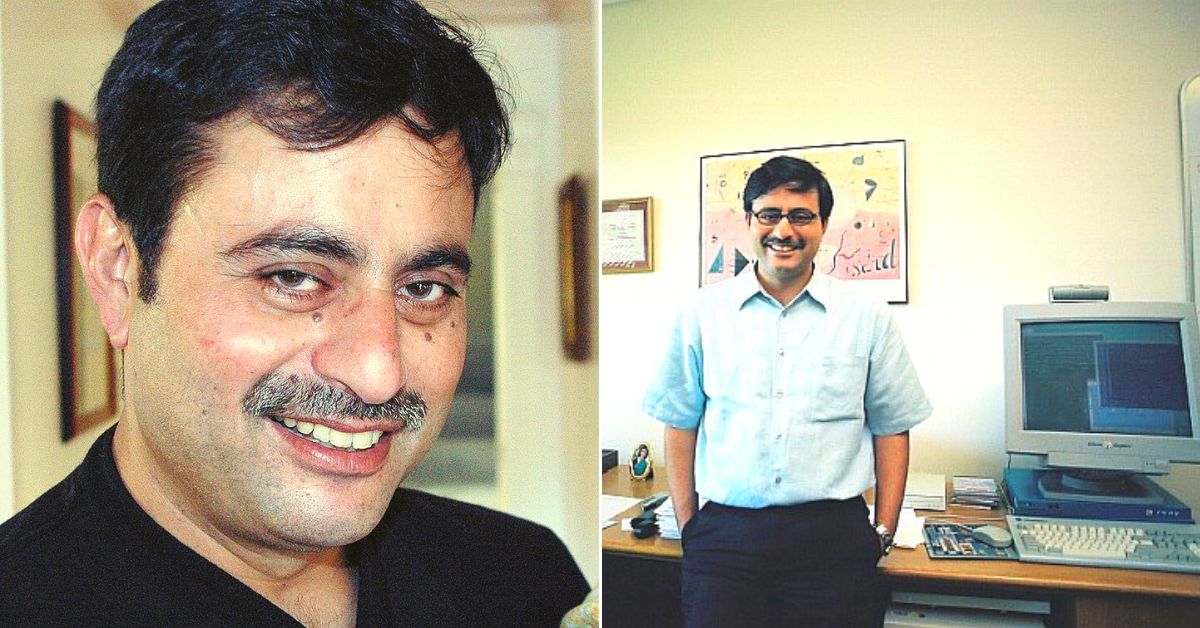
Up until very recently, it was believed that Ultra Violet (UV) rays from the sun can inhibit, or even prevent, formation and continuance of life. However, a team of Indian Scientists, led by the eminent Jayant Narlikar, has discovered 3 new types of bacteria which are UV resistant. What is even more fascinating is that this experiment has shown that life exists even 40 km above Earth’s surface!

K. Raghu carries an article in The Mint and mentions that the experiment involved sending a balloon in to the stratosphere of our planet. He goes on to write:

The balloon sent up to the stratosphere was the second effort by India after a maiden venture in 2001. It contained probes that collected air samples at different heights ranging from 20km to 41km above the earth’s surface.
This is a great breakthrough for Indian science, specifically so since it could alter the way we have been defining life and its necessary environments.
Read the complete article at The Mint by clicking here.
Image courtesy: The Mint

With His Heart In The Right Place

Prof. AV Ramani

A Chemical Engineer and lecturer at IIT Madras is an unusual candidate to have worked on a heart valve that has drastically reduced the cost of such a medical procedure, in turn bringing relief to millions of poor cardiac patients in Asia. However, Professor AV Ramani has done just this.

A former professor of metallurgy at IIT and later an employee of National Aeronautical Laboratories (NAL), he quit his government job and put his vast materials knowledge to the development of one device that will change the lives of millions of children in India who are affected by rheumatic fever and suffer permanent
The Heart Valve Prosthesis

The Heart Valve Prosthesis

damage to their heart valves. The device – an indigenous heart valve, which costs a fraction of the imported ones in use at the time, has been created after years of research and hard work.


Developed at the Chitra Thirunal Institute (CTI) under the patronage of Dr.Valiathan and Prof. S. Ramaseshan, the heart valve adheres to all international standards and has a titanium-based metal cage that is long-lasting and wear-resistant. The engineering demands of such a valve were very high. Deepa Mohan tells us more about the requirements of such a machine in this article for Citizen Matters, a Bangalore based news magazine:

“It is worth remembering,” points out Prof. Ramani, “that the life of the heart valve IS the life of the patient”. The human heart beats about 80,000 times a day. For even a ten year life-span, the valve would have to function for at least 400 million cycles, which means a very high-precision engineering requirement, and, because the heart valve, typically, would be surgically implanted in younger people, it needs to be something that would last for a ‘normal’ lifetime.

Important decisions like allowing contributing partners to retain their intellectual property rights under a concept of joint ownership, and designing the valve specifically for Asian anatomy, where the valve dimensions are different from those of the western population, were other factors contributing to the success and prominence of the venture. Once developed, the challenge of marketing and large-scale manufacture of the product was undertaken by the TTK group, which set up a unit for this in Bangalore.

The indigenous heart valve is, in the words of Deepa Mohan:

..a living proof of how academicians, government officials and business people can work together with great synergy to bring out a product that is both profitable and beneficial.

Read the complete interesting article here.
Image Courtesy: Deepa Mohan in Citizen Matters

Link Courtesy: Uday Arya. Thanks a ton!

Laptop for 500 Rupees

Update: The ToI today carries an article stating that this entire piece of news does not seem to be validated. Most likely the device is just capable of simple computing operations and not as full-fledged as a laptop. End of update

Laptops and the internet are more or less ubiquitous for most urban high school students. However, the cost barrier is still high and hence only a limited section of the student population can afford it. This is poised to change in the near future with the advent of a new Rs. 500 laptop (currently in prototype phase)
This Rs. 500 laptop prototype will be on display on February 3rd at Tirupati. This prototype is a joint effort by the students of Vellore Institute of Technology, scientists in Indian Institute of Science, Bangalore, IIT-Madras and involvement of Public Sector Units like Semiconductor Complex.

Akshaya Mukul writes in this article at the Times of India:

The $10 laptop project, first reported in TOI three years ago, has come as an answer to the $100 laptop of MIT’s Nicholas Negroponte that he was trying to hardsell to India. 

“At this stage, the price is working out to be $20 but with mass production it is bound to come down,” R P Agarwal, secretary, higher education said.

Another very interesting launches on this day will be those of an e-classroom, a virtual laboratory and an improved version of the existing ‘Sakshat’ portal.
The following is an interesting turn of events:

Sources also said that the ministry has entered into an agreement with four publishers — Macmillan, Tata McGraw Hill, Prentice-Hall and Vikas Publishing — to upload their textbooks on ‘Sakshat’. Five per cent of these books can be accessed free. 

Of course, all these initiatives also require that the current infrastructure be improved significantly. The article mentions that:

In this context, government would give Rs 2.5 lakh per institution for 10 Kbps connection and subsidise 25% of costs for private and state government colleges. 

The mission would seek to extend computer infrastructure and connectivity to over 18,000 colleges in the country, including each department of nearly 400 universities and institutions of national importance.

It is wonderful to see that the government and other institutions are coming together to herald in a new age of education and making use of technology to drive positive change.

Read the complete article here.
Image courtesy: incasoftware.co.uk

Calendar

September 2010
M T W T F S S
« Aug    
 12345
6789101112
13141516171819
20212223242526
27282930  

Recent Comments

PROMOTION

"Neumonia and Other Sketch Stories" - A collection of sketch stories. Download the e-book for free. Click on the book cover below.
"The observations are acute: the sound of high heels on asphalt, the bit about how all BPO employees lose their hair very fast are spot-on. This book is a better, shorter alternative to any Sunday movie on TV. It's a little jewel" - Hindustan Times