








Jagori: Awakening Women

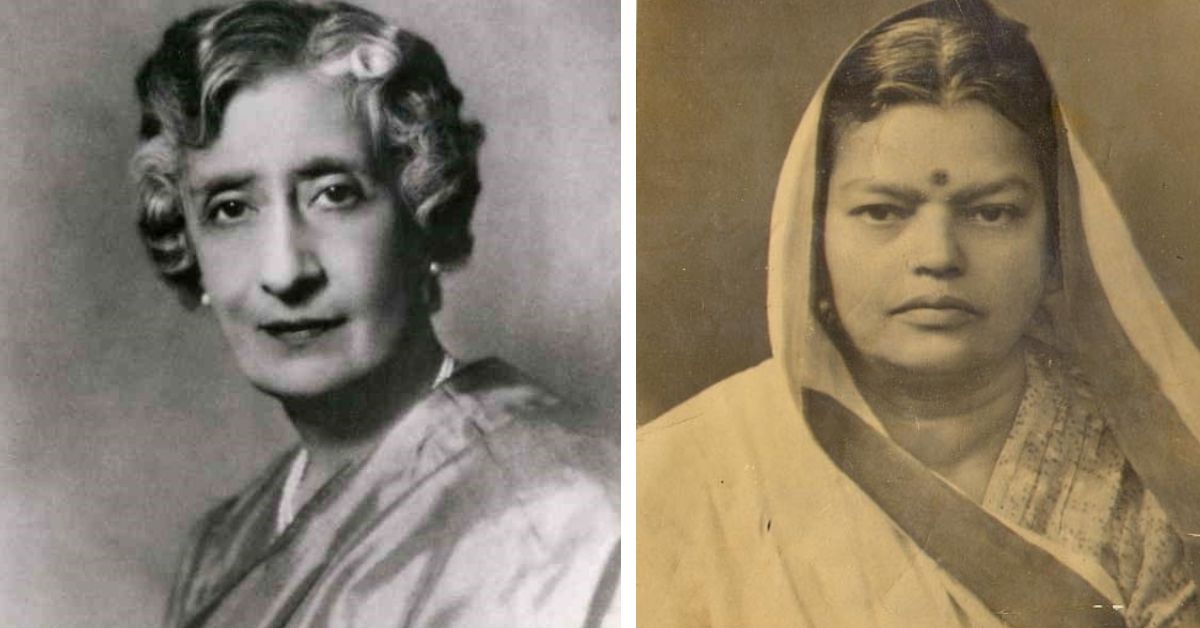
Established in the year 1984 in Delhi as an unregistered society, with a vision of “spreading feminist consciousness for the creation of a just society”, Jagori has been working unremittingly on its mission for over 25 years now. At the time of its genesis, Jagori described itself as “Women’s Resource and Training Centre”. For its founders, a group of seven people – Abha, Gouri, Jogi, Kamla, Manjari, Runu and Sheba – Jagori was their response to a need within women’s movement. They decided to form what they envisioned as a ‘creative space’ for women to express their realities, “to articulate their experience of oppression, to know more about it and to find ways of fighting it.”

Over the years, Jagori became a part of various defining campaigns and struggles. Among the issues raised by Jagori in the women’s movement have been those of single women, sexuality, mental health of women, safe travel for women in the railways, and consistent advocacy on violence against women. Jagori has also played a significant role as a member of the National Coordination Committee for conceptualization and coordination of the biannual National Conference of Women’s Movement in India. Jagori has also regularly engaged with the Indian Association of Women’s Studies (IAWS) and housed the Secretariat in 1995.

Over the years, Jagori’s objectives have been reshaped into consciousness raising and awareness building on violence, health, education, development and other issues critical for women’s individual and collective empowerment, production and distribution of creative material on feminist issues, dissemination of information and knowledge on feminist concern to meet the needs of women’s groups, NGO’s and development organizations and advocacy on women’s rights and gender equality.

At Jagori’s Resource Centre, one would find a library with a comprehensive collection of resources on various women’s issues. As a part of regular services, Jagori carries out information search and retrieval for both internal and external users. Specialized services like preparation of reading lists, information packages, topic-based bibliographies, are provided on request. Jagori also provides consultation services to smaller centers or NGOs for setting up libraries or information centers or similar assistance. Jagori also has a distribution and sale outlet for its publications and publications from women’s groups and feminist publishing houses from all over the country.

Among the most recent campaigns started by Jagori is the SafeDelhi campaign started to fight the problem of sexual harassment in Delhi.

To find out more about JAGORI, log onto www.jagori.org

Saffron Tree: Book Reviews and Literary Resources for Children

Ever wondered what books would be great to read to your children? Especially the younger ones? While there are some wonderful books in the western publishing world, where are the Indian children’s books that could give your child the much desired multi-cultural flavor, especially if you are residing abroad? Enter Saffron Tree – an initiative that discovers and reviews gems in Indian children’s literature. Saffron Tree does the work of figuring out what books you should be reading to your child. All you need to do is read their site!

The Better India was privileged to have an e-mail exchange with Praba Ram, the founder of Saffron Tree. Here is what Praba Ram has to say about Saffron Tree and the thoughts behind it:

What inspired you to begin Saffron Tree? Tell us a little more about the concept and what all you had to do to achieve it.
Praba: Right after graduate school, I decided to stay home for my older daughter who was a toddler then. Around the same time, we had also moved to a new city in the US where we had no friends or family. Books kept us company, and I loved spending time reading to my little one.While we read many wonderful authors and illustrators in the mainstream American publishing world, I was keenly aware to offer books with Indian and multi-cultural flavors. I thought books would be a great medium to expose my children to the diverse world we lived in. I started researching online for authors of South Asian, particularly of Indian descent who had written stories centering around Indian themes. Soon, finding picture books written by some wonderful authors and illustrators became a passion. Around the same time, I also found out about publishers from India, such as Tara books, Tulika, Katha, Pratham, each with its own, unique independent voice in the world of children’s books.

I immediately knew I had to share with the world, the wonderful multi-cultural and multi-lingual gems, both from India and the U.S. Saffron Tree was born in October 2006 when my older daughter was four years and my little one, just four months old. The name was born out of imagination, simply to imply that books are as precious as the exotic spice, saffron and the more, the merrier indeed! I have always believed in the positive benefits of exposing children to books early on, mainly from studies and research showing how infant and toddler brains can soak up information like spongesAlso,discovering the joys of reading with a child through a multitude of children’s books that kids growing up today have access to – a truly pleasurable experience, indeed. Reading to children brought out the inner child in me, and made me realize seeing the world through the eyes of children can be very rewarding to adults too. It makes you pause, take a step back amidst the busy and hectic lives you lead, and enjoy the delightful moments you share together reading.

The best part about blogging is that it also gives us a wider forum to interact with a group of other like-minded individuals who are as passionate as I am in exposing their children to good quality children’s books. The tree slowly branched out and has been growing with the love and support of like-minded parents who are equally interested in reading eclectic children’s literature. Today, we stand strong as a team of sixteen blogger reviewers.

How difficult is it to find children’s books written by Indian authors? Who are the well-known ones and is there anything being done to promote this genre?
Praba: It’s truly a breath of fresh air in the world of Indian children’s publishing. Today, there are some excellent independent children’s book publishers working to promote authors and illustrators and create books with modern Indian sensibilities, while also being sensitive to the needs of children living in both rural and urban India. And there are veteran publishers such as Children’s Book Trust, National Book Trust, Rupa etc. with years of publishing experience, who have promoted gems like Ruskin Bond. Also, there has been a new wave of international publishers that have entered the Indian publishing scene. All these put together, I have little doubt in my mind that finding good, quality books would be a challenging task. If someone is interested, we have the names of all the popular Indian publishers listed on our website.

How do you select appropriate books to read to your children? Do you screen them before introducing them to your kids? What are the things you look for?
Praba: Going with the interest of the child is certainly one way to select books. For the really young in the baby/toddler.pre-school stages, there are plenty of board books and picture books that experts recommend. My guess is finding board books for babies on Indian themes might be a bit difficult, although publishers in India have recently started paying attention to this age group as well. Also, age appropriateness is an important aspect to consider. Most publishers would let you know that on their books and websites. Of course, what clicks with one child may not click with another, and that is perfectly fine. Little children typically tend to be volatile, but research shows that twenty minutes of reading aloud to children goes a long way in terms of benefits.

Which are the books children take to most readily and are easiest to learn from? Does Indian mythology feature high on their list?
Praba: Interests change and evolve as children grow older. For the very young in the early childhood category (0 to 5), concept board books and picture books are always wonderful to introduce early. Sometime between five and seven, typically children here make their first transition from picture books to chapter books. My guess is more complex genres like mythology, mystery, adventure typically click with children in the 7 or 8 plus age group, i.e. when they are more mature and fluent readers ready for advanced
chapter books. Children also take to comics and graphic novels around that age. These are just general pointers, and they can vary from child to child. The key is to start reading to your children early on and expose them to a variety of genres. Thanks to the children’s libraries that have sprouted in India in recent times, we have seen some of the voids being filled in terms of picture and chapter books, both Indian and non-Indian available in plenty for the early childhood.

To check out the delightful world of children’s books, visit Saffron Tree’s website: www.saffrontree.org

And before we sign-off, here is letting you know that Praba is also an author of a recently published children’s book. It is titled “Dinaben and the Lions of Gir”. The book talks about the Asiatic lions of India and the community of cattle people called the Maldharis that live in the jungle with the lions. They have been co-existing peacefully for centuries. The book celebrates their lives and that of the lions of Gir. Sounds wonderful? It is! You can read more about it here and here.

Okhai: Empowerment of a truly colorful kind

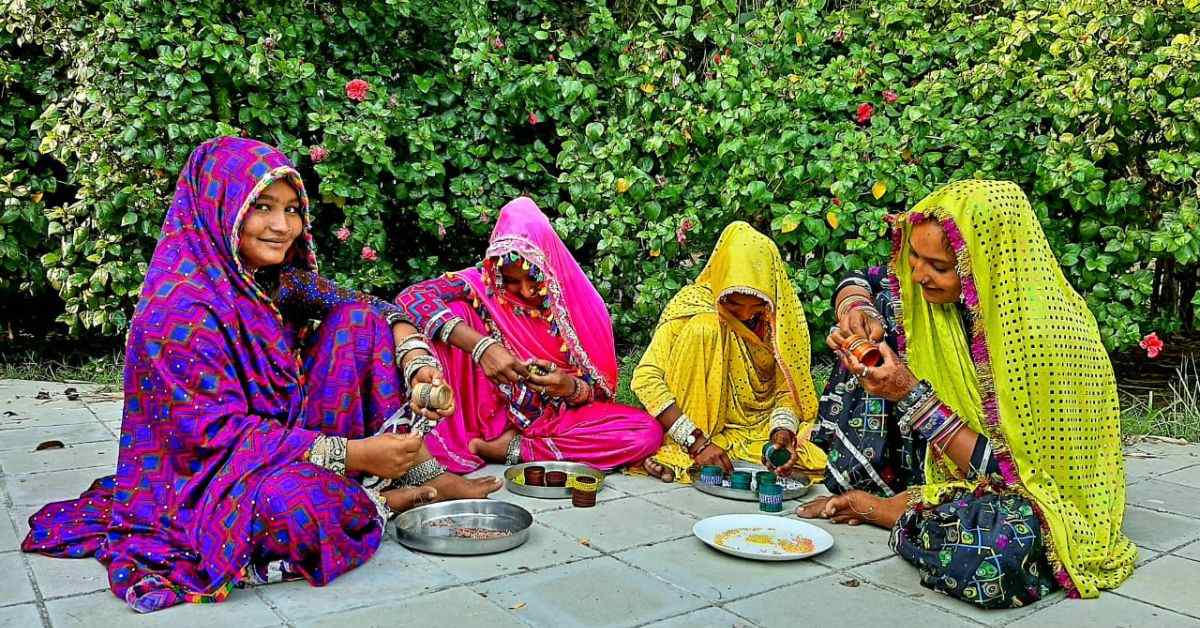
The region of Gujarat has been home to many a tribal cultures and has nourished them from the earliest known periods of history. The stark monotony of the arid landscape in this region is relieved by the bright shades of handicrafts made by the tribal women. Specifically, the Okhamandal Taluka is home to more than 200 Self Help Groups (SHGs) of men and women. It is from these communities that the Appliqué handicraft under the “Okhai” brand name has been created with the support and guidance of TCSRD (Tata Chemicals Society for Rural Development).

The Self Help Groups in Okhamandal Taluka mainly comprise of the Rabaris, Vagher and Ahirs. The most prominent tribe here, the Rabaris, are a semi-nomadic tribe known for their survival and adaptation in arid regions of Gujarat and Rajasthan – pursuing a pre-agrarian, pastoral lifestyle – found mainly in the Kutch and Saurashtra regions of Gujarat. The Rabaris today lead a quaint, colourful and rugged life which finds a manifestation in the embroidery and crafts made by them.

The TCSRD centre employs the skills of about 200 Rabari women from the various Okhamanda villages and a team of trained tailors. The various products made in Okhai include apparels, accessories and handicrafts. The handicrafts workforce is guided by a full time designer to translate the traditional products into those that are in consonance with the current fashion trends. These products are sold at retail showrooms in Mithapur and Ahemdabad. The products are an amalgamation of the traditional art form of the Tribal Women and the designs of the designer.

As their website puts its, “The Okhai brand has become a powerful statement by the women of Okhamandal villages over the years. A statement that empowers them, a statement that gives them and the region an identity, a statement that make people notice this beautiful form of art and patronize it.”

What we’ve found particularly interesting is the impact that these self-help groups are creating on the community members. Do read the following tales of empowerment at the Okhai website:
Laxmi Bhara – Chief designer. She has been associated with the project for over 8 years and now is a proud owner of a home.
Rami Dula Nangesh – Empowerment personified. Her day with Okhai starts at 5 in the morning and she has been instrumental in bringing about innovative changes to the various products.

More about Okhai here: http://www.okhai.org/
To read about Tata Chemicals Society for Rural Development (TCSRD) click here: http://www.tcsrd.org/

This article has been contributed by Chandrika Maheshwari. Chandrika is a student in her 3rd year of engineering in BITS, Pilani and holds a vision to do something for the country and contribute in its development. Her interests include social entrepreneurship, traveling, reading and writing.
PS: Remember to participate in our logo contest! Click here

A Barefoot Journey to Tilonia

A less traveled track to Tilonia gives one a journey into Indian entrepreneurship and perhaps changes the way our villages are perceived by city dwellers. Tilonia brings you face to face with the real spirit of India. Its misty hopefulness uncovers the nature of the task that is ahead for a social entrepreneur, its uniqueness and challenges.

Tilonia is a small town 25 kms from Kishangarh near Ajmer in Rajasthan. Barefoot College, established in 1972, inspires this town with the conviction that solutions to rural problems lie within the community. These solutions are broadly classified by Barefoot College into solar energy, healthcare, education, water, rural handicrafts, people’s action, communication, women empowerment, income generation, wasteland development, electricity and power as well as social awareness and conservation of ecological systems in rural communities.

Barefoot College was founded by Sanjit ‘Bunker’ Roy, an Indian social activist and educator. Roy was influenced by the philosophy of Mao Zedong, and modeled his organization after Mao’s Barefoot Doctors. Roy has worked all his life with the Barefoot College.

Spread over more than 8 acres of land, the campus of Barefoot College was built between 1980 and 1986, designed by a team of rural ‘barefoot’ architects, masons, blacksmiths, farmers and members of women groups who sat and struggled through the initial basic designing of the campus. This institution believes in imparting informal, non-structured, on-the-job practical training by identifying the poor, unemployed youth who have been unable to finish their formal education and have returned to their respective villages as dropouts. The five principles which are an integral part of the functioning of the college are equality, collectiveness, self-reliance, decentralization and austerity.

Related news about The Barefoot College
Bunker Roy, founder-director of the much talked-about Barefoot College at Tilonia in Rajasthan’s Ajmer district, has been chosen for 2009′s Robert Hill Award for his contribution to promotion of photo-voltaics (solar energy). He is the first Indian to be recognised by the Global Solar Community which had its 24th European Photovoltaic Solar Energy Conference in Hamburg, Germany, this weekend.
Click here to read more about this in The Hindu.

The education program focuses on the overall development of rural children, with literacy being just one part of it. It encourages hands-on or learning-by-doing process of gaining knowledge and skills. Lessons are focused on awareness about the environment and socio-economic and political forces that dominate development. The aim is to provide the children with a right balance of education and literacy so that they choose to stay in their village and work for its development. The college has different programs for children and women. There are Balwadis (rural crèches) established for children between the age of 6 months-5 years for the convenience of working mothers. Night schools have been set up for ‘working children’. There are bridge courses, courses for night school children who aspire to join formal day schools. In these night schools, initiatives like the children’s parliament are established which allow them to participate in the management of their schools through a democratic process. Candidates are selected through a proper election process, giving them an idea of the working of a democracy.

There is also a huge emphasis on the holistic development of women by empowering them socially, financially and politically. In the past 38 years, the college has trained more than 15,000 women in jobs ranging from construction work, education, metal craftsmanship, toy making and solar engineering, to mechanical repair and fabrication, health care, water testing, handicrafts, film making and social activism.

Vocational Training at Tilonia

Vocational Training at Tilonia

The Barefoot College has setup eight field centers in Rajasthan and a society known as SAMPDA (Society for Activating, Motivating and Promoting Developmental Alternatives) through the collective efforts of which the Barefoot approach is replicated in rural communities across 14 states in India.

The global response received by the organization is worth acknowledging. The institute has witnessed semi-literate middle aged woman traveling from places as diverse as Afghanistan, Cameroon, Gambia, Mali and Sierra Leone to undergo training to become barefoot solar engineers.

To know more about this organization and to read on some of its wonderful initiatives, please visit their website at www.barefootcollege.org.

This article has been contributed by Chandrika Maheshwari. Chandrika is a student in her 3rd year of engineering in BITS, Pilani and holds a vision to do something for the country and contribute in its development. Her interests include social entrepreneurship, traveling, reading and writing.

Neonatal Care in India: Raising a generation by raising awareness

Every seven minutes, a woman in India dies due to pregnancy-related complications. Over a million babies born in the country die within their first month of life. India has the unfortunate distinction of claiming more than a quarter of the total newborn deaths in the world. The majority of these deaths occur in rural areas where poverty and lack of knowledge about proper maternal and child health care are the real cause of these fatalities.

The Indian government has come up with schemes such as the National Rural Health Mission (NRHM) and the soon-to-be-launched National Urban Health Mission (NUHM) to address this dire situation. Both schemes give high priority to the issue of maternal and newborn health for marginalized communities, and seek to improve the availability of and access to quality health care for those at the lowest rung of the socio-economic ladder. Additionally, government programs such as the Janani Suraksha Yojana incentivize delivery in hospitals by encouraging mothers to opt for institutional deliveries.

While the government’s efforts are commendable, the complication arises in that people must first be aware of the problem before they can take advantage of the government services addressing it. And unfortunately, in many Indian households, where the basics of survival take center stage, the health of mothers and their newborns is not given much importance.

Effective development communication programs can play a pivotal role in bridging these knowledge gaps by identifying barriers to behavior change, analyzing these barriers, and developing original techniques to overcome them.

AKHA

For instance, in Assam, a collaboration between the Indian government, UNICEF, and local bodies is using a boat called Akha to reach underprivileged indigenous tribes that inhabit geographically isolated sandbars and islands called chaporis. The chapori residents, who live near the lifeline of Assam—the Brahmaputra river, are often cut off from accessing health care facilities due to floods and other natural hazards. What’s more, awareness about maternal and child health care is all but drowned out by the other concerns for survival that face this group.

The Akha Boat

The Akha Boat

The Akha, which comes equipped with medical staff and communications materials, makes visits to these isolated regions with the mission to regularly provide facilities for maternal and child health as well as promote awareness about health-seeking behaviors. Findings suggest that the service delivery undertaken by the boat, which has been continually expanding over the last few years, has dramatically improved thousands of lives. 71 percent of the chapori mothers sought some form of antenatal care during their last pregnancy; of these, 42 percent sought care from the Akha.

This is one example of how an intervention tailored to the specific needs of a community can raise awareness and create tangible change.

SURE START

Sure Start Path

Another example is the work done by a project called Sure Start—an initiative based at PATH, an international not-for-profit organization supported by the Bill & Melinda Gates Foundation. The project is working with rural communities in Uttar Pradesh and settlements of marginalized people in Maharashtra to help mothers and their children to survive and stay healthy.

The project’s communications program is innovative in its efforts to raise awareness and interest about maternal and child health care issues. In villages, for example, the “letter from an unborn child” campaign reached out to 40,000 fathers-to-be, educating them about the importance of taking care of their wives during pregnancy. In both Uttar Pradesh and Maharashtra, the program uses interactive and entertaining tools including dance, music, theater, and games to create awareness.

Mr. Nirbhay Singh, the elected head of one of the villages in Uttar Pradesh where Sure Start operates, estimates that since the program began in his village in 2008, 70 to 75 percent of adults in the community have become aware of safe delivery practices and the vital importance of ensuring access to maternal and child health services. One result is that payments under the government’s Janani Suraksha Yojana (a scheme that incentivizes institutional delivery) have increased alongside the growing awareness about the health benefits of giving birth in hospitals.

In this way, projects such as these use customized communication techniques to raise awareness of maternal and newborn health issues, thus helping local communities benefit fully from existing government schemes. It has often been said that knowledge is power, and the projects mentioned above give that power back to the communities they work in.

Sure Start works to educate women in India on maternal and neonatal health. Sure Start, an initiative by PATH, supported by the Bill & Melinda Gates Foundation works to promote safe childbirth practices in India.

Connect with PATH at:
Facebook: http://www.facebook.com/pages/Sure-Start-Project-by-Path/178629192101
Twitter: http://twitter.com/pathsurestart

Article courtesy: Vikas S from PATH Sure Start. Thanks Vikas!

The Better India News Update: In case you are in Ahmedabad, you can catch the talk by Anuradha and Dhimant Parekh, founders of TBI, at IIM-A’s Entrepreneurship Summit on Jan 12th and 13th, 2010. You can interact with us about this site, about your ideas, about our plans or anything else under the sun.

Podcast: Praseeda Kunam, Woman Entrepreneur

We are happy to announce our partnership with Beyond Profit – A New Social Enterprise Magazine. Their mission is to bring you the most interesting and unique stories, people and ideas from the social enterprise sector. We believe this is similar to our objective and hence it made sense to join hands! The following is the first post (podcast infact ) as part of this partnership:

At Beyond Profit, we hold female social entrepreneurs close to our heart (probably because we are a team of mostly women!). Microfinance is a field in which women have long been a majority of customers, but a minority of the leaders. Praseeda Kunam is an exception, a pioneering woman who launched and runs her own microfinance institution. Praseeda left the job market after getting her MBA to start Samhita Community Development Service, which serves poor women in Madhya Pradesh, a particularly impoverished state in India.

In this podcast (link provided below), hear Praseeda speak about the challenges of being a woman entrepreneur in the financial inclusion space, the role of technology in the rapid expansion of Samhita, and the road ahead for her organization and the sector.

Praseeda was the winner of the Srijan 2008 “Most Promising Business Idea Award.” The Srijan Microfinance Forum recognizes emerging and innovative microfinance initiatives in India and serves as a platform for public debate about some of the sector’s most pressing issues.

Click here to hear Praseeda Kunam’s Interview with the Srijan Secretariat.

Srijan Website: www.intellecap.com/srijan2009

Mitra Jyothi – Changing the lives of visually impaired

madhu singhalIn our busy lives where our abilities are taken for granted, we forget that living along with us are challenged people who have special needs. Who could better understand the needs of the visually challenged than someone who has suffered it herself? Madhu Singhal is visually impaired by birth. Born into an upper middle class family in Haryana, Madhu had the affluence to lead a comfortable life. But she chose not to be laid back and wanted to do something on her own.

After completing her MA in Hindustani Classical Vocal Music, Madhu came down to Bangalore to undergo specialized training in communication and counseling. To her surprise and much difficulty, she found that there was very little support for her learning needs. In the North, audio recordings of text books were made available for students like her, but here in Bangalore Madhu couldn’t find any such help. Fighting this difficulty she completed her studies and got out only to find that it was extremely difficult for her to get a job. This is when Madhu decided that no one else should suffer what she suffered. And Mitra Jyothi was conceived.

Mitra Jyothi is aimed at empowering the visually impaired by supporting their educational needs, finding suitable jobscassettes and making them independent enough to take charge of their lives. The organization’s most popular initiative is its Talking Book Library. Text books and books for general reading are given a voice by volunteers, and cassettes and CDs are recorded for circulation. Over 22,000 cassettes of more than 2000 books have been recorded till date. Mitra Jyothi set up its own recording studio to provide this service professionally. Notably, Mitra Jyothi’s effort in this front was the first of its kind in Karnataka and over 5000 people have benefited from the library.

The organization is also extensively involved in Braille transcription and providing computer education to the visually impaired. Mitra Jyothi runs a full-fledged job placement cell for its members, a service that has helped its members find suitable jobs in corporates and manufacturing units. Another admirable service is that the organization runs special courses for women to impart independent living skills.

Mitra Jyothi has been serving the needs of the visually challenged for over two decades now. It has extended its services to Kerala, Andhra and Tamil Nadu. Madhu Singhal has nurtured the organization with her selfless commitment that grew beyond her impairments.  Madhu lives independent, travels abroad on her own, spearheads an organization and chairs important positions in various social service organizations – a true role model. What she has achieved can be made possible for more visually challenged people. Help spread the cause.

Visit http://www.mitrajyothi.org/

Khabar Lahariya – A Weekly Newspaper in Bundeli

Khabar Lahariya a weekly newspaper in Bundeli (local dialect of Bundelkhand) is being run by a group of women from various sections of the society from the interiors of Chitrakoot and Banda in Uttar Pradesh. Their main objective is to reach out to the nearby villages and provide them with ‘infotainment’.

Despite having a limited exposure to the literacy and information, their ability to interact with various people in public sphere and coming up with innovative ideas is extremely remarkable. Their works have been acknowledged and credited by leading National Dailies including The New Indian Express, The Hindu, Hindustan Times, Tehelka and various other dailies and weekly’s.

In 2008, the Khabar Lahariya group registered themselves as an independent organization, Pahal. With the incredible support from Nirantar, which is an acclaimed centre for gender and education, Pahal has now found its place in rural women’s media collectives of our country.

Khabar Lahariya carries out news that is of primary importance to the masses in and around these areas. Although they do have sections regarding current affairs, national and international news, they strongly highlight the cases of violence against women, issues on Dalits and more. This 8-page newsletter also covers issues on institutions like schools, marriage, health care and more.

Although these journalists do not come from strong literary background, they do ensure the quality does not receive a set back. Significant efforts have been made in order to improve their technical skills, their reporting and writing skills and more. Apart from the above, they also encourage public interactions and gather inputs to cater to the specific needs of the women. Meanwhile, frequent workshops are also being conducted by these women to encourage more writers and volunteers to have an in hand practical experience of running a newspaper.

Depending on the need of the hour, they hold meetings at their editorial office to divide their beats and after enormous research and writing they go all the way to the nearest city Allahabad for printing.

Click on the image below to read an issue of Khabhar Lahariya:
khabar_lahariya1

These phenomenal revolutionaries, who have gone beyond their capacity to go on fields, have received the prestigious Chameli Devi Jain Award for Outstanding Woman Mediaperson. Also, three members of the group have received fellowships from the Dalit Foundation in 2004, for reporting on issues related to rights of the Dalit community.

Overwhelming technological cloud has also been bestowed upon the offices of KL as they now work on computers with broadband connections. The challenge of consistently making an outstanding appearance in the face of media and having an unbiased opinion regarding the political scenario of our country comes very easily to them. They aren’t restricted in writing what their leaders want them to write. They write information regarding subjects that pertain to them. Hats off to the women behind this initiative, they have managed to achieve what many of us with enough resources have been unable to do!

Read more details about Khabar Lahariya, including how the paper is produced, edited and distributed at Nirantar’s website: NIRANTAR

This article written by guest reporter Jheel Parekh.
All images courtesy NIRANTAR.

Radio Bundelkhand – Giving Voice to the Voiceless

Azadpura is a village in Bundelkhand region. This area faces acute water scarcity and one problem that the women faced was a faulty well which required urgent repairing. The women aired this problem on Radio Bundelkhand and within four days the concerned authority replaced the missing wheel of the well. This is the power of Radio Bundelkhand, an initiative of Development Alternatives.

Community Radio for facilitating dialogue and interactive communication

The purpose of setting up Radio Bundelkhand, as identified with the help of our communities in the radius of the radio station, is to work along with them to use this communication medium to create awareness, give information, participate in local self governance and provide entertainment – all based on requests and feedback from the community. The audience includes the communities in the radius of the broadcast range – with special attention to women, youth and the marginalised groups.

 
Listening to Radio Bundelkhand

Listening to Radio Bundelkhand

Community Members on the Radio

Community Members on the Radio


The community and DA, jointly manage the station. There are five community reporters and six community coordinators. The villages these reporters represent are Azadpura, Ramnagar, Sitapur, Basova, Bagan, Bhagwantpur, Ghatao, Jamuniya, Gujerra Kalan, Mathrapur and Ghatao. There is also a Management Committee comprising the Sarpanch (elected village-head) of Basova Village, doctors, farmers and Self Help Group members.

Until now, Radio Bundelkhand has the longest duration of programming of four hours a day, seven days a week, in Bundelkhandi and Hindi amongst the government licensed community radio stations in India. The Government of India has given licenses to several NGOs throughout India to start community radios in their project areas. DA is one of the first to set up such a radio with the communities it has been serving for more than two decades in the Bundelkhand region.

The communities have decided that they would like information related to employment and livelihood opportunities, development of women, girl’s education, legal rights, farmers’ issues, training, their culture and history, how to ensure the availability of basic infrastructure such as water, energy and roads, development issues, and any other information sought by the communities. The broadcast timings in the morning and evening have been selected by the communities, with the women preferring the morning and the men the evening.

Programming Content on Radio Bundelkhand
Vandana –Devotional songs broadcast every morning.
Khet Khaliyan – It includes the Jhansi Mandi (unorganized market) prices for farmers so that community gets all the information related to agricultural products. Bundelkhand Radio also
broadcasts discussions about agriculture issues like how to protect seeds, crops & vegetables
from insects. Experts answer question asked by the farmers.
Bal Bandhu – Especially for school-going children. Moral stories, poems and jokes by school
children are included. Story telling through the Radio Jockeys is also a part of this programme.
Bundelo harbolo ke- This is about the Freedom Fighters of Bundelkhand. Stories of the freedom fighters & songs related to freedom fighters are also broadcast.
Aas Paas – In this programme Bundelkhand Radio broadcasts information on Right to
Information (RTI) and any other problem.
Mere Bundeli Mere Geet – is a listener’s programme in which they get the opportunity to listen to their choice of songs.
Amma ke Chauki Se – In this programme community women give their ideas on home receipes and step by step instructions for preparing the dish.
Nuskhe Nani Dadi Ke – In this programme older woman give tips on using home remedies or
Desi nuskhe for common ailments and diseases. Also, give tips of using simple home remedies and alternative herbal medicine, available from the average kitchen shelf.
Radio Drama – On every Sunday Bundelkhand Radio broadcasts a radio drama. In this
programme reporters discuss an issue and convey the messages related to social issues like
dowry, female foeticide, importance of education etc.
Sathin – Sathin is a special programme for women. Women from the community tell their story. They discuss the struggle in their lives and success story too. These women also share their
feelings what they want or wish for themselves.
Chhotou Kam Badou Munafou – This programme is for those people who want to do small business. Small entrepreneurs give tips to take up small business.

The programming, based on issues and content identified by the communities, is broadcast in the formats which they have preferred, that include the use of traditional Bundelkhandi songs, folk music and nataks, discussions, reports, commodity prices, phone-ins, experts speak, coverage of events in villages, jokes and satire, listeners’ letters and feedback. The Wireless Operating License was issued on July 31st, 2008 and the first transmission took place on August 15 2008 with the broadcast of the national anthem. Meanwhile the selected community reporters were trained over three months and a woman from Sitapur village inaugurated the station on the eve of Diwali. Community radio broadcasting/narrowcasting has allowed the rural poor to develop their communication in a language they understand. Community radio fosters debate on issues, facilitates access to government, decision-making and helps community members to organise themselves and evolve to manage their own affairs. Radio Budelkhand is characterised by its signature tune and jingles which declare that it is “Apna Radio Apni Baatein” – Our radio Our conversations.

Reaching our communities

The reach of the community radio is in a wide range of approximately 5-10 kms and 25 villages with a population of 15000 in the coverage area that are benefiting through the infotainment-based programmes. So far, Radio Bundelkhand radio has penetrated to the rural communities settled in and around TARAgram Orchha like the villages of Gundrai, Chandravan, Bagan, Orchcha, Sitapur, Azadpura, Lachmanpura.

The targeted beneficiaries are the marginalised and poorest with special emphasis on women and the unemployed youth who are the most vulnerable but also the potential change-makers. By selecting women community reporters, marginalised community reporters in an average age group of 20 we hope to reach them better.
The Management Committee also has a woman self-help group head. DA aims to ensure the participation of local people for the programming, broadcast and management of the station by the community itself.

The above article was written by Indira Mansingh, Chief Advisor, Development Alternatives.

Thank you Purnima Gupta for sending this across!
Previous article of Development Alternatives – Click here.

Divya Chaya Trust

The Divya Chaya Trust (DCT) was established in 1984 mainly to help destitute children and women. Their main aim was to support educational and vocational activities at schools in rural areas and encourage educating the orphans and school drop outs.

Their work is significantly differently as they impart career counseling and provide students with opportunities for further studies. The trust holds confidence building therapies in order to enable women to support themselves financially.

Divya Chaya Trust is located at various states across the northern part of India including West Bengal, New Delhi, Uttar Pradesh and Haryana and is currently working with various child care homes and ashrams. These include the SD Jain Mahila Ashram and Arya Bal Griha at Delhi, Ramakrishna Vivekananda Mission situated in West Bengal and Delhi.

The trust has around 49 employees who work full time for the establishment and betterment of their reach. Apart from the above, there are approximately 50 volunteers who are working for the same mission.

Their remarkable achievement for the year 2007-2008 is that they have sponsored educational expenses for 500 children. They also had organized seven career counseling sessions for more than 150 children who had graduated and were looking out for jobs.

Their contribution towards the growth of special children with various disabilities is also outstanding. Although the government claims that of the total disabled population only 2% are educated and very few are employed, the DCT is doing their best overcome these figures and make them more presentable for the country. To achieve the same, the trust has various services which are solely for the disabled. They have a range of options to reach the disabled, which include financial aids, or even providing them with simple basic necessities like a hearing aid, a wheel chair or even a Braille kit. A contribution from our end towards supplying these necessities would definitely be of immense support to them.

The most disappointing fact, however, remains that their total income is severely lower than their expenditure. The trust did loose a significant amount which could have been well avoided, had there been enough contribution made towards the trust from citizens.
Despite this, the trust did not loose hope and has recently built a residential home for the elderly at Haryana.

It is truly incredible to know that citizens of our country are going beyond their reach to dissolve the bridge between the privileged and under privileged by ensuring that primary education and fundamental living necessities are being provided to significant section of people.

Read more about Divya Chandra Trust here: http://www.divyachayatrust.org.in/

NGO write up done by guest reporter Jheel Parekh.

Calendar

September 2010
M T W T F S S
« Aug    
 12345
6789101112
13141516171819
20212223242526
27282930  

Recent Comments

PROMOTION

"Neumonia and Other Sketch Stories" - A collection of sketch stories. Download the e-book for free. Click on the book cover below.
"The observations are acute: the sound of high heels on asphalt, the bit about how all BPO employees lose their hair very fast are spot-on. This book is a better, shorter alternative to any Sunday movie on TV. It's a little jewel" - Hindustan Times