









Door Step School: Education now goes to every doorstep

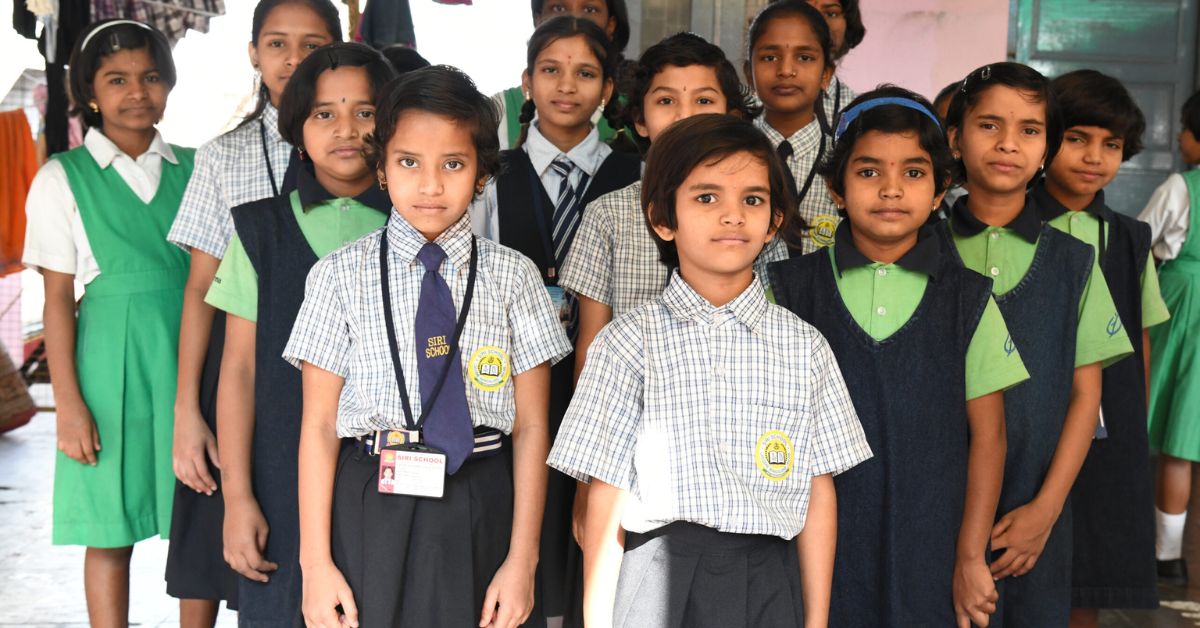
India is a developing country with a developing population, developing economy, developing education. But is education really developing amongst the people who are born poor and underprivileged. Door Step School has taken the big leap to change the present and to make 100 percent literacy a reality. This is a group of people whose main motivation in life is ‘service to society’ and they believe the best way to do so is to usher in a wave of knowledge that engulfs the future of our nation – the children. Meet Mrs. Rajani Paranjpe, the founder member, who says “We go where ever the children are and start the class right there”.

School on Wheels

School on Wheels

This inspiring lady, whose mission in life is spreading primary education, has closed many prisons as the saying by Victor Hugo goes “He who opens a school door, closes a prison”. When approached by The Better India for a brief glimpse into their world and how they work, she was kind enough to answer all our questions. Below is a detailed interview with Mrs. Rajani about her fantastic initiative, Door Step School:

What is the main objective that Door Step School is aiming at?

Hundred percent literacy through total school enrollment and quality education for all.
We bridge in the gaps in government’s efforts in achieving these goals. Our public education system faces three major problems in this regard, namely, non-enrollment, wastage (dropping out of school at early stage) and stagnation (not achieving the expected level of learning at respective stages in school). All our programs are designed to address these problems.

Education moves on to every door step – What was the initial thought process behind this philosophy?

I am a Social Worker by profession. I took this path because I always liked to work for and with people. So after nearly 15 years of my graduation (and infact 15 years of married life!) I took up a course in social work and after a few years of working in the field I joined the College of Social Work Nirmala Niketan, Mumbai, University of Bombay, as a member of faculty. I used to teach Research Methodology and Indian Social problems.

I selected Primary education as the mission of my life because I felt:

  • Education or rather illiteracy was the problem we needed to address on a war footing
  • Working with just one person in a family is usually sufficient because that person with a little education sees to it that his/her children get education.
  • We focused on 3-18 age groups, because my experience says it is far easier to teach a child than to teach an adult.
  • Messages such as health and family planning etc. can be given to a much larger population at much lesser cost if the population is literate.
  • Education is one national problem which can be solved permanently once all the children are in school and are literate.

I made a plan to start four programs through Door step School. They are literacy classes (literacy is defined as being able to read a newspaper), study classes, pre-primary education and community libraries.

After having a clear idea of what I wanted to do, I shared it with like minded people one of whom was Ms. Bina SethLashkari, a student of mine for two years. She and a few others from the college joined hands with me and we founded the organization in 1988-89 in Mumbai.

We named our organization ‘Door Step School” because we go where ever the children are and start the classes right there. E.g. we held classes on pavements or on road construction sites, building construction sites outside big markets, railway stations etc. We have added a few more programs along the way but the core programs have remained the same.

What challenges did you face in the initial day? How did your team deal with them?

We did not face many major challenges as such. I think the following factors helped us in our smooth functioning:

  • All of us who started the program were professional social workers and were in the field of social Work for some time before we started an organization.
  • The field we have selected is relatively simple, the work is primarily developmental,
  • The time was ripe for such activities and
  • We had a very focused approach with clear plan in front of us.

However, after we started working with the children of construction workers, we faced the challenge of tracking them when they moved from one site to another. Our search for an effective solution to this problem is still on.

Could you provide a brief insight into the projects that you run?

Computer as a teaching aid

Computer as a teaching aid

As I have mentioned earlier, all our programs are designed to address three major problems of our public education system. The target group is 3-14 (although we cater to children upto 18).
Pre-primary education serves two purposes – it prepares the child and the parents for schooling. On a more practical note it gives us the idea about which children are ready for school admission at the beginning of the next academic year. This ensures near-complete and timely enrollment.

For admitting children to school a birth or age certificate is required which many of the parents we deal with do not possess. We help them to get the age certificates and enroll children in school.

We provide school transport so that children attend school regularly which helps preventing school dropout and stagnation.

Study support classes to children attending school helps improve the quality of education which in turn reduces the chances of dropping out of school prematurely.

NFE (Non–Formal Education) classes helping reduce illiteracy.

School on Wheels, a bus which is designed as a class room helps us to take classes for children who are on streets and there is no place to gather them and teach them. It helps to cover those who would otherwise remain untouched.

School and Community Libraries as well as Reading Classes based in schools help in improving reading ability which is basic to any educational achievement

As an ending note, would you be able to tell us the difference that Door Step School has brought about on our society?

It is difficult to answer this question because the work we are doing is very small as compared to the need for such programs. Therefore I would rather not claim anything on the scale of society or nation.

However in the lives of children whom we have touched we have definitely made some impact or the other although this impact is not perceptible or measurable always. Some of our children have completed education and doing well in life. Some have left education midway and continued with their lives. It is their children who will benefit from the exposure we have given to their parents.
We experience this and we have many examples to show that a child who was with us even for a short time has nurtured a dream of sending his/her children to school and acts upon it when the time comes. We see this change in the attitude of ‘parents’ as our major gain. It shows that the root of education has struck in the family and now we do not have to worry. It will spread, we hope.

To know more about Door Step School, visit their website here: www.DoorStepSchool.org

Tip provided by a TBI reader, Zankhana Patel.

This article has been written by Malavika Tewari. Malavika is a NIFT graduate and has been working in the apparel sector for past 2 years. She has great fervor for reading and has observed the delight in writing for past few years.

Masoom – Illuminating the Night Schools of Mumbai


Twenty one year old Amol Pashilkar attempted his SSC examination in the year 2004-05. Unfortunately, he could not clear his examinations; he passed only in English. Since his confidence levels suffered a blow, he found it very difficult to reappear. After a four year long gap, in 2009, he took admission in Milind Night High School. With his renewed focus, could he clear the examinations?

Amol got 74% in his SSC. How did this drastic improvement come about? Amol could leap forward in academics because of the extra classes conducted by a Maharashtra based social organization that goes by the name Masoom. Masoom works with night schools in Mumbai, with the aim of improving academic performance of night school students.

Masoom is the first organization in Maharashtra to run a comprehensive intervention program for night schools. Masoom offers a unique approach to planning and implementing a comprehensive program for night schools based on their different needs. Masoom’s strategy for sustainable change is to work in the spirit of partnership with all major stakeholders in the education system. Because of Masoom, many like Amol could complete their education. Their interest in studies increases tremendously.

“I came across students who were largely self-motivated. They worked during the day and would attend classes in the evening. Nobody was forcing them to school. They came because they wanted to learn.” – Nikita Ketkar, Founder of Masoom

Tracing the beginnings

Nikita Ketkar, the founder of Masoom, stumbled upon the idea of helping night schools back in 2001. She was working in the civil services and was appointed on a project to identify child domestic workers, in the night school of Mumbai. Nikita adds, “I came across students who were largely self-motivated. They worked during the day and would attend classes in the evening. Nobody was forcing them to school. They came because they wanted to learn. It was sad to see that justice wasn’t being delivered to their aspirations.”

Masoom - Basic Science Concepts taught in a night school

Masoom - Basic Science Concepts taught in a night school

In 2006, Nikita further undertook research related to problems faced by night school students, under the Pukar Scholarship. Based on the findings, she decided to do something about these issues. She resigned from office and founded Masoom in 2008, her entire research team by her side. To facilitate learning for night school students, Masoom has developed a three pronged approach:

1. Providing Infrastructure such as computers, Science laboratory apparatus, mathematic kits, library books, notebooks, educational charts, workbooks and worksheets, teacher training material, Braille textbooks and audio-visual material

2. Capacity Building by organizing training sessions and workshops for teachers, parents and students, vocational guidance for students, counseling, extra curricular classes such as Life skills, yoga, meditation

3. Advocacy: Masoom works closely with all stakeholders and intend to act as an advocate for all issues concerning night schools

Since night schools are run from 6:30 to 9:30 in the evening, most of these kids come after long hours of work. By providing meals, Masoom ensures that they can study more efficiently. Nikita adds, “We want to build not just academic strength but also employability. Many students who earlier had to study with an empty stomach could not focus. Now we provide meals. The kids call it ‘nashta’ as sometimes it is the only meal they have in the day.”

Sports as part of the night schooling

Sports as part of the night schooling

Members of Masoom

In its own unique way, Masoom has touched the lives of many students, growing from just two schools to now ten. There are courses called the ‘bridge courses’ that help drop outs overcome gaps and at the same time, there is facility of psycho counseling for students with learning disabilities. They also help link students to government certified computer courses, for which they have initiated scholarships for part funding. With such personal care and concern for holistic development, there are bound to be many many success stories like Amol’s.

Visit Masoom’s website here: http://masoomforu.org/

Interview: Ruma of Noida Deaf Society

Meet Anil kumar who has a hearing disability. He used to work in a papad factory earning Rs.1500 a month for a daily workload of 10 hours. Then he came to know about Noida Deaf Society and enrolled for their English course in the year 2007. Eventually he got placed in Leela Kempinski Hotels, Gurgaon much to his joy and satisfaction. “I have learnt to commit to my job from NDS, and the value of having a good job and a regular salary,” says Anil.

Noida Deaf Society was started in the year 2005 single-handedly by Ruma Roka and now this organization is impacting over 300 students through its various courses. Here is an interview of Ruma on NDS, her inspiration and the impact she is creating:

How did Noida Deaf Society start? What was the inspiration behind it?

Ruma: I always wanted to do something for the less privileged in our society. In 2004 I learnt the Indian Sign Language. This got me in touch with the deaf community and I started researching about the deaf, their issues and the needs. The more time I spent with the deaf, the more I realized the need to do something. There was no looking back from that point. I realized that there were complex issues facing the deaf in the country including lack of education facilities, lack of resources especially designed keeping the needs of the deaf in mind, no avenues for holistic development and so on. Most importantly there is no access to quality training leading to sustainable livelihood.

I found that in India deaf education was in a bad condition. Deaf students are often forced to speak and use of sign language is discouraged. I also found that since schools are not really preparing the deaf for a responsible and independent life, the deaf end up in menial jobs and get deeply frustrated.

To address some of these issues and to bring about a positive change in this marginalized community, I started an organization called Noida Deaf Society (NDS) in 2005. I started from a small two bed room flat belonging to my husband. I just had five students and I was the only trainer. Through word of mouth the organization started growing. We started teaching English using sign language – since we believe that if the deaf picked up English, they could communicate in the workplace with the written word and hence be employable in multiple professions. Thereafter we started training in basics of IT and subsequently expanded trainings to include Life Skills, Grooming, Desktop publishing and graphics and work ethics. When I started, I was the only trainer but today we are a strong team of 15 which includes 12 deaf trainers and support staff.

What are the projects NDS adopts? How does it go about executing them?
Ruma: Our goal is to enable the complete integration of the deaf into the mainstream through education and specialized vocational programs leading to gainful employment. At Noida Deaf Society we understand the constraints of the Deaf and focus on their abilities to bring out the best in them. We have used the visual medium of IT to enable learning. Training programs are conducted by Deaf trainers as we feel that they best understand the needs of the Deaf and also act as role models for the community. Training is conducted in Indian Sign Language using visual aids and multimedia based material. Our trainings have been developed based on market research and are job oriented in nature.

Training in Life Skills and Work Ethics is a key focus area towards preparing the youth for employment. Regular exposure to the industry is provided through guest lectures by professionals, industry visits and workshops. We are also actively engaging with the industry to build sensitivity and raise awareness about the Deaf through workshops, mentoring programs, collaborative industrial training, employee volunteering and sign language orientation. We have so far been able to employ over 170 youth in leading organizations in profiles such as Graphic Designing, Backend IT and Data Entry, Retail, Hospitality, Teaching, Export Houses, Production Units and so on.

Could you share with us some of the success stories of NDS?
Rumi:
Anil Kumar, whom you have already noted about, is one such story. The other is that of Rattan Kumar. Rattan joined the MS Office course at Noida Deaf Society in January 2009. Opportunity knocked when he was close to finishing his course in the form of a contract data entry job at Mobile Creches. They wanted a part time data entry operator. Rattan worked hard and managed well to switch between his roles of a student and of a data entry operator. After his contract got over he was placed in ITC Maurya in Delhi in August 2009. His performance there has been so good that ITC has asked for more candidates from NDS. He has truly been a role model for the deaf and has made us very proud. Despite of coming from a weak family background (separated parents) he has given the best of himself to society.

We have many such success stories put up on our website too.

What are your future plans with NDS?
Ruma:
Our student strength is increasing day by day and it is becoming difficult for us to operate from the current facilities. We would like to build a state of the art vocational training insitute for the Deaf, the only one of its kind in the country where we can offer training in multiple trades and enable the deaf to access employment. A permanent facility will also help us to reach out to the many Deaf in the country and enable them to lead meaningful lives. Introduction of new training programs like computer networking and hardware is also on the cards. Another thing that I would like to see happen in the near future is a digitized teaching & learning material for improving English literacy.

Do you have any volunteer or employment requirements that might interest our readers?
Ruma:
Yes we do have a vibrant volunteer program where people from all walks of life especially professionals are contibuting towards skill development of our students. We also have employee volunteering programs with many corporates including NIIT and Mphasis.

However, we first encourage people to learn Sign language as then they will be able to contribute in a more meaningful manner. We essentially need help in employment linkages, fundraising, specialized training in computer networking and hardware.

Here is a photograph of Ruma with the entire NDS family:

To know more about NDS and to go through their work, please visit their website: http://noidadeafsociety.net/

Unsung Hero: Vipul Thaker

This article is dedicated to one of the many unsung heroes bringing about a change. His name is Vipul Thaker, a simple man with simple dreams. Without going into his background, let me start from one of his birthdays. It was on that day when he decided he wanted to do something different. He decided to educate a Rabari (a tribe in Gujarat) child. A makeshift classroom was created on the terrace of his two bedroom house. As days passed by, Vipul went on to explore the talent in the slum surrounding his housing society. A few more students joined his class and subsequently the classroom was shifted to a light post on a nearby road. His class had no roof and was hence exposed to the harsh elements of the weather. The classes went on nevertheless. Every evening at around 09.00 pm the class would commence.

Within one year Vipul had around twenty children who worked in the day time and regularly attended his evening classes.

Looking at the progress of this informal school, the parents who belonged to the Rabari community came to his aid. They gifted Vipul with an empty hut to which the classes now moved. Of all the problems that Vipul faced, one was that of gender discrimination. The girls were not allowed to study. After much persuasion from Vipul, the parents were convinced and the girls walked in for the very first time. Within a month their strength doubled.

Vipul Thaker's school and students

This school wasn’t Vipul’s full time profession. He had a day job. He did receive some voluntary contribution from a few NRIs. After a point, he decided to admit his students in to a municipal school. Additionally, the evening classes were regularly conducted to ensure students did not miss out in case they didn’t go to school in the day.

Vipul had a dream to nurture – he wanted every child to get education on par with what their more privileged peers got. He negotiated with the private school principals, head masters, teachers and finally led to the introduction of a scholarship scheme. And so today out of forty students, around twenty five of them have been admitted to a school with better amenities for the students.

In the last few years, some of his students have shown their skills at the state level in the field of dramatic and graphic arts. Today he can proudly say that these children have something to look forward to. They have a future too. Vipul considers the renowned Gujarati educationist Gijubhai Badheka as his source of inspiration. He believes that Gandhian ideals too have been a prominent force behind his willingness to contribute selflessly.

The important thing, dear readers, is that this man and many more like him are actually striving to provide an identity to these children. They are providing a platform through which these children can express their ideas and needs.

Vipul and thousands of such grassroots revolutionaries are working towards bringing a constructive change in the society and we salute them for their relentless work in making a better India.

This article has been written by Arnav Anjaria. He is a third year student of Integrated Masters in Political Science at the University of Hyderabad. He can be contacted at arnav.anjaria@gmail.com

Rose Computer Academy

Logo_Rose_Academy

Amit Kataria comes from a humble background. Brought up in Choma village, Gurgaon, Haryana by his father, a farmer and mother, a housewife, he always dreamt of making a change in the society. Never having let his walking disability come in the way of his dreams, today he has successfully transformed the lives of many in his village by imparting computer literacy and in the process, setting a precedence worth following.

Amit’s journey began in 2007, “I completed my primary education in Choma but beyond that level of education, there was no opportunity there so I decided to study at a school in West Patel Nagar and passed my tenth and twelfth class there. In my final year, I came back to my village in 2006. I realized that most villagers owned land and money but they had little or no literacy especially in computing. They were ignorant of the need for computer skills. I found that this was the biggest need of my village and its future generations. That was when I decided to start a computer learning institute in my area.”

Students in Rose Computer Academy

Students in Rose Computer Academy

With a vision to spread computer literacy throughout India, especially in rural areas, Amit started his venture ROSE Computer Academy in 2007, when he was only nineteen years of age. Having learnt computers, he realized its potential in making his community independent and in the long run, in contributing to strengthening of the economy and the nation at large. At no point of time did Amit lose heart in the face of difficulties even when finances were few and far between, he persisted. “I still remember September 7, 2005, the day when I had earned my first hundred rupees. When I set out to start my institute, I had twenty-three thousand rupees of savings. My maternal uncle agreed to lend me one lakh rupees and I could start my computer lab.”

Amit’s academy has so far trained 300 students from his village, offering courses such as Basic computing, Java, Graphic Designing, Tally, C++ and many others. His is the only academy in Palam Vihar, Gurgaon which offers different kinds of computer courses under one roof, working 18 hours a day. Some of his students have also gone ahead and opened their own enterprises, while others have taken up jobs. Some start working at the academy itself.

One of the students at ROSE Academy is seventeen year old Ashok Silwal. Born in a small village of Nepal, Ashok came to India in 2007. His father is a bus driver at a school in Gurgaon and had no money to support his education so he went back to Nepal and enrolled for a correspondence course in India. “In Gurgaon, my father met Amit Kataria sir. Sir needed an office boy, so I started working with him at the Academy. I soon developed an interest in learning computers. I completed a Certificate Course in Computer Application and Desk Top Publishing and also completed my schooling here. Then I started teaching at the ROSE Academy and earned salary also. Now I am able to contribute to my family too,” Ashok smiles, gleaming with pride.

ROSE COMPUTER ACADEMY
(Behind Sangam Sweets) H. Block Mkt. P.O.
Palam Vihar, Gurgaon – 122017
Haryana
INDIA
Landline: 91-124-4387843
Mobile: 91-9868573124 / 91-9312605558
Website – http://www.rosecomputeracademy.com/index.aspx

ROSE Academy has provided computer skills and employment opportunity to many like Ashok. Besides computer education, ROSE Academy also provides learning assistance to students in their studies, considerably brining down the examination failure rate. As Amit puts it, “ROSE academy is like the rose flower that spreads its fragrance everywhere.” True to its name, the work and virtues of the Academy are an inspiration by every measure!

A Barefoot Journey to Tilonia

A less traveled track to Tilonia gives one a journey into Indian entrepreneurship and perhaps changes the way our villages are perceived by city dwellers. Tilonia brings you face to face with the real spirit of India. Its misty hopefulness uncovers the nature of the task that is ahead for a social entrepreneur, its uniqueness and challenges.

Tilonia is a small town 25 kms from Kishangarh near Ajmer in Rajasthan. Barefoot College, established in 1972, inspires this town with the conviction that solutions to rural problems lie within the community. These solutions are broadly classified by Barefoot College into solar energy, healthcare, education, water, rural handicrafts, people’s action, communication, women empowerment, income generation, wasteland development, electricity and power as well as social awareness and conservation of ecological systems in rural communities.

Barefoot College was founded by Sanjit ‘Bunker’ Roy, an Indian social activist and educator. Roy was influenced by the philosophy of Mao Zedong, and modeled his organization after Mao’s Barefoot Doctors. Roy has worked all his life with the Barefoot College.

Spread over more than 8 acres of land, the campus of Barefoot College was built between 1980 and 1986, designed by a team of rural ‘barefoot’ architects, masons, blacksmiths, farmers and members of women groups who sat and struggled through the initial basic designing of the campus. This institution believes in imparting informal, non-structured, on-the-job practical training by identifying the poor, unemployed youth who have been unable to finish their formal education and have returned to their respective villages as dropouts. The five principles which are an integral part of the functioning of the college are equality, collectiveness, self-reliance, decentralization and austerity.

Related news about The Barefoot College
Bunker Roy, founder-director of the much talked-about Barefoot College at Tilonia in Rajasthan’s Ajmer district, has been chosen for 2009′s Robert Hill Award for his contribution to promotion of photo-voltaics (solar energy). He is the first Indian to be recognised by the Global Solar Community which had its 24th European Photovoltaic Solar Energy Conference in Hamburg, Germany, this weekend.
Click here to read more about this in The Hindu.

The education program focuses on the overall development of rural children, with literacy being just one part of it. It encourages hands-on or learning-by-doing process of gaining knowledge and skills. Lessons are focused on awareness about the environment and socio-economic and political forces that dominate development. The aim is to provide the children with a right balance of education and literacy so that they choose to stay in their village and work for its development. The college has different programs for children and women. There are Balwadis (rural crèches) established for children between the age of 6 months-5 years for the convenience of working mothers. Night schools have been set up for ‘working children’. There are bridge courses, courses for night school children who aspire to join formal day schools. In these night schools, initiatives like the children’s parliament are established which allow them to participate in the management of their schools through a democratic process. Candidates are selected through a proper election process, giving them an idea of the working of a democracy.

There is also a huge emphasis on the holistic development of women by empowering them socially, financially and politically. In the past 38 years, the college has trained more than 15,000 women in jobs ranging from construction work, education, metal craftsmanship, toy making and solar engineering, to mechanical repair and fabrication, health care, water testing, handicrafts, film making and social activism.

Vocational Training at Tilonia

Vocational Training at Tilonia

The Barefoot College has setup eight field centers in Rajasthan and a society known as SAMPDA (Society for Activating, Motivating and Promoting Developmental Alternatives) through the collective efforts of which the Barefoot approach is replicated in rural communities across 14 states in India.

The global response received by the organization is worth acknowledging. The institute has witnessed semi-literate middle aged woman traveling from places as diverse as Afghanistan, Cameroon, Gambia, Mali and Sierra Leone to undergo training to become barefoot solar engineers.

To know more about this organization and to read on some of its wonderful initiatives, please visit their website at www.barefootcollege.org.

This article has been contributed by Chandrika Maheshwari. Chandrika is a student in her 3rd year of engineering in BITS, Pilani and holds a vision to do something for the country and contribute in its development. Her interests include social entrepreneurship, traveling, reading and writing.

Seek A Miracle Ataxia Group – SAMAG

samag ataxia group

SAMAG is a registered, Non-Profit support group which is relentlessly working for the cause of “Ataxia” and “Muscular Dystrophies”- a set of Neuro Muscular degenerative disorders resulting in body imbalance and heart problems which gradually worsens until the victim becomes totally incapacitated. At present, there is no known cure in this world for this disorder.

SAMAG was founded by Chandu George in 2006 in Hyderabad, India with a vision to spread awareness about Ataxia and to provide information and counseling to families coping with Ataxia. Journey has been difficult for this budding organization but thanks to the positive efforts of volunteers led by Chandu, SAMAG has slowly and steadily created awareness on Ataxia and has successfully paved the way to create a forum for Ataxians thus bringing in hope and voice for Ataxians in India.

Chandu George, belonging to a middle class family in Hyderabad, has grown from being a shy and introvert guy into a confident personality leading the way for better life for Ataxians. Diagnosed with Friedreich’s ataxia from the tender age of 14, Chandu realized very early that living with Ataxia was a part of his life and a reality. Over the years he has accepted this hard bitter truth in life and maintaining an ever optimistic attitude, he has strived relentlessly in building SAMAG, an effort to better the lives of families coping with this rare condition.

Chandu George, founder of SAMAG, was diagnosed with Frederick Ataxia at the young age of 14. His amazing sense of optimism has led to the creation of SAMAG.

Completing 4 years of operation, SAMAG has been successful in getting attention from local organizations and volunteers who have come forward to help in its efforts by tree plantations, donation of wheelchairs, organizing fundraising activities etc. SAMAG has also been featured in local channels like Saakshi TV and TV9 along with getting published in local newspapers. It continues to act as an advocacy and lobby group for Ataxians and continues to prepare volunteers who can contribute their time and energy for the welfare of Ataxia patients and help them in obtaining essential commodities like wheelchairs, walkers, medicine etc.

However, despite all its achievements, SAMAG is still in need of funds as well as volunteers to realize many of the pending projects. One such project is SAMAG Rehabilitation Center. SAMAG aspires to build a disabled friendly rehabilitation centre where it can bring the Ataxian families together along with care givers and volunteers. Chandu truly believes that spending a weeks time in a direct interactive environment , Ataxian families can share their concerns, reduce their worries and also develop a feeling of ” togetherness” which can bring them new hope in life.

This project is yet to be realized due to the lack of funds and resources.

Another project is to open a branch of SAMAG in Bangalore which is again not been realized because of lack of volunteers and like-minded people.

I take this opportunity to remind The Better India readers that SAMAG is a registered non-profit support group which entirely depends upon donation, charity, grants and fund raising events. It needs helping hands to support the cause and funds to implement projects. Even a little help can make a huge difference.

So, please feel free to contact Chandu at sam_ataxiaindia[at]yahoo[dot]com in order to find out ways of help, how to become a volunteer, how to conduct fund-raising activities, sponsor a victim or make a donation.

Please visit www.samataxiagroup.org to know more.

Read more about Ataxis here: Ataxia on Wikipedia

This article has been written and contributed to The Better India by Ashwini Rao.

Doctor couple does wonders for tribals at Sittilingi

hospital2Sittilingi is a remote village in Dharmapuri district, 125 km away from Salem town in Tamil Nadu, which used to be a god forsaken land caught under the spell of quacks and black magic. Noisy drums and fake injections were all they had to cure illnesses. This is when Dr. Regi and Dr. Lalitha took the plunge. This doctor couple went ahead to provide medical services to the tribals of Sittilingi, leaving their promising careers in the cities.

The couple found their calling in service to the underprivileged and wanted to use their knowledge where it was needed the most. Their hunt for the right place to offer their service ended at Sittilingi, a totally neglected and ignored tribal village. They ventured into the village, faced tough resistances and now they have emerged successful in establishing a full-fledged medical center for the tribals. A service beyond praises! 

Regi and Lalitha called their service the Tribal Health Initiative (THI). Their perseverance and continued service has brought about dramatic change in the living conditions of the natives. Infant mortality rate in Sittilingi has reduced to 20/1000 and there are no mothers dying in childbirth for the past 5 years. The nutrition levels of children and the general well being of the people have improved to a great extent.

Another striking fact about the Sittilingi initiative is that the girls who serve as nurses at the medical center are personally trained by Regi and Lalitha. When Regi and Lalitha saw that it was extremely difficult to get nurses to work at this tribal village, they decided to go choose smart and trainable girls from the village. This became such a wonderful uplift to the self esteem of the girls that they are extremely proud to be part of this initiative and to serve their community.

THI’s approach to medical care went one step ahead in educating the people and ‘helping the tribals help themselves’. They wanted to create a general understanding about health and health issues and make the natives acquainted with basic first aid. Today, over 21 neighbouring villages are benefiting from the Tribal Health Initiative that sprung at Sittilingi.  

And, the couple didn’t stop with medical facilities. They organize educational programmes, cultural activities and community development initiatives. There is a library facility that is available for children who also get to listen to motivating stories from a community worker every month.  Truly commendable, right?

It is very heartening to know about the selfless and committed service of Regi and Lalitha and many others who are supporting them. You can visit them at Sittilingi and get to know their service better. We also encourage you to support the initiative by contributing to the cause. Visit http://www.tribalhealth.org/

Author, Tea Seller and an Inspiring Hero

Meet Laxman Rao. He sells tea on the roadside in Delhi. He is also an author, having penned 20 novels in Hindi so far. What’s more, Hindi is not even his mother tongue! Laxman originally hailed from Maharashtra and has settled down in Delhi, running a tea stall. His interest in writing manifested in the form of a book in the late 70s when he published his first novel Nayi Duniya Ki Nayi Kahani.

A meeting with Indira Gandhi in 1984 led him to write the play Pradhan Mantri. His other novels include Parampara Se Judi Bharatiya Rajniti, Pattiyon ki Sarsarahat and Ramdas

When he wrote his first book, no publisher was ready to give him a second glance. After numerous failed attempts at getting the book published, Laxman decided to take the task upon himself. He got the book printed at his own cost and then set out to market it as well! Since then, Laxman has been printing his books and distributing them to various organizations. His books are available at the Delhi Public Library and many school libraries.

Laxman’s penchant for writing started early in his life, during his school years. Since then, he has read a great deal including the works of Gulshan Nanda, Mahatma Gandhi, Shakespeare and many more. By virtue of his novels, Laxman has had the chance to meet Indira Gandhi and recently President Pratibha Patil. Winner of the Inderprastha Sahitya Bharti Award, Laxman is an inspiration for many of us! To know more about Laxman Rao and to see his pictures, please check out the following stories about him:

1. More than his cup of tea | The Tribune – This is a great profile of Laxman, talking about his past, his current life and how he has managed to keep his passion alive.
2. Brewing up Books | Open Magazine – This is a recent article on Laxman and continues to convey his message of positivity and persistence.

Image on the homepage courtesy AFP and The Tribune.

Do you have a similar story to share? Then write to us: contact[at]thebetterindia.com

Interview: DSF Founder Maitreyee Kumar

In this post we bring to you an insightful interview with Maitreyee Kumar who is the founder of Dream School Foundation. Before we get into the actual questions, here is a brief background about Maitreyee.

Maitreyee started her career as software professional and worked with multinational software development firms in India and abroad for over 8 years before she made a shift towards social development. Her desire for social change and interest in child development through civil society mobilisation urged her to join CRY (Child Rights and You). She worked with CRY in the resource generation and volunteer management divisions for a decade and was instrumental in setting up and coordinating Volunteer Action at national level. Educated at Pune University (Masters in Computer Science), Maitreyee provides leadership and direction to the organisation and is primarily responsible for the overall management and administration of the organisation. She was also a recipient of the Sir Ratan Tata Trust Fellowship.

    Interview

The Better India (TBI):Tell us about Dream School Foundation (DSF) and the work that it does?
Maitreyee: Dream School Foundation (DSF) is a Bangalore based non-profit organisation working to ensure the child’s right to quality education. Our School Development Programmes help with holistic development of government schools while our initiative – HeadStart, addresses and assists a smooth transition from primary to secondary stages of education and strives to ensure continuity till the 10th grade for the vulnerable and underserved children.

We started as a group of committed individuals volunteering their time and skills for the cause of quality education for disadvantaged children in Govt. schools. Later we formally registered the organization and now 4 years later, we are fairly established with organizational framework in place, focused school programmes and two Education and Development centres for High School students. The underlying belief of our organisation is faith in people’s ability to contribute towards the education and development of our children.

DSF Volunteers with Maitreyee (5th from right, standing)

DSF Volunteers with Maitreyee (5th from right, standing)

TBI: Who has benefited from your program and how have you made a difference?
Maitreyee: The objective of the our intervention at the school level is to enhance the learning levels of the children studying at the government schools through support and partnership with teachers, active participation of the community coupled with intensive class room and school level interventions through trained personnel, teachers & volunteers. We believe that these interventions create an environment and processes, which ensures holistic development and enhanced performance of the school and its students.

Our initiative HeadStart aims to mentor and track individual students from the various schools, we support, through and beyond their Higher Primary / Middle school and High School Education. The underlying driver of the programme is to ensure that children both continue into high school (not drop out) and make an informed choice of schooling in the neighbourhood schools that are willing to give them an opportunity to share a learning experience without being discouraged by the financial liabilities.

The programme is strengthened by volunteer-involvement to mentor and track the performance of the participant – students and motivate them through the commitment of financial support for 3 years of High School Education. It is closely associated with our Learning Centres where the student-participants will have the opportunity to capitalise on Spoken English and Life –Skill Tutoring. We have seen marked improvement in the academic performance as well as personality development of these students and they are much better equipped to face the challenges of the world today.

TBI: What inspired you to create an organization like DSF?
Maitreyee: My experience and exposure as a software professional and later work with CRY gave me lot of opportunity to have a world view of society and social development. I came across several well meaning individuals who wanted to do something to bring about a change but very few ended up doing anything worthwhile. Some of us who were really passionate for the cause of Education and felt it is the only sustainable tool that can empower the nation and bridge the economic divide between communities in India started getting together.

We saw that while govt. efforts have ensured that most children have access to schools, quality education in these schools was still a dream. Schools needed to be equipped to provide education that is more than just development of cognitive abilities and rote learning and make learning an exciting and stimulating experience for children. Thus was born the idea of a Dream School which was developed by this group of passionate individuals with a keen desire to bring about a change.

TBI: How does DSF sustain itself?
Maitreyee: A large percentage of our funding comes from CSR initiatives of corporate firms while another significant part is from individuals and groups.

TBI: What are the schools that are currently under the purview of DSF?
Maitreyee: DSF partners around 20 schools across Bangalore for the Holistic school development and extends its services on smaller scale to several other needy schools. Our schools are primarily located in North Bangalore – RT Nagar, Yeshwantpur, Rajajinagar areas, while we also work with some schools around HAL airport area. Our Learning centres are situated at Yeshwantpur & RT Nagar.

Students at a DSF Adopted School

Students at a DSF Adopted School

TBI: What plans do you have for the future?
Maitreyee: This year we would primarily focus on strengthening our interventions both at our existing partner schools and Learning centres. Meanwhile the public education scenario in the urban context is undergoing several reforms and changes. We need to wait and watch before we step further in our programme expansion in urban areas.

Instead it’s the rural schools that are kind of orphan and need developmental support. There we also have tremendous scope for enhancing community participation in the school development. We plan to take on a pilot School development programme in the outskirts of Bangalore, extend our existing programmes to the rural community and then explore possibility of scaling up the initiative.

Computers at the DSF's R T Nagar Center

Computers at the DSF's R T Nagar Center

TBI: In what ways can our readers contribute to DSF?
Maitreyee: DSF owes its beginning to few committed individuals who volunteered for the cause of quality education. We have full faith in people’s ability to contribute towards the nation building process. Whether it is through volunteering your time or financial contributions, each one of you can reach out to underserved children. One can be a member of our School Support teams and volunteer at a school or mentor / teach students at our centres. We are in need of sponsors to contribute to the High School education of our HeadStart children.

One is also welcome to help in specialized areas like website & content development, financial accounts, counseling, child psychology, education etc.

TBI: Any other message you would want to provide or talk about?
Maitreyee: We believe that people at large are responsible for the situation of the state of education and children today. And people should play a proactive role to change the situation through collective action. We need to work on formation and strengthening of alliances that promote collective action which will finally result in influencing govt. policies and bringing about constitutional changes. We as educated citizens need to widen our perspective, get more aware and involved in the education system and advocate the right cause that would benefit a larger population than a narrow segment of society.

Maitreyee is ably supported by DSF’s Co-Founder Sabu Joseph. Sabu holds the post of Director – Strategy & Partnerships. Here is a brief bio of Sabu:
Prior to initiation of DSF, Sabu worked with Centre for Environment Education (CEE), in Bangalore where he initiated and managed projects in Environment and Sustainable Development. He taught Social work and management in IIRM, MATS school of management and was visiting faculty in many management institutions and organisations. His interest lies in training and development and has conducted various programmes in corporate, academic and NGO settings. Sabu currently consults with global organisations on sustainability and business transformation.

He provides vision and direction to DSF and is responsible for strategic planning and partnerships. He holds a Masters in Social Work and also a recipient of Common wealth Secretariat scholarship on Environment Education (TEE).

Contact DSF

For further information, please click here to visit the website of Dream School Foundation.

You can also e-mail DSF: info[at]dsfindia[dot]org

Calendar

September 2010
M T W T F S S
« Aug    
 12345
6789101112
13141516171819
20212223242526
27282930  

Recent Comments

PROMOTION

"Neumonia and Other Sketch Stories" - A collection of sketch stories. Download the e-book for free. Click on the book cover below.
"The observations are acute: the sound of high heels on asphalt, the bit about how all BPO employees lose their hair very fast are spot-on. This book is a better, shorter alternative to any Sunday movie on TV. It's a little jewel" - Hindustan Times