Pratham Books – Spreading the Joy of Reading among 6 Million Children in Bihar

Pratham-booksChildren in over 70,000 government schools in Bihar are now enjoying reading hundreds of colourful, well-written, and well-produced storybooks – thanks to Pratham Books and its novel mission to see “A book in every child’s hand”.

In our country, children are expected to learn to read and comprehend simple text by the end of their first year in school. Textbooks in early school grades require children to read fluently by the end of class two. However, available evidence indicates that a large proportion of school children are still struggling to recognise letters and decode words after 2 or 3 years of formal schooling. This makes helping children learn to read one of the biggest challenges in India today.

Pratham Books, a children’s book publisher with a difference, is addressing this challenge in style. The organization is a not-for-profit trust that was set up in 2004 with the objective of publishing high quality, low cost books in Indian languages and giving Indian children the opportunity to read interesting books that they can identify with, in their own language.

Last year, the government of Bihar introduced Bodhi Vriksha Karyakram, a programme to improve reading levels in early grades of school. However, for reading skills to actually improve, children need many, many books that stimulate their imagination, expand their minds, and evoke enough interest to keep them reading. In an extremely foresighted move, the Bihar government utilised 2% of the funds provided by Sarva Shiksha Abhiyan to buy storybooks and other such resources for students of standards 1 and 2.

The Government invited publishers including Pratham Books to participate in ‘Pustak Melas’ held in 37 districts of Bihar from November 2008 to January 2009. The schools were encouraged to attend these Melas and buy books for their students. In what could be the biggest investment in India’s history towards making books other than textbooks available to young children, this programme spent Rs. 30 crores, and reached no less than 6 million children! In just 7 weeks, truckloads of books, approximately 400 tons, were distributed across thousands of government primary schools in Bihar.

The Bihar government’s initiative is a simple, efficient model that can be replicated in other states. Efforts like these immensely improve reading levels among young students, and bring us closer to making India a reading country.

You can get more information on Pratham Books at http://www.prathambooks.org/.

For related articles please visit:

http://blog.prathambooks.org/2009/01/books-reach-children-in-bihar.html

http://www.scribd.com/doc/9812691/Kitabain-Chali-Bihar-Ke-Bachhoan-Ke-Pass

The Tree Planter

pine-2Global Warming. Unemployment. How do you come up with a solution that addresses both these issues? S M Raju, a civil servant in Bihar has done just that. Raju has started a campaign to encourage unemployed village folk to start planting trees. This campaign has been linked with the government’s NREGA (National Rural Employment Guarantee Act) and thus the village people earn money by planting these trees.

Amarnath Tewary writes in this article at the BBC:

An Indian civil servant, SM Raju, has come up with a novel way of providing employment to millions of poor in the eastern state of Bihar.

The article quotes that about 44% of Bihar’s population is under the poverty line. And Bihar has not been able to successfully spend the NREGA funds allocated to them mostly due to lack of awareness. Here comes Raju’s idea of bringing in tree plantation as part of NREGA.

Raju’s program has brought in significant benefits, as he says:

“So the idea struck to my mind, why not involve families below the poverty line in social forestry and give them employment under this scheme for 100 days?

“Under the scheme, each family can earn a minimum of 10,200 rupees ($210).”

Read the complete article here, which lists how Raju conceptualized and executed this successful idea. A special thanks to reporter Amarnath Tewary for writing about this.

Link to original article: http://news.bbc.co.uk/2/hi/south_asia/8257563.stm
Link submitted by: Deepak and Prakash

Super 30 – The Road To The IITs

Welcome to the second contribution from our remarkable guest editor Utkarsh Joshi. In this interesting article he talks about the selfless commitment of one man who has made it his life’s mission to identify and nurture talent that has the potential but not the financial means to make it to the IITs. This is the story of Anand Kumar and his Super 30. 
———————————————————————————————————————————————–

It takes a lot of resolve and hard work to come out of difficult situations and succeed in life. It takes even more to share one’s success with others like oneself and help them also succeed.

Anand Kumar has been there and done that.

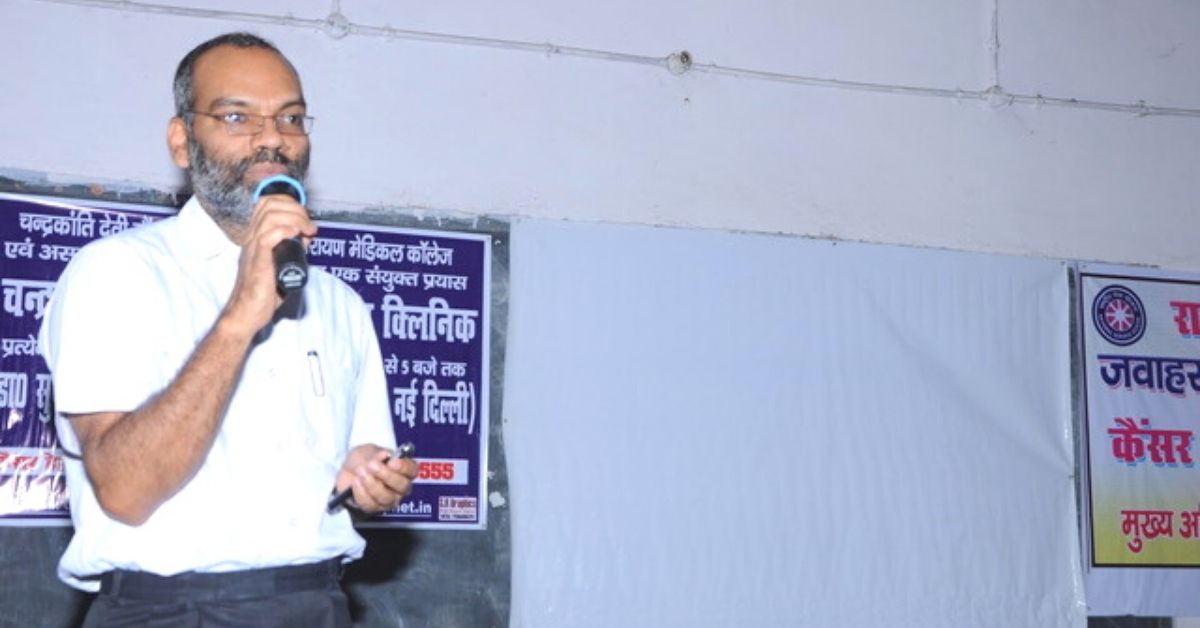
super-30Based out of Patna, Anand Kumar lost his father at a young age and his family faced many financial hardships early on. There was a time when the entire family was dependent on his mother’s earnings. At a point in time he even delivered home made papad’s made by his mother, to shops and homes on his bicycle. However, gifted with superb mathematical skills, he was encouraged by friends and family to pursue his dream of higher studies abroad. In 1992, he founded the Ramanujam School of Mathematics as a club where anyone could join free of any cost and attend training camps.

In 1994, he secured an admission in Cambridge and Sheffield universities but his financial health did not allow him to pursue his dreams. However he did not let that deter him. He converted his club into a coaching institute providing coaching for various competitive examinations. At the same time, he decided that what happened to him should not happen to others. Financial health should not come in the way of talent being recognized and nurtured.

This led to the creation of the Super 30 initiative.

This initiative provides free coaching, boarding and lodging to 30 talented students from financially weak backgrounds. These students are handpicked by Anand and his team and trained for the IIT JEE entrance exam. This initiative is funded by the money he earns from his coaching institute where he teaches up to 500 students in a single batch, thrice a week for two and a half hours each. He teaches upto 4 such batches at a time and charges these students a very reasonable 4000 rupees for the 11-month course. This money is channeled into the Super 30 initiative. The results for the Super 30 initiative have been extremely encouraging.

Founded in 2003, 18 students made it to the IIT’s in the founding year. The number rose to 22 in 2004 to 26 in 2005 to 28 in 2006 and 2007 and up to 30 in 2008 and 2009. Yes that’s correct! In the last two years, the super 30 boasts of a cent percent record with 30 out of 30 students coming through.

Today Anand Kumar has come a long way. His dream of going abroad has been fulfilled and he has been a speaker at Atlanta, where he addressed an annual conference organized by the American Mathematics Society and the Mathematics Association of America. He also has made contributions to The Mathematical Gazette and the Mathematics Spectrum, both reputed journals published from the UK, and Parabola, published in Australia. But he derives most satisfaction from the fact that he has helped talented students from the lower strata of society to fulfill their dreams. With future plans of spotting and nurturing talent in young students, he now intends to set up schools for the financially weak segment of society and leverage a similar business model. So that talent does not fade away for want of finances, and education does not remain the privilege of the financially stable only.
Visit the Super 30 website to read more about the wonderful initiative.

Image Courtesy: The Hindu

Read other articles by Utkarsh Joshi here.

English Radio Lessons – What an Idea!

Indian television afficionados may have come across an advertisement of a mobile service provider depicting how a mobile phone could be used to spread education in remote areas. It got us interested and we wanted to see whether such an idea (no reference to the company!) was actually being implemented. After some not-so-intensive news searching, we came across an article by BBC India’s Amarnath Tewary which describes how the radio is being used in Bihar to teach English to school children.

The Bihar Education Project, in collaboration with the Education Development Center (a US-based organization), launched this innovative teaching idea in order to improve literacy of the state. Bihar currently has a literacy percentage of only 47%.

Amarnath Tewary reports:

The students are looking inquisitively at a radio set perched on a plastic chair in the middle of the classroom in the capital, Patna.
They are all waiting for a new English lesson to begin – on the radio. 

So, for half an hour, four days a week, millions of primary students in Bihar today learn English through this radio lesson.

The year-long interactive radio lessons are being broadcast by the four regional state-run All India Radio stations. The lessons cover seven million students attending 65,000 primary schools in all the 38 districts of the state.

And what does a student have to say about this?:

“It is very easy to learn English on radio. Every day we wait for this class. Even if the teacher is not in the class we learn and enjoy the programme,” a student, Sakshi Kumari, said. 

The state government has granted a 1000 rupees to every school to enable them to buy a radio. And the benefits of such initiatives in Bihar are told in this para:

Interestingly, backward and dirt-poor Bihar appears to be a trend setter here – a recent federal government report found that school students in the state are now faring better in English and mathematics than anywhere else in the country. 

The article is very well written and also gives you the perspective of the teachers in these schools. It is truly inspiring to see such initiatives being taken in the field of education, which is perhaps one of the most important areas requiring development in our country.
Last, but not the least, we couldn’t help but add the punch line – What an Idea!

Image courtesy: Prashant Ravi from BBC News

Innovations At Times Of Crisis

The Kosi river disaster in Bihar earlier this year caused widespread devastation. However, if we try to look for a silver lining or at least something to appreciate, we can talk about the ‘babus’ who tried to bring in new technologies and innovations to help the victims pick up the pieces of their lives, and start again. Be it toilets made of bamboo or software for tracking missing persons, government officials are playing an important role in rebuilding the community.

Bamboo is available in plenty, and the people are being encouraged to use it to build their homes as well as furniture for use and sale. The “bamboo economy” plan is being drawn by the Bihar Government to ensure that the workers are guaranteed an income and training programs to help generate employment. Women’s self help groups are also being set up to promote the bamboo revolution. Alok Kumar Gupta writes in Down to Earth:

Officers claim that a bamboo revolution is on the cards. Now that floodwaters are receding, H C Sirohi, commissioner of Saharsa division and in charge of flood relief operations, has launched a training programme to make bamboo furniture. “At first all we saw were resigned faces of thousands of flood victims grieving the death of their dear ones. We then decided to use local resources to help them rebuild their lives. Bamboo seemed the obvious answer as it grows here in plenty and we believe it will usher in employment opportunities,” Sirohi said.

The Bihar government has finalized a blueprint to create a bamboo economy in the flood-hit northern and central Bihar. Talks with the National Bamboo Mission have begun for setting up women’s self-help groups. National Bamboo Mission is a government body created by the Union Ministry of Agriculture to promote the bamboo sector. The government has assured flood victims that it would purchase their bamboo furniture for schools and government offices, replacing wooden benches. It also plans to sell the furniture in other states.

Besides relief work, the Government’s other priority has been tracking missing persons. In the aftermath of the calamity, thousands of people have been displaced from their homes, and it is an enormous task to locate these people. The government had to develop new software with the help of IT companies, since the IBM software previously used in Sri Lanka after the 2004 tsunami worked on details like passport number and driving license, which most people in the flood-hit districts did not possess.

This spurred Jeevika to develop a software with the help of IT majors. This one is based on data such as the name of the missing person, his village, block and district. Called the Missing Person Tracking System (MPTS), this software is being used to track down lost relatives.

“Data collected by Jeevika and the officials from flood-hit districts is entered into the software. We have ensured that names of the district, block and village are automatically corrected even if wrong spellings are keyed. Over a dozen families have been re-united with their missing members,” added Choudhary.

The state has also been doing a commendable job of monitoring relief camps and plugging in any gaps. “Mobile inspectors” with GPRS-enabled phones have been deployed by the State Disaster Management Cell to travel incognito to these camps and take photographs of their conditions.

The most innovative invention, however, came from the flood victims themselves. Stranded people created makeshift boats from six pieces of thick banana stems tied together using a local patua fibre. Such boats could stay afloat for a while since the banana stems absorb water and expand, thus tightening the joints held by the ropes. This is so original and useful that the army and navy men present in the rescue operations have recommended its study for possible uses. We would like to salute the Indian spirit, which can come up with amazing inventions even in the middle of a storm.

Read the complete article here.
Image Courtesy: Down to Earth

A Flood of Unlikely Heroes

They are afflicted with polio and are disabled. Yet these two casual labourers and friends – Amrendra Shukla and Ravi Paswan – have saved more than 40 people from getting swept away in the disastrous floods of Bihar. The old adage “Where there’s a will, there’s a way” has never been more beautifully depicted as by these two brave souls, reported by Amarnath Tewary in BBC News:

“Before our eyes little children, women and elderly people were being swept away in the strong currents of the flood water,” Shukla told the BBC.

An idea came to him and Paswan to tie three empty drums together with thick bamboo sticks and then place a wooden bed on top.

They initially took six children on it for 3km (1.8 miles) in neck-deep water to reach a safer place.

Over three days they evacuated over 40 people – mostly children, women and elderly people.


The disastrous floods in Bihar has brought in its wake untold tragedy and hardships on people. However, from the wreck have emerged many heroes who never really had any intentions of becoming messiahs for the millions trapped in misery. It was circumstances and their inherent qualities that made them look inwards and turned them into great comforts for the suffering masses.

Aastha Volunteers

Aastha Volunteers

Another one of them is Anand Mohan, a recent graduate of Indian Institute of Technology (IIT), who intended to return to his home in Bihar for a few days before joining a multinational in Australia. Destiny had something else in store for him, and when he came to Sharsha, he found his hometown ravaged by the floods.

Mohan could not resist, and plunged into the relief operations. He was soon joined by more like-minded people, one of which was Ravi Verma, and together they formed a group called Aastha (Faith) Volunteers. They started collecting donations from friends and local people and providing help and support to the people in the relief camps. Aastha now has a team of 15 dedicated volunteers managing more than 300 flood victims.

“Now we do not want to go anywhere else. Here we’re getting everything from these people. They’re taking care of us more than the government or other agencies,” said Sanjay Kumar Mukhia from the neighbouring district of Madhepura.

He lost 16 members of his family in floods caused by rampaging rivers.

“My three year’s old son survived only because of milk supplied by these bhaiyas, (brothers),” said another flood victim, Ghuran Ram.

Vijendra Rai’s three children were suffering from acute diarrhoea – but they all survived thanks to timely medical help from Aastha volunteers.


What is even more admirable is the way these youths shrug off media attention that most other proclaimed organizations, government bodies and media houses clamour for. Theirs is the spirit that The Better India strives for.


Read the complete BBC article here.

Image Courtesy: BBC News

Link Courtesy: Ramanand Nayak. Thanks.

Calendar

September 2010
M T W T F S S
« Aug    
 12345
6789101112
13141516171819
20212223242526
27282930  

Recent Comments

PROMOTION

"Neumonia and Other Sketch Stories" - A collection of sketch stories. Download the e-book for free. Click on the book cover below.
"The observations are acute: the sound of high heels on asphalt, the bit about how all BPO employees lose their hair very fast are spot-on. This book is a better, shorter alternative to any Sunday movie on TV. It's a little jewel" - Hindustan Times