Interview: Smita Ram – Rang De

Rang De

In our lives whenever there is a financial emergency we have the privilege of access to a whole gamut of banking and financial services. We could walk into a bank avail a loan , use our credit cards. But there is a vast majority in our country who don’t even have access to a bank account.

That is where ‘Microcredit’ comes into play. Microcredit refers to providing small loans to low income households – mostly to start a micro-enterprise like livestock rearing, tailoring, grocery store etc. These income generating activities enable poor households to become self-reliant and get out of the vicious circle of poverty.

Rang De is not just any peer to peer micro lending platform. Their field partners are non-profit organizations who believe in the organization’s mission to reach out to the truly undeserved. Their terms and conditions are quite explicitly stated on the portal which includes 1) Every borrower on Rang De is aware that his/her photograph is displayed on the portal 2) All Rang De borrowers pay 8.5%flat p.a. on business loans and 5% flat p.a. on education loans.

One can simply register on rangde.org to become a social investor. Choose borrowers to make a social investment of as little as Rs. 100. At the end of the repayment schedule, the investor receives a 2% interest on the investment.

Here’s an interview with Smita Ram, Co-Founder & COO , Rang De:

What was the whole idea behind starting Rang De?

The idea behind starting Rang De was to create a sustainable initiative that will address a problem at its roots. Prior to starting Rang De, we were dabbling with several ideas relating to child labor, domestic help, media etc.

But soon we realized that most of these problems had poverty as its root cause and unless we address poverty, the rest will continue to exist. While we were researching these problems, Mr. Mohammed Yunus won the Nobel Prize in December 2006. That’s how we were introduced to the concept of micro-credit. Something that intrigued us was the interest rates that the borrower paid and how little people like us knew about the concept.

Thus Rang De was born as an initiative that facilitates small loans (micro-credit) for Indians that do not have access to credit. You can lend from Rs. 100 onwards on www.rangde.org to entrepreneurs identified by our partners across India. Join us to make poverty history in India!

What kind of hurdles you had to face during setting up the organization?

There were plenty of challenges right from registering the entity, to attracting talent to getting funds. We continue to face similar and other challenges but that is what makes working for Rang De enjoyable.

Rang De has a fabulous repayment rate, how do you guys achieve that?

We follow a model that is similar to the one propagated by Mr. Mohammed Yunus. We lend money usually to individuals in groups.The group could be a self help group or a joint liability group. In both cases, the group members vet each other and the group leader signs as a guarantor. The group also agrees to pitching in with the repayments if one of them fails to repay. This is the main reason for the repayment rate. Apart from this, we have a criteria for the selection of the borrowers which our field partners follow.

What has been the response of the social investors?

Our social investor base is growing slowly but steadily. We have a little more than 1000 social investors and in some sense, we are a close-knit community. Those who invested their money first have also now begun to invest their time to make Rang De more efficient.

In how many states does the organization have its presence?

We currently have a presence in 10 states – Karnataka, Andhra Pradesh, Tamil Nadu, Orissa, Kerala, Rajasthan, Uttar Pradesh,Maharashtra, Madhya Pradesh,West Bengal.

Although the impact is quite evident, could you tell us some anecdotes of the social impact of Rang De, on individuals and the community in general?

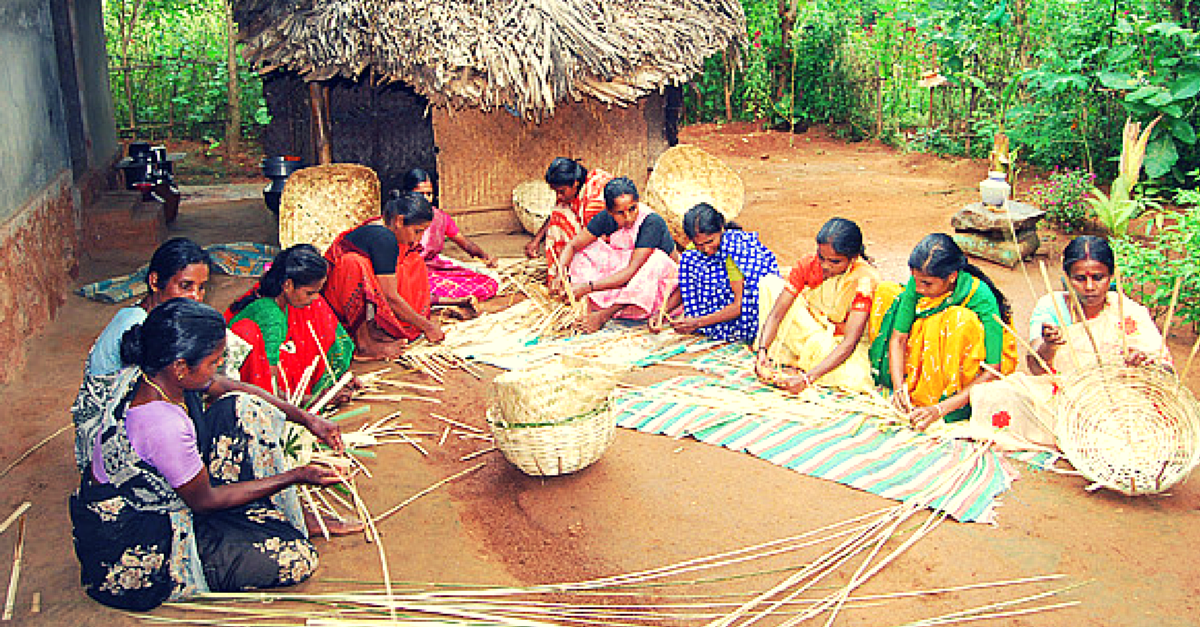
Women entrepreneurs we are reaching out to in Orissa are getting access to loans for the first time. Their loan size is as small as Rs.1000. They are able to borrow money for the first time because it is affordable.

Any plans of making it a for-profit organization?

No. We do not plan to make it a for-profit organization.

How do you plan to take it forward? Where do you see it 5 years down the line?

We would like to be able to reach out to people across all states in India and go deeper into the territories where we have started to work. We would also like to provide a wide range of social investing options to the investors and make social investing a norm.

The Better India team wishes Rang De all the best of their mission to create a macro impact through micro credit.

Contact Details
Do visit www.rangde.org for more info
Twitter: http://twitter.com/rangde
Facebook: http://apps.facebook.com/causes/127485?m=96aaaf39/

Solar Power to Light Up Hawker Shops

Those signature kerosene and petromax lamps at hawker shops have decorated our streets during its busy evenings for years now. They are a hawker’s constant companion and a basic necessity for their shops. But did you know that a hawker has to spend around 250-300 rupees every month for these lights? Parting with this big chunk of money from the handful that he earns becomes quite a burden. Accolades to Urja Unlimited, who understood this difficulty faced by the hawkers and came up with a fine solution – replacing the fuel lamps with solar power.

Urja Unlimited is an organization which was born with a novel idea of providing ‘energy for all’ through renewable energy. Urja aims to serve every village, town and city in India with efficient energy solutions. With its vision in mind, Urja initiated the project to support street hawkers and aspires to reach a million hawkers with their lanterns.

The main aim of the project is to completely eliminate the recurring fuel expenditure on the hawkers. Moreover, as we all know, there are environmental benefits attached to giving up the use exhaustible fuels. Also, the hawker gets to work in a fume free environment.

Over 150 hawkers in Faridabad enjoy the solar power

Solar power comes as a breather for hawkersThe first step towards energy efficiency was Urja Unlimited’s solar lantern project in Faridabad. Over 150 hawkers have opted for Urja’s lanterns which have given them a breather with their expenses. The brighter solar lamps have enlivened their surroundings, gotten rid of the risk of health hazards and brightened the faces of the hawkers.

Savitri Pandey, a hawker in Faridabad who has switched to Urja’s lantern, mentioned that she is now able to devote the cost savings on giving up the kerosene lamps to her children’s tuition needs. Saina Bano says that “Ab har mahina mittiktel (kerosene oil) chori se kharidane kay jhanjhat khatam.” Ashok, a hawker suffering from Tuberculosis, said that he is now spending less on his medical expenses.

Support to spread the cause

Replicating the success and spreading awareness across the country is a big task in the hands of Urja Unlimited now. The constraint is that the equipment is slightly priced on the higher side, around 2600 to 3600 rupees. Logically, the amount is equivalent to what the hawkers would spend over a year for their fuel costs and they need not spend any more on their fuels after this initial investment. Also, the lanterns can easily serve the users for almost 5 to 7 years. Urja intends to bring down the cost that could come on the hawkers by entering into partnerships with micro finance institutions, corporates and other philanthropic organizations.

How can you help this initiative?

With more people like you supporting the cause, we are sure that we can make some difference to the lives of more street hawkers. Here are a few things that you can do:

  • Introduce Urja Unlimited to your company and encourage a corporate social responsibility initiative
  • Contact Urja Unlimited to find out more about the initiative and help them serve better
  • Help spread awareness about the use of renewable energy

You can know more about the organization at www.urjaunlimited.in. Urja and The Better India shall assist you in sharing your contributions.

Village Service Trust

Village Services Trust (VST) is an NGO based in Tamil Nadu with a mission to facilitate rural development through community development projects. Their vision is to “serve the basic needs and priorities of the socially, educationally and economically backward sections of women, foster rehabilitation and overall development of the physically challenged and provide utmost care and support for child welfare”.

VST’s main focus areas are women’s empowerment and child welfare and they currently operate in the Dindigul and Kanyakumari districts of Tamil Nadu. Many of their initiatives, targeting the areas of education, health and overall welfare, are implemented in tandem with the state government and other NGOs operating in these areas.

VST has enabled the formation of women’s group in village to campaign for better representation and involvement in key decision making processes. They also have implemented a Grameen Bank model micro credit system that is supported by Self Help Groups (SHGs). These SHGs have also been successful in building community network within these societies for women and the marginalised.

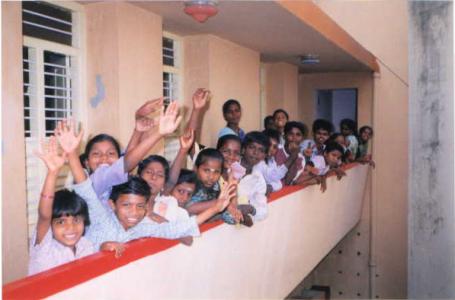
vst-children-at-shelter

VST also runs health centers to provide medical, maternity consultations and counselling. In collaboration with the Aravind hospital, Madurai, VST has organized eye and dental camps. They are also active in spreading awareness about personal hygiene, HIV, STDs, immunization and family planning.

The other major focus for VST is child welfare with emphasis on rehabilitation of abandoned and abused children. VST rescues at-risk children and provides them shelter, education, vocational training and, more importantly, an opportunity to lead a normal life again. The child rehabilitation project has been operational since 1999 at their Dindigul center. It is estimated that there are 3500 children living on the streets of Dindigul.

Many of the abandoned or run-away children seek work in factories and shops to earn a living. Their predicament makes them easy victims of sexual, labor and/or drug abuse. VST seeks to help these children by help strengthen family structure to minimize run-aways, scouting for and reaching out to the abandoned as early as possible and shelter them before abuse. They also rescue abused children and provide a safe shelter where they can grow in a nurturing environment.

At present, there at 83 children being cared for at the shelter. It takes almost Rs. 1.5 Lakhs or $3,000 a month to sustain this project, to provide for children’s basic needs ie food, clothing, health care, education etc.

The child rehabilitation project currently has a crisis of funds. VST is seeking donations to help them continue operations and provide for these children.

Below is the link to their website which is enabled with a Paypal system for donations. Your generosity will be greatly appreciated by VST and the children. You can also choose to sponsor a child at the shelter.

Village Services Trust

Please do visit the website to read more about the work that they are doing on the ground.

You can also contact them at

The Village Service Trust

Michaelpalayam – 624215
Nilakottai Taluk
Dindigul District
Tamil Nadu

Phone: +91 (451) 6531 997
Mobile: +91 (0) 995 286 4440 or +91 (0) 984 212 4729
Fax: +91 (451) 242 0430 or +91 (451) 244 0062

Email: thevst[at]rediffmail[dot]com

RangDe – An Online Microfinance Company

rangdeI recently came across RangDe.org which takes the concept of microfinance to the online world.

It serves as a bridge between ’social investors’ and people who need small amounts of money to improve their business and financial position. For your investment, you stand to earn 3.5% per annum. Of course, this is not guaranteed since the money is being lent to low income households and the probability of default could be high. Having said that, it is interesting to see from their statistics that 100% of the loans have been paid back so far.

You can go through the list of borrowers, with a brief on why they need that extra money and you can then decide to invest accordingly. If you don’t have the time to select a borrower, you can also do something known as “Smart Invest” where RangDe picks borrowers on their behalf.

To cover their costs, RangDe charges an interest rate of 8.5% pa to the borrowers and retains 5% of that, handing over the remaining 3.5% to you, the investor.

It is an interesting service, and it will be all the more interesting to see how they fare in the coming years. Visit Rangde.org and see if you would like to be a part of their social investment spectrum.

This article originally appeared here.

For Those Who Dare To Dream

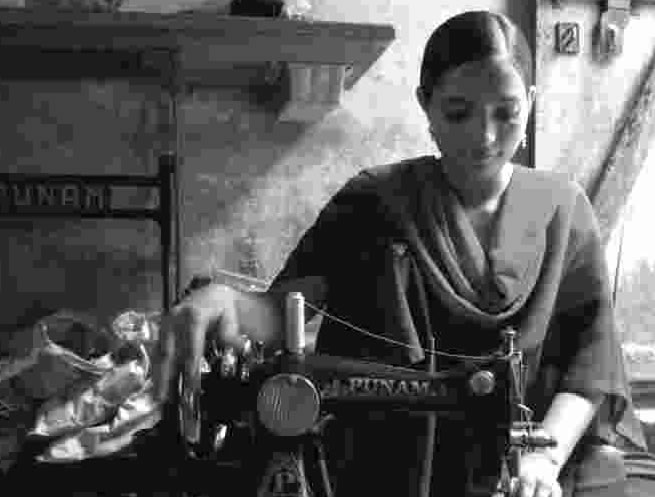
Twenty-five year old Rehana has faced several hardships in her short life thus far. As a nineteen year old, she had to take up the mantle of the household, when her father, a salesman in a local cycle shop, fell seriously ill. The eldest of 4 unmarried sisters, she started stitching clothes for her neighbours to earn a living. Today, she runs a successful clothes boutique and a general store in her village Chandwak, near Jaunpur. Rehana is also the National Winner (North) in the recently concluded Citi Micro Entrepreneur Awards.

Rehana was aided in her progress by the NGO, Nazir Art Seva Samiti, which helped her in getting an initial loan and guidance for setting up a tailoring unit. While providing her with marketing opportunities to expand her reach, the NGO also helped her obtain a second seed capital when Rehana decided to set up a general store in her house. The support provided by the NGO and Rehana’s own determination has changed her life as well as improved lives of others around her.

Presently, Rehana has 5 employees, 3 at her tailoring unit and 2 at the store. She has borne educational expenses for some who have started their own enterprise. She also provides free training to needy women at her boutique and later on engages some of them in the work.

The work done by these NGOs in uplifting the lot of the underprivileged and affording them entrepreneurship opportunities is highly commendable. This is one of the several stories of successful micro entrepreneurs who have been helped by local NGOs to achieve social and economic empowerment. Click here to read the other inspiring tales of struggle and success.

Link Courtesy: Arvind Singh. Thanks a ton!
Image Courtesy: Citi Micro Entrepreneur Awards Brochure

Transforming lives in the Shimla Hills

The hills of Shimla are rich and fertile. All major agricultural products are grown here, including  wheat, rice, pulses, potatoes, ginger, turmeric and many other fruits and vegetables. However, in the early 1970s, the problem was that the menfolk of this area would squander away all their income on liquor. Women were deserted and led miserable lives. Enter Subhash Mendhapurkar who transformed the lives of the women in the Shimla Hills.

Kallol Bhattacherjee of The Week writes this extensive report on Subhash Mendhapurkar and how he brought about a revolution in the hills of Shimla:

Mendhapurkar knew it was not going to be easy in Shimla. He started off in a room in a youth hostel near Jagjit Nagar village. The chain-smoking young man punching the keys on a rickety Remington intrigued the local people. He started introducing the women to feminist thoughts. “Sometimes he would stay up for weeks as people came continuously to consult him,” said Vimla Devi. 

Under his guidance, the women learnt of a rule that every liquor vendor needs to seek permission from the Gram Panchayat to open a store.
This then led to more active involvement from the women:

The hills were changing. In 1983, Mendhapurkar ended his association with SWRC and started Sutra (Social Uplift Through Rural Action) with rural women as members.
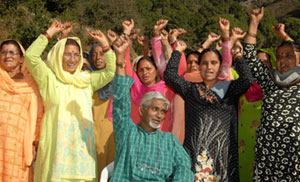
“We told liquor vendors to seek permission of the panchayat members before vending liquor in the neighbourhood,” said Leela Devi, one of the pioneers of Sutra. The panchayat was still under the thumb of the menfolk, and female panchayat members’ role was limited to making tea and pakodas for the male members. Mendhapurkar asked the women to decide if they required a liquor vendor in their neighbourhood. “If not, you should form majority in the panchayat meetings and convey your opposition through mahila mandalis,” he told them. The women just did that and nixed every attempt to open new liquor shops. “We mobilised all the women suffering from alcoholic husbands and ensured that they formed majority in every panchayat meeting,” said Vimla Devi, who emerged as a prominent anti-liquor crusader. 
Subhash just didn’t stop there. He also looked actively in to the issues faced by the women who were deeply reliant on the mountain lands for their living:

The forest department had been planting thousands of pine trees on the hill slopes to prevent soil erosion. But it was of no help to small women entrepreneurs. “What is good for the forest department is often not useful for women. They want small fruit trees that hold soil, and grass which is good for their cows,” said Mendhapurkar. How to use mountains for social benefit without triggering landslides in the rains was a challenge that pushed him to understand them better. Now he visits the International Centre for Integrated Mountain Development, Kathmandu, to deliver an annual lecture in December. According to Mendhapurkar, since women control the rural economy in the Shimla Hills, and since they benefit from forestry, the Shimla-Kassauli region of the Shivalik ranges should be utilised for female health and their economy. 

Subhash then went ahead and introduced the concept of water harvesting to help women manage water resources better. The association started by him, Sutra, became immensely popular. After focusing on these livelihood issues, Subhash then turned to healthcare and micro-credit to make them more independent:

“Denied care and affection, and always illiterate, these women did not know how to improve their condition,” he said, narrating a campaign he began in the mid-1980s for single women. It is known as Ekal Naari Shakti Sangathan or simply ‘ekal’ in the hills. 

Hearing of the campaign in the hills, women from all over Himachal Pradesh sent requests for similar help. In Hamirpur and Una districts, a large number of single women were HIV+ thanks to their husbands who were migrant workers. In April this year, around 3,000 single women from rural Himachal marched to Shimla, and Chief Minister Prem Kumar Dhumal promised them that the rural single women would get free treatment for all ailments in government hospitals. “We want respect for single women of Himachal villages. We should not be treated differently,” said Nirmal Chandel, leader of Ekal. By 2009, Ekal will launch its pan-Indian avatar.

The impact of all that Subhash has done is there for everyone to see. The article says:

The impact of Mendhapurkar’s work is best felt in the way the sex ratio in Solan district has stabilised at 940 females to 1,000 males, which was much lower earlier. 

Truly, what Subhash has managed to achieve is a lot and beyond what can be put in words in a single article. And of course, the hills have changed. The Better India salutes the spirit of Subhash Mendhapurkar and all his associates who helped bring about this change.

Read the complete article which covers the initial days of Subhash and how he managed to bring about these transformations.

Image courtesy: Arvind Jain of The Week.

Act Now For The Better India.

Bank A Billion

India is one of the biggest unbanked countries in the world. Lack of a permanent address and other collateral keeps millions away from the banking and credit sector, which could otherwise improve their lives by a huge margin. In order to facilitate this financial inclusion, Grameen Solutions (the Microfinance powerhouse founded by Dr. Muhammad Yunus of Bangladesh) and Obopay (the service provider for payments via mobile phones) have come together to form the Grameen-Obopay Bank A Billion initiative. This will provide access to financial services like cross-border remittances, money transfers, payments, and saving and credit accounts through the omnipresent mobile platform.

Priya Kekre reports in CIOL:

One of the biggest challenges the world faces today is financial inclusion or what one may call banking the unbanked sectors. There are many research and economic studies that state that when a critical mass of people or consumers are brought into the banking sector it has a multiplier effect on the countrys GDP, leading to economic growth. It is estimated that the banking sector itself grows by 10x while the countrys economic embassy undergoes a revamp. If millions of people are included into the banked sector, they get access to credit, savings, financial services, and remittances, which automatically increases their purchasing and investment power, says Vijay Balakrishnan, CMO, Obopay. Hence, many developing nations are looking at financial inclusion as an economic and strategic objective.

The thrust is on the inclusion of the poorest sections of society who cannot afford banking and financial services nor have the credit-worthiness to be eligible for these services, but have basic earning capacity. The mobile phone having become an easily available commodity all over the country, providing such solutions on this platform becomes the best way forward. The concept of ‘mobile micro credit’ is here to stay, and hopefully will reach and uplift a billion of the poorest in India and rest of the world.

Read the complete article here.

Home Page Image Courtesy: GrameenFoundation.org

Micro-credit at the Post Office

What makes more sense than reaching the poorest sections of the society through the one place easily accessible to them – the post office! The National Bank for Agriculture and Rural Development (NABARD) has tied up with the largest postal service in the world – India Post – to make microcredit available to female self-help groups (SHGs) in the remotest parts of the country. An SHG is described by Professor Annuppalle of Sri Venkateswara University as “small voluntary association of poor people, preferably from the same socio-economic background.”


Lori Curtis reports in MicroCapital:


The loans are set up so that NABARD provides the funds and the Post Office disburses the loans to SHGs. The interest rate is nine percent, three percent of which is commission for the Post Office, the rest is returned to NABARD. SHGs must open accounts with their local post office, and once they are identified by NGOs or recommended by NABARD they are watched for six months. A committee made up of representatives from NABARD, relevant NGOs and the Department of Post determine a credit rating and those SHGs with qualifying marks are eligible for these loans. The upper loan limit is Rs 24,000 (USD 515) or four times the deposit the SHG has in their post office.

The project which was initiated in two districts in Tamil Nadu as a pilot project in 2006 has now been extended to include the Northeast and 8 more states. A total of Rs.1.35 million has been disbursed to 165 SHGs in Tamil Nadu.

The National Bank for Agriculture and Rural Development (NABARD) was founded in 1982 as part of a government mandate to facilitate credit flow for promotion and development of agriculture, small-scale industries and rural crafts. As of March 2006, 33 million individuals have been linked to microcredit through this program.

With 155,333 post offices in India, of which 139,074 are in rural areas, there is great potential for this scheme to change the lives of millions living below the poverty line, and provide them a means of sustained livelihood.

Read the complete article here.

Link Credit: Asha P. Thanks for contributing!

Image Courtesy: http://sophieandstan.blogspot.com/

Calendar

September 2010
M T W T F S S
« Aug    
 12345
6789101112
13141516171819
20212223242526
27282930  

Recent Comments

PROMOTION

"Neumonia and Other Sketch Stories" - A collection of sketch stories. Download the e-book for free. Click on the book cover below.
"The observations are acute: the sound of high heels on asphalt, the bit about how all BPO employees lose their hair very fast are spot-on. This book is a better, shorter alternative to any Sunday movie on TV. It's a little jewel" - Hindustan Times