






The Apple Project

Background

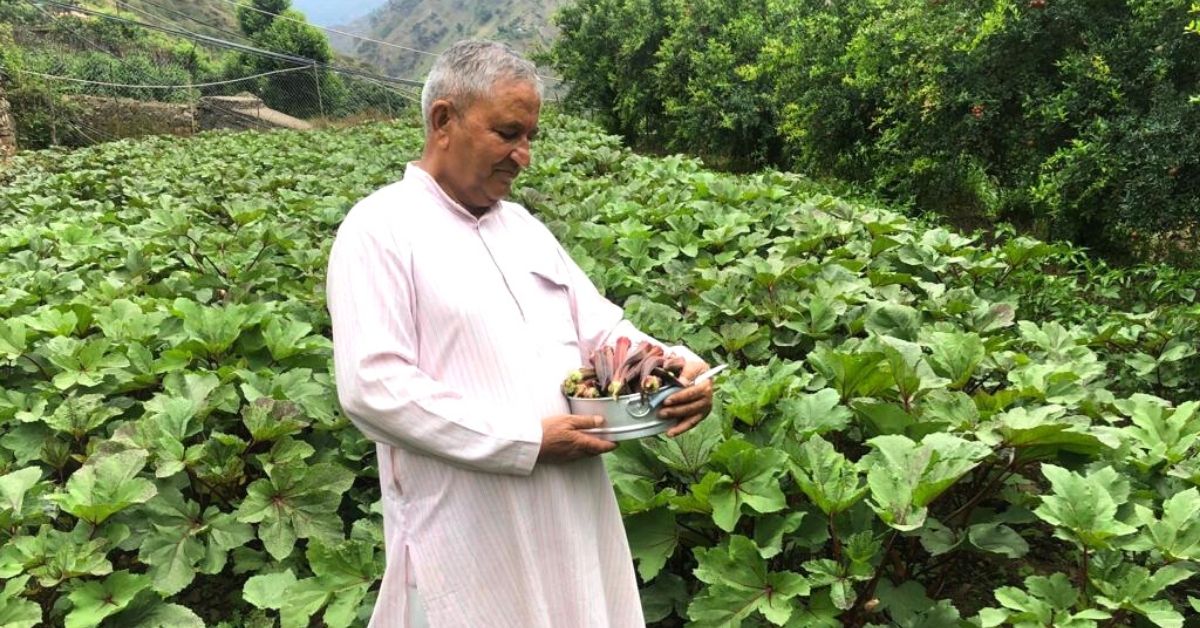
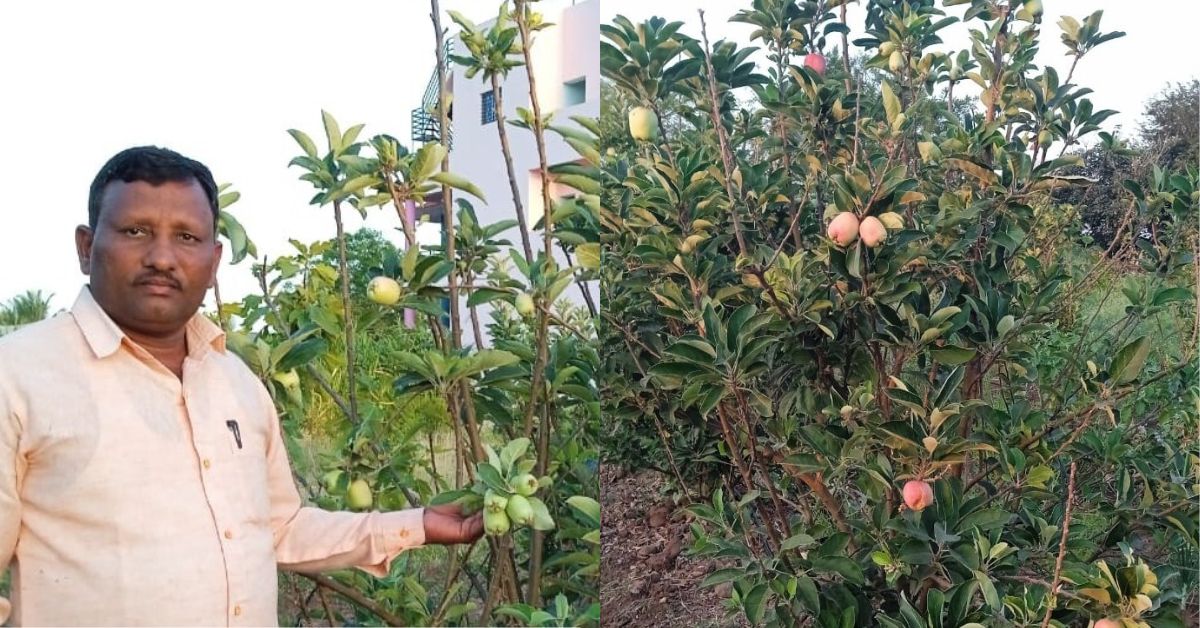
The apple project consists of four decentralised apple collection centres. Farmers are encouraged to join a cooperative, through which they can process and sell their produce jointly at better prices. The goal of the project is to facilitate a process of empowerment among small-scale apple farmers in order to promote sustainable socio-economic development through promotion of a value-addition business chain, owned and led by farmers themselves.

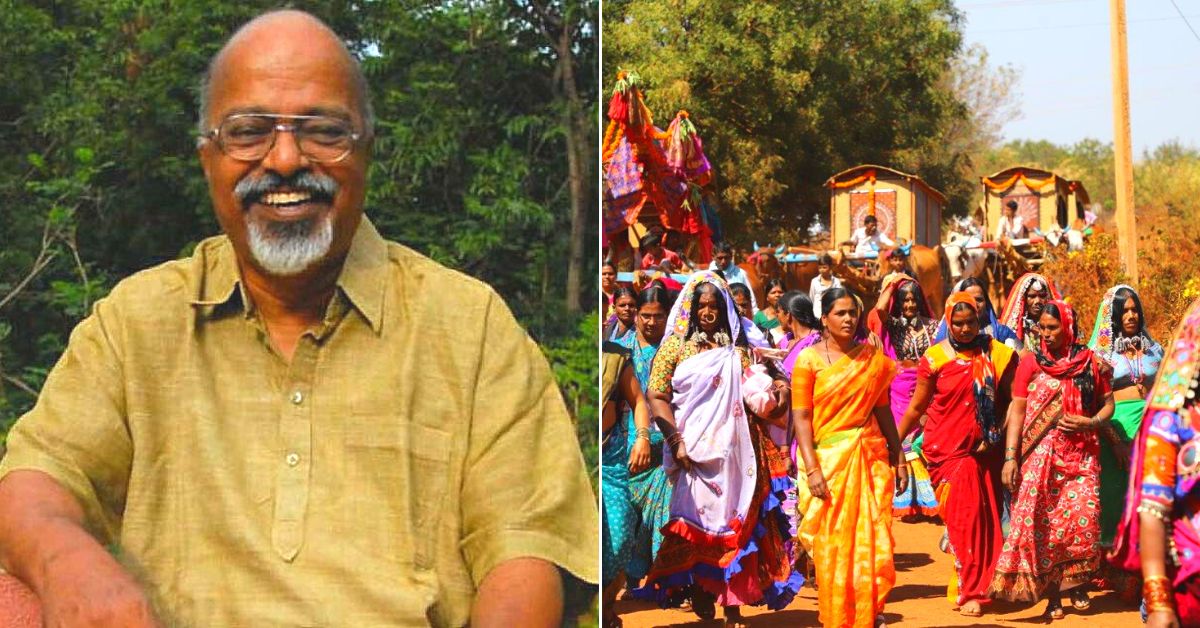
In this article, we talk about a successful cooperative initiative called The Apple Project launched by Shri Jagdamba Samiti (SJS), an NGO led by Mr. L.P. Semwal.

SJS launched this project in Uttarakhand with the realisation that small farmers in a market-oriented agribusiness get further marginalised mainly due to the dominance of mandis, a chain of well-organised intermediaries who control the entire process from credit supply for farm inputs, transportation and marketing of produce. The apple project hence strives to create a model of business-driven, decentralised independent and small-scale production with coordinated arrangements for processing and marketing by providing technical, managerial and investment support to enable farmers collectively to move up the value chain. The ‘collective’ feature of the business model is promoted to save individual time, distribute risk, maintain price assurance, pursue damage control and save on handling costs such as storage and transportation.

Empowerment beyond economic gains

The Centre apparently did have an empowering effect among the community beyond mere economic gains. First, market dynamics and the apple business as such became more transparent and easier to understand for everyone. Thereby, people were enabled to participate actively and accumulate broader ownership instead of depending on traders and middlemen. Also, people were encouraged to view and understand power no longer purely along the lines of traditional class boundaries, but become aware of the power and possibilities for participation they have. Also, the Centre has an empowering effect on women. It was for instance repeatedly noted that women were for the first time participating in public meetings, and daring to speak up in public.

Breaking the prevalent market cycle

A main strategy of the Apple Project is to break the dependency of small and marginal farmers on middlemen through a process of a joint marketing via the Centre. This has both strong economic effects, as it raises the farmers’ direct gains significantly, and empowers them by reducing their risk of being exploited by middlemen. However, breaking entirely away from a highly organised network of middlemen is not an easy task. Middlemen still keep a tight control of crucial stages of growing as well as apples’ post-harvest processing. Sometimes, middlemen also operate transport services and buy apples from farmers at their orchards, but at a very low price. It is hence not easy for small farmers to delink themselves from the system controlled by middlemen. A sustainable, comprehensive alternative system should be in place.

The role of SJS as an external agent

The commitment, entrepreneurial competence and perseverance of the leadership of the farmers’ association and the Centre staff have been the main contributory factors for the success of business operations. SJS as an external agent has, however, played a distinctive role as a facilitator of the process. SJS’s main contribution has been to come up with an innovative business model for small and marginal apple growers and to build capacities of farmers to own and run such a business operation. SJS’s role in this regard has been building capacities of farmers in general and leadership of the farmers’ association in particular. The other important role that SJS has played as an external agent is to mediate power-play in relation to forming the farmers’ association.

Matching economic goals with social goals

The uniqueness of the Apple Project is its business model which is based on the functioning of the business operations whilst at the same ensuring social goals. If economic benefits are only used for consumption purposes there is no clear link to social change. Hence, it is important to monitor what the money is spent for (e.g. education, better health care etc.).

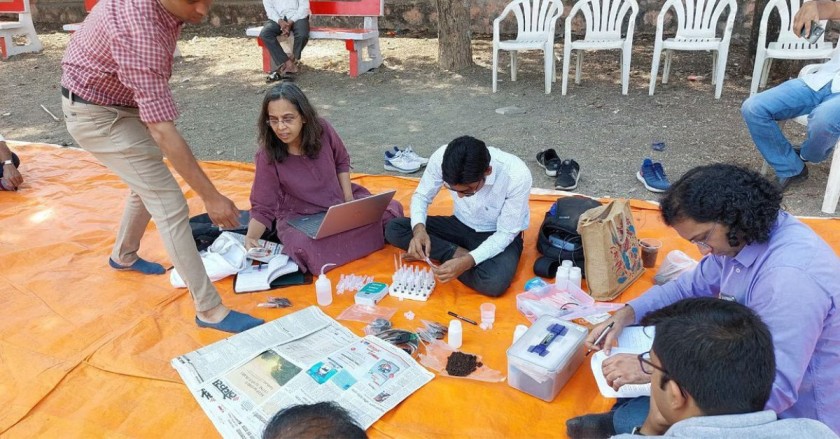
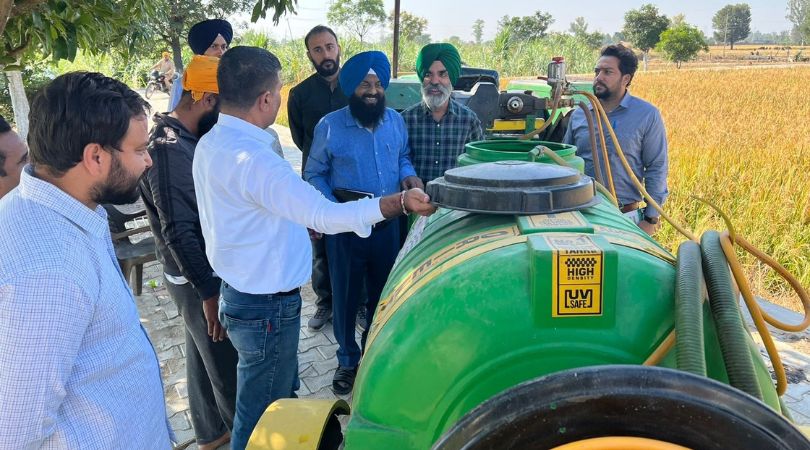
Story Telling Workshop for the Apple Farmers (Courtesy: CDC)

Story Telling Workshop for the Apple Farmers (Courtesy: CDC)


Economic empowerment alongside social interventions is required in order to stimulate long-term social change. SJS is also aware that joint ownership of the business operations alone will not automatically deliver social goals. The new form of collective ownership is an alternative to the form of organisations hitherto established in the village which were dominated by the Sayanas. SJS is cautious that opposing an existent power structure can lead to the unintended creation of another power structure. This is a major concern for the future.

Promoting a value-driven business model

Organising small and marginal apple growers is not simply an economic activity. The story of apple growers in Bawar area suggests that power structures and politics play a major role in village life and an economic activity cannot circumvent or keep aloof from such realities. The new farmers’ association and the Centre promoted a principle of political neutrality and a leadership model which is based on competence instead of party affiliations. Promoting a new form of economic activity with a social goal based on political neutrality and competence had been possible due to the values of inclusiveness and tolerance of diversity, which the Centre stands for. Drivers of change must hence incorporate the values they aim to promote, and these should be reflected in all areas of operation.

Enabling farmers to jointly move up the economic chain

With support from private investors, originating from successful business families, a new model for advancement of small and marginal farmers is now being tested in India and other countries. This model is an attempt to find a healthy entry point for rural development by concentrating on setting-up healthy agro-businesses in which farmers themselves gradually gain economic ownership.
Similar to the self-help groups and cooperatives, the aim is to set-up healthy business in handling, processing and trading farmer’s commodities on a commercial basis. The main difference of the new approach is that the farmers are equal business partners of the investor: they will only gain full economic ownership if the investment is repaid fully. No paternalistic form of aid, but a sound economic partnership between an investor and a (farmer-owned) company. The investor assists the farmers in setting up commercially-run businesses (private Limiteds), based on a solid feasibility and business plan, and makes available a full (guaranteed) loan to the new company. The companies are to generate sufficient profit to pay back the loan, capitalize the company and invest in new profitable business ventures (allowing the farmer to move further up the value-addition chain). Part of the profit flows back to the farmers in the form of better prices for their commodities and possibly dividend payments.Some of the guiding principles behind the projects where the new model is being tested, are:

  1. Invest in profitable agro-business ventures – set up farmer-owned businesses, based on professional feasibility analysis and business plans.
  2. Farmers: equal business partners – farmers are not merely ‘beneficiaries’ or ‘the target group’, instead they are an equal business partner of the private business partner/investor
  3. Loan, no free money – the investment required is brought in by a private business partner, driven by its social corporate responsibility, rather than by its profit seeking objectives, but is to be repaid to sustain the model.
  4. Farmer ownership – as repayments are made on the investments, the economic ownership of the company is automatically transferred to the farmer groups.
  5. Continued strategic guidance by professional/business partners – whereas farmers are to gain 100% economic ownership over the business, and they are to be represented in the governing body (Board of Directors), the majority of the BoD will remain professional or business partners, to ensure that the long-term interest of the company and continued strategic guidance is secured.
  6. Invest, but also plough back profits – While investing in higher value-addition processing, the model is intended to plough back part of the profits to the farmers and into new economic activities in the region.
  7. Collective action to save time, energy & money
  8. Improve bargaining position
  9. Take out intermediaries – e.g. the middlemen or informal lenders.
  10. Overcome difficulties in handling & logistics – e.g. inaccessibility and transportation, especially in undulating terrains, leading to excessive wastage. Collectively, the farmers can more easily organize solutions or obtain external support (e.g. from (local) government or private sector).

The above article is excerpted from the original article by CDC with due permission from SJS.
All images courtesy CDC and SJS.

Transforming lives in the Shimla Hills

The hills of Shimla are rich and fertile. All major agricultural products are grown here, including  wheat, rice, pulses, potatoes, ginger, turmeric and many other fruits and vegetables. However, in the early 1970s, the problem was that the menfolk of this area would squander away all their income on liquor. Women were deserted and led miserable lives. Enter Subhash Mendhapurkar who transformed the lives of the women in the Shimla Hills.

Kallol Bhattacherjee of The Week writes this extensive report on Subhash Mendhapurkar and how he brought about a revolution in the hills of Shimla:

Mendhapurkar knew it was not going to be easy in Shimla. He started off in a room in a youth hostel near Jagjit Nagar village. The chain-smoking young man punching the keys on a rickety Remington intrigued the local people. He started introducing the women to feminist thoughts. “Sometimes he would stay up for weeks as people came continuously to consult him,” said Vimla Devi. 

Under his guidance, the women learnt of a rule that every liquor vendor needs to seek permission from the Gram Panchayat to open a store.
This then led to more active involvement from the women:

The hills were changing. In 1983, Mendhapurkar ended his association with SWRC and started Sutra (Social Uplift Through Rural Action) with rural women as members.
“We told liquor vendors to seek permission of the panchayat members before vending liquor in the neighbourhood,” said Leela Devi, one of the pioneers of Sutra. The panchayat was still under the thumb of the menfolk, and female panchayat members’ role was limited to making tea and pakodas for the male members. Mendhapurkar asked the women to decide if they required a liquor vendor in their neighbourhood. “If not, you should form majority in the panchayat meetings and convey your opposition through mahila mandalis,” he told them. The women just did that and nixed every attempt to open new liquor shops. “We mobilised all the women suffering from alcoholic husbands and ensured that they formed majority in every panchayat meeting,” said Vimla Devi, who emerged as a prominent anti-liquor crusader. 

Subhash just didn’t stop there. He also looked actively in to the issues faced by the women who were deeply reliant on the mountain lands for their living:

The forest department had been planting thousands of pine trees on the hill slopes to prevent soil erosion. But it was of no help to small women entrepreneurs. “What is good for the forest department is often not useful for women. They want small fruit trees that hold soil, and grass which is good for their cows,” said Mendhapurkar. How to use mountains for social benefit without triggering landslides in the rains was a challenge that pushed him to understand them better. Now he visits the International Centre for Integrated Mountain Development, Kathmandu, to deliver an annual lecture in December. According to Mendhapurkar, since women control the rural economy in the Shimla Hills, and since they benefit from forestry, the Shimla-Kassauli region of the Shivalik ranges should be utilised for female health and their economy. 

Subhash then went ahead and introduced the concept of water harvesting to help women manage water resources better. The association started by him, Sutra, became immensely popular. After focusing on these livelihood issues, Subhash then turned to healthcare and micro-credit to make them more independent:

“Denied care and affection, and always illiterate, these women did not know how to improve their condition,” he said, narrating a campaign he began in the mid-1980s for single women. It is known as Ekal Naari Shakti Sangathan or simply ‘ekal’ in the hills. 

Hearing of the campaign in the hills, women from all over Himachal Pradesh sent requests for similar help. In Hamirpur and Una districts, a large number of single women were HIV+ thanks to their husbands who were migrant workers. In April this year, around 3,000 single women from rural Himachal marched to Shimla, and Chief Minister Prem Kumar Dhumal promised them that the rural single women would get free treatment for all ailments in government hospitals. “We want respect for single women of Himachal villages. We should not be treated differently,” said Nirmal Chandel, leader of Ekal. By 2009, Ekal will launch its pan-Indian avatar.

The impact of all that Subhash has done is there for everyone to see. The article says:

The impact of Mendhapurkar’s work is best felt in the way the sex ratio in Solan district has stabilised at 940 females to 1,000 males, which was much lower earlier. 

Truly, what Subhash has managed to achieve is a lot and beyond what can be put in words in a single article. And of course, the hills have changed. The Better India salutes the spirit of Subhash Mendhapurkar and all his associates who helped bring about this change.

Read the complete article which covers the initial days of Subhash and how he managed to bring about these transformations.

Image courtesy: Arvind Jain of The Week.

Act Now For The Better India.

Mushrooming Growth and Prosperity

All Ritamoni Dueri of Jalukbari village near Sonapur in Assam knew about mushrooms was that people have sometimes died after consuming them. She had no idea that they could be cultivated or that they could supplement her family’s meager income and enable them to live their lives better. Two years after the concept was introduced to her and other families near her village by Mushroom Development Foundation (MDF) based in Guwahati, almost 1000 families in 50 villages in and around Sonapur are happily growing mushrooms and reaping its benefits. Samudra Gupta Kashyap tells more about this profitable initiative in the Indian Express:

Within Sonapur, the MDF has also taken up an interesting campaign to attract more villagers towards mushroom cultivation. The Sonapur Anchalik Kathfula Krishi Samiti has put up a board with comics and cartoons illustrating their messages in Sonapur’s weekly haat held every Saturday. “Three of our local boys were sent to Don Bosco Institute in Guwahati for a four-day workshop on cartoons and illustrations, and they are carrying out this campaign on our behalf,” said Prasanna Daimari, director of the Samiti. And to drive home the message further, the Samiti has now planned to provide half a kg of mushrooms free to the stall at the haat where villagers have their meals. 

Not only did MDF have its task cut out for encouraging cultivation of mushrooms in Sonapur, since most of the population was not aware of this crop, but it also had to work hard to cultivate a market in the area.

MDF, meanwhile, has built up its own mechanism to provide the vital marketing linkage to the Sonapur growers to sell their produce. “Since Guwahati is a huge market, most of the mushrooms produced in Sonapur are sold in the city,” said Pranjal Baruah, an Ashoka Fellow, who is also the general secretary of the Mushroom Development Foundation. “We have set a modest target of production of five kilos of mushrooms for each family. Even if we are able to increase the monthly income by even Rs 3,000 for each of the 200 families who have taken to commercial growing of mushrooms, it will be a big achievement,” added Baruah. 

The MDF is also popularising mushrooms among people who have never tasted it. “We are using our personal contacts to introduce mushrooms in wedding receptions and other parties. One out of ten such parties have already begun to serve its dishes,” he said.

With its proximity to Guwahati, Sonapur has immense potential to grow into a hub for supplying skilled labour to the city. This is another project being undertaken by MDF with various other entities like Sonapur College to bring about development of the area.

The MDF is also looking at taking up a few more schemes for skill development of the local population. “Sonapur can provide a large number of plumbers, mechanics, masons, carpenters and electricians to the city. We are looking for partners to provide such skills to the village youth,” said Pranjal Baruah. 

Looks like good work is mushrooming everywhere!

For the complete article, click here.

Act Now For The Better India.

Image Courtesy: www.worldcommunitycookbook.org

Prosperity from Rubber Plantations

Our previous post revealed how Bamboo is being used by victims of floods to rebuild their lives. Now, rubber plantations are leading to increasing prosperity among people of Goalpara district in Assam. A lot of success stories have emerged, largely centered around those who have taken to growing rubber trees in their farms. Rubber grows easily in the North East regions owing to large tracts of unused land and inexpensive labour. Not only is the money good, it has had various positive impacts on the society and the way of living of the beneficiaries. 

Teresa Rehman writes in Tehelka about this Rubber Revolution:

The rubber board, a statutory body constituted under the Rubber Act, 1947, by the Ministry of Commerce and Industry has implemented several programmes for rubber plantation development in the Northeast. The first plantations, mostly confined to large estates, trial plantations were taken up by the forest and soil conservation department. However, since 1980s, small growers have been switching to rubber with some help from the Rubber Board. 

In fact, Goalpara district of Assam has been one of the Board’s success stories. Out of the total 4000 hectares of rubber plantation in Assam, around 2900 hectares are in Goalpara district itself. Over 7000 familes are dependent directly or indirectly on rubber plantations and their average income is more than Rs 10 crore per annum.

And the statistics of the kind of demand for rubber in our country:

More than 36000 articles ranging from giant truck tyres to tiny elastic bands are manufactured from rubber. In fact, an ambassador car has 300 rubber parts. The tyre-industry consumes nearly 85 percent of the natural rubber in India. 

What is even more interesting is the impact that this prosperity has led to in the traditional customs and ways of life in this region. To know more about that, read the complete article here.

Eliminating Pesky Pesticide Residues

Pesticides may have helped in controlling crop damage and increasing yield, but their usage has become so widespread in India as to pose significant health risks to its population. After extensive application, pesticides like DDT and Aldrin have been banned to check further damage to health and environment. However, most of these chemicals have a considerably long lifetime, and are present in the environment for hundreds of years.

A team of researchers in IIT-Madras has developed a technology called nanoparticles that can effectively treat and eliminate one of the most obstinate chemicals in pesticides called organochlorine, present in the unpopular pesticides like DDT, endoulfan, dioxin and aldrin. Seema Singh reports about this successful experiment in Mint:

“Even though some of these pesticides have been banned, they are very much present in the environment. For instance, endosulfan has an environmental lifetime of 100 years,” says T. Pradeep, professor of chemistry at IIT Madras. His nanoparticles, mostly from gold, silver, copper and several oxides, are effective on endosulfan even at very low concentration. “Efficient chemistry at low concentration is important so that even if one molecule of the pesticide passes by, it gets removed by the nanoparticle,” adds Pradeep.

The next challenge for the research team is to formulate ways to make the technology percolate to the people who need it most, in rural areas. The costs need to be brought down to a large extent to make it accessible to the country’s poor.

Eureka is interested in taking this technology to rural population but the high cost of manufacturing could hinder the outreach for some time. “We intend to take this up as a no-loss, no-profit venture but that will have to wait until production goes up (and cost comes down),” says Abhay Kumar, general manager of water technologies division at Eureka in Bangalore. A community water purifier prototype, using nanotechnology filter, is under construction. It is scheduled to be installed in Kasargod district, one of the endosulfan-affected areas in Kerala, by March.

“This effort has to multiply, through all possible channels – industry, non-governmental organization and most importantly, government machinery,” says Pradeep, whose interaction with the Central water resources ministry turned out to be a one-way affair. Under the US Clean Water Act of 1972, the extent of contaminants in a glass of water is decreasing, but the number of contaminants entering potable water is increasing, says Pradeep.

It is sad to know that India ranks among the lowest in drinking water quality standards set by the UN (120 out of the 122 nations judged). However, these rankings should be taken as an eye-opener that imminent action is necessary. And we are glad to hear this piece of good news from one of the premier educational institutes of the country. We wish them luck in successfully taking their findings to the masses so that many can benefit from the advances in technology.

Read the complate article here.
Image Courtesy: RSC.org

Cultivating Progressive Thought

Bahadur Singh Verma of Saproon Valley is a farmer with a difference. Having chosen agriculture as a career after completing high school education in 1960, Verma and his progressive methods of farming have become role models not only in Himachal Pradesh but across the country. Keeping abreast of the latest technologies in agriculture and being at the forefront of innovation has helped this off-season cultivator to carve a niche for himself. Arvind Kashyap of Indian Express reports how:

With a Rs 500 loan from his father and after getting permission from the government, Verma started by digging out stones from his wasteland. After growing cauliflower in the early sixties, he first returned the money his father gave him. He standardised production technology of off-season vegetables by adopting hybrid cultivation.

After cultivating beans and peas with bamboo support as an inter-crop, he used bamboo poles as support for hybrid tomatoes soon. After this, he introduced co-operative farm packaging and marketing systems for vegetable crops and stone fruits in the valley. He succeeded in isolating three late flowering groups of cauliflower for seed production by producing 117 kg of cauliflower seed in 0.08 hectares. He also introduced strawberry as an inter-crop. The Lata, Poonam and Parkash varieties have not only become popular among the farmers of Himachal but are also being adopted by farmers of neighbouring states.

Not only this, Verma is well conversant with energy conservation and has introduced several such mechanisms on his farmland:

Not content with his success with vegetables, Verma also developed a new method of “hand pollination” in his small Kiwi fruit orchard and grew 1.6 quintal of Kiwi fruit from a single plant. With a biogas plant, a wind power plant and solar power panels on his farm, Verma says he is saving more than Rs 50,000 annually on power.

And the results?

Over the years, Saproon valley, situated on the northern side of Solan town, has become known for the cultivation of off-season vegetables, stone fruits and production of temperate fruits and cash crops, with an annual turnover of more than Rs 20 crore.

Farming can hardly be called an unprofitable profession in the case of Bahadur Singh Verma. In our country, we frequently hear of farmer suicides and rural folk moving to the cities in search of manual labour and hazardous jobs because of loss-making farms. While a significant portion of these migrations and deaths are due to natural calamities and poverty-ridden debt, I do believe that lack of specialized skills and know-how also plays a pivotal role in the low returns for most farmers. If only Verma’s knowledge and methods could percolate to the other agricultural belts of the nation, the need for farmers to leave their age-old occupation and look to the cities for survival could be stemmed.

Read the complete article here.

Image Courtesy: Pbase.com

Calendar

March 2010
M T W T F S S
« Feb    
1234567
891011121314
15161718192021
22232425262728
293031  

PROMOTION

"Neumonia and Other Sketch Stories" - A collection of sketch stories. Download the e-book for free. Click on the book cover below.
"The observations are acute: the sound of high heels on asphalt, the bit about how all BPO employees lose their hair very fast are spot-on. This book is a better, shorter alternative to any Sunday movie on TV. It's a little jewel" - Hindustan Times