Pravah: Inspiring Youth Citizenship

Pravah, an organisation based in Delhi works with young people to impact issues of social justice through youth citizenship action . Pravah believes that sustainable change emanates from individuals. “Change them or their orientation and the system will change.”

Pravah works with both adolescents as well as young adults, through two broad interventions, the School Programs and Youth Action.
In Youth Action they basically have 5 programs:
1. SMILE – which stands for Students Mobilisation Initiative for Learning Through Exposure. The aim of this program is to involve the youth in activities which helps them belong to their background and take more responsibility in whatever they do.

2. Youth For Development – is a partnership between Pravah and Voluntary Service Overseas ( VSO) . In YfD , the individual gets to work in a rural area for six months . Also, there is a 2 week training schedule before the commencement and constant mentoring.

3. Global Xchange – is a 6 month long international volunteering exchange programme in collaboration with VSO and British Council.

4. Change Looms – is a leadership and Organisational development programme that supports , encourages young independent projects or organisations working for social change .

5. Campus Catalysts- is for campus based initiatives for the youth involved in social action on or outside their campuses. The aim of the program is to mobilise social action on campuses.

School Programs are :

1. From Me To We – is focussed on inspiring adolescents to take up active leadership in areas of social change. In this , learning and life skills programs are conducted in cooperation with schools under FMTW. Theatre, games, simulation exercises, stories, case studies are a core component of the curriculum. FMTW currently reaches out to 3500 students in over 30 schools mainly in and around Delhi, Rajasthan, Gujarat and Karnataka.

2. Fun Camps – for kids between 13 and 17 , these are 6 day trips to villages, for teachers and various theme based fun trips.

3. Teacher’s Training – Pravah trains teachers for one year to design and conduct life skills program. Educator’s Collective is a network of school teachers, educators working for social transformation.

4. CLAP- Citizen Learning and Action Program is for adolescents between 13 and 17 who feel strongly about a cause. CLAP helps you to take that forward, and develops leadership skills in making social change. CLAP partners with Sanskriti School and Ford Foundation.

Also, they have started the Pravah Jaipur Initiative supported by Sir Ratan Tata Trust. The centre will create knowledge bank for various programmes by offering media fellowships for youth development, workshops, seminars and volunteering placements.

Films With Wings is a collaborative initiative of Pravah and Interactive Resource Centre, a non profit in Pakistan. Founded on the principle that films are a powerful medium in bridging various divides, FWW is an effort which provides a dynamic platform for young minds of both nations to engage, co- create , challenge and capture a variety of experiences and expressions through a serious of Intensive dialogues , workshops between youth of both nations followed by a Film festival.
Website : http://pravah.org

Unsung Hero: Vipul Thaker

This article is dedicated to one of the many unsung heroes bringing about a change. His name is Vipul Thaker, a simple man with simple dreams. Without going into his background, let me start from one of his birthdays. It was on that day when he decided he wanted to do something different. He decided to educate a Rabari (a tribe in Gujarat) child. A makeshift classroom was created on the terrace of his two bedroom house. As days passed by, Vipul went on to explore the talent in the slum surrounding his housing society. A few more students joined his class and subsequently the classroom was shifted to a light post on a nearby road. His class had no roof and was hence exposed to the harsh elements of the weather. The classes went on nevertheless. Every evening at around 09.00 pm the class would commence.

Within one year Vipul had around twenty children who worked in the day time and regularly attended his evening classes.

Looking at the progress of this informal school, the parents who belonged to the Rabari community came to his aid. They gifted Vipul with an empty hut to which the classes now moved. Of all the problems that Vipul faced, one was that of gender discrimination. The girls were not allowed to study. After much persuasion from Vipul, the parents were convinced and the girls walked in for the very first time. Within a month their strength doubled.

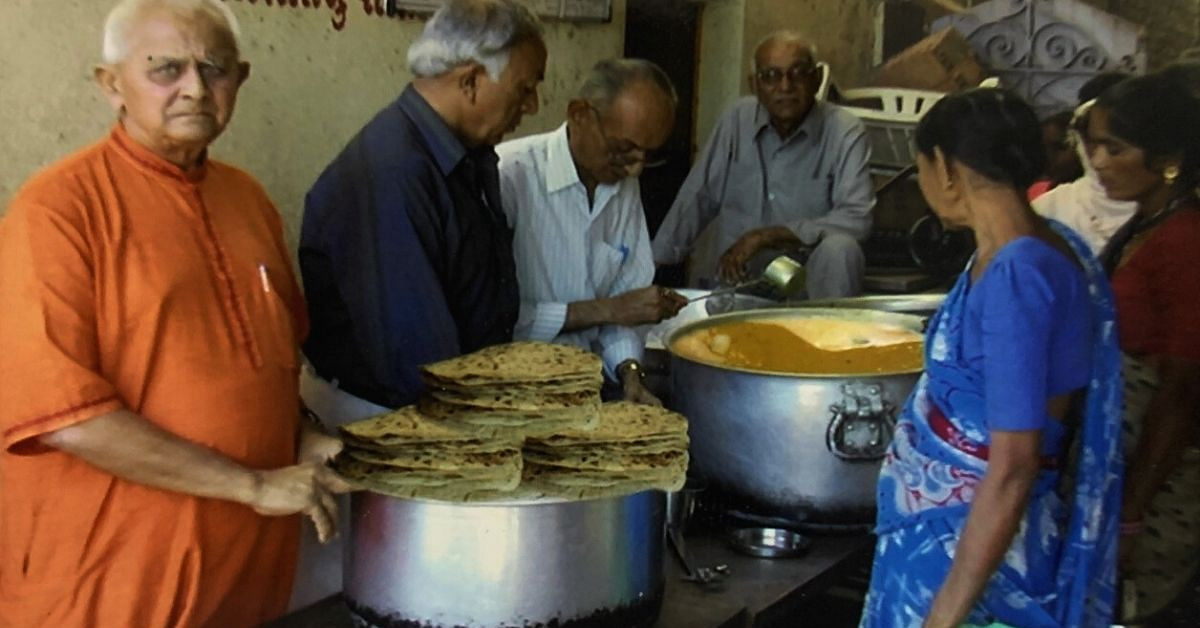
Vipul Thaker's school and students

This school wasn’t Vipul’s full time profession. He had a day job. He did receive some voluntary contribution from a few NRIs. After a point, he decided to admit his students in to a municipal school. Additionally, the evening classes were regularly conducted to ensure students did not miss out in case they didn’t go to school in the day.
Vipul had a dream to nurture – he wanted every child to get education on par with what their more privileged peers got. He negotiated with the private school principals, head masters, teachers and finally led to the introduction of a scholarship scheme. And so today out of forty students, around twenty five of them have been admitted to a school with better amenities for the students.
In the last few years, some of his students have shown their skills at the state level in the field of dramatic and graphic arts. Today he can proudly say that these children have something to look forward to. They have a future too. Vipul considers the renowned Gujarati educationist Gijubhai Badheka as his source of inspiration. He believes that Gandhian ideals too have been a prominent force behind his willingness to contribute selflessly.

The important thing, dear readers, is that this man and many more like him are actually striving to provide an identity to these children. They are providing a platform through which these children can express their ideas and needs.

Vipul and thousands of such grassroots revolutionaries are working towards bringing a constructive change in the society and we salute them for their relentless work in making a better India.

This article has been written by Arnav Anjaria. He is a third year student of Integrated Masters in Political Science at the University of Hyderabad. He can be contacted at arnav.anjaria@gmail.com

Okhai: Empowerment of a truly colorful kind

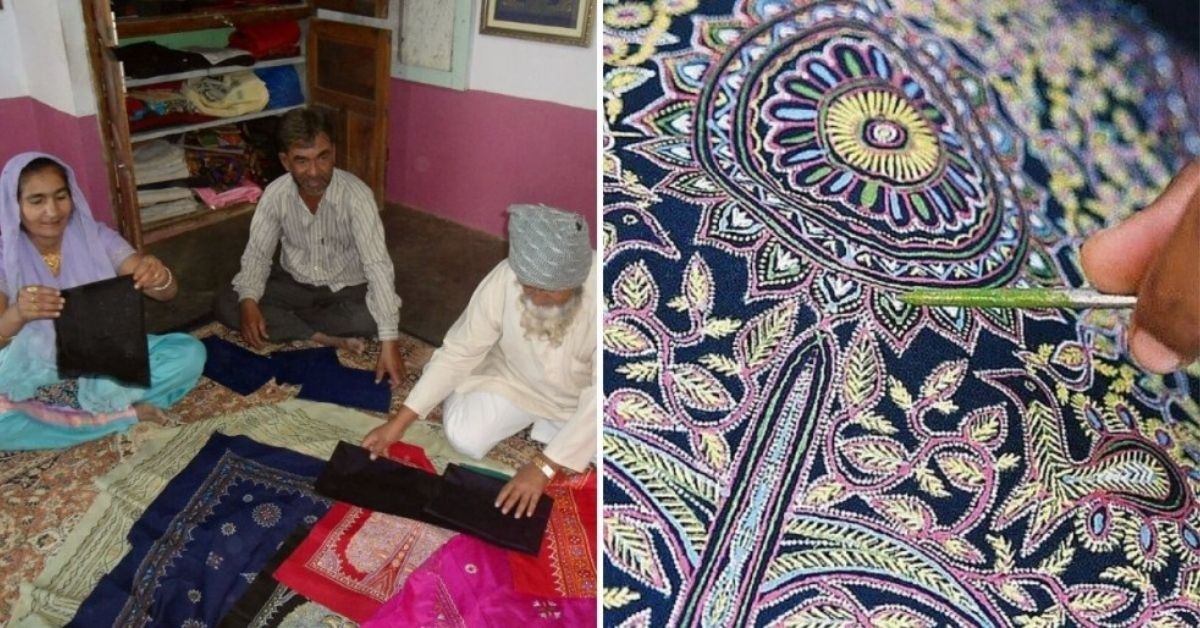
The region of Gujarat has been home to many a tribal cultures and has nourished them from the earliest known periods of history. The stark monotony of the arid landscape in this region is relieved by the bright shades of handicrafts made by the tribal women. Specifically, the Okhamandal Taluka is home to more than 200 Self Help Groups (SHGs) of men and women. It is from these communities that the Appliqué handicraft under the “Okhai” brand name has been created with the support and guidance of TCSRD (Tata Chemicals Society for Rural Development).

The Self Help Groups in Okhamandal Taluka mainly comprise of the Rabaris, Vagher and Ahirs. The most prominent tribe here, the Rabaris, are a semi-nomadic tribe known for their survival and adaptation in arid regions of Gujarat and Rajasthan – pursuing a pre-agrarian, pastoral lifestyle – found mainly in the Kutch and Saurashtra regions of Gujarat. The Rabaris today lead a quaint, colourful and rugged life which finds a manifestation in the embroidery and crafts made by them.

The TCSRD centre employs the skills of about 200 Rabari women from the various Okhamanda villages and a team of trained tailors. The various products made in Okhai include apparels, accessories and handicrafts. The handicrafts workforce is guided by a full time designer to translate the traditional products into those that are in consonance with the current fashion trends. These products are sold at retail showrooms in Mithapur and Ahemdabad. The products are an amalgamation of the traditional art form of the Tribal Women and the designs of the designer.

As their website puts its, “The Okhai brand has become a powerful statement by the women of Okhamandal villages over the years. A statement that empowers them, a statement that gives them and the region an identity, a statement that make people notice this beautiful form of art and patronize it.”

What we’ve found particularly interesting is the impact that these self-help groups are creating on the community members. Do read the following tales of empowerment at the Okhai website:
Laxmi Bhara – Chief designer. She has been associated with the project for over 8 years and now is a proud owner of a home.
Rami Dula Nangesh – Empowerment personified. Her day with Okhai starts at 5 in the morning and she has been instrumental in bringing about innovative changes to the various products.

More about Okhai here: http://www.okhai.org/
To read about Tata Chemicals Society for Rural Development (TCSRD) click here: http://www.tcsrd.org/

This article has been contributed by Chandrika Maheshwari. Chandrika is a student in her 3rd year of engineering in BITS, Pilani and holds a vision to do something for the country and contribute in its development. Her interests include social entrepreneurship, traveling, reading and writing.
PS: Remember to participate in our logo contest! Click here

Lijjat Turns 50!

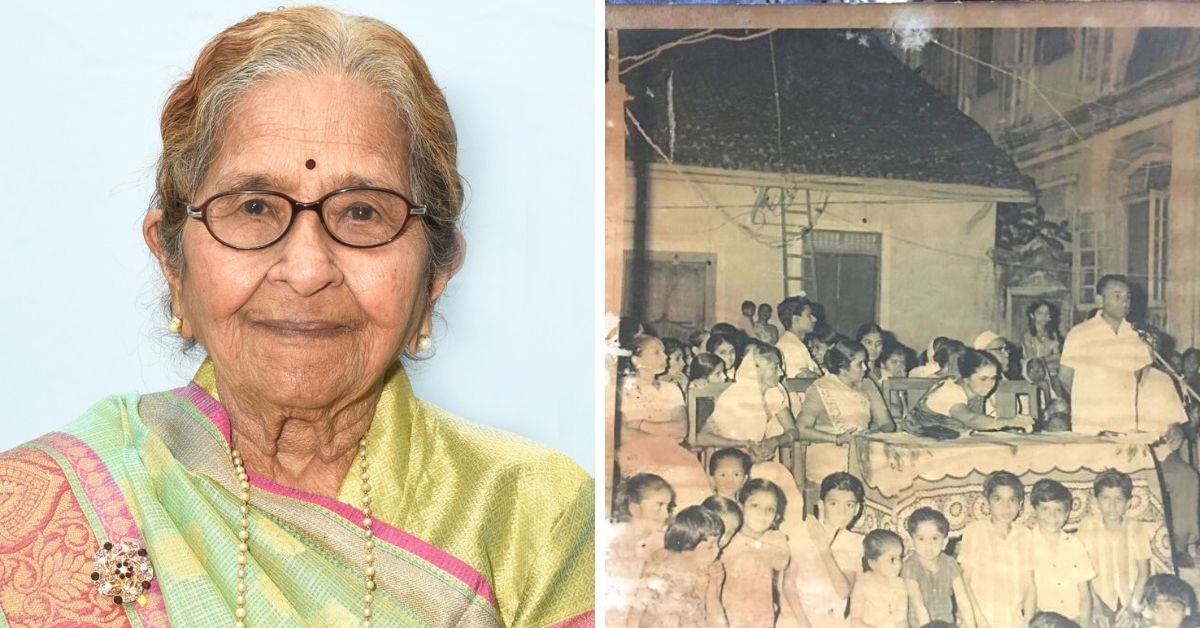
lijjat_papadAlong with six other Gujarati housewives,she had gathered on March 15 1959 for rolling “papads” on the terrace of an old building in a South Mumbai suburb in order to supplement their meagre family income. Yesterday, Jaswantiben Jamnadas Popat, the sole survivor of the founding group of ‘seven sisters’, celebrated 50 years of Lijjat along with 45,000 other women who form part of this women-only co-operative.

Started with a loan of Rs. 80 from a social worker and entrepreneur, Chaganlal Karamsi Parekh, the business grew quickly as word spread about the taste and quality of the papads (or “poppadoms” as they are known in other parts of the world). Zubair Ahmed tells the tale of the humble beginning in this BBC article:

Mrs Popat says: “We were semi-literate which restricted our chances to get jobs. But we realised our papad-making expertise could be used to earn small amounts of money to help our husbands reduce their financial responsibility.”

Lijjat is now a co-operative with a turnover of nearly $100m and a sustainable business model that provides opportunity for employment and financial independence to thousands of illiterate but skilled women who live in abject poverty. These women get a sense of empowerment by being able to earn a living, and can their children to school or improve their living conditions. This, according to Mr. Ahmed is the biggest reason behind Lijjat’s success.

Most of the 45,000-strong female workforce live in slums or one-room hutments, with communal bathrooms and toilets.

They are still part of what is known as the working class. But working for Lijjat Papads gives them financial security.

Read more about Lijjat and the women behind its success here.

Photo courtesy: BBC News

The Common Man

A 16-year old who teaches 600 students in his backyard. A single man who led to an entire city being declared smoke-free, a year before the nation enforced it as a law. The saviour of the endangered whale shark who has rescued as many as 50 so far. A former Tisco employee who gave up her secure job to help poor tribal families in a remote Maoist-infested village build a new life. And a Physics professor who learnt all there is about rain water harvesting and then made it mandatory for all official buildings in Tamil Nadu. These are just some of the everyday heroes that are doing their bit to change lives, whether they are recognized for it or not.

Babar Ali is a class XI student in Berhampore, West Bengal. Moved by the plight of poor parents who could not afford to send their children to school, this youngster has been conducting classes after his school hours since he was 11. His students come from nearby villages, some even walking four km to reach his house. In order to induce better attendance, Ali also managed to get government officials to distribute free rice at the end of the month.

Besides lessons, the children are drawn by the free rice distributed at the end of each month. “Attendance was falling drastically. That is when I hit upon this idea. As my school is not recognised by the government, I couldn’t have got free rice. But government officials helped me,” says Ali.

Ali has big dreams for the future. “I dream that my school will grow and expand to other parts of the state and country where children want to but can’t go to school.” But for now, he will be content if his students get a proper classroom.

——

Hemant Goswami had been committed to act against tobacco since a school project he did in 1987. In 2004 he filed a writ petition with the Chandigarh High Court, following which the government was instructed to follow the tobacco Act in letter and spirit.

In 2005 when the Right to Information Act (RTI) came into force, Hemant decided to use it to make Chandigarh the first smoke-free city. He filed over 300 RTI petitions with all government departments and offices, raising questions about their adherence to tobacco control laws. In a year, more than 1,800 signboards warning people of the health implications of smoking were up in all government offices. Educational institutes too fell in line.

Hemant’s efforts finally resulted in Chandigarh being declared smoke-free in July 2007. But he didn’t rest even after that. He continues to monitor the proper enforcement of the law, and smokes out the violators.

——

Dinesh Goswami is a daily wage earner in Junagadh district of Saurashtra in Gujarat. But every time he hears of the whale shark being indiscriminately hunted by fishermen on the rough and choppy sea off the coast of Saurashtra, he rushes to their rescue.

Describing his most dangerous rescue so far, Goswami recounts, “State officials called me after reports that a shark was trapped in a net. After we set off, the sea got very rough and every minute, we thought the boat would overturn. Thankfully, we managed to save the whale shark and return safely.” Goswami now runs Paryawaran Mitra, an NGO for the protection of sea animals.

Having learnt about the whale sharks and their plight in a documentary by environmentalist Mike Pandey, Goswami decided to make it his mission to save them every time they are in danger.

——

In Purulia, along the Bengal-Jharkhand border, Jayati Chakraborty has started a school to help a tribe called santhals build a better future. Inspired by an NGO run by Kamalesh Chakraborty for developmental work in the area, she decided to stay on and make a difference.

She quit her job, faced down appalled friends and family. “They found it hard to believe that I would be better off working with poor people in a godforsaken village.” And she tried new things — linseed and tomato farming — finally deciding the area needed a school. “We converted a hall into a classroom and started with 66 students in 2001. It seemed the school was waiting to happen,” she says. Students pay Rs 30 a month. But paid pupil or not, no one is turned away.

—–

Chennai-based professor Sekhar Raghavan’s passion for saving and harvesting water found an outlet when he worked with the Centre for Policy Studies, which examines traditional ways of living.

He says he found “we had the complete records of Chengelpet district for 200 years and realized rain-water harvesting is not new, it’s just something we had forgotten”.

His Akash Ganga Trust eventually led to rainwater harvesting becoming compulsory for all buildings in Tamil Nadu in 2002.

—–

Thus we see that it is possible for a single person to change the lives of many, even while performing normal duties like going to school or earning a daily wage. All our barriers are just imaginary.

Read the complete article in Times of India here.
Image Courtesy: jyothsnay.wordpress.com

Writing to save Cultures

India boasts of a huge variety of languages and dialects. Many of these languages do not have scripts of their own. In fact many of them are on the brink of fading away into oblivion owing to the trend of people migrating to modern cities and hence newer cultures. However, a small academy in Gujarat is standing tall to save these languages from dying.

Anand Giridharadas writes in this article at The Mint on how the Adivasi Academy, based in Tejgadh, Gujarat, is working towards chronicling elements of rural culture.

It is not only obscure languages that these students are trying to chronicle and preserve, but also cuisines, sartorial habits and other significant elements of rural culture. Like drivers heading downtown at rush hour, the students see everyone else going the other way. A swelling class of Indian aspirants from small towns and villages such as Tejgadh sees urban life and the English language as pathways to affluence, security and respect. 

The academy was founded by Ganesh Devy, who is a former professor of English literature.

He created the school, known as the Adivasi Academy, with a burning question on his mind: Why do we wait for cultures to die to memorialize them? 

The article further reports:

In recent years some people in Tejgadh have become professional artists, one example of a deeper transformation. Modernity has been creeping into the villages, and young people have been pouring out. But they are unprepared. They grew up speaking a language no one recognizes beyond their village, and they are inexpert in Gujarati, Hindi and English, the languages of urban employment. In the cities, they find it difficult to escape the most menial jobs.
Devy wanted to combat this gravitational force. Could Adivasis be persuaded to study their culture rather than shed it, and to stay in the villages rather than flee? 

To know more on how young people like Kantilal Mahala, 21, and Vikesh Rathwa, 27, are working hard to preserve their language and culture, read this wonderful article at The Mint.

Image courtesy: www.livemint.com

A Reason To Smile

For the 300,000 residents of Juhapura in Ahmedabad, “Muskaan” is the remarkable adventure park created from recycled waste. It is a 2,500 sq m dream come true for the children, women and elderly of the primarily Muslim community. Chitra Padmanabhan reports in The Hindu of this amazing experiment in transforming ‘waste’:

Thrust out against the skyline in yellow, red, blue and orange (colour coding for age groups), the park is like a brave new city, with state of the art imagination: old telephone poles humming with new life as the mainstay of swings; sewage pipes reborn as play tunnels; used tyres as cushions on bamboo see saws.

A rock climbing wall and a hanging ‘commando’ bridge with a used cricket net wrapped around invite the adventurous to scrabble up. Here a higgledy-piggledy tyre tower tests the climber’s balance; there a weights and pulleys structure demands brain power.

Elsewhere, used pipes recast as a jal tarang invite you to co-relate varying sound pitches to the differing lengths of pipes being struck. It’s an infectious mix of playfulness, sportsmanship and everyday science.

Initiated by an NGO called Society for Promoting Rationality (SPRAT), the park aims to rebuild a community devastated and displaced in the aftermath of the Gujarat riots in 2002. Juhapura was largely formed due to the congregation of these Muslims, looking for safety in numbers. A width of road divides them from a Hindu-dominated community Vejalpur, and it is at this ‘border’ that Ahmedabad Urban Development Authority was persuaded to donate land for this project, so that the wall of prejudice dividing these two communities can be pulled down.

Help was difficult to come by at first, but with continued efforts, it started pouring in. With unique and non-monetary needs like waste materials and expertise, Muskaan soon started getting a spew of ‘donations’:

Encouragingly, Prof. Sudarshan Khanna, renowned authority on indigenous toys from the National Institute of Design and dedicated architects like Rizwan Quadri, and faculty from the Centre for Environmental Planning and Technology provided guidance on structural matters, to the slew of play models inspired by Jowher’s long-standing passion. Big guns like ONGC and BSNL as well as local companies contributed materials. Mrinalini Sarabhai’s Prakriti contributed to the greening effort. Convinced that the park is not a land grab hoax, members of both communities have joined its managing council. Local school heads and professionals help in overseeing functions.

SPRAT has also been the initiator of many other rehabilitation efforts for the disadvantaged and terror-stricken communities:

The organisation that initiated the “smile” is Ahmedabad-based NGO, Society for Promoting Rationality (SPRAT), which started community empowerment centres called “Caravan” in five cities in the aftermath of 2002.

An ongoing campaign “Mahaaz” (meaning ‘front’) seeks to create a front against all forms of terrorism – by documenting the needs of victims of violence, as for instance in the recent serial blasts in the city, and by recognising extraordinary deeds of bravery by ‘ordinary’ people in trying times with ‘Salaam’ awards, among others.

Its basic literacy programmes, Taleem, have concentrated on providing educational support services and vocational skills to the displaced and disadvantaged, focusing on Muslims and Dalits.

This one-of-its-kind park is a laudable effort to unite communities, bring about greater camaraderie and remove prejudices. The fact that it has been created using ‘waste’ products makes it even more endearing to the people it serves, and encourages greater public involvement – besides teaching a lesson or two in recycling and the creative utilization of available resources.

Read the complete article here.
Image Courtesy: The Hindu

Making Bapu Proud

Alcohol can be the cause of many evils. This was known by Mahatma Gandhi, as he encouraged abstinence among his followers. But it’s not an easy ideal to follow or preach.

Yet, this was achieved by the gutsy women of Bhilkeshwar in Chandrapur district, a few hours away from Gandhiji’s ashram in Gujarat. The women of this little village decided to take a firm stand against liquor after having suffered for its consequences since ages. Writes Madhavi Rajadhyaksha in this article in The Times of India:

The women first took up the cudgels against the liquor menace around six years ago. “When we’d stand in the village courtyard and chat in the evenings, we realised that our neighbours would come home drunk, eve-tease our children and even ill-treat their wives,” says Devangani Gajbhiye, explaining how the seeds of the movement were first sown. Cringing as she recalls those days, she says they were forced to act when they realised that menfolk in many households were blowing up money meant for the family’s grain and kerosene supplies on alcohol.

For the 10 women who initially formed a self-help group with the help of a local NGO called Association of Women Awareness and Rural Development (AWARD), the path to achieving their goals was not only difficult but also dangerous. Their targets were mainly the three local liquor shops on the main street, and they faced brutal retaliation. One of the protestors also lost her husband when he was stabbed to death by a local alcohol vendor. However, this did not break the resolve of these brave women. They laboured on with their cause, and it finally began to bear fruit.

Slowly the shops folded up, the policemen became more vigilant and the menfolk were forced to give up their habit. Today, 40 more women have joined the campaign, and there’s one proud achievement they all like to relate. “Nobody dares sell or drink alcohol in the village. Some villagers still go to neighbouring villages to get their quota, but can’t bring it back into our village,” they chorus. Buoyed by their success, neighbouring areas have taken a cue from the courageous women, and nearly 36 villages in the block have gone liquor-free.

As the sweet taste of victory sank in, the women formed a brigade of their own, taking on new challenges and crossing new milestones. With the backing of more voluntary organisations such as UNICEF, more self-help groups mushroomed and women began tucking away household savings, formed monitoring committees to keep a watch on the anganwadi workers and schoolteachers and even began addressing the village panchayats on safe drinking water and maternal care. Today, 80 per cent of deliveries take place in the hospital and every household has a toilet of its own. The self-help groups dole out money at lower interest rates than the local moneylender.

It is amazing how much a small group of women with no education or special skills, but a steely resolve and oodles of courage can achieve. Sticking to your cause against all odds can bring about a sea of change and positive impact on so many lives. This is a true inspiration for all of us.

Read the complete article here.

Home Page Image Courtesy: Google Images

Hear’s the Good News

Now lakhs of Indians with hearing disability will have access to a mobile dictionary in Indian Sign Language (ISL). Initiated by two youths in Vadodara – Rajesh Ketkar, himself 100 percent hearing impaired, and his friend Virbhadrasinh Rathod, this dictionary will enable the disabled person to have an image picture word with video-graphed sign language, all on the screen of his mobile.

The seeds of this idea were germinated in the minds of these youths when they attended a conference by the World Federation for Deaf in Madrid last year. Depariti Basu reports their story in this article in Indian Express:

“There were deaf people from across the world and we were amazed to see their confidence level. In India people still look at the deaf with sympathy unlike in other countries. There they ask for ‘professional assistance’ and not ‘help.’ We were exposed to their technology which is not used anywhere in India or even in any other Asian country,” Ketkar said through an interpreter. 

The two also run an NGO called Mook Badhir Mandal in Vadodara, for the hearing impaired. All this inspite of just having received education till class X, which is provided by the government, after which Ketkar took up vocational training in tailoring. Once again it is proved that education is not really a barrier for a firm determination and a will to succeed. Kudos to these youngsters who have taught us a lot.

Read the complete article hear

Image courtesy on homepage: www.deaftravel.co.uk

Calling for help?

EMRI - Ambulance on call service

EMRI - Ambulance on call service

Now if you are in Andhra Pradesh or Gujarat, you can dial 108 and immediately get connected to emergency medical, fire and police services. A fully equipped ambulance with technical staff can be at your doorstep in an average time of 20 minutes. And if you do not belong to these two states you should still read ahead as this service, provided by the Emergency Management Research Institute (EMRI) will soon be made available in the rest of the country.


William A. Haseltine, President of Foundation for Medical Sciences and The Arts, has written about the service in this article in The Hindu:
How it works:

EMRI dispatch centres are modern marvels. Addresses and map locations of fixed line callers are displayed on computer screens that summarise their call histories. The lines are then transferred to medical, police and fire professionals for action. By the time the call reaches the doctor, the location of nearby ambulances and local hospitals together with data describing available hospital services is on the screen. Life-saving procedures can become accessible within the golden hour, the crucial first hour following the emergency crisis.

With a fleet of 500 ambulances and 3000 technicians and drivers, it is estimated that the EMRI service helped in saving 22,000 lives in Andhra Pradesh itself last year!

Not only this, there is another service for remote medical care wherein a person can dial 104 and avail of free medical advice from health care professionals managed by Health Management and Research Institute (HMRI). Calls are prioritized and callers routed to appropriate destinations, including 108 if an ambulance is required.

The 104 workers currently operate from a call centre in Hyderabad. The target for the year is to increase the number of doctors in the call centre to about 200 and hire about 2000 paramedics, from about 50 doctors and 250 paramedics currently on staff. About one-quarter of the calls require professional medical advice and about half the calls originate from small farming villages with no permanent medical infrastructure. Shortly EMRI will field-test a mobile hospital.

The 108 and 104 services were the brainchild of three founders: Ramalinga Raju founder Chairman and CEO of Hyderabad-based Satyam Computer Services Ltd.; Dr. Ranga Rao and Dr. Balaji Utla.

Now the EMRI and HMRI models will also be used as role models for setting up similar services in other countries around the world.

On a similar note, residents of Bangalore have long been aware and benefited from an emergency ambulance service called Sanjeevini, which has rescued over 42,000 people till date. Sanjeevini is a part of Comprehensive Trauma Consortium (CTC) established as a non-profit, non-Governmental, voluntary organization by Dr. N. K Venkataramana.


The Sanjeevini helpline number is 1062, and you can visit their website here. Stay tuned to The Better India for a more comprehensive coverage of Sanjeevini.

Read the complete article in The Hindu here.

Image Courtesy: The Hindu

Calendar

September 2010
M T W T F S S
« Aug    
 12345
6789101112
13141516171819
20212223242526
27282930  

Recent Comments

PROMOTION

"Neumonia and Other Sketch Stories" - A collection of sketch stories. Download the e-book for free. Click on the book cover below.
"The observations are acute: the sound of high heels on asphalt, the bit about how all BPO employees lose their hair very fast are spot-on. This book is a better, shorter alternative to any Sunday movie on TV. It's a little jewel" - Hindustan Times