Jagori: Awakening Women

Established in the year 1984 in Delhi as an unregistered society, with a vision of “spreading feminist consciousness for the creation of a just society”, Jagori has been working unremittingly on its mission for over 25 years now. At the time of its genesis, Jagori described itself as “Women’s Resource and Training Centre”. For its founders, a group of seven people – Abha, Gouri, Jogi, Kamla, Manjari, Runu and Sheba – Jagori was their response to a need within women’s movement. They decided to form what they envisioned as a ‘creative space’ for women to express their realities, “to articulate their experience of oppression, to know more about it and to find ways of fighting it.”

Over the years, Jagori became a part of various defining campaigns and struggles. Among the issues raised by Jagori in the women’s movement have been those of single women, sexuality, mental health of women, safe travel for women in the railways, and consistent advocacy on violence against women. Jagori has also played a significant role as a member of the National Coordination Committee for conceptualization and coordination of the biannual National Conference of Women’s Movement in India. Jagori has also regularly engaged with the Indian Association of Women’s Studies (IAWS) and housed the Secretariat in 1995.

Over the years, Jagori’s objectives have been reshaped into consciousness raising and awareness building on violence, health, education, development and other issues critical for women’s individual and collective empowerment, production and distribution of creative material on feminist issues, dissemination of information and knowledge on feminist concern to meet the needs of women’s groups, NGO’s and development organizations and advocacy on women’s rights and gender equality.

At Jagori’s Resource Centre, one would find a library with a comprehensive collection of resources on various women’s issues. As a part of regular services, Jagori carries out information search and retrieval for both internal and external users. Specialized services like preparation of reading lists, information packages, topic-based bibliographies, are provided on request. Jagori also provides consultation services to smaller centers or NGOs for setting up libraries or information centers or similar assistance. Jagori also has a distribution and sale outlet for its publications and publications from women’s groups and feminist publishing houses from all over the country.

Among the most recent campaigns started by Jagori is the SafeDelhi campaign started to fight the problem of sexual harassment in Delhi.

To find out more about JAGORI, log onto www.jagori.org

Zainub Exports: Keeping India’s glory untarnished

In the book ‘What India can Teach us’, Max Muller defines two very different Indias – one is the India of today, of the cities and towns and the other India, thousands of years old, is that of the village communities. As a foreign tourist in India, staying in five star hotelss and travelling by fancy cars, one is most likely to miss out on the second India, the truer of the two. Similarly, as a tourist in my own country, while I had often been to Agra to visit the Taj Mahal, what I did not realise was that I was missing out on a more humble, yet strikingly important part of our heritage.  Located a few miles away from the glorious Taj, on the Fatehabad Road, are the marble factories of Agra. One among these is Zainub Exports.

Inlay work in progress

Engaged in a wide range of marble inlay work, workers at the Zainub Exports unit are treated just like family. It is, after all, a family tradition, an invaluable inheritance from the Mughal ancestors. Ask Mr. M. Ajeed Shirazi, a sixteenth generation entrepreneur and he will point out how his family has been running these factories since Mughal times. I listen to his narration but my mind has wandered off to another era, an era when the great ruler Shah Jahan added a grand legacy of structures during his reign. What must it have been like? Mr. Shirazi tells me how precious and semi precious stones used for the Taj Mahal were imported from all over the world, even in the seventeenth century. How much wealth, power and prestige must the royal highness have commanded? Then, I look at the humble figure in front of me. If it weren’t for Mr. Shirazi and his family, I might never have discovered the intricacies of marble structures and how it links us to our glorious past.

The different kinds of marbles on display

As a twenty-first century citizen, even though I am spellbound by the work of the artisans, I can’t help but ask the obvious question. Is there any money in the marble business? Mr. Shirazi hesitates, “This year the business was hit because of the slowdown abroad. Otherwise, we have many foreign tourists and clients who buy our products abroad.” From our discussions, I gauge that the major problem is that of marble sellers in bigger cities. They sell lower quality products, bringing down the price. How can a genuine product compete unless customers can spot and care for the difference? Problems cloud over the horizon. Yet, the satisfaction from this work is unmatched. For Mr. Shirazi, the work represents a culture, a legacy, a history he cannot trample carelessly. He holds it dear. There are always opportunities of work elsewhere, but he chooses to keep the glory of India untarnished. In the process, he helps many workers, who know nothing but marble.

The Final Work!

Take the case of thirty-two year old Mohammad Haneed, one of the workers. Born and brought up in Agra, Haneed joined this work right after high school. Zainub Exports is providing livelihood to many such artisans. They also have a place to train workers and thereafter employ them. I am surprised to see how much these workers know about different types of marbles. They repeatedly tell me that the blue stone is semi precious Lapis lazuli. I can hardly pronounce it right. What was the orange one, I ask for the fifth time. “The orange stone is carnelian. It’s the one that shines when you put a flashlight against it,” comes the answer. While I am filled with awe and pride to see this hardworking group of people, at the back of my head, all I can think of is trying to remember what these stones are called! Next time, I don’t want to feel like a tourist in my own country.

Zainub Exports:

Manufacture of Marble Inlay Work and Indian Handicrafts
Contact Details
Mailing Address:
18/160A, Fatehabad Road, Purani Mandi,
Tajganj, (opp. Kailash Talkies),
Agra-282001, Uttar Pradesh, INDIA

Contact No:
+919319127303
+919927860470

Email Ids:
zainubexport@yahoo.co.in
info@zainubexport.com
www.zainubexport.com

Parivartan: Take A Stand

“When I despair , I remember that all through history, the ways of truth and love have always won. There have been tyrants and murderers, and for a long time they can seem invincible, but in the end they always fall. Think of it – always” – Mahatma Gandhi.

Triveni is a resident of a settlement in east-Delhi and is classified by the government as a “low-income” person. She relies on the Public Distribution System (PDS) for her quota of essential food grains. However, Triveni had been unable to obtain her entitled food grains from the PDS shop for the last 3 months and wanted to know what she could do. She was advised to file an application under the RTI (Right to Information) act requesting copies of all PDS records, including cash memos. Before the information could arrive, Triveni was offered Rs. 20,000 and sacks of grains by the PDS shop owner, if she took back her RTI application. When the information did arrive, Triveni was shocked to learn that as per government records, she had been getting grains from the PDS shop for the last 3 months! Triveni is literate and can sign her own name so she was outraged to see thumbprints of varying shapes and sizes against her name in the cash memos .

Parivartan, a voluntary not-for-profit civil society organization which is a “people’s movement against corruption”, had advised and helped Triveni with the RTI. Using this RTI act, Parivartan accessed records for all fair price shops in that area and began to analyse the information. In August 2003, Parivartan organised a jun sunwai (people’s hearing) and over 300 people from across Delhi filed RTI applications to view their food grains records.

As the campaign spread, there were reports of violence against Parivartan volunteers and the fair price shop owners lobbied to increase their commission under the PDS as they argued it was too low to make profits.

All this led Parivartan to push for institutionalising the system of public scrutiny of records. Two Saturdays of every month were designated for public viewing of food grains and for lodging complaints. Parivartan has managed to bring about a relief to hundreds of people who were at the mercy of the fair-price shop owners for their daily food necessities.

Before this, Parivartan had led a successful crusade against bribery in Income Tax department.

Parivartan works on the principle that ‘development’ is a function of both growth and equity. Their focus areas include Research, Training, Development Communication and Implementation. They also have a  training programme for Identifying and Mentoring Micro-Entrepreneurs .

So, if you are facing redtape-ism or if corruption is glaring at you, don’t just close your eyes ignoring it. File an RTI, take a stand and get counted. It is high time the activist in us wakes up from slumber. If you need inspiration, get in touch with Parivartan at their e-mail: parivartan_india[at]rediffmail[dot]com.

People for Change: Spreading Education

Walking on the heat-radiating Delhi road, I noticed a bunch of Government school children clad in their blue uniforms, aiming for the fruits on a ‘Jamun’ tree with stones. Their evening snack was happily hanging from the branches hidden by innumerable leaves growing in all directions. I wondered how these children managed their studies with hardly anybody at home to guide them. It is not that these children are any less intelligent than the children who are economically blessed, but it is just that they don’t the right kind of supervision.

The difference between the organization “People for Change” and me is that I simply thought about it while they worked on it. “People for Change” is an organization that conducts tuition classes for underprivileged children in order to guide them in the right direction and prepare them well for the future. The organization was founded two years back with mere five students in a play school’s building which was lent to them during evening hours. It is now situated in Dayal Bagh, Faridabad where they have an apartment to themselves, the rent of which is paid by one of the many donors. It has children from class third to tenth totalling up to a hundred students at present. They have recruited 2-3 teachers who help the students with their homework, prepare them for lessons in advance and also teach them various crafts like paper bag making, art, origami etc. An addition to the teachers there are a few college students who teach on a voluntary basis. The founders of this organization, Ms. Nellie Dhillon and Ms. Nisha Celly, also come to teach on a regular basis. They believe that it is only when the children get appropriate exposure that they will get encouragement to do better. In order to encourage the children to strive for excellence, the organization rewards the students who perform outstandingly well in their annual examination.
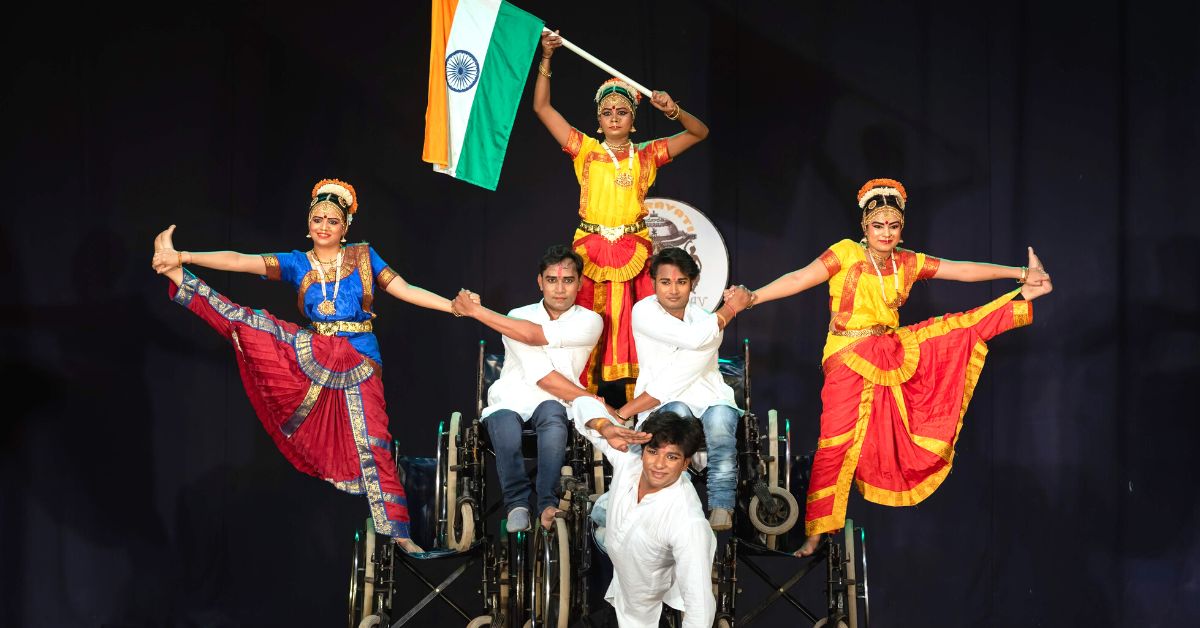
Education has evolved to become a blend of academic excellence and personality development. Working on these lines, “People for Change” conducts an annual function where all the children participate. In addition, they organize stitching, embroidery and other hobby classes during summer in the month of May. The aim of these hobby classes is to inculcate life skills in the children and to make maximum utilization of their free time.
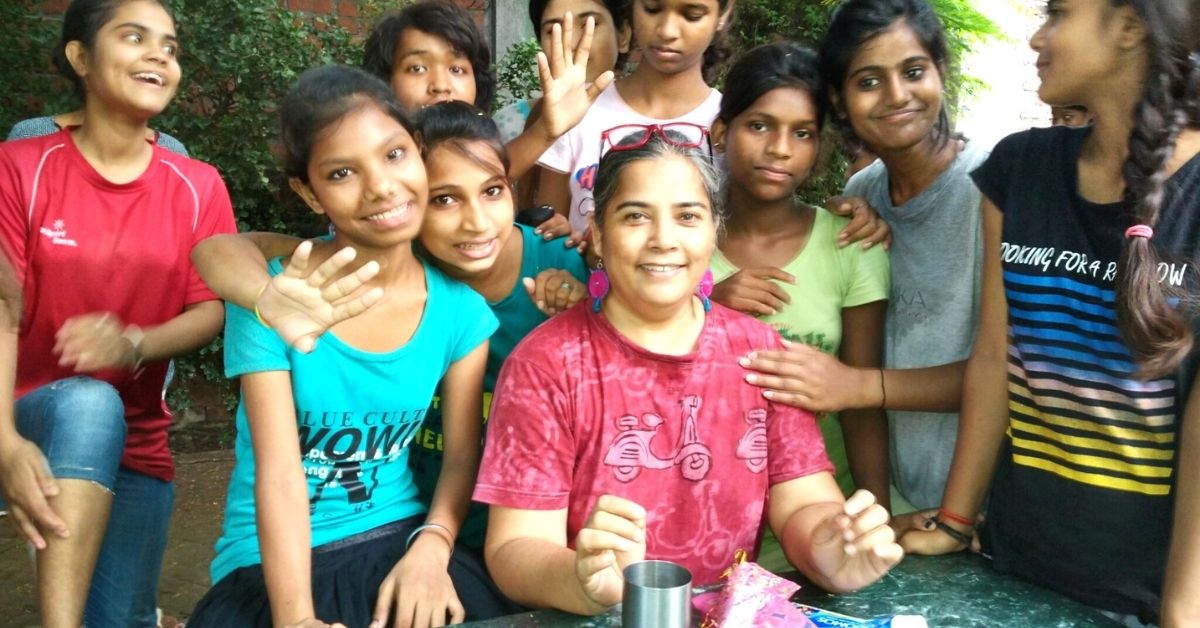
“People for Change” would appreciate more citizens to come forward and help them in spreading education to the needy. As “People for Change” is an expanding not-for-profit organization, it needs more people to help their cause in any little way they can. Anybody willing is welcome to help in their mission to attain hundred per cent literacy. Details can be obtained at the following number: 9899401882

This article has been written by Kanika Gautam. She is currently pursuing Bachelor of Commerce at Delhi University. She has been a part of the Shadow Editorial Board with Faridabad Times, Times of India. She is an alumnus of Mother’s International School, New Delhi and has been on the Editorial Board of her school magazine. She has also made contributions to her college magazine, has a passion for social work and a zeal for writing.

Conserve India: Using Fashion Against Poverty


Urban India is glaring at a huge waste management problem with no clear policy examining waste as a part of the production-consumption-recovery cycle.  In India, over a million people find employment in rag picking and recycling of waste; and this is an unorganized sector.

Most of the rag-pickers are poor, illiterate and belong to rural immigrant families. Many commence their profession at the young age of five to eight years. Most of them have never attended any school. While collecting rags they are subjected to chemical poisons and infections. Due to malnutrition, they suffer from stunted growth and anemia. These rag pickers have been weaned out of our social fabric and as begging is being abolished more and more beggars are becoming a part of this scavenging community.

Conserve  India, an organisation in Delhi founded by Anita and Shalabh Ahuja  was born of a desire to reduce India’s mountain of waste. Their team, after a lot of research, struck upon the idea of Upcycling by washing, drying and pressing plastic bags into sheets.

Handmade Recycled Plastic (HRP) is  made from  polythene bags picked from Delhi’s streets, rubber from old truck tyres’ inner tubes, old denims and saris. The processes used to make ‘Conserve’ bags and accessories have been specifically developed to be as energy efficient as possible and to keep out polluting dyes and chemicals.  This not only helps the environment, it also cuts costs, giving the organisation more money to invest in other social projects.

Santosh Kumar started collecting plastic bags for Conserve India as he could earn three times as much by selling plastic bags to be made into HRP instead of selling the garbage elsewhere.

Ragpickers enjoy working for Conserve as it directly implies that they, perhaps for the first time in their lives, will have enough to feed their families and rent homes that they can be proud of. On an average, a conserve ragpicker earns around $70 a month compared to a ragpicker who earns somewhere around $25.

The ragpicking community is unorganised; it is hard for them to protect their rights. By giving them ‘Conserve Employee Cards’, Conserve India helps them have a voice in the society. Conserve India has also started a campaign called Recognition for Ragpickers. As part of this, the organisation is trying to persuade the Delhi government to create an official register so as to recognize Delhi’s 150,000 ragpickers and give them their right to a fair wage.

Conserve also offers training to its workers so they can do better jobs in their organisation. Conserve supports schools in slums where many of its employees live. With an initial funding from Asian Development Bank, Conserve is now starting two new projects for tracking the general welfare of its workers and providing health clinics for those who have no access to healthcare.

In collaboration with top designers, Conserve India makes high-end fashion items like handbags, wallets, shoes and belts from the handmade recycled plastic.

Conserve India has collaborated with Fair Trade for marketing its products, which are available in stores across US, Japan, Europe . Their products can also be bought online through the Conserveshop.

By buying Conserve’s products one not only gets to be a trend setter in fashion, but also gets to help some of India’s poorest people and its environment.

For more information visit their website http://conserveindia.org. Infact if you want do something about the waste clogging the streets of your city, you can set up your own Conserve and be the change that you want to see in the society. Mail Conserve India at info@conserveindia.org or call on +91 11 43095301.

New! Jobs Listings featuring internships, volunteering opportunities & more. Click here.

Pravah: Inspiring Youth Citizenship

Pravah, an organisation based in Delhi works with young people to impact issues of social justice through youth citizenship action . Pravah believes that sustainable change emanates from individuals. “Change them or their orientation and the system will change.”

Pravah works with both adolescents as well as young adults, through two broad interventions, the School Programs and Youth Action.
In Youth Action they basically have 5 programs:
1. SMILE – which stands for Students Mobilisation Initiative for Learning Through Exposure. The aim of this program is to involve the youth in activities which helps them belong to their background and take more responsibility in whatever they do.

2. Youth For Development – is a partnership between Pravah and Voluntary Service Overseas ( VSO) . In YfD , the individual gets to work in a rural area for six months . Also, there is a 2 week training schedule before the commencement and constant mentoring.

3. Global Xchange – is a 6 month long international volunteering exchange programme in collaboration with VSO and British Council.

4. Change Looms – is a leadership and Organisational development programme that supports , encourages young independent projects or organisations working for social change .

5. Campus Catalysts- is for campus based initiatives for the youth involved in social action on or outside their campuses. The aim of the program is to mobilise social action on campuses.

School Programs are :

1. From Me To We – is focussed on inspiring adolescents to take up active leadership in areas of social change. In this , learning and life skills programs are conducted in cooperation with schools under FMTW. Theatre, games, simulation exercises, stories, case studies are a core component of the curriculum. FMTW currently reaches out to 3500 students in over 30 schools mainly in and around Delhi, Rajasthan, Gujarat and Karnataka.

2. Fun Camps – for kids between 13 and 17 , these are 6 day trips to villages, for teachers and various theme based fun trips.

3. Teacher’s Training – Pravah trains teachers for one year to design and conduct life skills program. Educator’s Collective is a network of school teachers, educators working for social transformation.

4. CLAP- Citizen Learning and Action Program is for adolescents between 13 and 17 who feel strongly about a cause. CLAP helps you to take that forward, and develops leadership skills in making social change. CLAP partners with Sanskriti School and Ford Foundation.

Also, they have started the Pravah Jaipur Initiative supported by Sir Ratan Tata Trust. The centre will create knowledge bank for various programmes by offering media fellowships for youth development, workshops, seminars and volunteering placements.

Films With Wings is a collaborative initiative of Pravah and Interactive Resource Centre, a non profit in Pakistan. Founded on the principle that films are a powerful medium in bridging various divides, FWW is an effort which provides a dynamic platform for young minds of both nations to engage, co- create , challenge and capture a variety of experiences and expressions through a serious of Intensive dialogues , workshops between youth of both nations followed by a Film festival.

Website : http://pravah.org

Interview: Ruma of Noida Deaf Society

Meet Anil kumar who has a hearing disability. He used to work in a papad factory earning Rs.1500 a month for a daily workload of 10 hours. Then he came to know about Noida Deaf Society and enrolled for their English course in the year 2007. Eventually he got placed in Leela Kempinski Hotels, Gurgaon much to his joy and satisfaction. “I have learnt to commit to my job from NDS, and the value of having a good job and a regular salary,” says Anil.

Noida Deaf Society was started in the year 2005 single-handedly by Ruma Roka and now this organization is impacting over 300 students through its various courses. Here is an interview of Ruma on NDS, her inspiration and the impact she is creating:

How did Noida Deaf Society start? What was the inspiration behind it?

Ruma: I always wanted to do something for the less privileged in our society. In 2004 I learnt the Indian Sign Language. This got me in touch with the deaf community and I started researching about the deaf, their issues and the needs. The more time I spent with the deaf, the more I realized the need to do something. There was no looking back from that point. I realized that there were complex issues facing the deaf in the country including lack of education facilities, lack of resources especially designed keeping the needs of the deaf in mind, no avenues for holistic development and so on. Most importantly there is no access to quality training leading to sustainable livelihood.

I found that in India deaf education was in a bad condition. Deaf students are often forced to speak and use of sign language is discouraged. I also found that since schools are not really preparing the deaf for a responsible and independent life, the deaf end up in menial jobs and get deeply frustrated.

To address some of these issues and to bring about a positive change in this marginalized community, I started an organization called Noida Deaf Society (NDS) in 2005. I started from a small two bed room flat belonging to my husband. I just had five students and I was the only trainer. Through word of mouth the organization started growing. We started teaching English using sign language – since we believe that if the deaf picked up English, they could communicate in the workplace with the written word and hence be employable in multiple professions. Thereafter we started training in basics of IT and subsequently expanded trainings to include Life Skills, Grooming, Desktop publishing and graphics and work ethics. When I started, I was the only trainer but today we are a strong team of 15 which includes 12 deaf trainers and support staff.

What are the projects NDS adopts? How does it go about executing them?
Ruma: Our goal is to enable the complete integration of the deaf into the mainstream through education and specialized vocational programs leading to gainful employment. At Noida Deaf Society we understand the constraints of the Deaf and focus on their abilities to bring out the best in them. We have used the visual medium of IT to enable learning. Training programs are conducted by Deaf trainers as we feel that they best understand the needs of the Deaf and also act as role models for the community. Training is conducted in Indian Sign Language using visual aids and multimedia based material. Our trainings have been developed based on market research and are job oriented in nature.

Training in Life Skills and Work Ethics is a key focus area towards preparing the youth for employment. Regular exposure to the industry is provided through guest lectures by professionals, industry visits and workshops. We are also actively engaging with the industry to build sensitivity and raise awareness about the Deaf through workshops, mentoring programs, collaborative industrial training, employee volunteering and sign language orientation. We have so far been able to employ over 170 youth in leading organizations in profiles such as Graphic Designing, Backend IT and Data Entry, Retail, Hospitality, Teaching, Export Houses, Production Units and so on.

Could you share with us some of the success stories of NDS?
Rumi:
Anil Kumar, whom you have already noted about, is one such story. The other is that of Rattan Kumar. Rattan joined the MS Office course at Noida Deaf Society in January 2009. Opportunity knocked when he was close to finishing his course in the form of a contract data entry job at Mobile Creches. They wanted a part time data entry operator. Rattan worked hard and managed well to switch between his roles of a student and of a data entry operator. After his contract got over he was placed in ITC Maurya in Delhi in August 2009. His performance there has been so good that ITC has asked for more candidates from NDS. He has truly been a role model for the deaf and has made us very proud. Despite of coming from a weak family background (separated parents) he has given the best of himself to society.

We have many such success stories put up on our website too.

What are your future plans with NDS?
Ruma:
Our student strength is increasing day by day and it is becoming difficult for us to operate from the current facilities. We would like to build a state of the art vocational training insitute for the Deaf, the only one of its kind in the country where we can offer training in multiple trades and enable the deaf to access employment. A permanent facility will also help us to reach out to the many Deaf in the country and enable them to lead meaningful lives. Introduction of new training programs like computer networking and hardware is also on the cards. Another thing that I would like to see happen in the near future is a digitized teaching & learning material for improving English literacy.

Do you have any volunteer or employment requirements that might interest our readers?
Ruma:
Yes we do have a vibrant volunteer program where people from all walks of life especially professionals are contibuting towards skill development of our students. We also have employee volunteering programs with many corporates including NIIT and Mphasis.

However, we first encourage people to learn Sign language as then they will be able to contribute in a more meaningful manner. We essentially need help in employment linkages, fundraising, specialized training in computer networking and hardware.

Here is a photograph of Ruma with the entire NDS family:

To know more about NDS and to go through their work, please visit their website: http://noidadeafsociety.net/

Udayan Care

udayan_logoShivam Udayan is an intelligent kid, quick to grasp new things. Now he has started learning horse riding at school. Ajay Udayan has been the head boy of his class since the last two months, he is very interested in sports and extracurricular activites.He also took part in Ramayana sessions in school. These are just two stories out of the 180 kids in Udayan care, 11 of whom are in boy’s NOIDA home There kids are mostly orphan or from abusive, destitute and dysfunctional backgrounds. The children over here live in well furnished, modern homes, with all the facilities that one would see in an upper middle class family. Children in the Noida home go to schools such as Rockwood and Assisi Convent.

Udayan care is an NGO started in 1994 by Dr. (Mrs.) Kiran Modi. Headquartered in Delhi, the organisation is working towards regenerating the lives of the disadvantaged children and women. They are committed to their aim of sustainable social development through various programs that include :

Udayan Ghars Shelter homes based on the Group Foster Care model developed
by the organisation with the sole aim of providing a family like environment for oprhaned,abused kids so as to promote social integration, brotherhood and providing the best possible education . Each Udayan Ghar is run by lifetime a volunteer mentor parent, the home on an average has about 15 children. Ghars are located in popular neighbourhoods and children attend private, English medium schools, and participate in vocational training and mental health programmes . At present they have twelve homes in and around Delhi/NCR.

Udayan Shalini Fellowship A distinctive higher education and vocational training scholarship, that works towards the transformation of disadvantaged girls into educated, independent and confident citizens like 22 year old Smita Verma who moved her family out of a one tenement flat in the congested bylanes of Old Delhi’s Chandi Chowk to an independent house in a decent location. She became the first engineer in her family , all thanks to the Udayan Shalini fellowship.

Outreach programme Started in 2004 to provide financial assistance to the children of HIV infected parents so that they are able to receive better nutrition, schooling and prospects of a better future. A long term relationship is established with the children through workshops, counsellings and home visits. In the eventual loss of parents, children are assured with Udayan Ghars.

Sugam Vedashram Project Nagapattinam district in Tamil Nadu was the worst affected by the Tsunami that rocked the shores of the country. Of the total district population of 1.4 million, approx. 197,000 were directly affected and 6051 were killed.Gasunie Engineering Technology (GET), Netherlands decided to ameliorate the suffering fisherman and develop a proper rehabilitation plan.

Finally three villages namely Chinnurpet, Chandrapadi and Talampettai were chosen and Sugam Vedashram Project was started in collaboration with Bandhua Mukti Morcha and GET. The aim of the project is to provide an educational and training platform for the devastated fishermen community.
At present they are seeking funds for the construction of the Center.

Udayancare is currently in the process of starting a hostel for underprivileged women. The organisation is accredited by Give India and Credibility Alliance.
Here are some wonderful photographs of the children at Udayan Care:

udayan image

Children at the Winter Camp in Jagshanti Udayan Ghar, NOIDA

udayan-3

udayan-4

Contact Details

Please visit http://www.udayancare.org/ to know more.
Blog : http://www.udayancareblog.blogspot.com/
Twitter : http://twitter.com/udayancare

This article has been written by Rahul Anand, an IT consultant , entrepreneur and social activist living in Delhi. He has been associated with Udayan care as a volunteer since the last two years; has started a program with cafindia (charity aid foundation) by the name of 100ruppeeclub. Also, his venture www.simplypoet.com is the world’s first multi lingual poetry portal

Author, Tea Seller and an Inspiring Hero

Meet Laxman Rao. He sells tea on the roadside in Delhi. He is also an author, having penned 20 novels in Hindi so far. What’s more, Hindi is not even his mother tongue! Laxman originally hailed from Maharashtra and has settled down in Delhi, running a tea stall. His interest in writing manifested in the form of a book in the late 70s when he published his first novel Nayi Duniya Ki Nayi Kahani.

A meeting with Indira Gandhi in 1984 led him to write the play Pradhan Mantri. His other novels include Parampara Se Judi Bharatiya Rajniti, Pattiyon ki Sarsarahat and Ramdas

When he wrote his first book, no publisher was ready to give him a second glance. After numerous failed attempts at getting the book published, Laxman decided to take the task upon himself. He got the book printed at his own cost and then set out to market it as well! Since then, Laxman has been printing his books and distributing them to various organizations. His books are available at the Delhi Public Library and many school libraries.

Laxman’s penchant for writing started early in his life, during his school years. Since then, he has read a great deal including the works of Gulshan Nanda, Mahatma Gandhi, Shakespeare and many more. By virtue of his novels, Laxman has had the chance to meet Indira Gandhi and recently President Pratibha Patil. Winner of the Inderprastha Sahitya Bharti Award, Laxman is an inspiration for many of us! To know more about Laxman Rao and to see his pictures, please check out the following stories about him:

1. More than his cup of tea | The Tribune – This is a great profile of Laxman, talking about his past, his current life and how he has managed to keep his passion alive.
2. Brewing up Books | Open Magazine – This is a recent article on Laxman and continues to convey his message of positivity and persistence.

Image on the homepage courtesy AFP and The Tribune.

Do you have a similar story to share? Then write to us: contact[at]thebetterindia.com

Divya Chaya Trust

The Divya Chaya Trust (DCT) was established in 1984 mainly to help destitute children and women. Their main aim was to support educational and vocational activities at schools in rural areas and encourage educating the orphans and school drop outs.

Their work is significantly differently as they impart career counseling and provide students with opportunities for further studies. The trust holds confidence building therapies in order to enable women to support themselves financially.

Divya Chaya Trust is located at various states across the northern part of India including West Bengal, New Delhi, Uttar Pradesh and Haryana and is currently working with various child care homes and ashrams. These include the SD Jain Mahila Ashram and Arya Bal Griha at Delhi, Ramakrishna Vivekananda Mission situated in West Bengal and Delhi.

The trust has around 49 employees who work full time for the establishment and betterment of their reach. Apart from the above, there are approximately 50 volunteers who are working for the same mission.

Their remarkable achievement for the year 2007-2008 is that they have sponsored educational expenses for 500 children. They also had organized seven career counseling sessions for more than 150 children who had graduated and were looking out for jobs.

Their contribution towards the growth of special children with various disabilities is also outstanding. Although the government claims that of the total disabled population only 2% are educated and very few are employed, the DCT is doing their best overcome these figures and make them more presentable for the country. To achieve the same, the trust has various services which are solely for the disabled. They have a range of options to reach the disabled, which include financial aids, or even providing them with simple basic necessities like a hearing aid, a wheel chair or even a Braille kit. A contribution from our end towards supplying these necessities would definitely be of immense support to them.

The most disappointing fact, however, remains that their total income is severely lower than their expenditure. The trust did loose a significant amount which could have been well avoided, had there been enough contribution made towards the trust from citizens.
Despite this, the trust did not loose hope and has recently built a residential home for the elderly at Haryana.

It is truly incredible to know that citizens of our country are going beyond their reach to dissolve the bridge between the privileged and under privileged by ensuring that primary education and fundamental living necessities are being provided to significant section of people.

Read more about Divya Chandra Trust here: http://www.divyachayatrust.org.in/

NGO write up done by guest reporter Jheel Parekh.

Calendar

September 2010
M T W T F S S
« Aug    
 12345
6789101112
13141516171819
20212223242526
27282930  

Recent Comments

PROMOTION

"Neumonia and Other Sketch Stories" - A collection of sketch stories. Download the e-book for free. Click on the book cover below.
"The observations are acute: the sound of high heels on asphalt, the bit about how all BPO employees lose their hair very fast are spot-on. This book is a better, shorter alternative to any Sunday movie on TV. It's a little jewel" - Hindustan Times