Dhriiti – The Courage Within: Promoting Micro Enterprises

Ajay Das comes from a poor family in Patla village. The family of six was dependent solely on agriculture. Apart from paddy, they also cultivated vegetables and Assam lemon, earning around Rs.1500 a month, which was barely sufficient. What does Ajay do now? He is an entrepreneur, producing arecanut leaf plates. Initially shy and slow, over a period of time he gained confidence when he saw the money coming in and when he realized that he could independently handle such a complex activity. In the last financial year, he produced around 40,000 products, one of the highest. He has taken up this activity full time and has one of the best raw material supply chains and is earning more than Rs.3000 a month.

Dalimi Patgiri from Bhalaguri village, a mother of two, is married to a teacher in a private school in the village. She came forward to start a similar venture. She not only saw an opportunity to earn additional income but also to set an example for other women. She facilitated setting up the raw material banks through a SHG (Self-Help Group) and helped collect 50,000 pieces of raw material in her area. She led a team of seven women on training visit to Salem at a time when many women did not have the courage to go beyond the precincts of the village. Later when her group did not support her to establish the plates manufacturing unit, she decided to do it alone. She set up the unit with a loan from SBI in January 2007. In spite of many problems and criticism from villagers, she has continued to improve her performance.

These are inspiring stories of just two of the many villagers of North East India, whose lives have been completely transformed by the initiatives of Dhriiti – The Courage Within.

Products

Tambul plates and bowls are made out of the sheaths from the arecanut (supari) tree. These disposable utensils can be used for serving and eating food. Some of the qualities of Tambul plates are as follows:

  • Completely Eco-friendly
  • Bio-degradable and Compostable
  • Chemical free and Non-Toxic
  • Hygienic
  • Natural and attractive appearance
  • Microwave-oven & Refrigerator safe
  • Sturdy and light which makes it possible to use in buffet parties
  • Can hold liquid for 3-4 hours

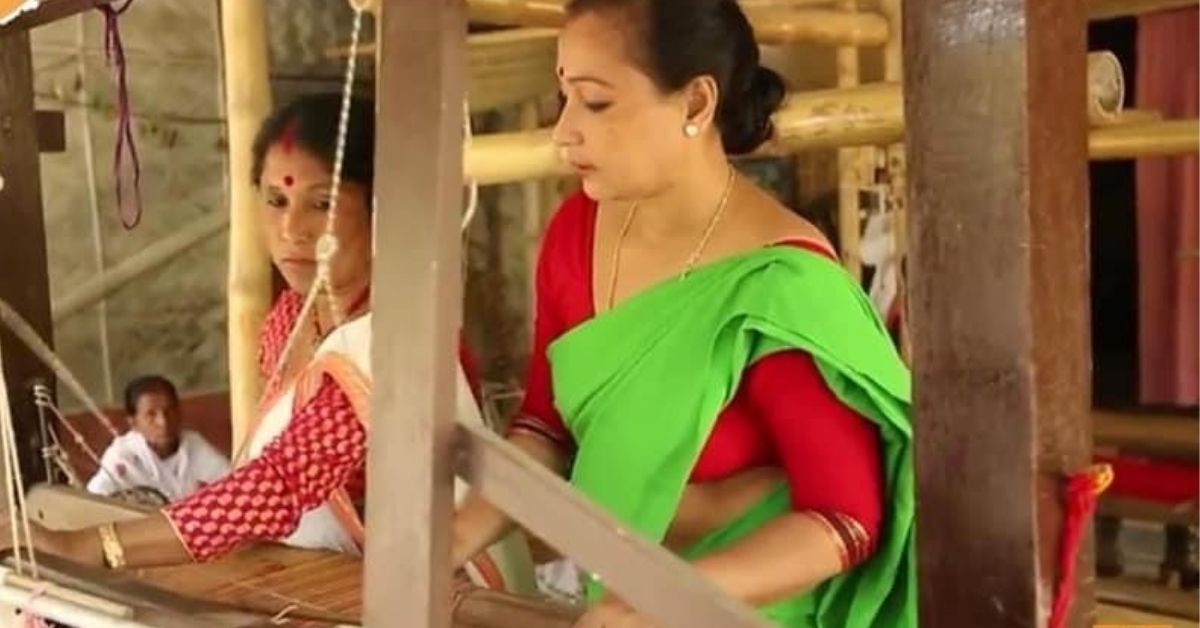
Dhriiti has set up micro enterprises for Arecanut Leaf Plate Manufacturing. Each arecanut leaf plate manufacturing unit provides direct employment to three persons and indirect employment to ten other persons. At the same time, it produced an eco-friendly alternative to dangerous plastics and polystyrene plates, using dried arecanut sheaths, otherwise wasted in these regions. Since these regions have a huge raw material supply, Dhriiti focuses on the four Bodoland districts of Baska, Chirang, Kokrajhar, Udalguri and the adjoining districts of Barpeta, Nalbari and Bongaigaon to promote this project. Dhriiti operates from its office in Barpeta, Assam and hopes to generate a business of more than 100 crores for rural North East by 2015.

So far, Dhriiti has established 44 units. Not only have over 5 lakhs plates been sold till now but the process has generated income of around 2 lakh for rural people by selling arecanut sheaths which was earlier deemed a waste product. The units, established at the house of the entrepreneurs, offer convenience and ease of self-employment.

The Raw Material Left for Drying

The Raw Material Left for Drying

Raw Material Entering Machine

Raw Material Entering Machine

Final Product coming out of the machine

Final Product coming out of the machine

The percentage of poor in Assam is the highest among the seven sister states of the North East. Around 36.09 percent of the State’s population continues to live below the poverty line. The incidence of unemployment, measured as a percentage of the labour force is increasing in Assam. The way out of the unemployment and insurgency scenario is to promote self employment. This is where the arecanut leaf plate industry comes in. Cheers to an organization that has tapped the opportunity in this sector, providing employment to not just the entrepreneurs but also to many others!

Contact Details

Dhriiti – The Courage Within
57A, Upper Ground Floor
Khizrabad, New Friends Colony
New Delhi 110065
Landline: 91-11-26843527 and 91-11-65963639


Tarani Bhawan,
Nakhanda Road,
Bilartari Hati,
Barpeta.
Assam- 781301
Landline:91-3665-236044, 235022

Email: info@dhriiti.org

Unnati Narang, Co-Founder of Serene Woods portal for authors and photographers, is the author of two books – ‘Drenched Soul’ (poetry) and ‘If At All’ (fiction). She is a freelance journalist for Times Ascent and enjoys blogging (www.l-b-w.blogspot.com) in her free time.

Neonatal Care in India: Raising a generation by raising awareness

Every seven minutes, a woman in India dies due to pregnancy-related complications. Over a million babies born in the country die within their first month of life. India has the unfortunate distinction of claiming more than a quarter of the total newborn deaths in the world. The majority of these deaths occur in rural areas where poverty and lack of knowledge about proper maternal and child health care are the real cause of these fatalities.

The Indian government has come up with schemes such as the National Rural Health Mission (NRHM) and the soon-to-be-launched National Urban Health Mission (NUHM) to address this dire situation. Both schemes give high priority to the issue of maternal and newborn health for marginalized communities, and seek to improve the availability of and access to quality health care for those at the lowest rung of the socio-economic ladder. Additionally, government programs such as the Janani Suraksha Yojana incentivize delivery in hospitals by encouraging mothers to opt for institutional deliveries.

While the government’s efforts are commendable, the complication arises in that people must first be aware of the problem before they can take advantage of the government services addressing it. And unfortunately, in many Indian households, where the basics of survival take center stage, the health of mothers and their newborns is not given much importance.

Effective development communication programs can play a pivotal role in bridging these knowledge gaps by identifying barriers to behavior change, analyzing these barriers, and developing original techniques to overcome them.

AKHA

For instance, in Assam, a collaboration between the Indian government, UNICEF, and local bodies is using a boat called Akha to reach underprivileged indigenous tribes that inhabit geographically isolated sandbars and islands called chaporis. The chapori residents, who live near the lifeline of Assam—the Brahmaputra river, are often cut off from accessing health care facilities due to floods and other natural hazards. What’s more, awareness about maternal and child health care is all but drowned out by the other concerns for survival that face this group.

The Akha Boat

The Akha Boat

The Akha, which comes equipped with medical staff and communications materials, makes visits to these isolated regions with the mission to regularly provide facilities for maternal and child health as well as promote awareness about health-seeking behaviors. Findings suggest that the service delivery undertaken by the boat, which has been continually expanding over the last few years, has dramatically improved thousands of lives. 71 percent of the chapori mothers sought some form of antenatal care during their last pregnancy; of these, 42 percent sought care from the Akha.

This is one example of how an intervention tailored to the specific needs of a community can raise awareness and create tangible change.

SURE START

Sure Start Path
Another example is the work done by a project called Sure Start—an initiative based at PATH, an international not-for-profit organization supported by the Bill & Melinda Gates Foundation. The project is working with rural communities in Uttar Pradesh and settlements of marginalized people in Maharashtra to help mothers and their children to survive and stay healthy.
The project’s communications program is innovative in its efforts to raise awareness and interest about maternal and child health care issues. In villages, for example, the “letter from an unborn child” campaign reached out to 40,000 fathers-to-be, educating them about the importance of taking care of their wives during pregnancy. In both Uttar Pradesh and Maharashtra, the program uses interactive and entertaining tools including dance, music, theater, and games to create awareness.

Mr. Nirbhay Singh, the elected head of one of the villages in Uttar Pradesh where Sure Start operates, estimates that since the program began in his village in 2008, 70 to 75 percent of adults in the community have become aware of safe delivery practices and the vital importance of ensuring access to maternal and child health services. One result is that payments under the government’s Janani Suraksha Yojana (a scheme that incentivizes institutional delivery) have increased alongside the growing awareness about the health benefits of giving birth in hospitals.

In this way, projects such as these use customized communication techniques to raise awareness of maternal and newborn health issues, thus helping local communities benefit fully from existing government schemes. It has often been said that knowledge is power, and the projects mentioned above give that power back to the communities they work in.

Sure Start works to educate women in India on maternal and neonatal health. Sure Start, an initiative by PATH, supported by the Bill & Melinda Gates Foundation works to promote safe childbirth practices in India.

Connect with PATH at:
Facebook: http://www.facebook.com/pages/Sure-Start-Project-by-Path/178629192101
Twitter: http://twitter.com/pathsurestart

Article courtesy: Vikas S from PATH Sure Start. Thanks Vikas!

The Better India News Update: In case you are in Ahmedabad, you can catch the talk by Anuradha and Dhimant Parekh, founders of TBI, at IIM-A’s Entrepreneurship Summit on Jan 12th and 13th, 2010. You can interact with us about this site, about your ideas, about our plans or anything else under the sun.

A Record That Bears Fruit

Not many people would have heard of Chaupakhi, a remote village in Assam. However it could be one of the latest entrants into the Guiness Book due to an eco-friendly afforestation initiative taken up by its residents. They succeeded in planting 280,000 saplings in just 24 hours, in a bid to outdo the previous record of 254, 469 planted by villagers in Nagapattanam, Tamil Nadu.

Manoj Anand writes in the Asian Age about this tree plantation drive and the man behind it:

The man behind motivating the Chaupakhi villagers for plantation drive was M.S. Manivannam, sub-divisional officer (civil) of North Salmara, who incidentally is from Tamil Nadu.
He told reporters: “Basically our purpose was also aimed at to involve the villagers in both eco-conservation and income generation activities. As we found a vast empty plot of land, we thought why not try out for tree plantation which has both eco-conservation and economic values. Moreover, the villagers can also get engaged under the National Rural Employment Guarantee Act.”

The benefits of such a mission are plenty. Besides guaranteeing an esteemed place in the Guiness Book for a hitherto unknown hamlet, it also provides employment and environmental benefits to the many residents of the place. Record or no record, let us hope the thought spreads, and such missions take root everywhere.

Read the complete article here.
Image Courtesy: www.tigerflag.com

Mushrooming Growth and Prosperity

All Ritamoni Dueri of Jalukbari village near Sonapur in Assam knew about mushrooms was that people have sometimes died after consuming them. She had no idea that they could be cultivated or that they could supplement her family’s meager income and enable them to live their lives better. Two years after the concept was introduced to her and other families near her village by Mushroom Development Foundation (MDF) based in Guwahati, almost 1000 families in 50 villages in and around Sonapur are happily growing mushrooms and reaping its benefits. Samudra Gupta Kashyap tells more about this profitable initiative in the Indian Express:

Within Sonapur, the MDF has also taken up an interesting campaign to attract more villagers towards mushroom cultivation. The Sonapur Anchalik Kathfula Krishi Samiti has put up a board with comics and cartoons illustrating their messages in Sonapur’s weekly haat held every Saturday. “Three of our local boys were sent to Don Bosco Institute in Guwahati for a four-day workshop on cartoons and illustrations, and they are carrying out this campaign on our behalf,” said Prasanna Daimari, director of the Samiti. And to drive home the message further, the Samiti has now planned to provide half a kg of mushrooms free to the stall at the haat where villagers have their meals. 

Not only did MDF have its task cut out for encouraging cultivation of mushrooms in Sonapur, since most of the population was not aware of this crop, but it also had to work hard to cultivate a market in the area.

MDF, meanwhile, has built up its own mechanism to provide the vital marketing linkage to the Sonapur growers to sell their produce. “Since Guwahati is a huge market, most of the mushrooms produced in Sonapur are sold in the city,” said Pranjal Baruah, an Ashoka Fellow, who is also the general secretary of the Mushroom Development Foundation. “We have set a modest target of production of five kilos of mushrooms for each family. Even if we are able to increase the monthly income by even Rs 3,000 for each of the 200 families who have taken to commercial growing of mushrooms, it will be a big achievement,” added Baruah. 

The MDF is also popularising mushrooms among people who have never tasted it. “We are using our personal contacts to introduce mushrooms in wedding receptions and other parties. One out of ten such parties have already begun to serve its dishes,” he said.

With its proximity to Guwahati, Sonapur has immense potential to grow into a hub for supplying skilled labour to the city. This is another project being undertaken by MDF with various other entities like Sonapur College to bring about development of the area.

The MDF is also looking at taking up a few more schemes for skill development of the local population. “Sonapur can provide a large number of plumbers, mechanics, masons, carpenters and electricians to the city. We are looking for partners to provide such skills to the village youth,” said Pranjal Baruah. 

Looks like good work is mushrooming everywhere!

For the complete article, click here.

Act Now For The Better India.

Image Courtesy: www.worldcommunitycookbook.org

A Clean Play!

Sanitation and clean drinking water are serious issues. And what better way to convey such a serious message than with the help of humorous plays? This is exactly what the Public Health Engineering Department (PHED) in Assam has undertaken to spread awareness about their programs and involve the intended beneficiaries.

These plays do not have a written script and adapt to the place where they are staged. They are also enacted with the help of local talent at the particular venue, so as to connect better with the people. Robin Chandra Das, an assistant executive engineer with PHED has conducted several such plays, and talks of its success to Teresa Rehman of Tehelka:

“We have few other staff members who assist me in staging the play. And in any locality, we often go hunting for local talent a few hours before the play is actually staged. We urge the women and children to participate in the play and once it is over, we hold an interactive session on sanitation. The humour in the play manages to strike the right emotional chord,” says Das.

The play also incorporates local dialects and even a few Assamese songs with the sanitation theme keeping the audience hooked. Another scene has a mother walking in with a boy who plays truant. The mother complains, “Earlier he used to skip school complaining of stomachache. But now that I have built a toilet at home with my savings, he cannot play around with the same excuse. Today, I heard something move. I thought that our neighbours had come out to defecate in the open but, instead, I saw my son perched on a tree near the bamboo grove.” She then explains to Jadu’s mother on the benefits of having a toilet at home and how it helps keep flies away.

The plays are a part of Total Sanitation Campaign (TSC) – a comprehensive program to introduce proper sanitation facilities in all rural areas with the broader goal of eliminating open defecation practice. In Assam, PHED is responsible for enforcing TSC and ensuring hygienic practices are followed, along with safe drinking water in all schools in rural areas. The government of India has been active in encouraging as well as recognizing their efforts.

The main goal of the GOI is to eradicate the practice of open defecation by 2010. To give fillip to this endeavour, GOI has launched Nirmal Gram Puraskar to recognise the efforts in terms of cash awards for fully covered PRI (Panchayat Raj Instituitions), and those individuals and institutions who have contributed significantly in ensuring total sanitary practices in their area of operation.

In the past two years, Assam has bagged eighteen Nirmal Gram Puraskars. Nareswar Kakati, Secretary, PHED, Assam told TEHELKA, “Our main target is to initiate behavioural change in the people using innovative means, paying special attention to whether they belong to the hilly terrain or the plains” The play is a small step in this direction but the sanitation campaign in Assam still has a long way to go.

The joint efforts of the state and central governments have given a tremendous boost to the sanitation program in Assam, and its results are plain to see. We hope that this serves as a lesson on how co-operation and initiative can help governments and men in power to clean up the country’s act.

Read the complete article here.

Image Courtesy: Ministry of Rural Development

Clothes Bank

This article is about a unique initiative called the Clothes Bank. Many people just throw their old clothes away. Old pair of jeans which one no longer fits in, an ancient sweater with some wool pulled off, a ragged t-shirt and all such clothing we abandon and move up to the latest fashion. You might want to donate, but the problem is how to find people who need such clothes?

To solve this, a Guwahati based NGO called Xavier’s Foundation has founded a unique Clothes Bank in association with the North Eastern Development Finance Corporation Limited (NEDFi).

The basic objective of this bank is simple – it collects clothes from people who no longer need them, and distributes these clothes to the poor and the needy. Its a brilliant idea and leaves one wondering as to why such an idea was not already implemented.

The Telegraph reports in this article:

“Our basic idea is to collect old clothes that can be still be used and make those available to the needy free of cost through different NGOs and other organisations which are working for the uplift of the poor and underprivileged,” Xavier’s Foundation president Pranab Jyoti Neog said. The idea is his brainchild.

For the donors:

He said the clothes bank would be good for donors as well because while disposing their old clothes they would be doing charity by ensuring that these clothes reach the needy and poor people free of cost.

If you live in Guwahati or nearby the city, you can donate your clothes at the office of the NEDFi which is house number 8 on Rajgarh Main Road. You can also call them at their office on +91-036-2529 202-06. (Contact number obtained from NEDFi website)

If we have numerous such clothes bank in our country, it would be a great help in cases of natural disasters (floods, earth quakes etc) since it would be easy to mobilize clothing to the affected people. In fact, why just a clothes bank we ask. We could also have an essential commodities bank wherein people can donate things like utensils, furniture, footwear etc. These banks could then take on the responsibility of distributing it to the needy. 

The Clothes Bank set up by NEFDi is a simple yet impactful idea and we hope this serves as an inspiration to many of us to take up such initiatives.

Read the complete Telegraph article.
Image courtesy: lime.com

Incredible India in a tiny Assamese village

We all know that tourism provides employment and income to millions in India. But have you heard of an entire village being trained to become a tourist hot-spot? This is the story of a small hamlet in Assam, mainly populated by impoverished families displaced by floods. These people have been trained for four years to play the perfect hosts to tourists, and come November, they will get the opportunity to display their new-found skills.

Durgapur, the little village on the fringes of the Kaziranga National Park, has about 70-odd families and has been jointly adopted by the ministry of tourism and the United Nations Development Program (UNDP). These families have borne the brunt of the worst floods, and most live below the poverty line. They do not have much to call their own, and there are not many avenues for making a living in this place. The skills being imparted to them via this initiative, with the help of several help-groups and NGOs like North East Social Trust (NEST) and Indian Institute of Hotel Management, aims to provide a regular source of income for these families.

Pullock Datta reports in The Telegraph about this interesting project:

Most of the families living in the village are below the poverty line and only a few own small plots of agricultural land.

“The villagers were provided training by the Indian Institute of Hotel Management and Catering Services at Guwahati and handicraft experts from Bangalore,” the NEST official said.

A troupe of dancers from the village even took classes at Uttar Kamalabari Satra in Majuli.

“Six youths were also provided training as tourist guides,” he said.

All the houses in the two square km village are Assam-style dwellings with thatched roof and bamboo walls.

It may sound a bit like a large-scale drama production where all the inhabitants have a role to play, and the entire village is a stage. However, if the production helps these unfortunate people earn a decent and honest living, it is an innovative solution to combat India’s enormous poverty.

Read the complete article here.

Image Courtesy: The Telegraph

Calendar

September 2010
M T W T F S S
« Aug    
 12345
6789101112
13141516171819
20212223242526
27282930  

Recent Comments

PROMOTION

"Neumonia and Other Sketch Stories" - A collection of sketch stories. Download the e-book for free. Click on the book cover below.
"The observations are acute: the sound of high heels on asphalt, the bit about how all BPO employees lose their hair very fast are spot-on. This book is a better, shorter alternative to any Sunday movie on TV. It's a little jewel" - Hindustan Times