







Neonatal Care in India: Raising a generation by raising awareness

Every seven minutes, a woman in India dies due to pregnancy-related complications. Over a million babies born in the country die within their first month of life. India has the unfortunate distinction of claiming more than a quarter of the total newborn deaths in the world. The majority of these deaths occur in rural areas where poverty and lack of knowledge about proper maternal and child health care are the real cause of these fatalities.

The Indian government has come up with schemes such as the National Rural Health Mission (NRHM) and the soon-to-be-launched National Urban Health Mission (NUHM) to address this dire situation. Both schemes give high priority to the issue of maternal and newborn health for marginalized communities, and seek to improve the availability of and access to quality health care for those at the lowest rung of the socio-economic ladder. Additionally, government programs such as the Janani Suraksha Yojana incentivize delivery in hospitals by encouraging mothers to opt for institutional deliveries.

While the government’s efforts are commendable, the complication arises in that people must first be aware of the problem before they can take advantage of the government services addressing it. And unfortunately, in many Indian households, where the basics of survival take center stage, the health of mothers and their newborns is not given much importance.

Effective development communication programs can play a pivotal role in bridging these knowledge gaps by identifying barriers to behavior change, analyzing these barriers, and developing original techniques to overcome them.

AKHA

For instance, in Assam, a collaboration between the Indian government, UNICEF, and local bodies is using a boat called Akha to reach underprivileged indigenous tribes that inhabit geographically isolated sandbars and islands called chaporis. The chapori residents, who live near the lifeline of Assam—the Brahmaputra river, are often cut off from accessing health care facilities due to floods and other natural hazards. What’s more, awareness about maternal and child health care is all but drowned out by the other concerns for survival that face this group.

The Akha Boat

The Akha Boat

The Akha, which comes equipped with medical staff and communications materials, makes visits to these isolated regions with the mission to regularly provide facilities for maternal and child health as well as promote awareness about health-seeking behaviors. Findings suggest that the service delivery undertaken by the boat, which has been continually expanding over the last few years, has dramatically improved thousands of lives. 71 percent of the chapori mothers sought some form of antenatal care during their last pregnancy; of these, 42 percent sought care from the Akha.

This is one example of how an intervention tailored to the specific needs of a community can raise awareness and create tangible change.

SURE START

Sure Start Path

Another example is the work done by a project called Sure Start—an initiative based at PATH, an international not-for-profit organization supported by the Bill & Melinda Gates Foundation. The project is working with rural communities in Uttar Pradesh and settlements of marginalized people in Maharashtra to help mothers and their children to survive and stay healthy.

The project’s communications program is innovative in its efforts to raise awareness and interest about maternal and child health care issues. In villages, for example, the “letter from an unborn child” campaign reached out to 40,000 fathers-to-be, educating them about the importance of taking care of their wives during pregnancy. In both Uttar Pradesh and Maharashtra, the program uses interactive and entertaining tools including dance, music, theater, and games to create awareness.

Mr. Nirbhay Singh, the elected head of one of the villages in Uttar Pradesh where Sure Start operates, estimates that since the program began in his village in 2008, 70 to 75 percent of adults in the community have become aware of safe delivery practices and the vital importance of ensuring access to maternal and child health services. One result is that payments under the government’s Janani Suraksha Yojana (a scheme that incentivizes institutional delivery) have increased alongside the growing awareness about the health benefits of giving birth in hospitals.

In this way, projects such as these use customized communication techniques to raise awareness of maternal and newborn health issues, thus helping local communities benefit fully from existing government schemes. It has often been said that knowledge is power, and the projects mentioned above give that power back to the communities they work in.

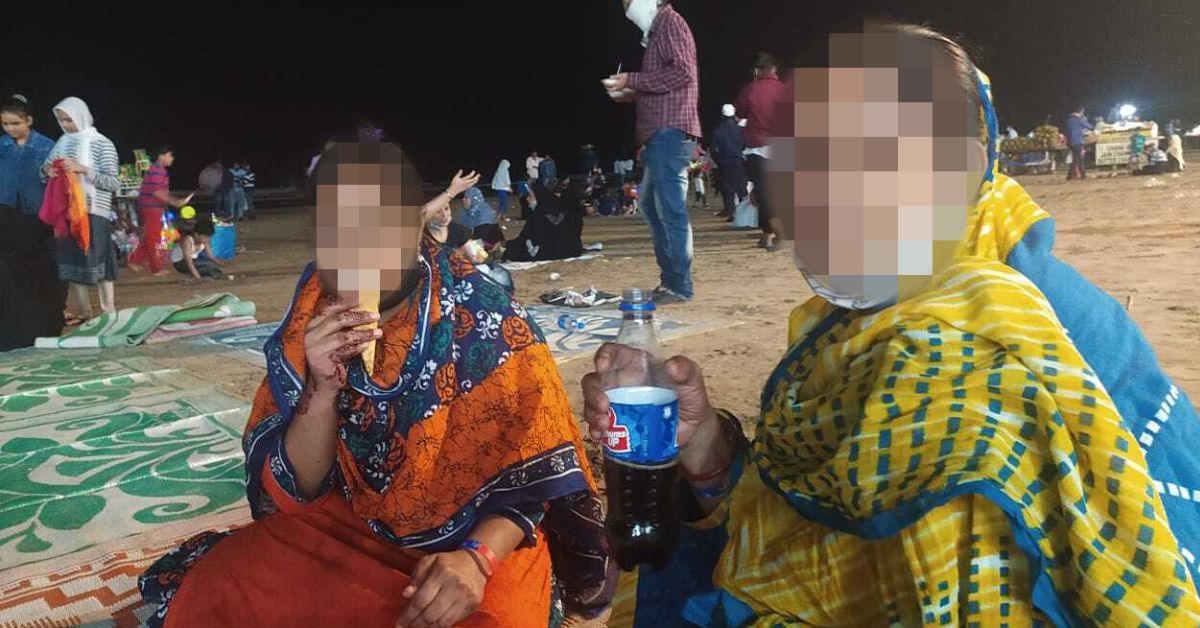
Sure Start works to educate women in India on maternal and neonatal health. Sure Start, an initiative by PATH, supported by the Bill & Melinda Gates Foundation works to promote safe childbirth practices in India.

Connect with PATH at:
Facebook: http://www.facebook.com/pages/Sure-Start-Project-by-Path/178629192101
Twitter: http://twitter.com/pathsurestart

Article courtesy: Vikas S from PATH Sure Start. Thanks Vikas!

The Better India News Update: In case you are in Ahmedabad, you can catch the talk by Anuradha and Dhimant Parekh, founders of TBI, at IIM-A’s Entrepreneurship Summit on Jan 12th and 13th, 2010. You can interact with us about this site, about your ideas, about our plans or anything else under the sun.

Comics for a Cause

We have all read comics when we were young. Many of us continue to read them due to their fascinating nature of conveying stories very easily.

But comics need not necessarily confine to the comedy genre. Can they be used to communicate an issue, a cause or a fact? World Comics India, led by Sharad Sharma, is doing exactly that – using the power of comics to bring about a social change!

World Comics India is a collective of cartoonists, media persons and grassroots activists. This organization makes use of comics to serve as a communication tool and as a mode of self-expression in remote areas of not only India, but many countries in South Asia.

Sketch of a Village Well

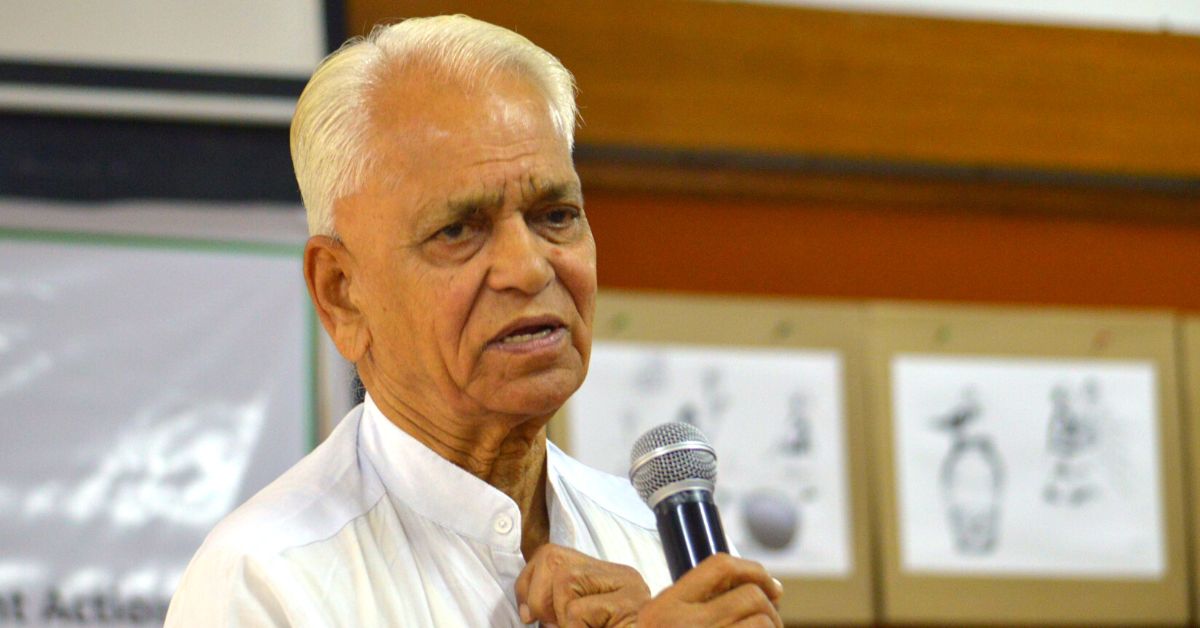
Sharad Sharma, who leads World Comics India, is a cartoonist from Jaipur and has initiated numerous workshops where cartoons and comics are used to spread awareness. A novel idea indeed, considering that comics can easily cut across language barriers!

One of their campaigns was the Girl Child Right Campaign which aimed to address the issue of female infanticide in the region of Western Rajasthan. Here, they trained children and adults in comics making. These trained people in turn created over 300 comics focused on the girl child’s rights. World Comics India then conducted a road-based tour with all this material which was distributed to various villagers and local leaders. You can view all the comics created as part of this campaign here: Girl Child Right Campaign Comics

Similarly, they had also initiated a campaign against corporal punishment in Uttar Pradesh. Students of a school in Maharajganj used comics to spread awareness amongst teachers that punishment by beating is not really the right way to discipline children. Details of this campaign available here: Corporate Punishment campaign.

Their website is comprehensive with a lot of material available for people and organizations to make use of. For instance, the entire manual on how to go about creating these comics is available in both English and Hindi (both files are about 2 MB each).

If interested, you can download a series of videos available on their website which showcases how the various campaigns were initiated and also on how World Comics India trains people in the art of comics making! Click here to view and download all resources related to World Comics India, including a book written by Sharad Sharma and Leif Packalen titled “Grassroots Comics – A Development Communication Tool”.

For contact details, please visit their website www.WorldComicsIndia.com

Pointer to WCI provided by Sunandini Basu of Inktales

Entries Invited – Innovation for India Awards

Mumbai, August 26, 2009: Marico Innovation Foundation announces its 3rd edition of the Innovation for India Awards to be held on 12th March 2010 in Mumbai. A significant initiative by Marico – the “Marico Innovation Foundation” was founded in 2003, with an objective to fuel Innovation in India. Under the leadership of stalwarts like Dr. Ramesh Mashelkar, the Foundation focuses on providing the country with a belief that Innovation is a crucial way to leapfrog into the center stage of global business leadership.

Over years the Foundation has effectively played the role of a catalyst by creating knowledge through years of in-depth research, multiplying this knowledge through various platforms and recognizing breakthrough innovations through its Innovation for India Awards.

The Awards nomination process for this year has started and applications are being invited till September 2009. Click here to Apply Now

Innovation for India Awards is the prestigious recognition for business and Social entities that have done some amazing breakthroughs that could hold lessons across all sectors. This year the Innovation for India Awards has added a new category- Public Services, which includes all innovations by Central or State government or any wing of the government including public-private partnership has innovated and have displayed a ‘clear public impact’.

So far the Awards have been recognizing and applauding outstanding leadership with innovative focus in Business and Social arena. Its intent is to reward projects and businesses that make a real difference to India and community at large. Based on the criteria of uniqueness, impact & scalability, ‘India’s Best Innovations” are declared at these Awards. Over the last 3 years, 23 such innovators have been recognized which includes organisations like Kirloskar Brothers, BOSCH MICO and Titan Industries Limited & Azim Premji Foundation, MV Foundation, Trichy Police and Kudambashree, ITC IBD,  Evalueserve. Tata Motors was recognised for their spirit of Innovation – The NANO by being bestowed with the Global Game Changer Award at the 2008 Awards.

What do the Winners Get? The Award winners will get felicitated in Mumbai in the presence of industry stalwarts and some of the best innovators in the country. Besides a a cash prize of Rs 1 lakh, the Foundation would also extend its illustrious Governing Council’s support as mentors to the winners and a platform with VCs and angel investors.

Any Indian company, social organization, government body and/or individuals who have successfully conceptualized and nurtured a brilliant idea, made it work and brought it to market is eligible to participate.

The three categories under which Innovation will be awarded are – Business Innovation (Products/Services, Business Model and Innovation in social space by a business organisation) and Social Innovation (innovation by a social organisation). Public Services Innovation (innovations by Central or State governments or any wing of the government including public-private partnership)

The guiding principles for selection of Awards are transparent, Qualitative, Consistent and Fair. A high profile jury consisting of India’s most respected and eminent personalities, will judge the Innovations on the basis of its uniqueness, sustainability and scalability through a rigorous four-stage selection process.

For the purpose of evaluation of candidates, and architecting the awards process, the Marico Innovation Foundation uses Erehwon Innovation Consulting’s path-breaking innovation methodology and framework. This methodology has been used successfully for innovation evaluation across various platforms globally.

Dr R A Mashelkar,FRS CSIR Bhatnagar Fellow, National Chemical Laboratory & Chairman of The Marico Innovation Foundation states that “The Foundation’s mission is to encourage Innovation in India, by providing the nation with a belief that Innovation is indispensable and is the way to leapfrog India into the center stage of global business leadership. Through these awards we want to commemorate projects and businesses that make a real difference to the country and community at large.”

“Innovation in India is a key theme in India’s global repositioning as an emerging economic superpower. With the second edition of the Innovation for India awards, the Marico Innovation Foundation seeks to continue to fuel innovation in India- amongst other achievements, let Indian businesses build a cascade of successful and enduring Indian Global brands,” believes Mr. Harsh Mariwala, Council Member, Marico Innovation Foundation & Chairman and Managing Director, Marico Limited

Photographs from last year’s event:

(from the left)-Actor & Director, Aamir Khan, Ad-Guru & Lyricist, Prasoon Joshi in discussion with Mr. Arun Maira, Chairman

(from the left)-Actor & Director, Aamir Khan, Ad-Guru & Lyricist, Prasoon Joshi in discussion with Mr. Arun Maira, Chairman

Mr. Sam Balsara, CEO Madison, awarded Mr. Kunwer Sachdev, CEO Su-Kam Power Systems Ltd. for Innovation in Business Process

Mr. Sam Balsara, CEO Madison, awarded Mr. Kunwer Sachdev, CEO Su-Kam Power Systems Ltd. for Innovation in Business Process

About Marico Innovation Foundation

The Marico Innovation Foundation was created in March 2003 under the stewardship of Dr. Ramesh Mashelkar. The Foundation’s Mission is to Fuel Innovation in India, by providing the nation with a belief that Innovation is possible and is the way to leapfrog India into the center stage of global business leadership. The Foundation also believes that a framework will enable leverage innovation for quantum growth. The foundation is steered by a governing council that oversees both its vision and direction.

The reach is first envisioned to cover the business community, both professional and entrepreneurial.  The reach will soon expand to future business leaders and the general public.  The Marico Innovation Foundation is led by its Council Members, who are visionaries like Dr R A Mashelkar, FRS, CSIR Bhatnagar Fellow, National Chemical Laboratory, Anu Aga, Chairman, Thermax, Sam Balsara, CEO, Madison, Ashwin Dani,  Vice Chairman, Asian Paints, Ranjan Kapur, Country Manager, WPP, Arun Maira, Chairman, Boston Consulting Group, Harsh Mariwala, Chairman & Managing Director,  Marico, K V Mariwala, EX-Director, Marico, Rajiv Narang, Chairman & Managing Director, Erehwon Innovation Consulting, Dorap Sopariwala, Consultant. Visit www.maricoinnovationfoundation.org for more information.

Divya Chaya Trust

The Divya Chaya Trust (DCT) was established in 1984 mainly to help destitute children and women. Their main aim was to support educational and vocational activities at schools in rural areas and encourage educating the orphans and school drop outs.

Their work is significantly differently as they impart career counseling and provide students with opportunities for further studies. The trust holds confidence building therapies in order to enable women to support themselves financially.

Divya Chaya Trust is located at various states across the northern part of India including West Bengal, New Delhi, Uttar Pradesh and Haryana and is currently working with various child care homes and ashrams. These include the SD Jain Mahila Ashram and Arya Bal Griha at Delhi, Ramakrishna Vivekananda Mission situated in West Bengal and Delhi.

The trust has around 49 employees who work full time for the establishment and betterment of their reach. Apart from the above, there are approximately 50 volunteers who are working for the same mission.

Their remarkable achievement for the year 2007-2008 is that they have sponsored educational expenses for 500 children. They also had organized seven career counseling sessions for more than 150 children who had graduated and were looking out for jobs.

Their contribution towards the growth of special children with various disabilities is also outstanding. Although the government claims that of the total disabled population only 2% are educated and very few are employed, the DCT is doing their best overcome these figures and make them more presentable for the country. To achieve the same, the trust has various services which are solely for the disabled. They have a range of options to reach the disabled, which include financial aids, or even providing them with simple basic necessities like a hearing aid, a wheel chair or even a Braille kit. A contribution from our end towards supplying these necessities would definitely be of immense support to them.

The most disappointing fact, however, remains that their total income is severely lower than their expenditure. The trust did loose a significant amount which could have been well avoided, had there been enough contribution made towards the trust from citizens.
Despite this, the trust did not loose hope and has recently built a residential home for the elderly at Haryana.

It is truly incredible to know that citizens of our country are going beyond their reach to dissolve the bridge between the privileged and under privileged by ensuring that primary education and fundamental living necessities are being provided to significant section of people.

Read more about Divya Chandra Trust here: http://www.divyachayatrust.org.in/

NGO write up done by guest reporter Jheel Parekh.

Breathing New Life Into Old Trees

peepal-tree2How many people would pay from their own pockets to restore life into old trees? Perhaps not many. That is why it is inspiring to hear about Dr Ramana Rao, who paid nearly Rs one lakh of his own to relocate two ancient peepal trees that were felled in Bangalore to make way for new roads.

Catching sight of the two giant trees – one 225 years and the other 240 years old, lying at the side of a highway, Dr Rao decided he could not let them die. With the help of 40 people and two 50-tonne trailer trucks, he managed to transport the trees to T Begur village, where they have been planted and given a new life.

Dr Rao wishes he could find sponsors for many more such rescue efforts, as more and more trees are being subject to the axe. Infrastructure projects in Bangalore have recently evoked the ire of citizens in their injudicious and widespread tree-felling. The latest victim to this mass tree-cutting drive has been the pristine locale of Lalbagh – a 250-year old botanical garden that has been the pride of Bangalore since the days of Hyder Ali.

A portion of this beautiful garden has been earmarked to make way for the Bangalore Metro rail project, which will lead to the felling of nearly 300 old and lovingly preserved trees. Dr Rao wishes the City authorities would take an interest in conserving trees, especially those of great significance like the ones in Lalbagh.

“These trees have seen and weathered so many storms. It would be tragic to uproot them merely for the sake of new infrastructure,” he said.

Citizen protests have fallen on deaf ears as the government refuses to consider alternatives. Read more about the citizen efforts and how you can participate at Hasiru Usiru. There is also a rally on Saturday, May 9th, at 8.00 am on Nanda Road in a final bid to save these trees. Bangalore readers, do try and be there to lend your support to the campaign.

Deccan Herald carries the remarkable story of Dr Rao’s efforts in this article.
Image Courtesy: Flickr

Link Courtesy: Faiq Gazdhar. Thanks!

The Common Man

A 16-year old who teaches 600 students in his backyard. A single man who led to an entire city being declared smoke-free, a year before the nation enforced it as a law. The saviour of the endangered whale shark who has rescued as many as 50 so far. A former Tisco employee who gave up her secure job to help poor tribal families in a remote Maoist-infested village build a new life. And a Physics professor who learnt all there is about rain water harvesting and then made it mandatory for all official buildings in Tamil Nadu. These are just some of the everyday heroes that are doing their bit to change lives, whether they are recognized for it or not.

Babar Ali is a class XI student in Berhampore, West Bengal. Moved by the plight of poor parents who could not afford to send their children to school, this youngster has been conducting classes after his school hours since he was 11. His students come from nearby villages, some even walking four km to reach his house. In order to induce better attendance, Ali also managed to get government officials to distribute free rice at the end of the month.

Besides lessons, the children are drawn by the free rice distributed at the end of each month. “Attendance was falling drastically. That is when I hit upon this idea. As my school is not recognised by the government, I couldn’t have got free rice. But government officials helped me,” says Ali.

Ali has big dreams for the future. “I dream that my school will grow and expand to other parts of the state and country where children want to but can’t go to school.” But for now, he will be content if his students get a proper classroom.

——

Hemant Goswami had been committed to act against tobacco since a school project he did in 1987. In 2004 he filed a writ petition with the Chandigarh High Court, following which the government was instructed to follow the tobacco Act in letter and spirit.

In 2005 when the Right to Information Act (RTI) came into force, Hemant decided to use it to make Chandigarh the first smoke-free city. He filed over 300 RTI petitions with all government departments and offices, raising questions about their adherence to tobacco control laws. In a year, more than 1,800 signboards warning people of the health implications of smoking were up in all government offices. Educational institutes too fell in line.

Hemant’s efforts finally resulted in Chandigarh being declared smoke-free in July 2007. But he didn’t rest even after that. He continues to monitor the proper enforcement of the law, and smokes out the violators.

——

Dinesh Goswami is a daily wage earner in Junagadh district of Saurashtra in Gujarat. But every time he hears of the whale shark being indiscriminately hunted by fishermen on the rough and choppy sea off the coast of Saurashtra, he rushes to their rescue.

Describing his most dangerous rescue so far, Goswami recounts, “State officials called me after reports that a shark was trapped in a net. After we set off, the sea got very rough and every minute, we thought the boat would overturn. Thankfully, we managed to save the whale shark and return safely.” Goswami now runs Paryawaran Mitra, an NGO for the protection of sea animals.

Having learnt about the whale sharks and their plight in a documentary by environmentalist Mike Pandey, Goswami decided to make it his mission to save them every time they are in danger.

——

In Purulia, along the Bengal-Jharkhand border, Jayati Chakraborty has started a school to help a tribe called santhals build a better future. Inspired by an NGO run by Kamalesh Chakraborty for developmental work in the area, she decided to stay on and make a difference.

She quit her job, faced down appalled friends and family. “They found it hard to believe that I would be better off working with poor people in a godforsaken village.” And she tried new things — linseed and tomato farming — finally deciding the area needed a school. “We converted a hall into a classroom and started with 66 students in 2001. It seemed the school was waiting to happen,” she says. Students pay Rs 30 a month. But paid pupil or not, no one is turned away.

—–

Chennai-based professor Sekhar Raghavan’s passion for saving and harvesting water found an outlet when he worked with the Centre for Policy Studies, which examines traditional ways of living.

He says he found “we had the complete records of Chengelpet district for 200 years and realized rain-water harvesting is not new, it’s just something we had forgotten”.

His Akash Ganga Trust eventually led to rainwater harvesting becoming compulsory for all buildings in Tamil Nadu in 2002.

—–

Thus we see that it is possible for a single person to change the lives of many, even while performing normal duties like going to school or earning a daily wage. All our barriers are just imaginary.

Read the complete article in Times of India here.
Image Courtesy: jyothsnay.wordpress.com

Transforming lives in the Shimla Hills

The hills of Shimla are rich and fertile. All major agricultural products are grown here, including  wheat, rice, pulses, potatoes, ginger, turmeric and many other fruits and vegetables. However, in the early 1970s, the problem was that the menfolk of this area would squander away all their income on liquor. Women were deserted and led miserable lives. Enter Subhash Mendhapurkar who transformed the lives of the women in the Shimla Hills.

Kallol Bhattacherjee of The Week writes this extensive report on Subhash Mendhapurkar and how he brought about a revolution in the hills of Shimla:

Mendhapurkar knew it was not going to be easy in Shimla. He started off in a room in a youth hostel near Jagjit Nagar village. The chain-smoking young man punching the keys on a rickety Remington intrigued the local people. He started introducing the women to feminist thoughts. “Sometimes he would stay up for weeks as people came continuously to consult him,” said Vimla Devi. 

Under his guidance, the women learnt of a rule that every liquor vendor needs to seek permission from the Gram Panchayat to open a store.
This then led to more active involvement from the women:

The hills were changing. In 1983, Mendhapurkar ended his association with SWRC and started Sutra (Social Uplift Through Rural Action) with rural women as members.
“We told liquor vendors to seek permission of the panchayat members before vending liquor in the neighbourhood,” said Leela Devi, one of the pioneers of Sutra. The panchayat was still under the thumb of the menfolk, and female panchayat members’ role was limited to making tea and pakodas for the male members. Mendhapurkar asked the women to decide if they required a liquor vendor in their neighbourhood. “If not, you should form majority in the panchayat meetings and convey your opposition through mahila mandalis,” he told them. The women just did that and nixed every attempt to open new liquor shops. “We mobilised all the women suffering from alcoholic husbands and ensured that they formed majority in every panchayat meeting,” said Vimla Devi, who emerged as a prominent anti-liquor crusader. 

Subhash just didn’t stop there. He also looked actively in to the issues faced by the women who were deeply reliant on the mountain lands for their living:

The forest department had been planting thousands of pine trees on the hill slopes to prevent soil erosion. But it was of no help to small women entrepreneurs. “What is good for the forest department is often not useful for women. They want small fruit trees that hold soil, and grass which is good for their cows,” said Mendhapurkar. How to use mountains for social benefit without triggering landslides in the rains was a challenge that pushed him to understand them better. Now he visits the International Centre for Integrated Mountain Development, Kathmandu, to deliver an annual lecture in December. According to Mendhapurkar, since women control the rural economy in the Shimla Hills, and since they benefit from forestry, the Shimla-Kassauli region of the Shivalik ranges should be utilised for female health and their economy. 

Subhash then went ahead and introduced the concept of water harvesting to help women manage water resources better. The association started by him, Sutra, became immensely popular. After focusing on these livelihood issues, Subhash then turned to healthcare and micro-credit to make them more independent:

“Denied care and affection, and always illiterate, these women did not know how to improve their condition,” he said, narrating a campaign he began in the mid-1980s for single women. It is known as Ekal Naari Shakti Sangathan or simply ‘ekal’ in the hills. 

Hearing of the campaign in the hills, women from all over Himachal Pradesh sent requests for similar help. In Hamirpur and Una districts, a large number of single women were HIV+ thanks to their husbands who were migrant workers. In April this year, around 3,000 single women from rural Himachal marched to Shimla, and Chief Minister Prem Kumar Dhumal promised them that the rural single women would get free treatment for all ailments in government hospitals. “We want respect for single women of Himachal villages. We should not be treated differently,” said Nirmal Chandel, leader of Ekal. By 2009, Ekal will launch its pan-Indian avatar.

The impact of all that Subhash has done is there for everyone to see. The article says:

The impact of Mendhapurkar’s work is best felt in the way the sex ratio in Solan district has stabilised at 940 females to 1,000 males, which was much lower earlier. 

Truly, what Subhash has managed to achieve is a lot and beyond what can be put in words in a single article. And of course, the hills have changed. The Better India salutes the spirit of Subhash Mendhapurkar and all his associates who helped bring about this change.

Read the complete article which covers the initial days of Subhash and how he managed to bring about these transformations.

Image courtesy: Arvind Jain of The Week.

Act Now For The Better India.

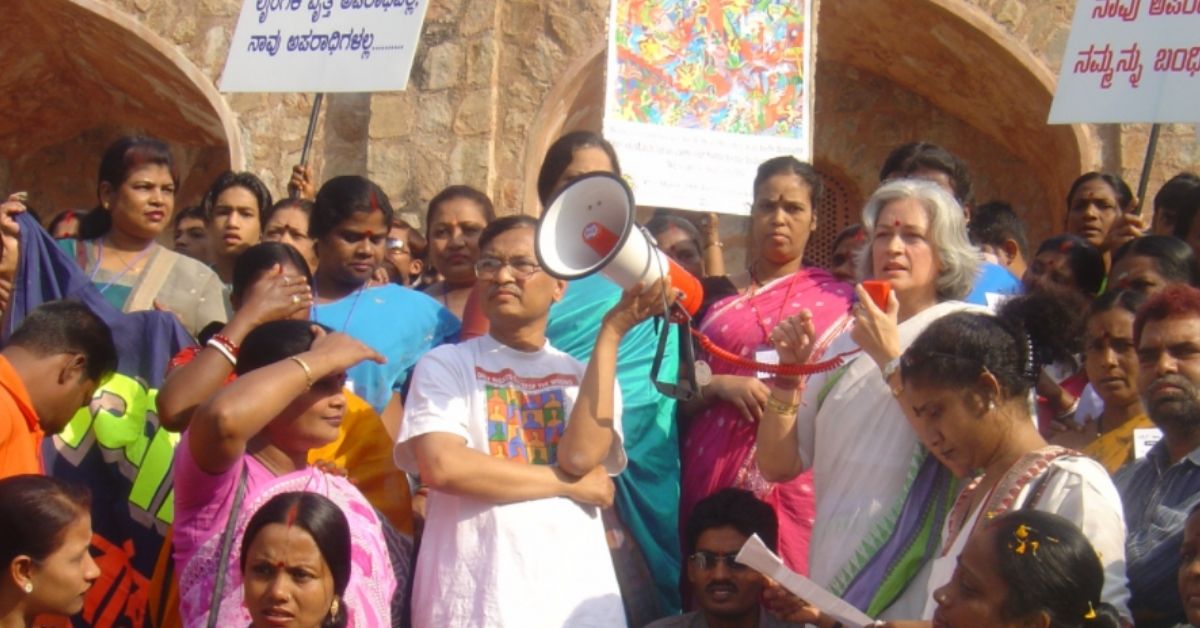
The courage of one woman stubbed out smoking in an entire nation!

Not many know that Kerala was the first state to ban smoking in public places way back in 1999. And this had come about by the mantel taken up by a single woman professor, Monamma Kokkad, who had the courage to stand against tobacco giants and smokers’ ire and file a petition for the smoking ban. The historic verdict of the Kerala High Court on July 12, 1999 is the backdrop for the current smoking ban implemented all over India on Gandhi Jayanti.

Monamma looks like an unlikely person to be spearheading an anti-tobacco campaign but this 61-year old retired English professor from Kottayam had enough reasons to. She had been exposed to a lot of “insensitive” smokers during her regular work commutes. On one such occasion, one of her colleagues who was an asthma patient, fainted in the train. Even this did not move the smokers, and Monamma decided to take on the challenge of fighting for the right of the passive smoker. John Mary expresses Monamma’s views in this article in Outlook India:

But what led this affable teacher to take up the cudgels? It was while commuting by train between Kochi and Kottayam that she was exposed to “insensitive” smokers. Recalls Monamma: “The up and down journeys used to be a torture. Men would puff away as if it was their birthright. Some of them couldn’t care less and swirled the smoke at us. There would be just me and three other ladies in the mixed coach. Working women were themselves rare in the ’70s, let alone their trying to take on smokers.”

But what really made her determined to take up the fight later was an incident involving her colleague, an asthma patient, who fainted in the train unable to suffer the smoke. “The people smoking would not stub their cigarettes even after I requested them. That’s when I raised my voice…. Don’t non-smokers have a right to inhale pure air?” she asks.

Monamma had to overcome a lot of barriers in terms of lack of information and support, but she stood her ground and won her cause. In fact, the Kerala ban was so effective that the police claim that only one percent of smokers light up in public places, a number likely to go down further with the national ban. No doubt Monamma breathes easy these days!

See also: Citizen essay on the smoking ban

Read the complete article here.

Image courtesy: Outlook India

The Erin Brockoviches of India

Do you think that the consumer rights movement is non-existent in India? Do you think that nobody bothers to file a complaint and fight a case if they have been wronged by a faulty product or deceived by false claims? Then chances are you don’t know about these consumer rights activists who fight tooth and nail to try and get citizens their due in consumer courts. Meet Mala Banerjee and C.P.Rai – two of India’s many dedicated advocates of the consumer’s cause.

Banerjee has helped scores of people across Bengal find justice as she drafts away new complaints as and when any grieving party comes to seek her help, without charging a rupee. Now 50 years of age, she still remembers the promise she made to Mother Teresa to help people, and for free. She can be reached at 9831046377. Writes Charu Sudan Kasturi in The Telgraph:

She may lack the glamour of Erin Brockovich, the California consumer rights activist played by Julia Roberts in an award winning film eight years ago, but Banerjee has helped dozens across Bengal find justice.

As a fresh law graduate just exiting her teens, Banerjee had worked at Mother’s Missionaries of Charity as an unpaid ayah.

“When I was leaving, Mother made me promise that I would continue to work for the people, and for free.”

Banerjee chose to work on consumer rights; she thought her legal training would help.

C.P.Rai and his dreaded typewriter

C.P Rai at his typewriter

C.P.Rai is a 70-year old retired government employee and now spends a large part of his time addressing the petitions of dozens of ordinary government employees and doling out free advice to others. One of his main points of contention against the government is that there is an application charge for the filing of complaints in the consumer courts. This could start with Rs.100 for a claim of Rs.1 Lakh, and go up to Rs.500 for higher claims. Rai believes that this is a major deterrent for poor people to file their complaints, and should be done away with.

When Rai’s fingers clatter against the keys of his three-decade-old Godrej typewriter, it often portends potential trouble for government agencies or private companies that stand accused of hoodwinking or cheating customers.

Rai is occupied these days devising his latest strategy to challenge Delhi’s bus system that he says quietly cheats people. “I have been battling the Delhi Transport Corporation (DTC) for nine years now. Buses are the common man’s mode of transport and appear cheap. But quietly, they have been looting you and me,” he says, his eyes flashing but his voice calm as he explains.

There are others like professors Sri Ram Khanna and Bupinder Zutshi who have contributed to the movement by introducing consumer rights into the curriculum at Delhi University and JNU respectively. They have also floated organizations like Voluntary Organization in Interest of Consumer Education (VOICE) and Consumer Voice, an online magazine for consumer awareness.

These crusaders for consumer rights have ensured that the hapless customer has a voice against injustice and at least a chance in hell against the mammoth corporations and their might.

Read the complete article here.

Image Courtesy: The Telegraph

Calendar

March 2010
M T W T F S S
« Feb    
1234567
891011121314
15161718192021
22232425262728
293031  

PROMOTION

"Neumonia and Other Sketch Stories" - A collection of sketch stories. Download the e-book for free. Click on the book cover below.
"The observations are acute: the sound of high heels on asphalt, the bit about how all BPO employees lose their hair very fast are spot-on. This book is a better, shorter alternative to any Sunday movie on TV. It's a little jewel" - Hindustan Times