Divya Chaya Trust

The Divya Chaya Trust (DCT) was established in 1984 mainly to help destitute children and women. Their main aim was to support educational and vocational activities at schools in rural areas and encourage educating the orphans and school drop outs.

Their work is significantly differently as they impart career counseling and provide students with opportunities for further studies. The trust holds confidence building therapies in order to enable women to support themselves financially.

Divya Chaya Trust is located at various states across the northern part of India including West Bengal, New Delhi, Uttar Pradesh and Haryana and is currently working with various child care homes and ashrams. These include the SD Jain Mahila Ashram and Arya Bal Griha at Delhi, Ramakrishna Vivekananda Mission situated in West Bengal and Delhi.

The trust has around 49 employees who work full time for the establishment and betterment of their reach. Apart from the above, there are approximately 50 volunteers who are working for the same mission.

Their remarkable achievement for the year 2007-2008 is that they have sponsored educational expenses for 500 children. They also had organized seven career counseling sessions for more than 150 children who had graduated and were looking out for jobs.

Their contribution towards the growth of special children with various disabilities is also outstanding. Although the government claims that of the total disabled population only 2% are educated and very few are employed, the DCT is doing their best overcome these figures and make them more presentable for the country. To achieve the same, the trust has various services which are solely for the disabled. They have a range of options to reach the disabled, which include financial aids, or even providing them with simple basic necessities like a hearing aid, a wheel chair or even a Braille kit. A contribution from our end towards supplying these necessities would definitely be of immense support to them.

The most disappointing fact, however, remains that their total income is severely lower than their expenditure. The trust did loose a significant amount which could have been well avoided, had there been enough contribution made towards the trust from citizens.
Despite this, the trust did not loose hope and has recently built a residential home for the elderly at Haryana.

It is truly incredible to know that citizens of our country are going beyond their reach to dissolve the bridge between the privileged and under privileged by ensuring that primary education and fundamental living necessities are being provided to significant section of people.

Read more about Divya Chandra Trust here: http://www.divyachayatrust.org.in/

NGO write up done by guest reporter Jheel Parekh.

Village Service Trust

Village Services Trust (VST) is an NGO based in Tamil Nadu with a mission to facilitate rural development through community development projects. Their vision is to “serve the basic needs and priorities of the socially, educationally and economically backward sections of women, foster rehabilitation and overall development of the physically challenged and provide utmost care and support for child welfare”.

VST’s main focus areas are women’s empowerment and child welfare and they currently operate in the Dindigul and Kanyakumari districts of Tamil Nadu. Many of their initiatives, targeting the areas of education, health and overall welfare, are implemented in tandem with the state government and other NGOs operating in these areas.

VST has enabled the formation of women’s group in village to campaign for better representation and involvement in key decision making processes. They also have implemented a Grameen Bank model micro credit system that is supported by Self Help Groups (SHGs). These SHGs have also been successful in building community network within these societies for women and the marginalised.

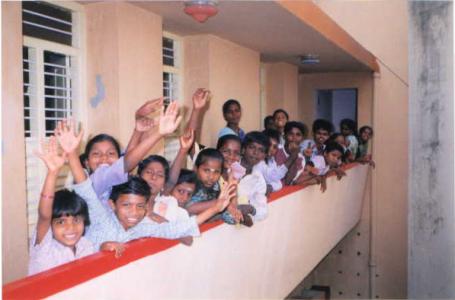
vst-children-at-shelter

VST also runs health centers to provide medical, maternity consultations and counselling. In collaboration with the Aravind hospital, Madurai, VST has organized eye and dental camps. They are also active in spreading awareness about personal hygiene, HIV, STDs, immunization and family planning.

The other major focus for VST is child welfare with emphasis on rehabilitation of abandoned and abused children. VST rescues at-risk children and provides them shelter, education, vocational training and, more importantly, an opportunity to lead a normal life again. The child rehabilitation project has been operational since 1999 at their Dindigul center. It is estimated that there are 3500 children living on the streets of Dindigul.

Many of the abandoned or run-away children seek work in factories and shops to earn a living. Their predicament makes them easy victims of sexual, labor and/or drug abuse. VST seeks to help these children by help strengthen family structure to minimize run-aways, scouting for and reaching out to the abandoned as early as possible and shelter them before abuse. They also rescue abused children and provide a safe shelter where they can grow in a nurturing environment.

At present, there at 83 children being cared for at the shelter. It takes almost Rs. 1.5 Lakhs or $3,000 a month to sustain this project, to provide for children’s basic needs ie food, clothing, health care, education etc.

The child rehabilitation project currently has a crisis of funds. VST is seeking donations to help them continue operations and provide for these children.

Below is the link to their website which is enabled with a Paypal system for donations. Your generosity will be greatly appreciated by VST and the children. You can also choose to sponsor a child at the shelter.

Village Services Trust

Please do visit the website to read more about the work that they are doing on the ground.

You can also contact them at

The Village Service Trust

Michaelpalayam – 624215
Nilakottai Taluk
Dindigul District
Tamil Nadu

Phone: +91 (451) 6531 997
Mobile: +91 (0) 995 286 4440 or +91 (0) 984 212 4729
Fax: +91 (451) 242 0430 or +91 (451) 244 0062

Email: thevst[at]rediffmail[dot]com

Synergy India Foundation

logoA non-profit and secular organization currently working in Andhra Pradesh, Synergy India Foundation or SIF has impacted the lives of more than 8500 people in the areas of Health, Environment, Safety and Education. Their main aims include:

  1. Making available basic and emergency medical facilities to the poor
  2. Disseminating information on clean and green environment
  3. Bringing about a social change in Education and Healthcare
  4. Ensuring compulsory primary education for children

With these objectives in mind, SIF has launched a number of projects in each of its area of focus. These include:

Healthcare:

With their main intention of spreading greater awareness among people about diseases and their cures, SIF undertakes several informative programs in a year. One of these was “Unite for Diabetes”, a Diabetes awareness walk organized in Hyderabad in November 2008. Another ongoing project of theirs is the “ESI Project” in which they sensitize the beneficiaries on available corporate health services of ESI and to increase efficiency of the ESI program by setting up Helpdesks, Helplines, Blood Donation Camps and Medical Camps.

Environment:

By developing pollution-free and healthy colonies in select areas, SIF aims to create “model colonies” that can be replicated in other parts of the nation and help sensitize the population about environmental ills. This is achieved by engaging the local populace in tree planting activities, assessing the pollution levels and educating the residents on pollution hazards and healthy practices of sanitation, etc.

Safety:

safetyWith the help of NCC cadets, Bharat Scouts and Guides, NSS, Institutions, Schools and Government support, SIF has initiated the “Safer Society” Project for implementing road safety, school safety and environmental safety in a model zone. With this initiative, they have undertaken several awareness drives to promote greater safety standards among the general public.

Education:

In collaboration with the Government of AP on the Sarva Siksha Abhiyan program, SIF has undertaken the construction of two model schools in Tirumalagiri. Serving as an example of Public-Private Partnership with the government contributing 80% financially and SIF the other 20%, these 2 schools (one for girls and the other for boys) will actively seek people’s participation in providing all facilities appropriate for the overall development of each student in Academics, Sports and Community Services.

educationThe organization has also started a “Security Guards Training and Employment Program” to promote employment and capacity building of unemployed youth and find them jobs in the security sector.

Contact:

To know further about Synergy India Foundation, their work and ways in which you could volunteer/contribute, visit their website http://www.synergyindiafoundation.org/ or contact them at the following address:

Plot No. 30, Kalyan Nagar, Near Central Bank of India

Hyderabad – 500038

Phone: 040-64601995

Fax: 040-23811192

e-mail: info@synergyindiafoundation.org

Parivaar

What is Parivaar?

Parivaar is a humanitarian service organisation, based in 24 Parganas (S), West Bengal, and at present is chiefly working for total care and overall development of homeless children from categories like orphans, girl children highly vulnerable to exploitation, victimization, and trafficking, street children, abandoned children, highly impoverished children from tribal areas and other such highly vulnerable children at Parivaar Ashram, Village- Barkalikapur, P.O. Bakhrahat, District 24 Parganas (South), West Bengal.

Starting from scratch and thereafter developed brick by brick, Parivaar Ashram is being continuously developed and moulded into a unique institution transforming the lives of each of its residential members (children and adults) and acting as a training ground of highly dedicated life-committed Seva-vratis for taking up multifarious service activities in future. As on 15th December ’08 there are 372 resident children and 30 Resident Seva-Vratis and 40 other day-time workers at Parivaar.

Parivaar Ashram also acts as a hub for various service activities for scores of the villages in the vicinity. At the Parivaar Ashram campus is also located Parivaar’s own Formal School ‘Amar Bharat Vidyapeeth’ in which the resident children of Parivaar study.

parivaarChildren are admitted at a young age of 4 to 10 into Parivaar Ashram. Each resident child once admitted into Parivaar will be under the care and custody of Parivaar till higher education (graduation / post-graduation) and subsequent job placement and settlement into future phase of life. Parivaar is and shall be behind each child and pave his/her way into any future career which he/she is aspiring for and showing promise of making to, whether it is a stream graduation in humanities, commerce or sciences, or a professional degree education in engineering/medicine. Their eldest group of children is already in Class 8 and despite the fact that they were late-starters in academic path (trained and initiated straight into Class 4 in 2004) they are outperforming children from educated households in their respective schools, and securing top-bracket ranks.

In the next 2 years, Parivaar is being developed to accommodate 1000 such resident children while ensuring the same high quality. A separate All-Girls Residential Institution is on the way of being developed which will be gradually expanded to accommodate 500 resident girls. Residential Institutions shall also be started in some of the far-off tribal areas where Parivaar is working.

Parivaar Ashram is also the base for many other projects serving the rural areas in 24 Parganas district as well as far-off tribal areas in districts of Midnapore (West), Bankura, and Purulia in West Bengal and Singhbhum (East) in Jharkhand. Two main tribes, Sabar and Birhore, are the main beneficiaries of Parivaar’s tribal service programs. 400 such families from highly impoverished tribal areas are enrolled in Parivaar’s regular Foodstock Scheme whereby 9 tonnes (9000 Kg) of foodstock (Rice and Dal) are ferried and distributed by Parivaar Seva-vratis through most inaccessible terrains in these areas every month. More than 100 children from these tribal areas have also been admitted at Parivaar Ashram Residential Institution. Also miscellaneous service activities like house-repair of dilapdited dwellings etc. are taken up across these villages.

See http://www.parivaar.org/Food_stock_Distribution_Scheme.shtml

Parivaar’s work has attracted an increasing number of supporters from amongst Indians in varied walks of life, and at the same time has been able to build a cadre of highly dedicated youth Seva-vratis who are initiated into ideals of service and trained at Parivaar Ashram.

The Beginning

parivaar1Parivaar was started by Vinayak Lohani (an alumnus of IIT Kharagpur and IIM Calcutta), who, inspired by spiritual and humanistic ideals of Swami Vivekananda, decided to devote his entire life for serving ‘Divine in Man’ as taught by Swami Vivekananda. Immediately after passing out of IIM in 2003, with just 3 children in a small rented building with almost no financial resources, Shri Vinayak started Parivaar. Till the level of 15 children at Parivaar, he used to take some lectures for students appearing for Management entrance examinations and through that could meet the expenses. Gradually people began to be inspired by this dedicated service and started to support this initiative and the number of children at Parivaar grew. At the end of 2004, Parivaar could purchase its own land to develop its permanent campus called Parivaar Ashram. Parivaar’s mission and theme began to attract dedicated youth, many of whom joined Parivaar Ashram as resident workers and began to become bearers of this mission.

Parivaar Ashram : Building of a Unique family

December ‘03 : Admission of 3 children at rented building at Bonogram near Thakurpukur, Kolkata.
June 30th ‘04: 59 children
Dec 29th ‘04: Purchase of land at Barkalikapur, Bakhrahat in 24 Parganas (South)
Dec 31st ’04: 67 children (all housed at Bonogram Centre)June 30th ‘05: 110 children.
Dec 31st ‘05: 145 children.
June 30th ‘06: 200 children.
April 15th ‘07: 226 children.
May 15th ’07: 250 children.
Oct 15th ’07: 275 children.
Feb 15th ’08 : 310 children.
Jun 15th ’08 : 332 children.

Dec 15th ’08 : 372 children

The Road Ahead

Parivaar wants to continuously develop its cadre of dedicated Seva-vratis who can devote themselves to a life of service and work in various neglected parts of India for our unserved brethren and bring light to their lives. Thus in the years to come similar full-fledged Seva-Ashrams shall be started in other places first in West Bengal and then in rest of India.

Parivaar’s Support Base

Indians (and a few foreign nationals too) all over the world have been influenced and inspired by Parivaar’s work. A large no. of working professionals including IIT and IIM alumni (more than 500 of them) the world over support Parivaar. Parivaar received more than Rs 3 Cr in the said Finacial Year, by Parivaar supporters worldover. Out of this the bulk was from individual donors who inspired by Parivaar support it magnanimously.

Read more about Parivaar and its activities at: http://www.parivaar.org/

CRY – Child Rights and You


India is home to over 400* million children; a group which does not yet have the right to vote, sign a contract or form unions and associations. And yet, this same group pays the highest price for all our failures as a society, falling victim to the problems of discrimination and abuse. Inspite of this, we continue to treat them as objects of sympathy and concern rather than as citizens whose constitutional rights are violated more than any other group.

What began as one man’s vision (of Late Rippan Kapur, our founder) is today a movement; of people from all walks of life, who believe that no child must be wronged. Our ‘child rights’ approach is geared towards bringing a sustainable and permanent change, one that ensures every child in India, whether girl or boy, gets an equal opportunity to a childhood.


4 CHILDRIGHTS

SURVIVAL

The Right to survive with adequate nutrition and quality health care services, citizenship and a wholesome family life.

CRY, in partnership with local NGOs ensures that Primary Health Centres are functional, pre and post-natal care services are available, immunisation camps are organised.

46,896 children have benefited from health programmes in 2006-07

PROTECTION

The right to be protected entails that all children be nurtured and protected from harmful influences, abuse and exploitation in any form and have a caring, secure family.

By mobilising communities to ask for minimum wages and avail of government schemes like employment guarantee schemes, so that they do not have to send their children to work. Thus by demanding for an accountable governance, creating a safer environment for India’s children.

102 more villages were child-labour free in 2006-07

DEVELOPMENT

The right to let a child develop fully through free, equal and quality education, recreation and a supportive environment.

CRY, along with its alliance partners, lobbies for policy- level changes to ensure that children have access to quality, free and equal education; ensures that children attend bridge classes or non-formal educational centres and are admitted into government schools with functional infrastructure.

22,736 more children went to school on 2006-2007

PARTICIPATION

The right to freedom of thought, opinion, religion, expression and action without social or gender discrimination.

All children shall enjoy their fundamental rights. Works towards ensuring this by providing a canvas for expression – forming children’s groups, enabling motivation and opportunities at various levels to explore their potential.

690 children’s groups formed or activated in 2006-07

How We DOIT

Understand the root cause of the problem

Illiteracy, malnutrition, female foeticide and child labour are symptoms of deeper problems like lack of livelihoods, caste, gender bias and other similar issues. By addressing these root causes, we work to eliminate the visible symptoms.

Mobilise support

We bring together donations, time, voices, support and resources from individuals like you.

Catalyse change

Using the funds and resources generated, we help build capacities of our grassroots partners and field workers towards mobilising their communities to address the root causes that affect them. Thus bringing about a sustainable change in the lives of their children.

Today, 200 grassroots NGO partners, communities in over 5000 villages and slums in 18 states across India, along with 1.5 lakh individuals are doing what’s right for India’s children.


STAND UP FOR


WHAT IS RIGHT

Thanks to individuals like you, CRY has carried the demand for a ‘just’ world for children this far. But the job is only just begun, because every time you see a violation of children’s rights and look away, you support those who exploit children for their own gains, because 400 million children in India need your belief and your support.

HOW YOU CAN MAKE A DIFFERENCE

DONATE: Funds are the critical lifeline not only for CRY, but for over 200 NGOs working with us.

VOLUNTEER & PARTICIPATE: Your time, skills and moral support are crucial. You can join a Public Action Group near your area and participate in activities like the marathon, yatras and street plays.

WRITE, BLOG & SPREAD THE WORD: If you are a media person or have access to the media, write about the injustice meted out to children. Blog your views on www.childrightsandyou.blogspot.com

SHOP: Shop for gifts online at www.thecryshop.cry.org The sales proceeds are ploughed back to support our demand for child rights.

TO KNOW MORE ABOUT HOW YOU CAN MAKE A DIFFERENCE, WRITE TO webinfo@crymail.org

GiveIndia

We at The Better India are pleased to announce a partnership with GiveIndia to help our readers make a difference in the lives of people in need.


What is GiveIndia?

GiveIndia (www.giveindia.org) is a NGO that works as a fundraising intermediary, connecting donors from all over the world with NGOs in India that need funds. GiveIndia’s role in this chain is to add value and transparency and credibility to the entire process through a number of ways.

How GiveIndia Works:

Firstly, GiveIndia has done due diligence on each of the NGOs it works with, ensuring that they meet the Credibility Alliance norms which mean they operate with high levels of transparency.

Then, GiveIndia lets the donor choose exactly how they want their money to be used by offering a variety of causes, NGOs and projects that help the poorest of the poor. So a donor can pick between over 400 “donation options” that range from providing a cataract surgery to education a child to training youth in livelihood skills to offering micro-credit to a rural woman. GiveIndia wants donors to be empowered to make their own choice of a cause that is dear to their heart.

Within 6-8 months of making a donation, a donor receives a feedback report with the details of their beneficiary and how they helped change a life. These feedback reports are individualised for each donor and take time and effort to generate but GiveIndia feels that until donors in India develop a much higher level of trust in NGOs, such reports help build confidence.

GiveIndia targets mostly retails donors as part of their mission of creating a giving culture in India. Currently GiveIndia raise funds through a website, http://www.giveindia.org where in the FY08 close to Rs2 crore was raised.

GiveIndia’s other main focus is the Payroll Giving Program where 25,000 professionals from the leading companies of India such as ICICI Bank, Genpact, Star TV and HDFC donate a sum of their choice from their salaries every month. Currently, these contributions total Rs50 lac per month and GiveIndia has ambitious plans to scale up this program.

Interestingly, GiveIndia is able to all this at a cost of fundraising that is below 10% against industry averages of 30 – 40%. GiveIndia is able to keep costs relatively low, thanks to a highly committed team of staff that works at a fraction of their “market rates”, a large band of very dedicated volunteers, zero outlay on Board members and the deep belief in the need to be as “thin” an organisation as possible.

The Beginning:

GiveIndia was started in the year 2000 by Venkat Krishnan, an IIM Ahmedabad alumnus who started his career in the corporate sector but decided to pursue something more meaningful. It is a registered non-profit in India and offers tax benefits to Indian as well as US and UK taxpayers. This makes it the preferred choice of many NRIs.

Testimonials:

One of GiveIndia’s NRI donors, Mr S Khanna explains why he donates through GiveIndia. “ I used to always wonder how I could make a difference. Earlier I had to rely on friends and relatives to make donations. But they had to find time and do me a favour. The other option was to wait until I come home for vacation. Going to India on vacation used to be so hectic. Then I found GiveIndia’s banner on the ICICI site. I have been a regular donor through your site and have been impressed by the way you have grown to provide a link between the donor and the NGOs.”

In Conclusion:

GiveIndia is a “one stop shop” for donating towards poverty alleviation in India. GiveIndia is quick to respond during disasters and has helped to raise funds for the Bhuj earthquake, the tsunami, the Bihar floods. Currently they are helping NGOs raise funds for the victims of the terror attacks in Mumbai as well as those affected by Cyclone Nisha that has devastated parts of Tamil Nadu.

With donation options starting as low as Rs500, India’s growing Internet user base finally has a trustworthy channel through which they can contribute towards the developemnt of our country. 

The Better India and GiveIndia Partnership:

The Better India has partnered with GiveIndia to help you make a difference in the lives of people in need.

Click here to visit the GiveIndia-TBI site where you can make a secure online donation and receive a feedback report (within a few months) of exactly how you helped change a life.

Youth for Seva

About YFS:
There is a growing desire among the youth in India to volunteer their time and talent for community development. But most of them are not currently involved in volunteering work because of three major reasons:
1. Not knowing where to start.
2. The fear that it may be too much of responsibility.
3. Concern that it cannot be done with their limited time availability.

“Youth for Seva”(YFS) was formed in April 2007 to fill this gap so that youth with an intention to volunteer and with different time commitments can easily find meaningful opportunities to serve the community.

Mission:
The mission of YFS is to inspire youth to volunteer, connect them to the grass roots projects, and provide ongoing support and training to the volunteers and the NGOs.

Achievements:
Since its inception in April 2007, YFS had secured the help of nearly 1,100 volunteers and assigned them suitably. However, in 2008 they were one of the NGOs to partner with Teach India program of Times of India, and helped engage more than 2000 volunteers in various government schools and slums of Bangalore. Besides schools, YFS has also helped hospitals, old-age homes and other institutions secure volunteers to help them with their needs.

Interview with Venkatesh Murthy – Co ordinator:
I met Venkatesh Murthy, Co-ordinator of Youth for Seva, several aspects of the vision of YFS were revealed. After working in the US for nearly 12 years, and observing the deep sense of community service ingrained in the culture, Venkatesh began to yearn to bring in a similar culture in the youth of his home country. So he moved back to India in early 2007, and began to float the idea of a community building and involvement program for individuals. His ideas received a lot of positive response, and he was encouraged to lay the foundation of Youth for Seva in April 2007.


Venkatesh was also deeply influenced by his readings of the ancient Indian scriptures, which talked of the 5 debts of man – his debt to his teachers, to his ancestors, to animals, nature and society. He believes that if only man would consider it his duty to repay his debts, we would not be witnessing the widespread damage to our habitat, environment, wildlife and the sufferings of the poor.


Though Youth for Seva is an NGO, Venkatesh wishes he could do away with the entire notion of NGOs.

“I want to encourage the concept of Individual Social Responsibility (ISR) – each individual taking charge of improving the conditions all around him. With a holistic approach encompassing all the five debts, it is possible for each person to do his bit and we will not have to worry about the world. Instead of calling up an NGO and asking them to pick up old clothes from your house, you could donate them to the construction workers at a nearby site. Instead of going to the slums and teaching children, you could start with taking lessons for your maid’s or watchman’s children. It’s all about looking around you and bringing about change”


Venkatesh’s ideals are reflected in Youth for Seva as it empowers the youth to find their niche, and participate in the change they want to bring about. Hopefully, this will lead to his mission of Individual Corporate Responsibility, where they will no longer be NGOs. Just a world full of hope.

How you can help:
Youth for Seva offers various options to the youths with varying time commitments.
Few months after graduation and before starting your professional career-Volunteering provides true-to-life experience and also helps you develop better communication skills and leadership qualities. If you volunteer for three months or more, you are eligible for a fellowship (stipend).
• For few hours every week throughout the year you can be associated with one or more projects closer to your home or college.
• Semester breaks-Here you can volunteer full time for 10 days or more. Your time will be utilized based on your interests and abilities. Remember that the longer you volunteer, the better are the fruits of service.
• We can assist Master of Social Works (MSW) students in doing their project work with credible NGOs.
• You can sponsor a school kit containing a school bag, 10 notebooks, one pen, pencil, eraser and geometry box for needy children with a donation of Rs.200
• Non-field work- You can help us with your writing, photo and video skills, graphics work and/or website development. Just let us know your areas of specialization and we will try to find ways to help the NGOs which share the same interests.
• Something that every one can do is subscribe to our e-newsletter.


Whether you want to work with children, physically and mentally impaired or senior citizens at schools, hospitals, slums or old-age homes, Youth for Seva has something for everyone as long as you have the desire to help others.

Contact Youth For Seva at:
8/28, Bull Temple Road,
Bangalore – 560 004
Karnataka, India
Tel: 9900227382
Email: youthforseva@gmail.com

Read more about Youth for Seva and register to volunteer with them at http://www.youthforseva.org/

Vivekananda Girijana Kalyana Kendra (VGKK)

“All the wealth of the world cannot help one little Indian village if the people are not taught to help themselves”


These are some of the words of Swami Vivekananda that inspired a young Dr. Hanumappa Sudarshan to venture into the B R Hills region near Mysore and devote his life to the development of the native Soliga tribe.


The Beginnings:
As a student of Bangalore Medical College, Dr. Sudarshan spent his free time helping the tribals of the Nilgiris with Dr.Narasimhan. And after graduation, he was clear in his mind about the purpose of his life. One day in 1979, he took a solitary bus to the forlorn and perilous B R Hills, and his life changed forever.

Dr. Sudarshan in a tribal village

Dr. Sudarshan in a tribal village

With the humble beginnings of a small hut on a rock, Dr. Sudarshan started operating his clinic with two staff members. The initial challenge was to find patients, as the sight of new people, especially people with needles and pills, was enough to frighten away the forest dwellers. However, as the doctor and his assistants became a common sight, and did not show any signs of going away, the tribals slowly gave in to their curiosity and began approaching them. It took several ‘miracle’ cures for them to start trusting the medicine man.


The Purpose:
Thus was founded Vivekananda Girijana Kalyana Kendra (VGKK) in 1981 for the improvement of these tribal lives. Once the treatments of Dr. Sudarshan found acceptance among the Soligas of B.R.Hills, tribals from neighbouring villages also started pouring in. Dr. Sudarshan and his team would conduct information sessions in all these small hamlets to educate the local population about their work. The tiny hospital began treating a number of ailments and VGKK’s pioneering work began to show results.

While the medical facility took off and became a huge success, Dr. Sudarshan found from living among the Soligas that only health care did not bring about lasting changes in the lives of these people. They lived in abject poverty and unawareness, and while curative treatment was a necessity, it was not the only one. These people needed a lot more.

Thus VGKK started adapting to the needs of the community and evolving into ways not envisioned in the beginning. It came to focus on 3 more aspects of tribal development – education, empowerment and livelihood support – in order to provide more sustained benefits.

Health Care:
The ‘hut on the rock’ is now a 20-bedded hospital with all necessary infrastructures – laboratory, x-ray facility, operation theatre and a well-stocked pharmacy. This hospital caters to a large population of tribals in the region, including some from neighbouring Tamil Nadu as well, and offers them free treatment. The hospital maintains detailed case records of the tribals, and computerization of these records is ongoing.

The Soligas and other tribals are indigenous forest people and have extensive knowledge of nature cures and medicinal herbs. Dr. Sudarshan decided to nurture this aspect of traditional herbal cure, and incorporate it in his treatments. The medicinal plants have been identified and documented, and are grown separately for therapeutic purposes.

There are several communities of tribals living in very far flung and inaccessible forest areas which cannot be serviced by the BR Hills facility due to the immobility of these people. In the beginning they were served by Dr. Sudarshan with his medicine bags, traveling on foot to reach them. However, now a special mobile health unit comprising of a doctor, a pharmacist/health worker and a driver has been dispatched to visit these areas.


Education:
Looking at the needs of the community, the small hospital hut also started serving as a school at nights.

The School in B R Hills

The School in B R Hills

Starting with a first batch of 6 students, the school has grown to a strength of 500 students, and now offers primary, secondary, high school, college and vocational training.

Dr. Sudarshan realized very early on that it was essential to help these Soliga children learn about their tribal traditions and keep them alive, in order to remain connected to their roots. So, along with studies, the school imparts knowledge on the several plant and animal species that abound in the nearby forests and the children are taught to cultivate vegetables, medicinal herbs, poultry, bees and silkworms.

Care has been taken to ensure that the children who are educated at this school are not left without means of livelihood, and have ample choices in life, which were perhaps not available to their parents.

Three among the first batch of students have completed their post-graduation, with one of them holding a PhD, a remarkable feat indeed. Most of the children who graduate from this school return to the community to help further education and other causes that VGKK stands for.


Vocational Training and Livelihood:
It became evident that primary and secondary education is not sufficient to guarantee a means of livelihood. In order to bridge this gap, the students and other members of the community were taught other skills like tailoring, knitting, spinning, silk, cotton and jute weaving, cane and bamboo works, baking, carpentry,

Vocational Training centre

Vocational Training centre

smithy, agarbathi-making, bee-keeping, handmade paper making and food processing.

The vocational trainings were selected based on the easy availability of indigenous raw materials and to cover all sections of society, whether literate or illiterate. Care has also been taken to divert the Soligas from being completely dependent on the forest and its produce, so as to better conserve their habitat. In order to enable these tribals to generate income with their acquired skills, VGKK set up manufacturing and processing units and employed them. More skilled training programs like welding, motor rewinding and household appliances were started to offer the youth a range of opportunities.

The Vocational Training Centre (VTC) was set up in 1982, and since then has trained more than 700 girls and boys. Most of the trainees have then gone back to their villages and set up their micro-enterprises with the availability of loans.


Community Development:
The Soligas, like other tribes across the country, have been largely exploited by the government and local forest authorities. With no clear land titles and no formal education, it was easy for them to fall prey to scheming outsiders. It was essential to unite all the Soligas across the region, and give them a common voice for their petitions and struggle to be heard. This was accomplished with the organization of Sanghas in every village, which was a group of Soliga representatives, to fight for their rights. Most of their alienated land has been restored to them and Soliga candidates have done well in local elections as well.


The Person:
Dr. Sudarshan is a study in commitment and humility. The recipient of the Right Livelihood Award (1994) and the Padma Shri (2000) among many others, he brushes aside all his achievements with a sweep of a hand and a shy smile, and continues talking about the tasks he still needs to accomplish.

Dr. Sudarshan

Dr. Sudarshan

Dr. Sudarshan has been Vice-President of the Voluntary Health Association of India, and a member of the Independent Commission on Health in India, the National Commission on Population, the National Nutrition Mission, the National Human Rights Commission, and the Indian Planning Commission’s Steering Group for the development of Scheduled Tribes. As Chairman of the Task Force on Health & Family Welfare he has brought out a comprehensive report to reform the health system of Karnataka. As Ombudsman for Health, Education & Social Welfare, Karnataka Lokayuktha, he is fighting against corruption and promoting good governance to make the public services reach the poor including the tribal people.

Having pioneered the role of public private partnership in the social sector, Dr. Sudarshan manages more than 40 public health centres in Karnataka and Arunachal Pradesh and now Orissa, in conjunction with the Government. This is part of a related organization founded by him called the Karuna Trust which focuses on rural development. The largest community health insurance program in India is also run under its aegis, which offers incredible benefits to the poor like insurance at ultra-low premiums of Rs. 30 per annum for wage loss compensation of Rs.50 per day. Such initiatives are what make Dr. Sudarshan the person he is. Greatly inspired by the teachings of Mahatma Gandhi, Swami Vivekananda and Albert Shweitzer, Dr. Sudarshan emanates urgency of purpose and tranquility of inner peace, both at once.


Contact VGKK and Karuna Trust at:
#686, 16th Main, 4th T – Block Jayanagar
Bangalore – 560011 , Karnataka
Phone : 91-80-22447612
Email :ktrust@vsnl.net
Website: http://www.karunatrust.org/


Read More:
Wikipedia, Right Livelihood Award, The Hindu, Karuna Trust

DEEDS – Listening to their call for help

About DEEDS:
DEEDS is a Charity for the Hearing Impaired. It is an acronym that stands for Development Education Empowerment for the Disadvantaged in Society.

Their Vision:
‘To Enrich & Touch the lives of at least 10,000 deaf persons  by the end of this decade’. In pursuance of this Vision, so as to make the deaf financially Self Reliant & Contributors in main stream Society’.
 

Key Areas of Focus:
 - Free Education for the deaf
- Free Vocational Training for the deaf
- Ensuring Job Placements

Ongoing Projects: 

They have 11 ongoing projects in Mumbai ,Vadodara , Noida and Dehradun.  
Some of their projects are as follows:

  • Noida Deaf Society – Noida (Computer centre providing Basic & Advanced Computer knowledge)
  • DEEDS Ishara Initiative – Mumbai (Teaching English Literacy with the help of Sign Language)
  • The Bajaj Institute of Learning – Dehradun (Provides education from KG to XIIth totally free
  • DEEDS Catering Institute – Mumbai (Provides a one-year full-time diploma with stipend in catering certified by Maharashtra State Vocation Board)
  • DEEDS LTMG Tailoring Project- Mumbai. It provides free training in the tailoring vocation.
  • DEEDS Computer Center at Sanskardham at Goregaon. It imparts basic and advanced skills in computers.
  • DEEDS Computer Center at Samvad Karnabadhir Prabodhini at Dombivali. It imparts basic and advanced skills in computer.
  • DEEDS  Computer Rooms in  schools like Rochiram Thadani School for the Hearing Handicapped, Chembur and Pragati Vidyalaya for the deaf, Dadar.
  • DEEDS also provide material support to 27 schools for the deaf in Mumbai as per requirements.

Achievements:

Their success rate in placements also has been considerable.  They have placed over 400 candidates in various fields like banking, hospitality, catering, house-keeping, traffic attendents at petrol pumps, Brew Masters, Jewellery-making, diamond sorting, clerical jobs and back office processes. They are constantly striving to improve our ties with the various sectors of industry to identify lucrative opportunities for their candidates. 


Upcoming Events:
DEEDS is conducting a fund raising event on the 22nd October in Mumbai. It is a hilarious play with a comic twist, adapted and directed by Shubha Khote. Click here to know more about the event.

Stay tuned for volunteering opportunities with DEEDS.

Contact DEEDS at:
Development, Education, Empowerment of the Disadvantaged in Society
8 Bajaj Arcade,
31, Union Park, Khar(W),
Mumbai 400 052. India.
Tel: +91-22-26005083/84.
Email: humanity@deeds-india.com

Read more about DEEDS and their work at their website: http://www.deeds-india.com/

Calendar

September 2010
M T W T F S S
« Aug    
 12345
6789101112
13141516171819
20212223242526
27282930  

Recent Comments

PROMOTION

"Neumonia and Other Sketch Stories" - A collection of sketch stories. Download the e-book for free. Click on the book cover below.
"The observations are acute: the sound of high heels on asphalt, the bit about how all BPO employees lose their hair very fast are spot-on. This book is a better, shorter alternative to any Sunday movie on TV. It's a little jewel" - Hindustan Times