










Door Step School: Education now goes to every doorstep

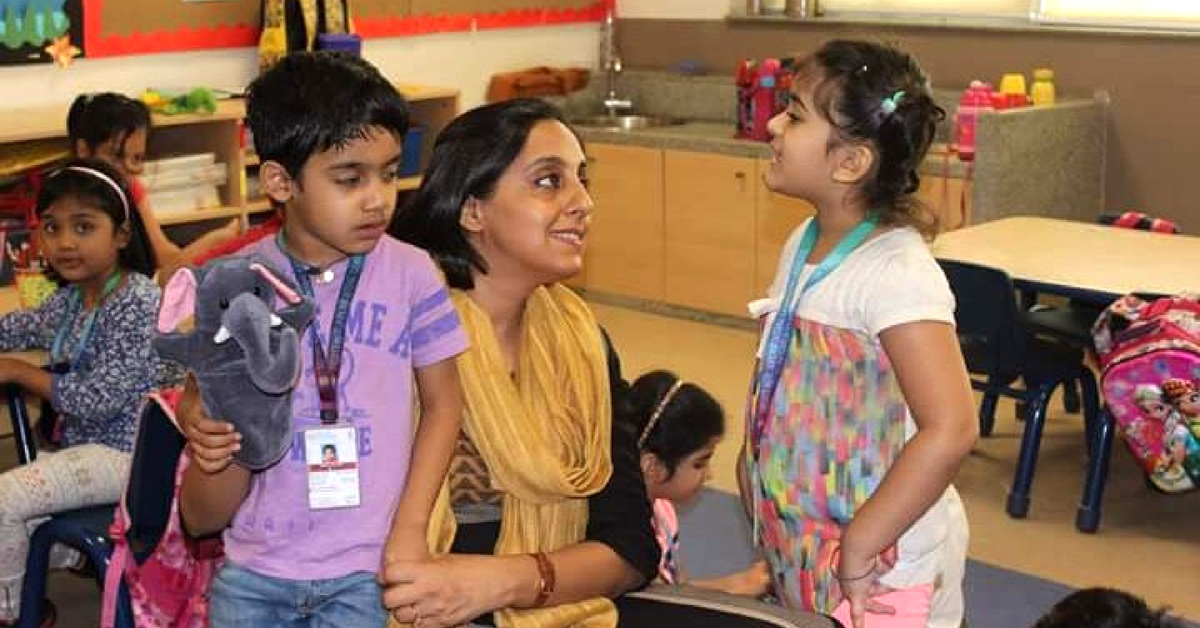
India is a developing country with a developing population, developing economy, developing education. But is education really developing amongst the people who are born poor and underprivileged. Door Step School has taken the big leap to change the present and to make 100 percent literacy a reality. This is a group of people whose main motivation in life is ‘service to society’ and they believe the best way to do so is to usher in a wave of knowledge that engulfs the future of our nation – the children. Meet Mrs. Rajani Paranjpe, the founder member, who says “We go where ever the children are and start the class right there”.

School on Wheels

School on Wheels

This inspiring lady, whose mission in life is spreading primary education, has closed many prisons as the saying by Victor Hugo goes “He who opens a school door, closes a prison”. When approached by The Better India for a brief glimpse into their world and how they work, she was kind enough to answer all our questions. Below is a detailed interview with Mrs. Rajani about her fantastic initiative, Door Step School:

What is the main objective that Door Step School is aiming at?

Hundred percent literacy through total school enrollment and quality education for all.
We bridge in the gaps in government’s efforts in achieving these goals. Our public education system faces three major problems in this regard, namely, non-enrollment, wastage (dropping out of school at early stage) and stagnation (not achieving the expected level of learning at respective stages in school). All our programs are designed to address these problems.

Education moves on to every door step – What was the initial thought process behind this philosophy?

I am a Social Worker by profession. I took this path because I always liked to work for and with people. So after nearly 15 years of my graduation (and infact 15 years of married life!) I took up a course in social work and after a few years of working in the field I joined the College of Social Work Nirmala Niketan, Mumbai, University of Bombay, as a member of faculty. I used to teach Research Methodology and Indian Social problems.

I selected Primary education as the mission of my life because I felt:

  • Education or rather illiteracy was the problem we needed to address on a war footing
  • Working with just one person in a family is usually sufficient because that person with a little education sees to it that his/her children get education.
  • We focused on 3-18 age groups, because my experience says it is far easier to teach a child than to teach an adult.
  • Messages such as health and family planning etc. can be given to a much larger population at much lesser cost if the population is literate.
  • Education is one national problem which can be solved permanently once all the children are in school and are literate.

I made a plan to start four programs through Door step School. They are literacy classes (literacy is defined as being able to read a newspaper), study classes, pre-primary education and community libraries.

After having a clear idea of what I wanted to do, I shared it with like minded people one of whom was Ms. Bina SethLashkari, a student of mine for two years. She and a few others from the college joined hands with me and we founded the organization in 1988-89 in Mumbai.

We named our organization ‘Door Step School” because we go where ever the children are and start the classes right there. E.g. we held classes on pavements or on road construction sites, building construction sites outside big markets, railway stations etc. We have added a few more programs along the way but the core programs have remained the same.

What challenges did you face in the initial day? How did your team deal with them?

We did not face many major challenges as such. I think the following factors helped us in our smooth functioning:

  • All of us who started the program were professional social workers and were in the field of social Work for some time before we started an organization.
  • The field we have selected is relatively simple, the work is primarily developmental,
  • The time was ripe for such activities and
  • We had a very focused approach with clear plan in front of us.

However, after we started working with the children of construction workers, we faced the challenge of tracking them when they moved from one site to another. Our search for an effective solution to this problem is still on.

Could you provide a brief insight into the projects that you run?

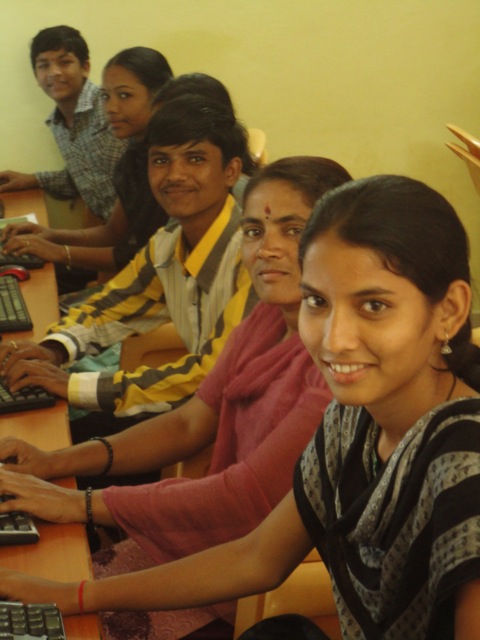
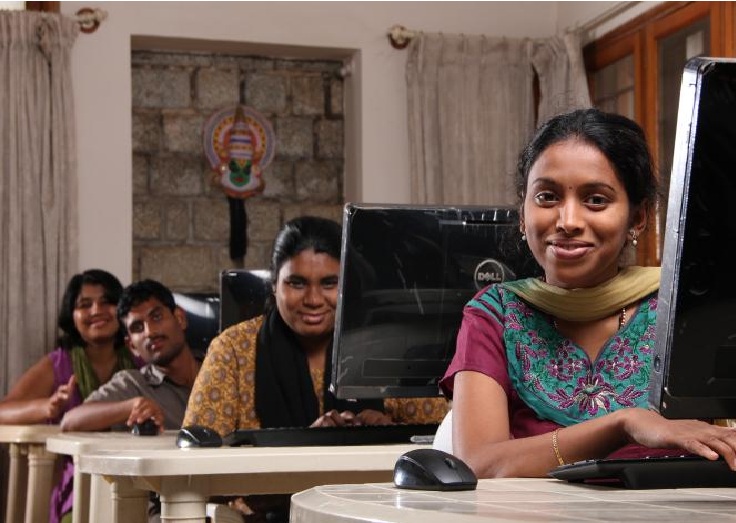
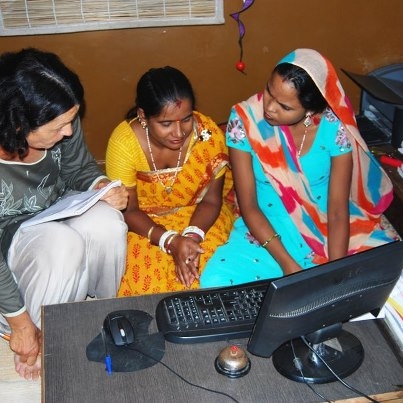
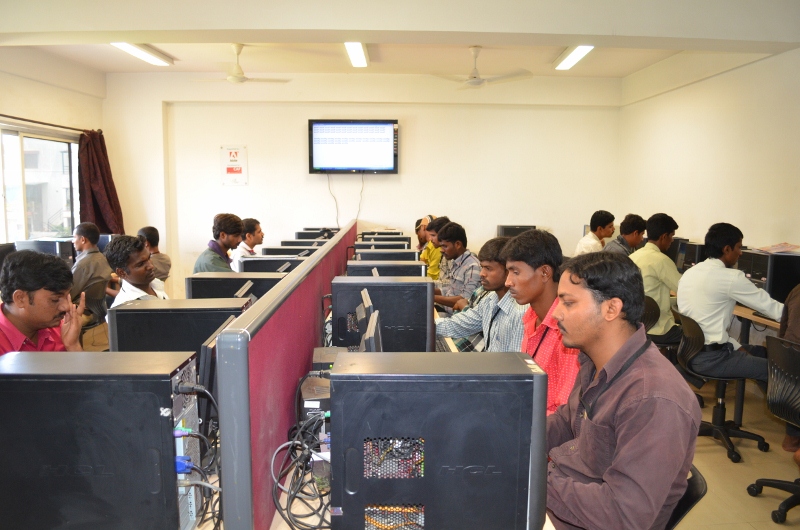
Computer as a teaching aid

Computer as a teaching aid

As I have mentioned earlier, all our programs are designed to address three major problems of our public education system. The target group is 3-14 (although we cater to children upto 18).
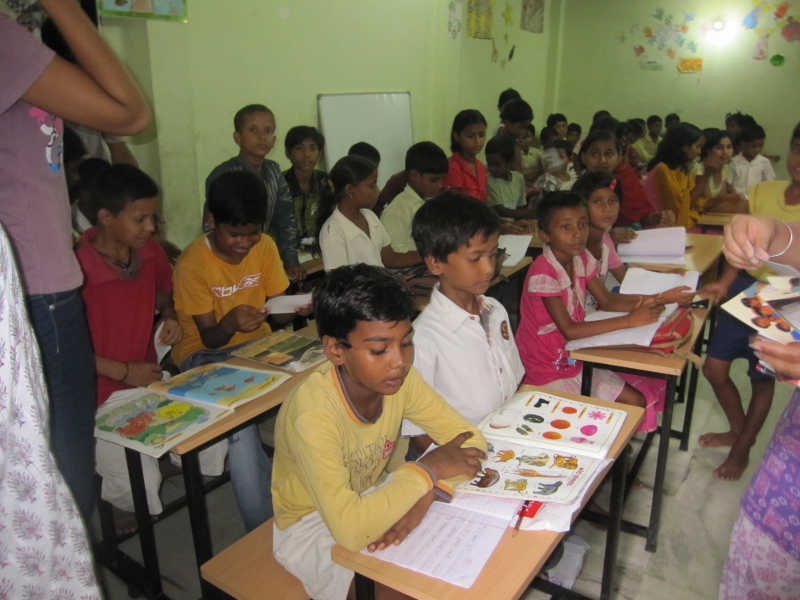
Pre-primary education serves two purposes – it prepares the child and the parents for schooling. On a more practical note it gives us the idea about which children are ready for school admission at the beginning of the next academic year. This ensures near-complete and timely enrollment.

For admitting children to school a birth or age certificate is required which many of the parents we deal with do not possess. We help them to get the age certificates and enroll children in school.

We provide school transport so that children attend school regularly which helps preventing school dropout and stagnation.

Study support classes to children attending school helps improve the quality of education which in turn reduces the chances of dropping out of school prematurely.

NFE (Non–Formal Education) classes helping reduce illiteracy.

School on Wheels, a bus which is designed as a class room helps us to take classes for children who are on streets and there is no place to gather them and teach them. It helps to cover those who would otherwise remain untouched.

School and Community Libraries as well as Reading Classes based in schools help in improving reading ability which is basic to any educational achievement

As an ending note, would you be able to tell us the difference that Door Step School has brought about on our society?

It is difficult to answer this question because the work we are doing is very small as compared to the need for such programs. Therefore I would rather not claim anything on the scale of society or nation.

However in the lives of children whom we have touched we have definitely made some impact or the other although this impact is not perceptible or measurable always. Some of our children have completed education and doing well in life. Some have left education midway and continued with their lives. It is their children who will benefit from the exposure we have given to their parents.
We experience this and we have many examples to show that a child who was with us even for a short time has nurtured a dream of sending his/her children to school and acts upon it when the time comes. We see this change in the attitude of ‘parents’ as our major gain. It shows that the root of education has struck in the family and now we do not have to worry. It will spread, we hope.

To know more about Door Step School, visit their website here: www.DoorStepSchool.org

Tip provided by a TBI reader, Zankhana Patel.

This article has been written by Malavika Tewari. Malavika is a NIFT graduate and has been working in the apparel sector for past 2 years. She has great fervor for reading and has observed the delight in writing for past few years.

Masoom – Illuminating the Night Schools of Mumbai


Twenty one year old Amol Pashilkar attempted his SSC examination in the year 2004-05. Unfortunately, he could not clear his examinations; he passed only in English. Since his confidence levels suffered a blow, he found it very difficult to reappear. After a four year long gap, in 2009, he took admission in Milind Night High School. With his renewed focus, could he clear the examinations?

Amol got 74% in his SSC. How did this drastic improvement come about? Amol could leap forward in academics because of the extra classes conducted by a Maharashtra based social organization that goes by the name Masoom. Masoom works with night schools in Mumbai, with the aim of improving academic performance of night school students.

Masoom is the first organization in Maharashtra to run a comprehensive intervention program for night schools. Masoom offers a unique approach to planning and implementing a comprehensive program for night schools based on their different needs. Masoom’s strategy for sustainable change is to work in the spirit of partnership with all major stakeholders in the education system. Because of Masoom, many like Amol could complete their education. Their interest in studies increases tremendously.

“I came across students who were largely self-motivated. They worked during the day and would attend classes in the evening. Nobody was forcing them to school. They came because they wanted to learn.” – Nikita Ketkar, Founder of Masoom

Tracing the beginnings

Nikita Ketkar, the founder of Masoom, stumbled upon the idea of helping night schools back in 2001. She was working in the civil services and was appointed on a project to identify child domestic workers, in the night school of Mumbai. Nikita adds, “I came across students who were largely self-motivated. They worked during the day and would attend classes in the evening. Nobody was forcing them to school. They came because they wanted to learn. It was sad to see that justice wasn’t being delivered to their aspirations.”

Masoom - Basic Science Concepts taught in a night school

Masoom - Basic Science Concepts taught in a night school

In 2006, Nikita further undertook research related to problems faced by night school students, under the Pukar Scholarship. Based on the findings, she decided to do something about these issues. She resigned from office and founded Masoom in 2008, her entire research team by her side. To facilitate learning for night school students, Masoom has developed a three pronged approach:

1. Providing Infrastructure such as computers, Science laboratory apparatus, mathematic kits, library books, notebooks, educational charts, workbooks and worksheets, teacher training material, Braille textbooks and audio-visual material

2. Capacity Building by organizing training sessions and workshops for teachers, parents and students, vocational guidance for students, counseling, extra curricular classes such as Life skills, yoga, meditation

3. Advocacy: Masoom works closely with all stakeholders and intend to act as an advocate for all issues concerning night schools

Since night schools are run from 6:30 to 9:30 in the evening, most of these kids come after long hours of work. By providing meals, Masoom ensures that they can study more efficiently. Nikita adds, “We want to build not just academic strength but also employability. Many students who earlier had to study with an empty stomach could not focus. Now we provide meals. The kids call it ‘nashta’ as sometimes it is the only meal they have in the day.”

Sports as part of the night schooling

Sports as part of the night schooling

Members of Masoom

In its own unique way, Masoom has touched the lives of many students, growing from just two schools to now ten. There are courses called the ‘bridge courses’ that help drop outs overcome gaps and at the same time, there is facility of psycho counseling for students with learning disabilities. They also help link students to government certified computer courses, for which they have initiated scholarships for part funding. With such personal care and concern for holistic development, there are bound to be many many success stories like Amol’s.

Visit Masoom’s website here: http://masoomforu.org/

Zainub Exports: Keeping India’s glory untarnished

In the book ‘What India can Teach us’, Max Muller defines two very different Indias – one is the India of today, of the cities and towns and the other India, thousands of years old, is that of the village communities. As a foreign tourist in India, staying in five star hotelss and travelling by fancy cars, one is most likely to miss out on the second India, the truer of the two. Similarly, as a tourist in my own country, while I had often been to Agra to visit the Taj Mahal, what I did not realise was that I was missing out on a more humble, yet strikingly important part of our heritage.  Located a few miles away from the glorious Taj, on the Fatehabad Road, are the marble factories of Agra. One among these is Zainub Exports.

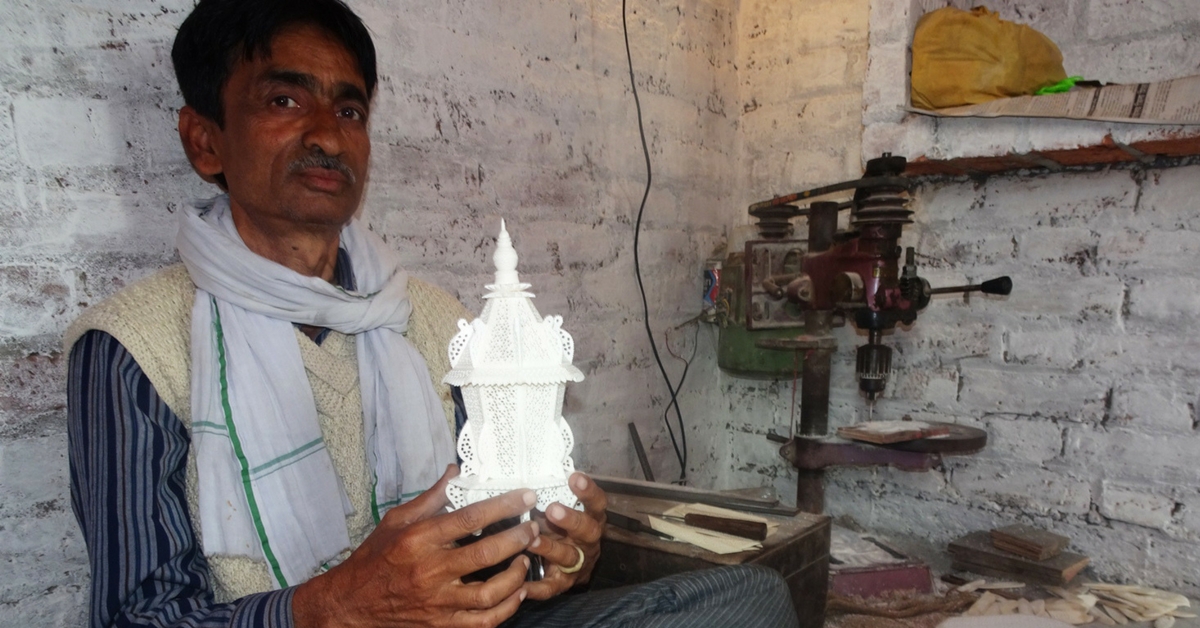
Inlay work in progress

Engaged in a wide range of marble inlay work, workers at the Zainub Exports unit are treated just like family. It is, after all, a family tradition, an invaluable inheritance from the Mughal ancestors. Ask Mr. M. Ajeed Shirazi, a sixteenth generation entrepreneur and he will point out how his family has been running these factories since Mughal times. I listen to his narration but my mind has wandered off to another era, an era when the great ruler Shah Jahan added a grand legacy of structures during his reign. What must it have been like? Mr. Shirazi tells me how precious and semi precious stones used for the Taj Mahal were imported from all over the world, even in the seventeenth century. How much wealth, power and prestige must the royal highness have commanded? Then, I look at the humble figure in front of me. If it weren’t for Mr. Shirazi and his family, I might never have discovered the intricacies of marble structures and how it links us to our glorious past.

The different kinds of marbles on display

As a twenty-first century citizen, even though I am spellbound by the work of the artisans, I can’t help but ask the obvious question. Is there any money in the marble business? Mr. Shirazi hesitates, “This year the business was hit because of the slowdown abroad. Otherwise, we have many foreign tourists and clients who buy our products abroad.” From our discussions, I gauge that the major problem is that of marble sellers in bigger cities. They sell lower quality products, bringing down the price. How can a genuine product compete unless customers can spot and care for the difference? Problems cloud over the horizon. Yet, the satisfaction from this work is unmatched. For Mr. Shirazi, the work represents a culture, a legacy, a history he cannot trample carelessly. He holds it dear. There are always opportunities of work elsewhere, but he chooses to keep the glory of India untarnished. In the process, he helps many workers, who know nothing but marble.

The Final Work!

Take the case of thirty-two year old Mohammad Haneed, one of the workers. Born and brought up in Agra, Haneed joined this work right after high school. Zainub Exports is providing livelihood to many such artisans. They also have a place to train workers and thereafter employ them. I am surprised to see how much these workers know about different types of marbles. They repeatedly tell me that the blue stone is semi precious Lapis lazuli. I can hardly pronounce it right. What was the orange one, I ask for the fifth time. “The orange stone is carnelian. It’s the one that shines when you put a flashlight against it,” comes the answer. While I am filled with awe and pride to see this hardworking group of people, at the back of my head, all I can think of is trying to remember what these stones are called! Next time, I don’t want to feel like a tourist in my own country.

Zainub Exports:

Manufacture of Marble Inlay Work and Indian Handicrafts

Contact Details
Mailing Address:
18/160A, Fatehabad Road, Purani Mandi,
Tajganj, (opp. Kailash Talkies),
Agra-282001, Uttar Pradesh, INDIA

Contact No:
+919319127303
+919927860470

Email Ids:
zainubexport@yahoo.co.in
info@zainubexport.com
www.zainubexport.com

Ecosphere Spiti: Social Innovation at the Foothills of Himalayas

Spiti, a tranquil valley in Himachal Pradesh at an average altitude of 3600 meters is home to around 10,000 Buddhists. Spiti Ecosphere is a social enterprise formed by the collaborative effort of the local community and professionals from diverse backgrounds with the aim of creating sustainable livelihoods linked to nature and culture conservation.

Spiti Ecosphere is focussing on the economic empowerment, development and conservation of the region through their range of products and services. These include the following:

  • Eco Travel which takes us close and personal with the mighty Himalayas and the nature & culture of Spiti. It is an initiative to promote eco-tourism in the region. Eco Travel offers various options to the discerning traveler ranging from a Spiritual Sojourn of the monasteries to the Pugmarks where one gets to track the elusive snow leopard and the Himalayan wolf in the midst of this treasure trove of biological diversity.
  • Organics – Spiti’s unique ecosystem is richly endowed with various indigenous species. Ecosphere has streamlined the process for extracting and sourcing these rare Himalayan herbs including SeaBuckthorn popularly known as the “Wonder Berry”
  • Conservation – Mountain ecosystem and economics share a symbiotic relationship, and maintaining the balance with the environment is critical to the sustainability of livelihoods. Muse, Spiti SeaBuckthorn Society and Spiti Trans-Himalyan Action Group have been working in the region on the issues of climate change, promoting renewable energy, waste management and the Dhangkar initiative. Dhangkar, originally called Dhakkar meaning ‘citadel on a cliff’, was the erstwhile capital of Spiti . The Dhangkar Monastery is one of the five major monastic centres in Spiti and belongs to the Gelug–pa sect of Vajrayana Buddhism. It is a heritage conservation site in a state of despair listed in the ‘World’s Hundred Most Endangered Sites’ by the World Monuments Watch Program. Check out www.dhangkar.com to know more about Dhangkar


In the near future, Ecosphere plans to come up with some very innovative projects. One of them includes “Environment education in schools”, the belief being that awareness about the environment should start early by educating children in schools. They are also planning to come up with a short documentary showcasing the Spiti way of living and at the same time sensitising travelers and communities on how to ensure that it remains preserved.

To know more about Spiti Ecosphere and the wonderful work they are carrying out in this beautiful valley of the Himalayas, visit their website at http://www.spitiecosphere.com/

You can also connect with them on Facebook: http://www.facebook.com/group.php?gid=55566667952

For volunteering and other opportunities, mail them at info[at]spitiecosphere[dot]com

Agastya: Sparking Creativity in Rural India

Spread over a vast area of 170 acres of rocky wasteland in Kuppam, a deprived rural area in Andhra Pradesh, Agastya International foundation believes that complete learning is a combined form of shiksha (education), samskara (values) and sansara (world). It focuses on transforming the critical and much neglected area of primary and secondary education of the rural masses in India, including children and teachers.

Agastya runs one of the largest hands-on science education programs in the world!

Agastya does this by bringing hands-on science education to the rural masses through the use of outreach programs like “Science on Wheels” (Mobile Labs), Science Fairs, Teacher Development Program and Young Instructors Programs. Agastya seeks to fill the gaps in the Indian education system that threaten its socio-economic development. The conventional Indian education system instills little creativity in children and teacher education is generally divorced from classroom realities. Agastya’s projects overcome these problems with their unique features which involve idea generation and testing through the Creativity Lab, creativity generation for poor and disadvantaged through interactive and engaging learning methods, learning linked to environmental goals, emphasis on developing behavioral skills and a close link between teacher education and the classroom system.

Agastya: Science on Wheels

If you ever hear Ramji Raghavan (Founder, Agastya International Foundation) speak, you would certainly hear him talk about the learning pyramid as he strongly believes in the fact that we learn about 5% of what is taught to us in a lecture, 10% of what we read, 50% of what we see and hear, 70% of what we discuss with others, 80% of what we experience and 95% of what we teach. Ramji Raghavan, a former NRI banker came back to India with a vision of providing education to poor children and teachers – education that would be the opposite of conventional techniques and this led to the birth of Agastya, named after Mahirshi Agastya, famous for spreading sacred knowledge to south India, as a charitable trust in 1999.

Agastya has started off successfully on the path of building a creative India of ‘tinkerers, solution seekers and creators’ that are ‘ humane, anchored and connected’ by impacting over 3 million children and 120,000 teachers from vulnerable and disadvantaged communities. The model is scalable and replicable anywhere in the world.

You can take a look at Agastya’s visual documentation here.

Website: http://www.agastya.org/

This article has been contributed by Chandrika Maheshwari. Chandrika is a student in her 3rd year of engineering in BITS, Pilani and holds a vision to do something for the country and contribute in its development. Her interests include social entrepreneurship, traveling, reading and writing.

Bamboo House India: A Journey towards Green Livelihoods

So what are the options you look at when you go out to buy furniture? Wood, metal, even plastic? How about getting home some bamboo furniture the next time you go shopping? Not only will you be making an environmentally friendly choice, you will also be providing employment opportunities to millions of rural and tnribal artisans living in abject povevrty in the bamboo belt of India. Thanks to the research and efforts by two young entrepreneurs, Prashant Lingam and Aruna, this is now a possibility.

With the idea germiating from their own search for an eco-friendly furniture option, Bamboo House India came into being officially in May 2008, after the founders spent about 9 months on study and experimentation. In this time, Prashant and Aruna Kappagantula were exposed to the miserable living conditions of the bamboo artisans of North-East India and decided that the aim of their enterprise would not only be to create a space for bamboo in the Indian furniture market, but also to generate employment for 5 million artisans. Lofty as it might sound, they went ahead and created a tangible business plan which included building expertise and spreading awareness about bamboo and its uses, creatively utilizing bamboo in multiple scenarios including furniture, structure and flooring, and setting up a chain of bamboo showrooms all across the country for retailing the products created by these artisans.

Why Bamboo?

  • Renewable Resource
  • Absorbs Greenhouse Gases
  • Amazing Growth Rate
  • Very little waste
  • Versatility
  • Soil Protection
  • Economic Development
  • Grows in variety of conditions
  • Minimizes CO2 gases and generates upto 35% more oxygen than equivalent stand of trees
  • Can be harvested annually
  • Helps mitigate water pollution due to its high nitrogen consumption
  • Requires only a modest capital investment to generate a steady income

Their journey towards creating “green livelihoods” was not an easy one. There were several hurdles faced by these entrepreneurs, and not just from one source. Firstly, there is not much information available on bamboo and its properties and uses, and the duo had to almost start from scratch and build their own data bank through study and experimentation. They lost almost 4 lakh rupees on bamboo furniture they built initially because they were not aware that bamboo traps moisture and cracks. They gained a lot of knowledge from the artisans in North East who have been in the trade from centuries. However, communicating with these artisans and uniting them under one banner posed its own callenges. The severe lack of infrastructure in the areas where they reside caused great delays in execution. It sometimes took 25 days for the furniture design to reach the artisan by post, and he had to travel 40kms to inform Prashant or Aruna that he had received it. The provision of mobile phones, the internet and cameras has eased the situation now.

Not the least of the problems was convincing the government authorities and finding support for the venture. After considerable persuasion, Bamboo House India managed to get support from Confederation of Indian Industries (CII-Hyderabad) for setting up the stores, starting the first one in Hyderabad. They have also partnered with institutions like IIT-Delhi, National Institute of Design and National Mission on Bamboo Application to set up model homes and instill confidence in the utility of bamboo. Aid from entities like IL&FS and APTDC went a long way in providing the impetus and helping them to spread the word about their work.

Bamboo Furniture by Bamboo House India

Prashant and Aruna have great plans for the future. They hope to set up 3-5 exclusive bamboo outlets in the next 3-5 years and also expand into niche segments like bamboo flooring and clothing. We wish them luck and encourage you to support their cause by visiting their store today. Find out more about them on their website: http://www.bamboohouseindia.org/

<div style=”color:#fff;background-color:#888;padding:5px;font-family:Arial;font-size:12px;width:250px;float:right;”>

<strong>Why Bamboo?</strong>
<ul>
<li>Renewable Resource</li>
<li>Absorbs Greenhouse Gases</li>
<li>Amazing Growth Rate</li>
<li>Very little waste</li>
<li>Versatility</li>
<li>Soil Protection</li>
<li>Economic Development</li>
<li>Grows in variety of conditions</li>
<li>Minimizes CO2 gases and generates upto 35% more oxygen than equivalent stand of trees</li>
<li>Can be harvested annually</li>
<li>Helps mitigate water pollution due to its high nitrogen consumption</li>
<li>Requires only a modest capital investment to generate a steady income</li>
</ul>
</div>

Rose Computer Academy

Logo_Rose_Academy

Amit Kataria comes from a humble background. Brought up in Choma village, Gurgaon, Haryana by his father, a farmer and mother, a housewife, he always dreamt of making a change in the society. Never having let his walking disability come in the way of his dreams, today he has successfully transformed the lives of many in his village by imparting computer literacy and in the process, setting a precedence worth following.

Amit’s journey began in 2007, “I completed my primary education in Choma but beyond that level of education, there was no opportunity there so I decided to study at a school in West Patel Nagar and passed my tenth and twelfth class there. In my final year, I came back to my village in 2006. I realized that most villagers owned land and money but they had little or no literacy especially in computing. They were ignorant of the need for computer skills. I found that this was the biggest need of my village and its future generations. That was when I decided to start a computer learning institute in my area.”

Students in Rose Computer Academy

Students in Rose Computer Academy

With a vision to spread computer literacy throughout India, especially in rural areas, Amit started his venture ROSE Computer Academy in 2007, when he was only nineteen years of age. Having learnt computers, he realized its potential in making his community independent and in the long run, in contributing to strengthening of the economy and the nation at large. At no point of time did Amit lose heart in the face of difficulties even when finances were few and far between, he persisted. “I still remember September 7, 2005, the day when I had earned my first hundred rupees. When I set out to start my institute, I had twenty-three thousand rupees of savings. My maternal uncle agreed to lend me one lakh rupees and I could start my computer lab.”

Amit’s academy has so far trained 300 students from his village, offering courses such as Basic computing, Java, Graphic Designing, Tally, C++ and many others. His is the only academy in Palam Vihar, Gurgaon which offers different kinds of computer courses under one roof, working 18 hours a day. Some of his students have also gone ahead and opened their own enterprises, while others have taken up jobs. Some start working at the academy itself.

One of the students at ROSE Academy is seventeen year old Ashok Silwal. Born in a small village of Nepal, Ashok came to India in 2007. His father is a bus driver at a school in Gurgaon and had no money to support his education so he went back to Nepal and enrolled for a correspondence course in India. “In Gurgaon, my father met Amit Kataria sir. Sir needed an office boy, so I started working with him at the Academy. I soon developed an interest in learning computers. I completed a Certificate Course in Computer Application and Desk Top Publishing and also completed my schooling here. Then I started teaching at the ROSE Academy and earned salary also. Now I am able to contribute to my family too,” Ashok smiles, gleaming with pride.

ROSE COMPUTER ACADEMY
(Behind Sangam Sweets) H. Block Mkt. P.O.
Palam Vihar, Gurgaon – 122017
Haryana
INDIA
Landline: 91-124-4387843
Mobile: 91-9868573124 / 91-9312605558
Website – http://www.rosecomputeracademy.com/index.aspx

ROSE Academy has provided computer skills and employment opportunity to many like Ashok. Besides computer education, ROSE Academy also provides learning assistance to students in their studies, considerably brining down the examination failure rate. As Amit puts it, “ROSE academy is like the rose flower that spreads its fragrance everywhere.” True to its name, the work and virtues of the Academy are an inspiration by every measure!

A Barefoot Journey to Tilonia

A less traveled track to Tilonia gives one a journey into Indian entrepreneurship and perhaps changes the way our villages are perceived by city dwellers. Tilonia brings you face to face with the real spirit of India. Its misty hopefulness uncovers the nature of the task that is ahead for a social entrepreneur, its uniqueness and challenges.

Tilonia is a small town 25 kms from Kishangarh near Ajmer in Rajasthan. Barefoot College, established in 1972, inspires this town with the conviction that solutions to rural problems lie within the community. These solutions are broadly classified by Barefoot College into solar energy, healthcare, education, water, rural handicrafts, people’s action, communication, women empowerment, income generation, wasteland development, electricity and power as well as social awareness and conservation of ecological systems in rural communities.

Barefoot College was founded by Sanjit ‘Bunker’ Roy, an Indian social activist and educator. Roy was influenced by the philosophy of Mao Zedong, and modeled his organization after Mao’s Barefoot Doctors. Roy has worked all his life with the Barefoot College.

Spread over more than 8 acres of land, the campus of Barefoot College was built between 1980 and 1986, designed by a team of rural ‘barefoot’ architects, masons, blacksmiths, farmers and members of women groups who sat and struggled through the initial basic designing of the campus. This institution believes in imparting informal, non-structured, on-the-job practical training by identifying the poor, unemployed youth who have been unable to finish their formal education and have returned to their respective villages as dropouts. The five principles which are an integral part of the functioning of the college are equality, collectiveness, self-reliance, decentralization and austerity.

Related news about The Barefoot College
Bunker Roy, founder-director of the much talked-about Barefoot College at Tilonia in Rajasthan’s Ajmer district, has been chosen for 2009′s Robert Hill Award for his contribution to promotion of photo-voltaics (solar energy). He is the first Indian to be recognised by the Global Solar Community which had its 24th European Photovoltaic Solar Energy Conference in Hamburg, Germany, this weekend.
Click here to read more about this in The Hindu.

The education program focuses on the overall development of rural children, with literacy being just one part of it. It encourages hands-on or learning-by-doing process of gaining knowledge and skills. Lessons are focused on awareness about the environment and socio-economic and political forces that dominate development. The aim is to provide the children with a right balance of education and literacy so that they choose to stay in their village and work for its development. The college has different programs for children and women. There are Balwadis (rural crèches) established for children between the age of 6 months-5 years for the convenience of working mothers. Night schools have been set up for ‘working children’. There are bridge courses, courses for night school children who aspire to join formal day schools. In these night schools, initiatives like the children’s parliament are established which allow them to participate in the management of their schools through a democratic process. Candidates are selected through a proper election process, giving them an idea of the working of a democracy.

There is also a huge emphasis on the holistic development of women by empowering them socially, financially and politically. In the past 38 years, the college has trained more than 15,000 women in jobs ranging from construction work, education, metal craftsmanship, toy making and solar engineering, to mechanical repair and fabrication, health care, water testing, handicrafts, film making and social activism.

Vocational Training at Tilonia

Vocational Training at Tilonia

The Barefoot College has setup eight field centers in Rajasthan and a society known as SAMPDA (Society for Activating, Motivating and Promoting Developmental Alternatives) through the collective efforts of which the Barefoot approach is replicated in rural communities across 14 states in India.

The global response received by the organization is worth acknowledging. The institute has witnessed semi-literate middle aged woman traveling from places as diverse as Afghanistan, Cameroon, Gambia, Mali and Sierra Leone to undergo training to become barefoot solar engineers.

To know more about this organization and to read on some of its wonderful initiatives, please visit their website at www.barefootcollege.org.

This article has been contributed by Chandrika Maheshwari. Chandrika is a student in her 3rd year of engineering in BITS, Pilani and holds a vision to do something for the country and contribute in its development. Her interests include social entrepreneurship, traveling, reading and writing.

Mitra Jyothi – Changing the lives of visually impaired

madhu singhalIn our busy lives where our abilities are taken for granted, we forget that living along with us are challenged people who have special needs. Who could better understand the needs of the visually challenged than someone who has suffered it herself? Madhu Singhal is visually impaired by birth. Born into an upper middle class family in Haryana, Madhu had the affluence to lead a comfortable life. But she chose not to be laid back and wanted to do something on her own.

After completing her MA in Hindustani Classical Vocal Music, Madhu came down to Bangalore to undergo specialized training in communication and counseling. To her surprise and much difficulty, she found that there was very little support for her learning needs. In the North, audio recordings of text books were made available for students like her, but here in Bangalore Madhu couldn’t find any such help. Fighting this difficulty she completed her studies and got out only to find that it was extremely difficult for her to get a job. This is when Madhu decided that no one else should suffer what she suffered. And Mitra Jyothi was conceived.

Mitra Jyothi is aimed at empowering the visually impaired by supporting their educational needs, finding suitable jobscassettes and making them independent enough to take charge of their lives. The organization’s most popular initiative is its Talking Book Library. Text books and books for general reading are given a voice by volunteers, and cassettes and CDs are recorded for circulation. Over 22,000 cassettes of more than 2000 books have been recorded till date. Mitra Jyothi set up its own recording studio to provide this service professionally. Notably, Mitra Jyothi’s effort in this front was the first of its kind in Karnataka and over 5000 people have benefited from the library.

The organization is also extensively involved in Braille transcription and providing computer education to the visually impaired. Mitra Jyothi runs a full-fledged job placement cell for its members, a service that has helped its members find suitable jobs in corporates and manufacturing units. Another admirable service is that the organization runs special courses for women to impart independent living skills.

Mitra Jyothi has been serving the needs of the visually challenged for over two decades now. It has extended its services to Kerala, Andhra and Tamil Nadu. Madhu Singhal has nurtured the organization with her selfless commitment that grew beyond her impairments.  Madhu lives independent, travels abroad on her own, spearheads an organization and chairs important positions in various social service organizations – a true role model. What she has achieved can be made possible for more visually challenged people. Help spread the cause.

Visit http://www.mitrajyothi.org/

Lighting up lives – Diya Foundation

In our society, the differently-abled and mentally challenged citizens find it extremely difficult to be able to make a living and live a life of dignity. These individuals do need work and subsequently the advantages of work. However, prejudices towards them have caused them to be treated as surplus citizens incapable of being contributing and productive members of society.

This is where Diya Foundation makes its mark. Started in 1999, Diya Foundation is a vocational training center which provides training and, more importantly, employment to adults who are mentally challenged as well as others who are differently-abled physically.

Sarah Santamaria, founder of Diya Foundation, shares her insights with us:

TBI: How was Diya Foundation started and what was the motivation behind it?
Sarah: Diya Foundation was started 10 years ago in March, 1999. I met several parents of differently abled children who expressed their helplessness and despair in trying to figure out what to do with their child after he/she turned 14 years. Very often schools would ask these parents to take their child out of the school programme because the school could no longer cater to the needs of the child. These parents were at a loss as to what to do with an adult child now full time at home and this is what motivated me to start Diya Foundation. Diya Foundation is the bridge to smoothen the transition from school to work.

TBI: How many people does Diya currently employ and help out?
Sarah: Diya currently employs 4 physically challenged staff, 6 abled staff and 21 mentally challenged trainees.

TBI: Is there any way our readers can contribute or help you out?
Sarah: Yes, we are a small organisation but very committed to the cause of differently abled adults. While making our trainees economically self sufficient, we also have long term plans to set up a residential care facility for the differently abled. We seek support in various forms – patronising the products our trainees make which helps them earn a stipend, donations in cash to support our ongoing projects, voluntary help to teach our trainees income generating skills and also as much support as possible to spread awareness about Diya Foundation and the work we do.

This Diwali, Diya Foundation urges you to add sparkle to your life by doing more. They have a range of delicious chocolates and colourful diyas on sale for individuals and corporates. Handcrafted using imported cocoa, the Chocolyn chocolates are available in a range of flavours and along with the diyas, make for a delightful gift. A gift that will give you double the joy because of the cause it supports.

Diyas for Diwali

Diyas for Diwali


Diya Foundation Chocolates

Diya Foundation Chocolates

The products can be custom wrapped to suit varied preferences and budgets. For more information and to place your orders, contact Diya Foundation here:

Diya Foundation

Calendar

September 2010
M T W T F S S
« Aug    
 12345
6789101112
13141516171819
20212223242526
27282930  

Recent Comments

PROMOTION

"Neumonia and Other Sketch Stories" - A collection of sketch stories. Download the e-book for free. Click on the book cover below.
"The observations are acute: the sound of high heels on asphalt, the bit about how all BPO employees lose their hair very fast are spot-on. This book is a better, shorter alternative to any Sunday movie on TV. It's a little jewel" - Hindustan Times