









Granthayan – Mobile Book Stores for Rural India

Urban India has it easy in terms of access to literature and good books. We have our malls and online book shops. However, it is not so easy for people in rural India to get access to vernacular literature. Majority of the rural population get access only to newspapers and textbooks. One man, Pankaj Kurulkar, aims to change this scene with his wonderful initiative – Granthayan.

Aruna Viswanatha reports about Granthayan in this article at The Mint:

An electrical engineer by training, 45-year-old Kurulkar ran a networking and hardware solutions company for 15 years, before he put Rs3 crore of his own into Granthayan, a chain of mobile bookstores that travels the length and breadth of Maharashtra selling mostly Marathi books. Kurulkar says he plans to later replicate his business model in other states, focusing on books in their regional languages. 

As one can easily imagine, the roadblocks and problems that such an initiative would face are significant:

Only 59% of India’s rural population can read, according to the 2001 census, and reading material itself is limited outside the cities. Local languages have also had to face the growing popularity of English. “The situation is pathetic. People are migrating from vernacular language to English medium, and not at all passionate about reading Marathi,” says Kurulkar, who writes novels and short stories as well.
“Rural areas don’t see anything other than newspapers and textbooks. So good, affordable reading material, which is simple, is the need for the day,” says Rukmini Banerji, a programme director at non-government organization Pratham, which prepares an annual report on the status of education measuring student literacy. “Nothing is easily available like you can go to the paan (betel) shop and get gutka.” Pratham’s publishing arm, Pratham Books, which prints cheap children’s books, also has plans to enter the rural retail market next month, according to managing trustee Ashok Kamath. 

Kurulkar, however, is confident that this initiative of his will make an impact on the current scenario. His progress so far has been very impressive:

To date, Kurulkar says, his trucks have visited 28 out of the 35 districts in Maharashtra, and covered 80% of the state. The trucks follow pre-set routes—up and down the Mumbai-Goa highway for instance—and stay in a neighbourhood from a few days up to a week, depending on the amount of local business. Each truck has a staff of three, with a driver, an accountant and a helper on board.
According to Kurulkar, Granthayan has sold around 100,000 titles in the first three months of operation, and stocks both Marathi and English titles, though, he says, 75% of the company’s stock and sales are in Marathi. 

To know more about what are the bestsellers in the rural areas and what are the other problems faced by Granthayan, please do read the entire article here.

Image courtesy: Mint

Hope continues to seep through times of distress

It has been difficult for us here at The Better India to continue to keep our spirits high during these times. The Mumbai tragedy has shaken our belief in a secure and progressive nation. And when we were just beginning to flounder in our faith of keeping this initiative alive, there appear sparks of hope in the form of people like V D Zhende, who did a great job of saving hundreds of lives during the CST station firing in Mumbai.

Mr. Zhende is a Railways timetable announcer at the Chhatrapati Shivaji Terminus. Nimisha Srivastava writes about Zhende in this article at IBNLive:

VD Zhende says, “I heard a loud explosion and then I saw public running. So, we started announcing for the government railway police (GRP) and the railway protection force (RPF).” 

However, the police for some reason did not appear on time.

“Only when public started coming with blood all over, I realised that there was some gunfight happening. So I started announcing that all passengers go out from platform 1 and not go towards the main line, recalls Zhende.

We thank people like Zhende and the numerous other unsung heroes who did their bit to save the lives of our countrymen.

Please click here to watch the video interview of Mr. Zhende.
Read the article here.

Future Thinking: E-Waste Management

With growing dependencies on computers and related peripherals, the amount of e-waste being generated in India is enormous, running into millions of tons every year. Delhi, Mumbai and Bangalore top the list in terms of total e-waste being generated in the country. Now, the Mumbai Metropolitan Region Development Authority (MMRDA) has decided to create a road map to deal with all the e-waste generated by the city and to prepare for a future e-waste management plant.

Swapnil Rawal reports in this article at the Indian Express:

The core committee would have members from the Maharashtra Pollution Control Board (MPCB), Department of Environment along with officials of the civic bodies in the MMR. 

It is great that the authorities concerned are showing some great foresight with regards to this growing issue:

Shah said that the MMR, especially Mumbai and Navi Mumbai, will face a serious problem over the handling of e-waste in years to come. “It’s something like the scenario the civic body faced around 25-30 years back with solid waste in Mumbai,” Shah stated. 

The article goes on to say:

The core committee, besides locating a site for the proposed processing plant, will also frame guidelines for the collection and transportation of the waste from designated centres to the plant, which would be operated by private players. 

Read the complete article here.

Image courtesy: http://ewasteguide.info (which is also a great site to know more about e-waste management)

Quality Education for Slum Children

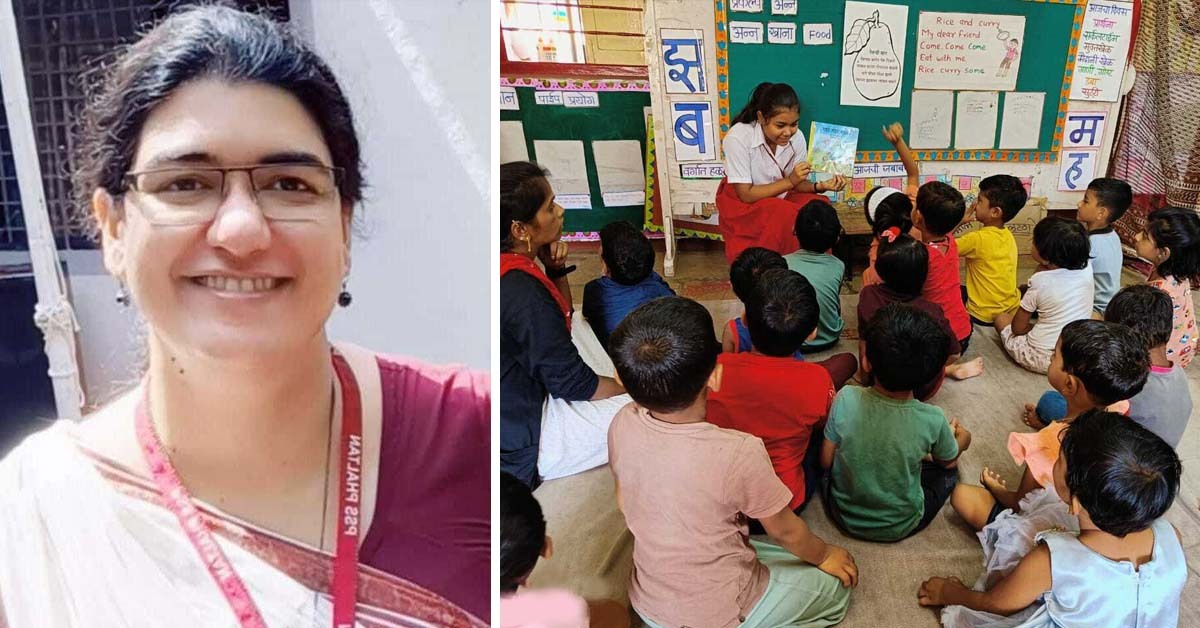
The Students of Symbiosis Infotech Campus (SIC) have come together to contribute towards providing better quality education for slum children.  The group is called Prayatna and their intention is to enrich the experience that the slum children get from the government run schools that they attend. Preeti Srivastav writes in this article in the Indian Express.

“These children do attend their government-run schools, but they needed that extra looking after to make themselves more competent. We not only take classes for them on our campus but have also got them admitted in a good English medium school for their better education,” says Chauhan, adding, “We have to catch them young as it becomes difficult to shift them from a Hindi or vernacular medium schools to a English medium one.”

The really interesting part is the source of the funds for this activity:

Not neglecting the funds, he said that they were paying Rs 7000 per children to the school, which in turn takes care of all the needs of the children – from fees to books to uniforms. When asked about the source of funds, Chauhan explained that SIC students conduct film festivals and games through which they collect money for the children. They also collect old clothes and books from SIC students. However the noble idea was of alumni adopting the children.

It is truly wonderful that as part of their college activities the students are able to source funds and provide for a better education for the lesser privileged children of our country. We hope that this model will act as a source of inspiration for many other colleges across India to give back something to the society.
And the work just doesn’t seem to stop at providing classroom education, as the article goes on to say:

Apart from the schooling, they also have many activities lined up for the kids.”We bring them to our campus five times a week and give them classes for english, maths, science, personality development, general knowledge and so on. We also take them for games and sports. We show them inspirational documentaries,” says Chauhan.

One of the objectives with which The Better India was started is to spread awareness and create a sense of social contribution amidst our citizens. Hence, for us it is heartening to note that today’s students are already treading this path of spreading welfare! We wish Prayatna all the very best in their ongoing endeavors and look forward to many more school children receiving quality education from SIC and other similar college bodies.

Read the complete article here.

Teaching street children a thing or two

Akanksha Foundation, a non-profit organization trying to improve the lives of slum children via the medium of education, recently held a literary fest. The objective of the fest was to get these children excited about reading, and also to explore their and encourage their creativity in writing and expression.


Preeti Srivastav reports in ExpressIndia about the programme in which more than 300 children participated and enjoyed. Excerpts:


“Nothing can replace the joy of reading, but children are so over burdened with their courses that they tend to loose interest. We are conducting festivals of this kind to encourage reading among the children. These children hardly come across good books. So we are here to bring some good reading to them,” shares Reeves Rodrigues, general manager, Aakanksha foundation.

Read the rest of the article here, and check out the Akanksha Foundation and the work they do here. For people who love to work with children, especially in Mumbai and Pune, they could offer several opportunities for volunteering.

No more long queues in this modern Post Office

Think Post Office and you more often than not think haphazard counters with long queues. Any work to be done at this offices have been linked to being tedious and cumbersome. However, this is now in for a huge change. Nisha Nambiar, in this article of the Indian Express, writes about a model Post Office being introduced in Baramati. This PO will boast installation of latest technology in addition to automated kiosks and electronic token systems.

Excerpt:

Union communications minister Jyotiraditya Scindia had launched the project to upgrade and modernize 500 post offices in 10 selected postal circles in two phases. In the first phase, 50 post offices were identified for their physical appearance and for their work environment.

Jarodia, who will inaugurate the post office, said, “In the state circle five post offices have been identified for the first phase. Besides Baramati in Pune region, the others are Nanded, Bhandara, Calangute and Jawahar.”

The article also lists the following salient features of this modern Post Office:
* Citizens will receive mail earlier, with delivery from 10 am instead of 11.30 am
* Letters to be dispatched the same day even after 4.30 pm
* Postmaster can be contacted by email at spmbaramati@gmail.com
* No queue, electronic token display
* Fully computerised
* Separate counter for senior citizens
* Generator backup, no load shedding
* Post forum of residents

Considering the fact that a lot of information still travels via snail mail in our country, it is a welcome initiative to revamp and improve our Post Offices. This model PO will hopefully pave the way for all other post offices of the country to follow suit.

Read the complete article here.

Calendar

March 2010
M T W T F S S
« Feb    
1234567
891011121314
15161718192021
22232425262728
293031  

PROMOTION

"Neumonia and Other Sketch Stories" - A collection of sketch stories. Download the e-book for free. Click on the book cover below.
"The observations are acute: the sound of high heels on asphalt, the bit about how all BPO employees lose their hair very fast are spot-on. This book is a better, shorter alternative to any Sunday movie on TV. It's a little jewel" - Hindustan Times