Sikshana: Filling gaps in public education

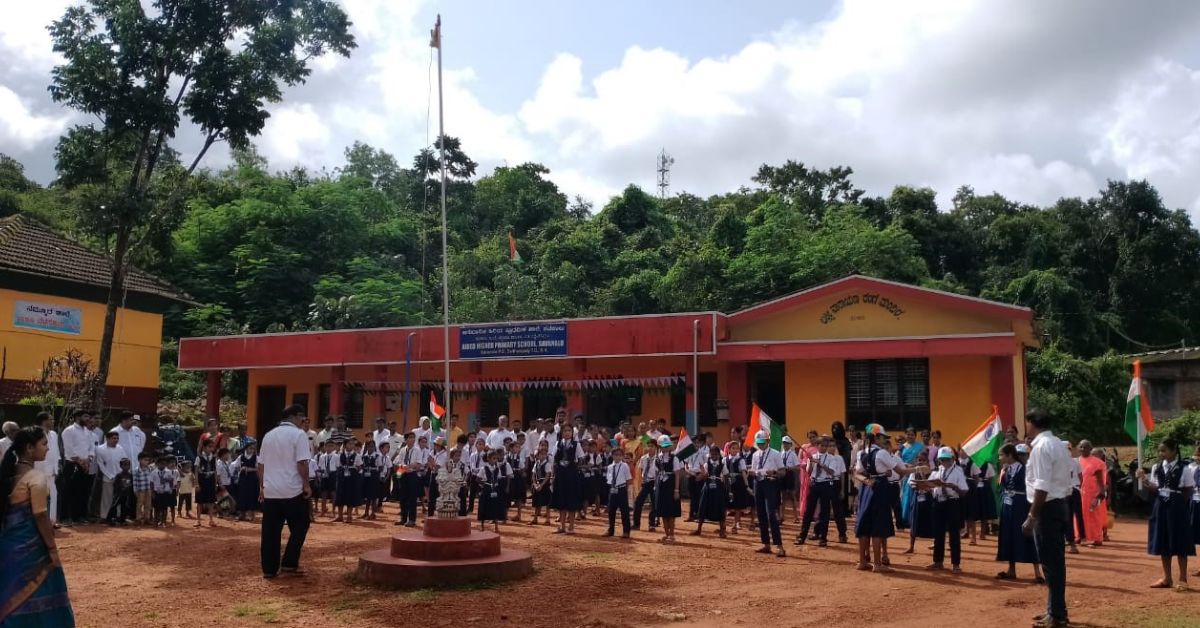
Every morning, as I walk to the bus stand, I cross a local school here, a government school. I hear loud singing voices; the same songs every morning – the prayers and the national anthem. I pause and smile. School is such a beautiful feeling! Only when I am returning home in the afternoon do I mutter curses under my breath. Swarms of children run madly in all directions in and out of the school. With their uniform loosely hanging over their bodies and a few torn books falling out of their bags, I see the dismal picture of ‘education’. I wish these kids had a way to study at better schools, where they would truly be educated. There could also be an alternate option. Why not improve the quality of education in these government schools? That’s exactly what Sikshana does.

In 2002, Mr. E S Ramamurthy, retired chairman of BHEL in Bangalore wanted to work on a social cause. He started working with a primary school to understand their functioning and their problems. Initially he remained associated with aangan badis, overseeing the midday meal programmes. Yet, after it was taken up by the government, Ramamurthy decided to do something more. He decided to focus on the quality of education in government schools and act as a facilitator. The founder member of Sivasri Trust, which operates Sikshana, Ramamurthy started out in 2004. In the next one year, he could cover ten schools. Since then, there his idea has known no bounds. He gradually strengthened the Trust and found more board members. In 2007, one of the funders, Mr V.R. Prasanna, having returned from the US after 16 years, joined the Board as a fulltime Director.

Prasanna explains the Sikshana model, “I realised that the model was very successful and could be replicated. I joined as the Programme Director with a view to scale it up. It is a decentralized approach. We try to understand the basic needs of each school, based on the village and community conditions. The idea was to empower schools by disbursing funds and bring in management concepts. Since 99% of our schools are in rural areas, we noticed that students found it difficult to express what they knew. Hence, we focused on four skills – Read, Write, Compute and Express!”

What started with ten schools has today grown to 375 schools, covering almost 50 000 students. Sikshana acts as a facilitator, providing resources and guidance to the schools. In India, 90% of all children in the 6-14 age group attend a public school, which is why the Sikshana team felt that any meaningful effort to improve the educational standards of the new generation should necessarily start here. The value additions are countless. Take technology, for instance. Prasanna explains, “We started our initiative of providing one laptop per school and one pendrive per child. Being able to access a computer helps children overcome their fear of technology. Kids are even learning English faster, because of computers. We have English-Kannada dictionary installed in every system. We make sure every child comes forward to use the facility. We also help those who excel or are able to do better than the others by conducting summer technology camps for them. At the end of every year, we organise a computer summit, across schools. Two students from each school give presentations. This increases their confidence levels. We know that our students will be able to become whatever they want in life, because of the kind of exposure they get.”

Many individuals who want to make a difference in the society often wonder how they would do it all by themselves. When I look at Sikshana and the magnitude, impact and diversity of their projects, I am assured that anything is possible if you want it bad enough. Prasanna writes on the Sikshana blog, “With Sikshana yet to hit the 20 employee mark and the need to manage nearly 375 schools in 7 blocks, a question that naturally comes to one’s mind is how is Sikshana able to conduct such large events in addition to mentoring all the schools. I am seeing increasing signs of the teachers and the department taking ownership of Sikshana. An increasing number of teachers have started to believe in themselves.”

Thus, on one hand children are imbued with an enthusiasm to learn actively and on the other, the staff is more aware of its role and potential. With Skishana playing the facilitator, the day is not far when public schools will be at par with, if not superior to, the private schools.

Pravah: Inspiring Youth Citizenship

Pravah, an organisation based in Delhi works with young people to impact issues of social justice through youth citizenship action . Pravah believes that sustainable change emanates from individuals. “Change them or their orientation and the system will change.”

Pravah works with both adolescents as well as young adults, through two broad interventions, the School Programs and Youth Action.
In Youth Action they basically have 5 programs:
1. SMILE – which stands for Students Mobilisation Initiative for Learning Through Exposure. The aim of this program is to involve the youth in activities which helps them belong to their background and take more responsibility in whatever they do.

2. Youth For Development – is a partnership between Pravah and Voluntary Service Overseas ( VSO) . In YfD , the individual gets to work in a rural area for six months . Also, there is a 2 week training schedule before the commencement and constant mentoring.

3. Global Xchange – is a 6 month long international volunteering exchange programme in collaboration with VSO and British Council.

4. Change Looms – is a leadership and Organisational development programme that supports , encourages young independent projects or organisations working for social change .

5. Campus Catalysts- is for campus based initiatives for the youth involved in social action on or outside their campuses. The aim of the program is to mobilise social action on campuses.

School Programs are :

1. From Me To We – is focussed on inspiring adolescents to take up active leadership in areas of social change. In this , learning and life skills programs are conducted in cooperation with schools under FMTW. Theatre, games, simulation exercises, stories, case studies are a core component of the curriculum. FMTW currently reaches out to 3500 students in over 30 schools mainly in and around Delhi, Rajasthan, Gujarat and Karnataka.

2. Fun Camps – for kids between 13 and 17 , these are 6 day trips to villages, for teachers and various theme based fun trips.

3. Teacher’s Training – Pravah trains teachers for one year to design and conduct life skills program. Educator’s Collective is a network of school teachers, educators working for social transformation.

4. CLAP- Citizen Learning and Action Program is for adolescents between 13 and 17 who feel strongly about a cause. CLAP helps you to take that forward, and develops leadership skills in making social change. CLAP partners with Sanskriti School and Ford Foundation.

Also, they have started the Pravah Jaipur Initiative supported by Sir Ratan Tata Trust. The centre will create knowledge bank for various programmes by offering media fellowships for youth development, workshops, seminars and volunteering placements.

Films With Wings is a collaborative initiative of Pravah and Interactive Resource Centre, a non profit in Pakistan. Founded on the principle that films are a powerful medium in bridging various divides, FWW is an effort which provides a dynamic platform for young minds of both nations to engage, co- create , challenge and capture a variety of experiences and expressions through a serious of Intensive dialogues , workshops between youth of both nations followed by a Film festival.

Website : http://pravah.org

Interview: Janet Yegneshwaran – Trees For Free

Everyone knows the benefits of planting trees: cleaner air, good monsoons, no global warming. But most of us don’t get the time or sometimes don’t really have the inclination to go that extra mile to plant a tree. Trees for Free is a wonderful organization that has taken up this initiative in Bangalore. They involve volunteers and companies, inspiring them to give  back to the environment. Corporate houses can become a Tree Planting Member as part of their CSR activity and adopt a cause whose benefits will be felt across the globe for years and generations to come.

Individuals can become a ‘Tree Planting Member’ , by donating  a minimum of 100 Rupees for 1 tree a month.

Here’s an interview with Janet Yegneshwaran, Founder of Trees For Free.

Q: What was the inspiration behind Trees For Free ?

In 2005 when I wanted to start a Trust in memory of my late husband, there was lot of tree cutting in Bangalore and everybody were crying over this. So I thought it is better to be positive instead of crying over the felled tree, and started planting trees.

Q: What was your background before starting Tree For Free? The obstacles you faced in setting up the organization?
I was a landscape artist before I started Trees For Free. Initially I had to go around the neighbourhood with friends, and volunteers, knocking on doors to ask them if they would look after a tree planted in front of their house.  Most of them were for it except a few who preferred keeping the place for parking of their car and some of them did not like the idea of a tree in front of their house as the trees shed a lot of leaves and they will have the added job of sweeping the leaves.

Q: I believe a lot of us want to plant trees, but we don’t know where to plant, how does Tree For Free scout a site for plantation?
Earlier we used to go door-to-door.  Now with the media exposure, people who want to plant trees, who have found places for planting and who are ready to look after the saplings planted have started contacting us.  Now our role is to only plant it for them.

Q: What is the kind of socio economic, ecological impact the organization is generating?
People who want to plant trees inside their compound, on their roads and nearby schools etc., and who have no monitory support or do not have the know-how of planting can now contact our organisation and we plant it free for them.

Similarly, Corporates and green groups who want to plant, who can afford the expenses but do not know how and where to plant, can come to us. We will not only show them the place to plant where it will be looked after, we will keep the place and the saplings ready for planting .They and their representatives can come to the site of planting and plant it themselves. In case they are unable to, they can still sponsor the saplings and our volunteers will plant it for them.

Lot of trees are being cut in Bangalore, almost every day and lots more are on the anvil. Our aim is to plant trees all over Bangalore wherever they could be looked after, to see that
the greenery is brought back to Bangalore.

Q: What has been the general feedback of volunteers?


All our volunteers are very happy to plant trees. Most of the places where we plant are filled with debris and filth all over. When they start planting, in the frenzy they do not see any of these. They put their hands without even thinking and plant trees. The feedback is great and they spread word about our website to their friends in turn.

Q: Any corporate partners, sponsors you are associated with?
Many corporates have been partnering with us - Yahoo! Software Development Pvt. Ltd. plants trees for the birthdays of their employees. Harley Davidson has collected fees for test drives for Trees for Free. Aditya Birla Group has kept a portion of the price on Van Heusen Cotton Shirts for tree planting. Once, the car in which we were carting the saplings broke down before time and the Volunteers and Applied Materials India Pvt., Ltd, have come forward to contribute and we have been presented with a 5-seater Bolero Camper Gold with a tipper to facilitate transport of trees, workers, tree-guards and tools.

Shell, Perot Systems, WPA World Class Service, Applied Materials, India Pvt. Ltd., etc., have all been sponsoring the tree planting.

Q: Could you explain the various initiatives Trees For Free is running? Like the Gift For Free ?
CSR is a huge part of what we do.  We also have Gift Certificates which we issue to people who want to sponsor trees and gift them to friends.

Q: How do you plan to take it forward?
There is a lot of space in Bangalore for trees and lots more are becoming empty every day. People from Schools, Colleges, Hospitals, Gated Communities etc., have started coming forward to ask us to plant trees for them.  We have been covering a distance of only 30 kms
from the city center so far.  Now we have started getting requests from places like Ramanagaram (a district near Bangalore).
We have already planted trees in a village school in Muthur, 75 kms away from Bangalore and in Malur. We hope to take this initiative to many further places.  We also hope that Corporates come forward
to sponsor bamboo tree-guards so that we can start planting on the roadsides wherever people have shown us the place to plant.

The Better India Team wishes Trees For Free all the best in making this country green.

Contact Details

Site: http://www.treesforfree.org/
Blog: http://treesforfree.blogspot.com
Facebook: http://www.facebook.com/treesforfree/

Lakedew 010DSC07188DSC07390

Daily Dump – Easy and Effective Waste Management

One question that you would perhaps like to answer is “How do I reduce my contribution to the city’s garbage system without altering my lifestyle too much?” Well, let Daily Dump answer that for you.
Daily Dump provides a commercial compost ‘pit’ that you can have at your home. All your leftovers and other organic waste can be dumped into these pits. Within a few months this becomes manure and you can use it for your garden or just sell it off to a needy farmer maybe.

Early Days

Daily Dump, the brain child of Ms Poonam Bir Kasturi, evolved from the question – How can design make a difference? Poonam graduated in Product Design in 1985 from the National Institute of Design. She worked in a small scale manufacturing company after college and then set up a craft based design company called Industree with two other partners. She quit after 5 years and set up Playnspeak, a proprietorship concern, to make products for the home. At the same time Poonam also was the founding faculty of Srishti School of Art, Design and Technology in Bangalore which she in May 2008 to start Daily Dump.

So, what exactly is Daily Dump?

In simple words, this product allows every homeowner to reduce their contribution to city waste. In India, no commerical home composter was available till the Daily Dump product was launched.
It is designed for a single family as the “customer”. It is supported by a service backup and customer support. It actually helps families convert their wet waste into eco-friendly compost. The knowledge base is open-source to encourage micro-enterprises.

How to start Daily Dump-ing?
1. Order a Daily Dump composting product from the address given below.
2. Install it in your home
3. Start putting all your organic waste in this compost pot.
4. Rejoice in having reduced the burden on your city’s waste management system!

The Product and its elements

Daily Dump has designed a product with which anyone can convert kitchen waste into compost at home. The product, made of terra-cotta, is sourced from village potters. It is marketed through word-of-mouth referrals, media awareness, and their website. It is sold through channels including individuals, retail stores, and societies. The designs are ‘open source’, so individuals in other locations can replicate, adapt, build on, sell and use – for wide and rapid propagation of the idea.

The current product works well in independent homes; and they are working on a ‘mechanical composter’ for use in flats. Daily Dump’s vision is to see a composter pre-fitted in every flat sold in the country, as a standard fitting. Daily Dump not only retro fits composters at homes and other establishments but also provides maintenance advice and assistance through its service plans, essentially allowing you to just dump and letting nature and Daily Dump do the rest.
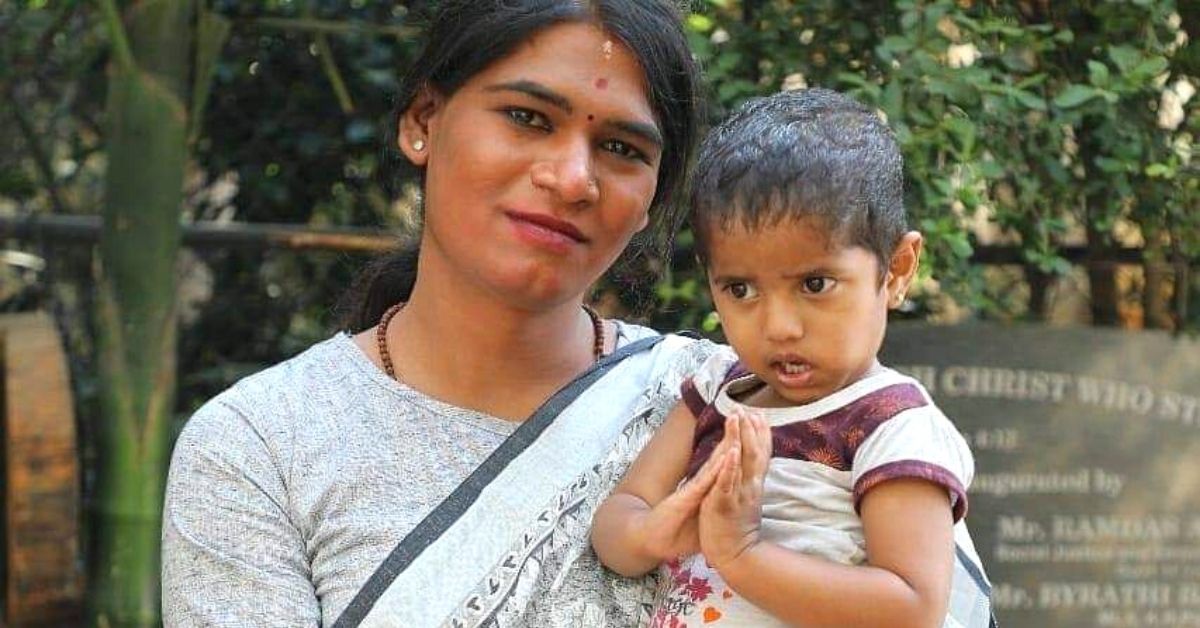
Product Range

This product, in addition to reducing waste, serves as a way to get over the social stigma attached to waste in our country. Without being preachy it makes the job of taking care of your waste “doable” and “possible”.

The potters who make the terra cotta pots have benefited significantly – their profitability has increased since they started making these products.

The Team

The current Daily Dump team comprises of:
Poonam Bir Kasturi (Founder), Delara Damania (Designer), Savitha, Shwetha, Vinita, Trupti, Sudheer and Anupama

Current Challenges

The challenge faced by the team presently is to create sustainable revenue streams and make money out of all the research and design work that they have done. The team has also learnt a lot and is looking to partner with NGO’s now to make strategic connections to enable waste to be managed better all over the country. Daily Dump has a robust design and an easily replicable one, which can be adapted by most people all over India.

Looking forward, Daily Dump is in the process of prototyping a mechanical composter to be retrofitted into homes in India. For this, they are looking to work with builders and see if this product can then enter into every home as a standard fitting.
The Daily Dump team is constantly trying to figure out:

  • How to get builders to retrofit a composter in each balcony and utility?
  • How to design a new mechanical composter such that it follows the cradle to cradle philosophy and yet is cheap and fits into the informal manufacturing setup that dots the Indian urban landscape?

Recognition

Daily Dump has received the following awards & honors:

  • “Nominated for the INDEX awards 2007 – an international award to improve the quality of life
  • Awarded the Green Product of the Year by Anchor Better Interior Excellence Awards 2007
  • Made it to the final round of the TATA NEN Hottest Startups 2009.
  • Indira International Innovation’s ‘Star Entrepreneur of the Year Award’, 2009
  • Made it to the final round of the Sankalp Social Enterprise and Investment Forum Award 2009.
Contact and get your Daily Dump today!
Address: 2992, 12 A Main, HAL IInd Stage, Bangalore 560 008, INDIA
E-mail: dailydumpcompost@gmail.com
Phone: +91 80 41152288
Website: www.dailydump.org

A Wonderful Government Officer

This article is a reader contribution. Our reader Neeraja Raghavan talks about her tryst with a wonderful Government officer, breaking the myth that everyone out there is inefficient. Read on in her own words:

I was told by my auditor that IT returns of quite a high amount (above Rs 25K) were due to me, from the filing of tax returns for the financial year 2007-2008.

Although these had been filed before 31st July 2008, and the returns are supposed to ‘automatically’ get credited into one’s account after six months, my auditor told me: “Madam! This is the most corrupt department in the country! The officer handling this told me he wants a 2% cut.”

“Bribe?” I asked.

“Yes, madam,” was his answer.

“I am not going to bribe,” I replied.

“Then, Madam, it will take more than 2 years,”he replied.

I said ok, let it take as long as it takes, but I refused to bribe anyone.

Nevertheless, I filed a grievance on some website in December 2008, when 6 months elapsed, but apart form getting a fancy and instant acknowledgement on the website with a registration no:, nothing further happened. (Needless to say, every attempt of mine to get the name of the bribe seeking IT officer from my auditor failed utterly.)

Well, I had an eventful day about two months ago.

Hot as the afternoon was, I decided to invest some of my sleepy time at work, in telephoning the IT department. So I went onto the Net and searched for every telephone no: there is for IT officers in Bangalore.

From the lowest to the highest: that is my usual thumb rule in such cases. So I patiently telephoned from the lowest rung in the ladder to the highest.

Firstly, every single number of the fifteen EPABX numbers rang off the hook, with no one even bothering to pick up the receiver.
Secondly, the PRO cell by some fortuitous chance, managed to tell me which ward/range my PAN number came under, so that helped in my further tracking.
Very knowledgeably, I then began asking for the IT officer in charge of my Range, if at all I was lucky enough to have a human voice answer me at the other end.

Now this went on and on from 2 to 3:30 pm, after which I was emboldened enough to go all the way upto the COMMISSIONER in charge of my Range, and listen to this: at 3:30 I was told by his peremptory secretary: “He has gone for lunch and will be back at 4:30 pm. No, I don’t know his e-mail address.” I laughed: for if an officer goes for lunch saying he will return at 4:30 pm, you can be sure he will not return for the day, for don’t all Government offices close at sharp 5 pm?
Well, I made good use of the time between 3:30 and 4:30 pm, and managed to get the e-mail address of this commissioner, from his colleague, yet another commissioner in charge of yet another range/ward. (Madam, I am sorry this does not fall under my jurisdiction…OK sir, could you please tell me whose jurisdiction it does fall under? And would you be so kind as to give me his e-mail address?)

I mopped the sweat off my brow and sent off an e-mail to the lunching Commissioner, and no sooner did the clock strike 4:30 pm than I called up his office. Very reluctantly, his secretary handed him the telephone.
I explained my problem. I took care to also add that all EPABX numbers were just ringing off their hooks, and since I could not reach the concerned officer, I was sorry but I had no option but to bother a high up person like him.

He not only listened to me patiently, he also asked me if I would be interested in exposing the officer who purportedly asked for a bribe (to which I said sure, but since I only had my auditor’s word without a name for it, I really had no authentic proof).

“I am only doing my job” he said when I thanked him for his work

Then he noted down all my contact numbers, and called me back within 15 minutes.
He explained that due to some new system of computerisation, there had been enormous delay in processing of 2007-8 returns, and I was amongst 80% or more tax payers who were still waiting for the refund.
He said that despite this, since I had been inconvenienced to such a degree, he had arranged for my returns to be credited into my account right away. (He also clarified that the bribe angle could not have much truth in it, as there were so many whose dues were pending, so my auditor could well have been voicing his won desire! I agreed that this could well be the case.)

Further, he said the EPABX was indeed not responding as he had himself tried the telephone nos and found my experience to be his as well. He said he was looking into this as well.
All this happened on that one day. Now, I am not only in receipt of the full money (with interest), my attempts to thank the concerned officer have met with embarassed brush offs! “I am only doing my job!” he said.

So there are good Government officers, too! And it has been my good fortune to encounter one such!

Above article written by Neeraja Raghavan. Thanks!

Do you have a similar story to share? Then write to us: contact[at]thebetterindia.com

Interview: DSF Founder Maitreyee Kumar

In this post we bring to you an insightful interview with Maitreyee Kumar who is the founder of Dream School Foundation. Before we get into the actual questions, here is a brief background about Maitreyee.

Maitreyee started her career as software professional and worked with multinational software development firms in India and abroad for over 8 years before she made a shift towards social development. Her desire for social change and interest in child development through civil society mobilisation urged her to join CRY (Child Rights and You). She worked with CRY in the resource generation and volunteer management divisions for a decade and was instrumental in setting up and coordinating Volunteer Action at national level. Educated at Pune University (Masters in Computer Science), Maitreyee provides leadership and direction to the organisation and is primarily responsible for the overall management and administration of the organisation. She was also a recipient of the Sir Ratan Tata Trust Fellowship.

    Interview

The Better India (TBI):Tell us about Dream School Foundation (DSF) and the work that it does?
Maitreyee: Dream School Foundation (DSF) is a Bangalore based non-profit organisation working to ensure the child’s right to quality education. Our School Development Programmes help with holistic development of government schools while our initiative – HeadStart, addresses and assists a smooth transition from primary to secondary stages of education and strives to ensure continuity till the 10th grade for the vulnerable and underserved children.

We started as a group of committed individuals volunteering their time and skills for the cause of quality education for disadvantaged children in Govt. schools. Later we formally registered the organization and now 4 years later, we are fairly established with organizational framework in place, focused school programmes and two Education and Development centres for High School students. The underlying belief of our organisation is faith in people’s ability to contribute towards the education and development of our children.

DSF Volunteers with Maitreyee (5th from right, standing)

DSF Volunteers with Maitreyee (5th from right, standing)

TBI: Who has benefited from your program and how have you made a difference?
Maitreyee: The objective of the our intervention at the school level is to enhance the learning levels of the children studying at the government schools through support and partnership with teachers, active participation of the community coupled with intensive class room and school level interventions through trained personnel, teachers & volunteers. We believe that these interventions create an environment and processes, which ensures holistic development and enhanced performance of the school and its students.

Our initiative HeadStart aims to mentor and track individual students from the various schools, we support, through and beyond their Higher Primary / Middle school and High School Education. The underlying driver of the programme is to ensure that children both continue into high school (not drop out) and make an informed choice of schooling in the neighbourhood schools that are willing to give them an opportunity to share a learning experience without being discouraged by the financial liabilities.

The programme is strengthened by volunteer-involvement to mentor and track the performance of the participant – students and motivate them through the commitment of financial support for 3 years of High School Education. It is closely associated with our Learning Centres where the student-participants will have the opportunity to capitalise on Spoken English and Life –Skill Tutoring. We have seen marked improvement in the academic performance as well as personality development of these students and they are much better equipped to face the challenges of the world today.

TBI: What inspired you to create an organization like DSF?
Maitreyee: My experience and exposure as a software professional and later work with CRY gave me lot of opportunity to have a world view of society and social development. I came across several well meaning individuals who wanted to do something to bring about a change but very few ended up doing anything worthwhile. Some of us who were really passionate for the cause of Education and felt it is the only sustainable tool that can empower the nation and bridge the economic divide between communities in India started getting together.

We saw that while govt. efforts have ensured that most children have access to schools, quality education in these schools was still a dream. Schools needed to be equipped to provide education that is more than just development of cognitive abilities and rote learning and make learning an exciting and stimulating experience for children. Thus was born the idea of a Dream School which was developed by this group of passionate individuals with a keen desire to bring about a change.

TBI: How does DSF sustain itself?
Maitreyee: A large percentage of our funding comes from CSR initiatives of corporate firms while another significant part is from individuals and groups.

TBI: What are the schools that are currently under the purview of DSF?
Maitreyee: DSF partners around 20 schools across Bangalore for the Holistic school development and extends its services on smaller scale to several other needy schools. Our schools are primarily located in North Bangalore – RT Nagar, Yeshwantpur, Rajajinagar areas, while we also work with some schools around HAL airport area. Our Learning centres are situated at Yeshwantpur & RT Nagar.

Students at a DSF Adopted School

Students at a DSF Adopted School

TBI: What plans do you have for the future?
Maitreyee: This year we would primarily focus on strengthening our interventions both at our existing partner schools and Learning centres. Meanwhile the public education scenario in the urban context is undergoing several reforms and changes. We need to wait and watch before we step further in our programme expansion in urban areas.

Instead it’s the rural schools that are kind of orphan and need developmental support. There we also have tremendous scope for enhancing community participation in the school development. We plan to take on a pilot School development programme in the outskirts of Bangalore, extend our existing programmes to the rural community and then explore possibility of scaling up the initiative.

Computers at the DSF's R T Nagar Center

Computers at the DSF's R T Nagar Center

TBI: In what ways can our readers contribute to DSF?
Maitreyee: DSF owes its beginning to few committed individuals who volunteered for the cause of quality education. We have full faith in people’s ability to contribute towards the nation building process. Whether it is through volunteering your time or financial contributions, each one of you can reach out to underserved children. One can be a member of our School Support teams and volunteer at a school or mentor / teach students at our centres. We are in need of sponsors to contribute to the High School education of our HeadStart children.

One is also welcome to help in specialized areas like website & content development, financial accounts, counseling, child psychology, education etc.

TBI: Any other message you would want to provide or talk about?
Maitreyee: We believe that people at large are responsible for the situation of the state of education and children today. And people should play a proactive role to change the situation through collective action. We need to work on formation and strengthening of alliances that promote collective action which will finally result in influencing govt. policies and bringing about constitutional changes. We as educated citizens need to widen our perspective, get more aware and involved in the education system and advocate the right cause that would benefit a larger population than a narrow segment of society.

Maitreyee is ably supported by DSF’s Co-Founder Sabu Joseph. Sabu holds the post of Director – Strategy & Partnerships. Here is a brief bio of Sabu:
Prior to initiation of DSF, Sabu worked with Centre for Environment Education (CEE), in Bangalore where he initiated and managed projects in Environment and Sustainable Development. He taught Social work and management in IIRM, MATS school of management and was visiting faculty in many management institutions and organisations. His interest lies in training and development and has conducted various programmes in corporate, academic and NGO settings. Sabu currently consults with global organisations on sustainability and business transformation.

He provides vision and direction to DSF and is responsible for strategic planning and partnerships. He holds a Masters in Social Work and also a recipient of Common wealth Secretariat scholarship on Environment Education (TEE).

Contact DSF

For further information, please click here to visit the website of Dream School Foundation.

You can also e-mail DSF: info[at]dsfindia[dot]org

The Channapatna Toy Story

Channapatna. It is the name of a small town between Bangalore and Mysore. But more often than not, the name evokes images of beautiful, colourful toys that had us enthralled as children and still make us remark at their exquisite craftsmanship. If ever toys made a town, this would be it, as the Geographical Indicator tag on Channapatna also confers. Savitha Karthik writes in Deccan Herald of her journey through the town, the changes she witnessed bit had not expected, and the work of Maya Organic – an NGO that helps the toy makers earn a decent living from a dying art.

Expecting to see an old craftsman sitting in a quiet corner and chipping away on a piece of wood that would eventually turn into one of those dolls, Savitha was surprised to find the factory of Maya Organic where workers of varying ages chipped away on power lathes and crafting those toys.

Girish, who has been working on toys for the last 18 years, explains, “We are a family of toymakers. My father, now, 74 years old, my brother, all of us, have been working on making toys.” So, how have things changed over the years? I ask. “Things have changed. Earlier, people would work on hand lathes in their homes, or hire lathes, and then we would go to the toy emporiums and sell our toys. Life was difficult because we had to make ends meet on a daily basis. Now, with the factory, things are more streamlined, and it is no longer a daily wages thing. Also, back then, we would make saada bombe (plain toys).”

Once believed to have been the art of Persian toymakers, who were brought in by the Mysore ruler Tipu Sultan, the skill has undergone a host of changes to cater to the changing environment. With exports being the mainstay of the industry, the toys have also evolved to hold greater appeal to the western markets. The use of vegetable dyes is one such innovation, which makes these toys score over their more controversial lead-containing Chinese counterparts.

However, the picture still isn’t that rosy for these artisans:

An enquiry at a Handicrafts Emporium within the town brought a new perspective to the toy story.

The owner explains that while there are huge export orders, there is always the fear that such bulk orders get rejected even if there is a slight fault in one of the toys. And in the non-tourist season, on ordinary weekdays, there are not many people who actually buy toys from such shops in the town. And so, there is diversification, from the traditional toys to metalware, to incense sticks to sarees.

The Channapatna toys have been more than playthings for the many girls growing up in the town, offering them a means of livelihood and empowerment at the factory. Their story is intricately linked to the toy story of Channapatna.

Read the complete article here.

Image Courtesy: Seattle Times

A Hotel By Sex Workers

It looks like any other no-frills, hygienic restaurant serving quality south Indian fare. However, what is unique about this moderately spacious hotel in Mysore is the fact that it is run by 12 male and female sex workers and transgenders. The bistro is located near the Mysore Palace and is named Ashodaya, after the organization Ashodaya Samiti which works with male, female and trangender sex workers in the city. Preethi Nagaraj tells the story in DNA:

The hotel was declared open by the Commissioner of Police, Dr S Parashivamurthy in Mysore on Tuesday, which was observed as World AIDS day.

“I am sure I would spread a word about this place when I go home,” adds Angela Corrs from UK who was happily indulging in the very Indian dish-puri and fried dal. She pauses for a moment to answer DNA’s query, “Yes, I know who run this resto and why. This effort sends out a strong signal that if sex workers really want a dignified life, they can have it.”
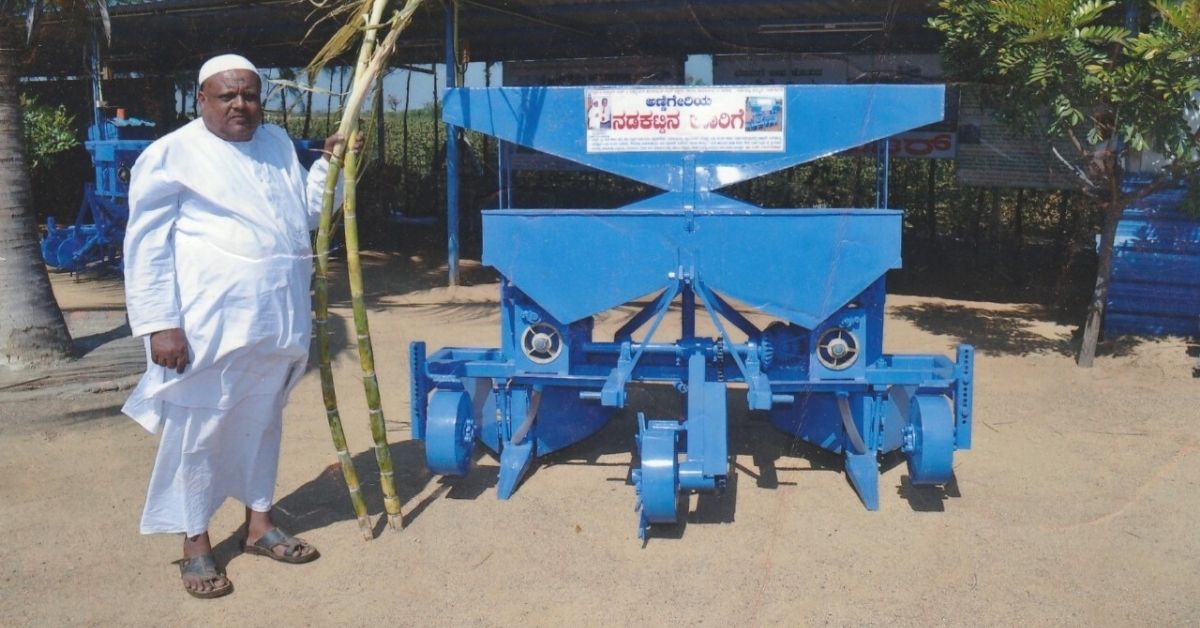
“This is certainly not the kind of hotel we’d look around, but we want to join these guys’ humble effort for a change for good,” says Robert, another foreign custom enjoying the spice morning food.

Ashodaya Samiti also runs a community kitchen for sex workers where they can have free food, because they often suffer discrimination in other hotels.
The hotel was opened as part of World Bank’s entrepreneurial initiatives with an initial investment of Rs.4.5 lakh. It is now raking in Rs.3000 per day, from which the profit is being used to fund Ashodaya Samiti’s other projects in nearby Mandya.

Ashodaya is a wonderful example of how people compromised by circumstances can take charge of their lives, and can change not only their own lives but the lives of many others around them.

Read the complete article here.
Image Courtesy: DNA

On Children’s Day – An Unusual Gift

On Children’s Day, what better gift can we give them than the gift of a voice and representation? This is what about 65,000 children enjoy in 4 districts in Karnataka at the Makkala (children) Panchayats. Aged between 6 and 18, these young leaders are being groomed to understand their rights and participate in the democratic process of the country.

Initiated in 1995 by Concerned for Working Children (CWC), an NGO, in collaboration with the Ministry of Rural Development and Panchayati Raj, Government of Karnataka, the Makkala Panchayats allow children to make informed decisions on issues that concern them. Malathi Belur reports in Deccan Herald:

As part of Makkala Panchayat, the voters elect candidates aged between 12 and 16, who in turn hold Grama Sabhas and participate in Gram Panchayat meetings.

If you thought these little administrators could be sidestepped, think again. For, they are armed with information, data from research, surveys and an agenda chalked out at the prior meeting of Makkala Gram Sabhas.

Apart from the Namma Sabha and Bhim Sangha, the Makkala Panchayat gets a backing from the Task Force which comprises government functionaries, elected representatives, local NGOs and other organisations.

Not only are these children raising and solving their concerns, they are also bringing about a world of change in the community and its development. They have successfully campaigned for various issues like facilities for the disabled, proper distribution of ration cards to the poor, basic amenities in schools, etc. With their fun-filled and lively way of working, they have infused new life and vitality in the proceedings of the sabhas and panchayats.

Wondering how the elections are held?

Elections held to the Panchayats are better than those that are held to Gram Panchayats due to their non-partisan nature, compulsory voting and reservations for working children, students, school dropouts, migrant children, the disabled and girls. However, each Panchayat has devised its own system based on local needs. For example, while in Kundapur girls are given 65 per cent reservation, in Bellary, seat sharing between girls and boys is 50:50.

What about corruption?

Elections are held in schools by the election committee with the help of head masters, teachers and anganwadi workers. In one instance, when a member of the Panchayat failed to attend meetings, he was sought an explanation. On finding the reason invalid, he was recalled and by-election was held to the post. Of course, earnestness of these kids would make any adult feel shame for not being able to recall the corrupt ministers in our political set-up.

This unique initiative by the CWC and Government of Karnataka is a wonderful model to make responsible and dedicated citizens out of the children of today, and a great training ground for future leaders of the nation. It also stems the tendency to complain about inadequacies in the system, and instead, be a part of the system and work to improve it from within. The Makkala Panchayats could surely serve as an example for the role played by an ideal democracy to the rest of the country, as to the rest of the world, and should be given due recognition and encouragement. There are a lot of lessons to be learnt here.

Read the complete article here.

Image Courtesy: Sonk Films

Vivekananda Girijana Kalyana Kendra (VGKK)

“All the wealth of the world cannot help one little Indian village if the people are not taught to help themselves”


These are some of the words of Swami Vivekananda that inspired a young Dr. Hanumappa Sudarshan to venture into the B R Hills region near Mysore and devote his life to the development of the native Soliga tribe.


The Beginnings:
As a student of Bangalore Medical College, Dr. Sudarshan spent his free time helping the tribals of the Nilgiris with Dr.Narasimhan. And after graduation, he was clear in his mind about the purpose of his life. One day in 1979, he took a solitary bus to the forlorn and perilous B R Hills, and his life changed forever.

Dr. Sudarshan in a tribal village

Dr. Sudarshan in a tribal village

With the humble beginnings of a small hut on a rock, Dr. Sudarshan started operating his clinic with two staff members. The initial challenge was to find patients, as the sight of new people, especially people with needles and pills, was enough to frighten away the forest dwellers. However, as the doctor and his assistants became a common sight, and did not show any signs of going away, the tribals slowly gave in to their curiosity and began approaching them. It took several ‘miracle’ cures for them to start trusting the medicine man.


The Purpose:
Thus was founded Vivekananda Girijana Kalyana Kendra (VGKK) in 1981 for the improvement of these tribal lives. Once the treatments of Dr. Sudarshan found acceptance among the Soligas of B.R.Hills, tribals from neighbouring villages also started pouring in. Dr. Sudarshan and his team would conduct information sessions in all these small hamlets to educate the local population about their work. The tiny hospital began treating a number of ailments and VGKK’s pioneering work began to show results.

While the medical facility took off and became a huge success, Dr. Sudarshan found from living among the Soligas that only health care did not bring about lasting changes in the lives of these people. They lived in abject poverty and unawareness, and while curative treatment was a necessity, it was not the only one. These people needed a lot more.

Thus VGKK started adapting to the needs of the community and evolving into ways not envisioned in the beginning. It came to focus on 3 more aspects of tribal development – education, empowerment and livelihood support – in order to provide more sustained benefits.

Health Care:
The ‘hut on the rock’ is now a 20-bedded hospital with all necessary infrastructures – laboratory, x-ray facility, operation theatre and a well-stocked pharmacy. This hospital caters to a large population of tribals in the region, including some from neighbouring Tamil Nadu as well, and offers them free treatment. The hospital maintains detailed case records of the tribals, and computerization of these records is ongoing.

The Soligas and other tribals are indigenous forest people and have extensive knowledge of nature cures and medicinal herbs. Dr. Sudarshan decided to nurture this aspect of traditional herbal cure, and incorporate it in his treatments. The medicinal plants have been identified and documented, and are grown separately for therapeutic purposes.

There are several communities of tribals living in very far flung and inaccessible forest areas which cannot be serviced by the BR Hills facility due to the immobility of these people. In the beginning they were served by Dr. Sudarshan with his medicine bags, traveling on foot to reach them. However, now a special mobile health unit comprising of a doctor, a pharmacist/health worker and a driver has been dispatched to visit these areas.


Education:
Looking at the needs of the community, the small hospital hut also started serving as a school at nights.

The School in B R Hills

The School in B R Hills

Starting with a first batch of 6 students, the school has grown to a strength of 500 students, and now offers primary, secondary, high school, college and vocational training.

Dr. Sudarshan realized very early on that it was essential to help these Soliga children learn about their tribal traditions and keep them alive, in order to remain connected to their roots. So, along with studies, the school imparts knowledge on the several plant and animal species that abound in the nearby forests and the children are taught to cultivate vegetables, medicinal herbs, poultry, bees and silkworms.

Care has been taken to ensure that the children who are educated at this school are not left without means of livelihood, and have ample choices in life, which were perhaps not available to their parents.

Three among the first batch of students have completed their post-graduation, with one of them holding a PhD, a remarkable feat indeed. Most of the children who graduate from this school return to the community to help further education and other causes that VGKK stands for.


Vocational Training and Livelihood:
It became evident that primary and secondary education is not sufficient to guarantee a means of livelihood. In order to bridge this gap, the students and other members of the community were taught other skills like tailoring, knitting, spinning, silk, cotton and jute weaving, cane and bamboo works, baking, carpentry,

Vocational Training centre

Vocational Training centre

smithy, agarbathi-making, bee-keeping, handmade paper making and food processing.

The vocational trainings were selected based on the easy availability of indigenous raw materials and to cover all sections of society, whether literate or illiterate. Care has also been taken to divert the Soligas from being completely dependent on the forest and its produce, so as to better conserve their habitat. In order to enable these tribals to generate income with their acquired skills, VGKK set up manufacturing and processing units and employed them. More skilled training programs like welding, motor rewinding and household appliances were started to offer the youth a range of opportunities.

The Vocational Training Centre (VTC) was set up in 1982, and since then has trained more than 700 girls and boys. Most of the trainees have then gone back to their villages and set up their micro-enterprises with the availability of loans.


Community Development:
The Soligas, like other tribes across the country, have been largely exploited by the government and local forest authorities. With no clear land titles and no formal education, it was easy for them to fall prey to scheming outsiders. It was essential to unite all the Soligas across the region, and give them a common voice for their petitions and struggle to be heard. This was accomplished with the organization of Sanghas in every village, which was a group of Soliga representatives, to fight for their rights. Most of their alienated land has been restored to them and Soliga candidates have done well in local elections as well.


The Person:
Dr. Sudarshan is a study in commitment and humility. The recipient of the Right Livelihood Award (1994) and the Padma Shri (2000) among many others, he brushes aside all his achievements with a sweep of a hand and a shy smile, and continues talking about the tasks he still needs to accomplish.

Dr. Sudarshan

Dr. Sudarshan

Dr. Sudarshan has been Vice-President of the Voluntary Health Association of India, and a member of the Independent Commission on Health in India, the National Commission on Population, the National Nutrition Mission, the National Human Rights Commission, and the Indian Planning Commission’s Steering Group for the development of Scheduled Tribes. As Chairman of the Task Force on Health & Family Welfare he has brought out a comprehensive report to reform the health system of Karnataka. As Ombudsman for Health, Education & Social Welfare, Karnataka Lokayuktha, he is fighting against corruption and promoting good governance to make the public services reach the poor including the tribal people.

Having pioneered the role of public private partnership in the social sector, Dr. Sudarshan manages more than 40 public health centres in Karnataka and Arunachal Pradesh and now Orissa, in conjunction with the Government. This is part of a related organization founded by him called the Karuna Trust which focuses on rural development. The largest community health insurance program in India is also run under its aegis, which offers incredible benefits to the poor like insurance at ultra-low premiums of Rs. 30 per annum for wage loss compensation of Rs.50 per day. Such initiatives are what make Dr. Sudarshan the person he is. Greatly inspired by the teachings of Mahatma Gandhi, Swami Vivekananda and Albert Shweitzer, Dr. Sudarshan emanates urgency of purpose and tranquility of inner peace, both at once.


Contact VGKK and Karuna Trust at:
#686, 16th Main, 4th T – Block Jayanagar
Bangalore – 560011 , Karnataka
Phone : 91-80-22447612
Email :ktrust@vsnl.net
Website: http://www.karunatrust.org/


Read More:
Wikipedia, Right Livelihood Award, The Hindu, Karuna Trust

Calendar

September 2010
M T W T F S S
« Aug    
 12345
6789101112
13141516171819
20212223242526
27282930  

Recent Comments

PROMOTION

"Neumonia and Other Sketch Stories" - A collection of sketch stories. Download the e-book for free. Click on the book cover below.
"The observations are acute: the sound of high heels on asphalt, the bit about how all BPO employees lose their hair very fast are spot-on. This book is a better, shorter alternative to any Sunday movie on TV. It's a little jewel" - Hindustan Times