Doctor couple does wonders for tribals at Sittilingi

hospital2Sittilingi is a remote village in Dharmapuri district, 125 km away from Salem town in Tamil Nadu, which used to be a god forsaken land caught under the spell of quacks and black magic. Noisy drums and fake injections were all they had to cure illnesses. This is when Dr. Regi and Dr. Lalitha took the plunge. This doctor couple went ahead to provide medical services to the tribals of Sittilingi, leaving their promising careers in the cities.

The couple found their calling in service to the underprivileged and wanted to use their knowledge where it was needed the most. Their hunt for the right place to offer their service ended at Sittilingi, a totally neglected and ignored tribal village. They ventured into the village, faced tough resistances and now they have emerged successful in establishing a full-fledged medical center for the tribals. A service beyond praises! 

Regi and Lalitha called their service the Tribal Health Initiative (THI). Their perseverance and continued service has brought about dramatic change in the living conditions of the natives. Infant mortality rate in Sittilingi has reduced to 20/1000 and there are no mothers dying in childbirth for the past 5 years. The nutrition levels of children and the general well being of the people have improved to a great extent.

Another striking fact about the Sittilingi initiative is that the girls who serve as nurses at the medical center are personally trained by Regi and Lalitha. When Regi and Lalitha saw that it was extremely difficult to get nurses to work at this tribal village, they decided to go choose smart and trainable girls from the village. This became such a wonderful uplift to the self esteem of the girls that they are extremely proud to be part of this initiative and to serve their community.

THI’s approach to medical care went one step ahead in educating the people and ‘helping the tribals help themselves’. They wanted to create a general understanding about health and health issues and make the natives acquainted with basic first aid. Today, over 21 neighbouring villages are benefiting from the Tribal Health Initiative that sprung at Sittilingi.  

And, the couple didn’t stop with medical facilities. They organize educational programmes, cultural activities and community development initiatives. There is a library facility that is available for children who also get to listen to motivating stories from a community worker every month.  Truly commendable, right?

It is very heartening to know about the selfless and committed service of Regi and Lalitha and many others who are supporting them. You can visit them at Sittilingi and get to know their service better. We also encourage you to support the initiative by contributing to the cause. Visit http://www.tribalhealth.org/

BPOs Reach Rural India

an_indian_call_centerA lot has been said of BPOs. They have changed people’s lives and brought a modicum of hope to the lesser privileged sections of society that was denied for so long. However, till now the story was mostly restricted to urban India. Thanks to the efforts of a few like an enterprising District Collector in Tamil Nadu, Santhosh Babu and an economics graduate straight out of a US college, Kartik Raman, rural India now has an opportunity to be included in the BPO boom, and avail of alternative and better sources of income than what they could eke out from their meagre resources.

Kartik, along with 2 others, started a rural BPO in Bagad village in Jhunjhunu district if Rajasthan with 10 women, many out of class X and some graduates. A year later, the BPO called Source of Change boasts of 30 more employees earning between Rs.3500 and Rs.7000. Kartik plans to expand to more towns, recruiting about 1000 employees by 2012.

When Santhosh Babu decided to open a BPO for his collectorate, he recruited and trained villagers who had failed class X. The first BPO was of 100 seats capacity and was started with a loan of Rs.20 lakhs from the District Rural Development Agency. Its biggest client today is the US All State Insurance. Sreelatha Menon reports in Business Standard:

The most important gain of the BPO experiment in Tamil Nadu is that it recruits mostly people in villages who have failed Class X as well as graduates and pays both equal salaries of up to Rs 5,000.

After the tremendous success of the BPO experiment, Babu has been made the Managing Director of Electronics Corporation of Tamil Nadu (Elcot) to expand his operations to all 30 districts. Elcot has started a rural finishing scool where 7000 dropouts have already been trained, and plans to tender applications for franchises in every village. Every franchisee has to profitable and uncompromising on quality. The model is already serving as an inspiration for other states to embark on a similar development path.

We wish these dedicated few all the success in their endeavours and hope many more will join their ranks in improving the lot of all the far flung villages in India.

Read the rest of the story here.
Image Courtesy: Wikipedia

Village Service Trust

Village Services Trust (VST) is an NGO based in Tamil Nadu with a mission to facilitate rural development through community development projects. Their vision is to “serve the basic needs and priorities of the socially, educationally and economically backward sections of women, foster rehabilitation and overall development of the physically challenged and provide utmost care and support for child welfare”.

VST’s main focus areas are women’s empowerment and child welfare and they currently operate in the Dindigul and Kanyakumari districts of Tamil Nadu. Many of their initiatives, targeting the areas of education, health and overall welfare, are implemented in tandem with the state government and other NGOs operating in these areas.

VST has enabled the formation of women’s group in village to campaign for better representation and involvement in key decision making processes. They also have implemented a Grameen Bank model micro credit system that is supported by Self Help Groups (SHGs). These SHGs have also been successful in building community network within these societies for women and the marginalised.

vst-children-at-shelter

VST also runs health centers to provide medical, maternity consultations and counselling. In collaboration with the Aravind hospital, Madurai, VST has organized eye and dental camps. They are also active in spreading awareness about personal hygiene, HIV, STDs, immunization and family planning.

The other major focus for VST is child welfare with emphasis on rehabilitation of abandoned and abused children. VST rescues at-risk children and provides them shelter, education, vocational training and, more importantly, an opportunity to lead a normal life again. The child rehabilitation project has been operational since 1999 at their Dindigul center. It is estimated that there are 3500 children living on the streets of Dindigul.

Many of the abandoned or run-away children seek work in factories and shops to earn a living. Their predicament makes them easy victims of sexual, labor and/or drug abuse. VST seeks to help these children by help strengthen family structure to minimize run-aways, scouting for and reaching out to the abandoned as early as possible and shelter them before abuse. They also rescue abused children and provide a safe shelter where they can grow in a nurturing environment.
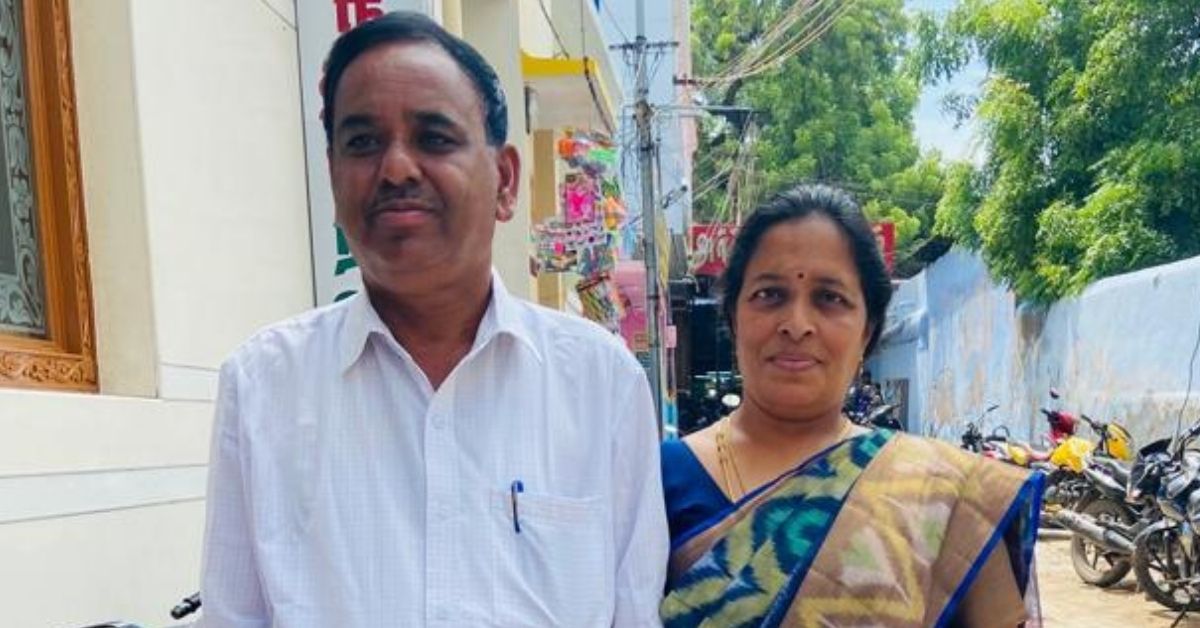
At present, there at 83 children being cared for at the shelter. It takes almost Rs. 1.5 Lakhs or $3,000 a month to sustain this project, to provide for children’s basic needs ie food, clothing, health care, education etc.

The child rehabilitation project currently has a crisis of funds. VST is seeking donations to help them continue operations and provide for these children.

Below is the link to their website which is enabled with a Paypal system for donations. Your generosity will be greatly appreciated by VST and the children. You can also choose to sponsor a child at the shelter.

Village Services Trust

Please do visit the website to read more about the work that they are doing on the ground.

You can also contact them at

The Village Service Trust

Michaelpalayam – 624215
Nilakottai Taluk
Dindigul District
Tamil Nadu

Phone: +91 (451) 6531 997
Mobile: +91 (0) 995 286 4440 or +91 (0) 984 212 4729
Fax: +91 (451) 242 0430 or +91 (451) 244 0062

Email: thevst[at]rediffmail[dot]com

Cooking stove that saves lives

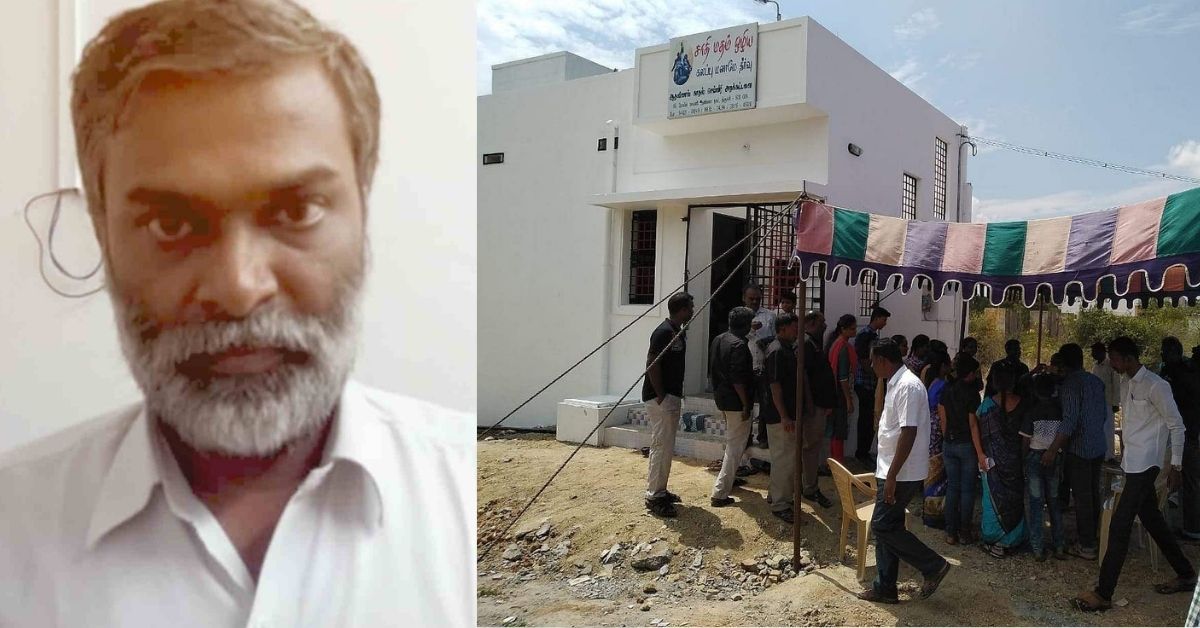
envirofit-stoveA cooking stove that not only cooks faster, saves fuel but also reduces harmful emissions by 80%. This is the promise of the stoves manufactured by Envirofit India Pvt. Ltd, part of the Shell Group. And they have already found 50,000 takers in the southern states of Karnataka, Tamil Nadu, Andhra Pradesh and Kerala.

Eliminating the dependence of poor people on gas and electricity, both of which are expensive and hard to come by in rural areas, the Envirofit stoves work on wood which is easier to collect. By working on a fuller combustion model and using heat insulating material, they reduce cooking time by as much as 40% as compared to traditional three stone stoves. However, at a retail price of a minimum of Rs.700 for a single pot burner, they might still be a little unaffordable for the large population living below poverty line. Envirofit aims to bring down this price to Rs. 500 in order to cater to this segment as well.

Poornima Mohandas reports in Mint:

The retail channel in south India sure seems ready. Sadathulla, a home appliances retailer in Gundalpet, says he sells more Envirofit stoves in a month than kerosene, electric or gas stoves.
With a reported 1.6 million deaths globally due to the use of solid biomass fuels, 400,000 of which are in India itself, it appears that the Envirofit stove could not have arrived sooner.
Read the complete article here.

Photo Courtesy: www.livemint.com

The Common Man

A 16-year old who teaches 600 students in his backyard. A single man who led to an entire city being declared smoke-free, a year before the nation enforced it as a law. The saviour of the endangered whale shark who has rescued as many as 50 so far. A former Tisco employee who gave up her secure job to help poor tribal families in a remote Maoist-infested village build a new life. And a Physics professor who learnt all there is about rain water harvesting and then made it mandatory for all official buildings in Tamil Nadu. These are just some of the everyday heroes that are doing their bit to change lives, whether they are recognized for it or not.

Babar Ali is a class XI student in Berhampore, West Bengal. Moved by the plight of poor parents who could not afford to send their children to school, this youngster has been conducting classes after his school hours since he was 11. His students come from nearby villages, some even walking four km to reach his house. In order to induce better attendance, Ali also managed to get government officials to distribute free rice at the end of the month.

Besides lessons, the children are drawn by the free rice distributed at the end of each month. “Attendance was falling drastically. That is when I hit upon this idea. As my school is not recognised by the government, I couldn’t have got free rice. But government officials helped me,” says Ali.

Ali has big dreams for the future. “I dream that my school will grow and expand to other parts of the state and country where children want to but can’t go to school.” But for now, he will be content if his students get a proper classroom.

——

Hemant Goswami had been committed to act against tobacco since a school project he did in 1987. In 2004 he filed a writ petition with the Chandigarh High Court, following which the government was instructed to follow the tobacco Act in letter and spirit.

In 2005 when the Right to Information Act (RTI) came into force, Hemant decided to use it to make Chandigarh the first smoke-free city. He filed over 300 RTI petitions with all government departments and offices, raising questions about their adherence to tobacco control laws. In a year, more than 1,800 signboards warning people of the health implications of smoking were up in all government offices. Educational institutes too fell in line.

Hemant’s efforts finally resulted in Chandigarh being declared smoke-free in July 2007. But he didn’t rest even after that. He continues to monitor the proper enforcement of the law, and smokes out the violators.

——

Dinesh Goswami is a daily wage earner in Junagadh district of Saurashtra in Gujarat. But every time he hears of the whale shark being indiscriminately hunted by fishermen on the rough and choppy sea off the coast of Saurashtra, he rushes to their rescue.

Describing his most dangerous rescue so far, Goswami recounts, “State officials called me after reports that a shark was trapped in a net. After we set off, the sea got very rough and every minute, we thought the boat would overturn. Thankfully, we managed to save the whale shark and return safely.” Goswami now runs Paryawaran Mitra, an NGO for the protection of sea animals.

Having learnt about the whale sharks and their plight in a documentary by environmentalist Mike Pandey, Goswami decided to make it his mission to save them every time they are in danger.

——

In Purulia, along the Bengal-Jharkhand border, Jayati Chakraborty has started a school to help a tribe called santhals build a better future. Inspired by an NGO run by Kamalesh Chakraborty for developmental work in the area, she decided to stay on and make a difference.

She quit her job, faced down appalled friends and family. “They found it hard to believe that I would be better off working with poor people in a godforsaken village.” And she tried new things — linseed and tomato farming — finally deciding the area needed a school. “We converted a hall into a classroom and started with 66 students in 2001. It seemed the school was waiting to happen,” she says. Students pay Rs 30 a month. But paid pupil or not, no one is turned away.

—–

Chennai-based professor Sekhar Raghavan’s passion for saving and harvesting water found an outlet when he worked with the Centre for Policy Studies, which examines traditional ways of living.

He says he found “we had the complete records of Chengelpet district for 200 years and realized rain-water harvesting is not new, it’s just something we had forgotten”.

His Akash Ganga Trust eventually led to rainwater harvesting becoming compulsory for all buildings in Tamil Nadu in 2002.

—–

Thus we see that it is possible for a single person to change the lives of many, even while performing normal duties like going to school or earning a daily wage. All our barriers are just imaginary.

Read the complete article in Times of India here.
Image Courtesy: jyothsnay.wordpress.com

A Man With Perfect Vision

When you think of eye care and restoration of sight, the first thought that comes to mind is of Aravind Eye Hospital in Madurai and its founder Dr. Govindappa Venkataswamy. The largest single provider of eye surgery in the world, Aravind has given sight to more than a million people in India since its inception in 1976. Having perfected the art of treating cataract and other eye problems to the point where any further improvements would necessitate a revolution in the field, the hospital and its team of dedicated surgeons and staff has achieved unimaginable economies of scale. A cataract operation that would cost $1,650 to perform in the US takes them about $10. Harriet Rubin has profiled the life and work of ‘Dr. V’ beautifully in his article published in FastCompany, from which here are a few excerpts:

How do you achieve perfection in the never-perfect and always-compromised world of business? It helps to have a service that you can’t sell. That way, you have to give it away. Your toughest customers are always the people who don’t need you. Many of Aravind’s patients can’t afford cataract surgery. Most don’t remember what good vision is — and don’t understand why it would offer any benefit. So Aravind has to keep educating them — and perfecting its own service.

On a slow day, Aravind treats 400 patients. Offering free services to all who need it, with absolutely no criteria for availing for free service, the hospital still manages a gross margin of 40%. This is despite the fact that almost 70% of its patients paying nothing, and it does not depend on donations or government grants. It has been achieved by constantly cutting costs, increasing efficiency, innovating and building a market. Most of Aravind’s potential beneficiaries are not even aware of such a service or their need for it.

“In the third world, a blind person is referred to as ‘a mouth without hands,’ ” says Dr. V. “He is detrimental to his family and to the whole village. But all he needs is a 10-minute operation. One week the bandages go on, the next week they go off. High bang for the buck. But people don’t realize that the surgery is available, or that they can afford it because it’s free. We have to sell them first on the need.”

Aravind has managed to beat costs in every area of its service: The hospital’s own Aurolab, begun in 1992, pioneered the production of high-quality, low-cost intraocular lenses. Aurolab now produces 700,000 lenses per year, a quarter of which are used at Aravind. The rest are exported to countries all over the world — except to the United States. (In order for Aravind to get its lenses approved for sale in the United States, it would have to pay for an FDA study and a clinical study, which the hospital cannot afford.) Aravind even has its own guest house, and students and physicians from around the world come to teach, study, observe, practice — and boost their training. Poles for stretchers? They’re made from bamboo that grows in Dr. V.’s garden. “We also have the $5 pole, which is bright and shiny,” says Dr. Natchiar, “but we prefer these bamboo poles.”

How many people knew that Dr V had studied to become an obstetrician but a crippling rheumatoid arthritis forced him to take an alternative path. If anything confirms the saying that ‘everything happens for the best’, this would be it. Rubin talks about the passion and leadership qualities of the humble man who has been inspired by Gandhi and Sri Aurobindo, but set his own standards.

You know he knows. He’s an eye surgeon — a man of vision. He has learned how to deliver perfection, and to do it despite crippling obstacles. As a young man, a brand-new obstetrician, he contracted rheumatoid arthritis and watched helplessly as his fingers slowly twisted, fused, and grew useless for delivering babies. So he started over, this time studying ophthalmology. He managed to design his own instruments to suit his hands, and these tools enabled him to do as many as 100 surgeries a day. He became the most admired cataract surgeon in India.

Twenty-five years later, he confronted another potentially crippling obstacle: retirement. In 1976, facing the prospect of social shelving at age 57, he opened a 12-bed eye hospital in his brother’s home in Madurai, India. Today, he runs five hospitals that perform more than 180,000 operations each year. Seventy percent of his patients are charity cases; the remaining 30% seek him out and pay for his services because the quality of his work is world-class. He is a doctor to the eyes and a leader to the soul.

Tossing all market intelligence to the wind, Aravind Eye Hospital has managed to create a huge demand by the quality of its service and the education its customers. This is one of the lessons that Rubin takes away from Aravind:

Give people a new experience, one that deeply changes their lives, make it affordable, and eventually you change the whole world. And your customers become your marketers.

In the end, to get more insight into the ideals of a great man, read Dr. V’s response to Rubin’s question:

I ask Dr. V. a simple question designed to get him to talk about his unique vision: “What are your gifts?” I ask him. Dr. V. replies, “People thank me for giving them sight.” This is no error of translation, no slipup of English. Dr. V. considers his gifts to be the things that he has given others, not what he possesses.

There are many lessons to be learnt from this single man and his shared vision.

Find the rest of the must-read article here.
Image Courtesy: World People’s Blog

Micro-credit at the Post Office

What makes more sense than reaching the poorest sections of the society through the one place easily accessible to them – the post office! The National Bank for Agriculture and Rural Development (NABARD) has tied up with the largest postal service in the world – India Post – to make microcredit available to female self-help groups (SHGs) in the remotest parts of the country. An SHG is described by Professor Annuppalle of Sri Venkateswara University as “small voluntary association of poor people, preferably from the same socio-economic background.”


Lori Curtis reports in MicroCapital:


The loans are set up so that NABARD provides the funds and the Post Office disburses the loans to SHGs. The interest rate is nine percent, three percent of which is commission for the Post Office, the rest is returned to NABARD. SHGs must open accounts with their local post office, and once they are identified by NGOs or recommended by NABARD they are watched for six months. A committee made up of representatives from NABARD, relevant NGOs and the Department of Post determine a credit rating and those SHGs with qualifying marks are eligible for these loans. The upper loan limit is Rs 24,000 (USD 515) or four times the deposit the SHG has in their post office.

The project which was initiated in two districts in Tamil Nadu as a pilot project in 2006 has now been extended to include the Northeast and 8 more states. A total of Rs.1.35 million has been disbursed to 165 SHGs in Tamil Nadu.

The National Bank for Agriculture and Rural Development (NABARD) was founded in 1982 as part of a government mandate to facilitate credit flow for promotion and development of agriculture, small-scale industries and rural crafts. As of March 2006, 33 million individuals have been linked to microcredit through this program.

With 155,333 post offices in India, of which 139,074 are in rural areas, there is great potential for this scheme to change the lives of millions living below the poverty line, and provide them a means of sustained livelihood.

Read the complete article here.

Link Credit: Asha P. Thanks for contributing!

Image Courtesy: http://sophieandstan.blogspot.com/

Friends of Police: Bridging the Police-Public Gap


More often than not, the perception of the police amidst the citizens has not been very good. In fact, even many of our movies have portrayed them in poor light. Due to this, we forget that they too are ordinary human beings like all of us. Friends of Police aims to bridge the gap between the public and the police personnel. Conceived by Pratheep V. Philip, Inspector-General of Police, Social Justice and Human Rights, this group has been attempting to change the perceptions of the police since 1993.

This article in The Week states that “the members of FOP are volunteer citizens who keep their eyes and ears open, and pass on potentially vital information to help the police.”

And what was the inspiration for Pratheep to start FOP:

“I know that our department has a negative image, and ever since I joined the service in 1987, I have had this urge to do something about it,” said Philip. He was wounded in the blast that killed Rajiv Gandhi at Sriperumbudur in 1991. “I was lying in a pool of blood thirsting for water. The policemen were either hurt or not around. It was a young boy from the crowd that gave me some water. The incident made stronger my idea of involving the public,” he said.

The help to the police, besides improving their image in the minds of the public, has been significant, says the article:

The volunteers have helped ease tensions, and have provided security at festivals and social gatherings in sensitive areas. Having an FOP volunteer around helps the policemen deal with the public better. “They act as an intermediary. And because they are in plainclothes, it is easier for them to collect information besides convincing the public,” said Philip. From unravelling a murder mystery to preventing a terrorist strike, just about anything is possible with FOP volunteers. “They are a viable option in combating terrorism.”

Read the complete article on Friends of Police here.

Alternative Nobel win for the Sarvodaya couple

Krishnammal Sankaralingam

Krishnammal Sankaralingam

They are two old people from a small settlement in Tamil Nadu called Nagapattinam. And this year, the Sarvodaya couple – Krishnammal and Sankaralingam Jaganathan, will be honoured with prestigious Right Livelihood Award – also known as the Alternative Nobel.

The couple had started Land for the Tiller’s Freedom (LAFTI) in 1981, a non-profit organization based on the Gandhian idea of equitable land distribution as a basis for rural economic development. It has its roots in the Bhoodan movement created by Acharya Vinoba Bhave, who advocated the Village Community ownership of land – a non-violent land revolution encouraging landowners to voluntarily submit their lands for community ownership. The Bhoodan and LAFTI movements have been instrumental in distributing 11,000 acres of land to 11,000 landless poor families for agriculture. LAFTI has also negotiated with government for land subsidies and with banks for reduced interest rates on loans for purchase of land. Read more about the organization here.

Rajaneesh Vilakudy has reported about the latest honour in Rediff News:

Talking exclusively to rediff.com from Kuthur, a tiny hamlet in Tamil Nadu, where the old couple reside, Krishnammal said, “We are happy. Our initiatives are being rewarded. It is a big award, but Padma Shree is bigger. It is an honor by the Indian Government, which we savour for our lifetime.”

Describing them as India’s Soul, the Right to Livelihood Award panel said the feat was “for two long lifetimes of work dedicated to realising in practice the Gandhian vision of social justice and sustainable human development”.

The duo had been awarded with the Padma Shree in 1989. Sankaralingam is 95 years old, and has been involved in many struggles including the one for independence.

Two lifetimes dedicated to fighting for causes and seeing results. We can imagine how difficult and satisfying that must be, and offer our heartiest congratulations to the couple who have heralded sunrise in so many lives.

Link Courtesy: Bharath Madhavan. Thanks!

Image Courtesy: Right Livelihood Award Website

Tsunami Survivors turn Waste Managers

The Tsunami that wreaked havoc in Dec, 2004

The Tsunami that wreaked havoc in Dec, 2004

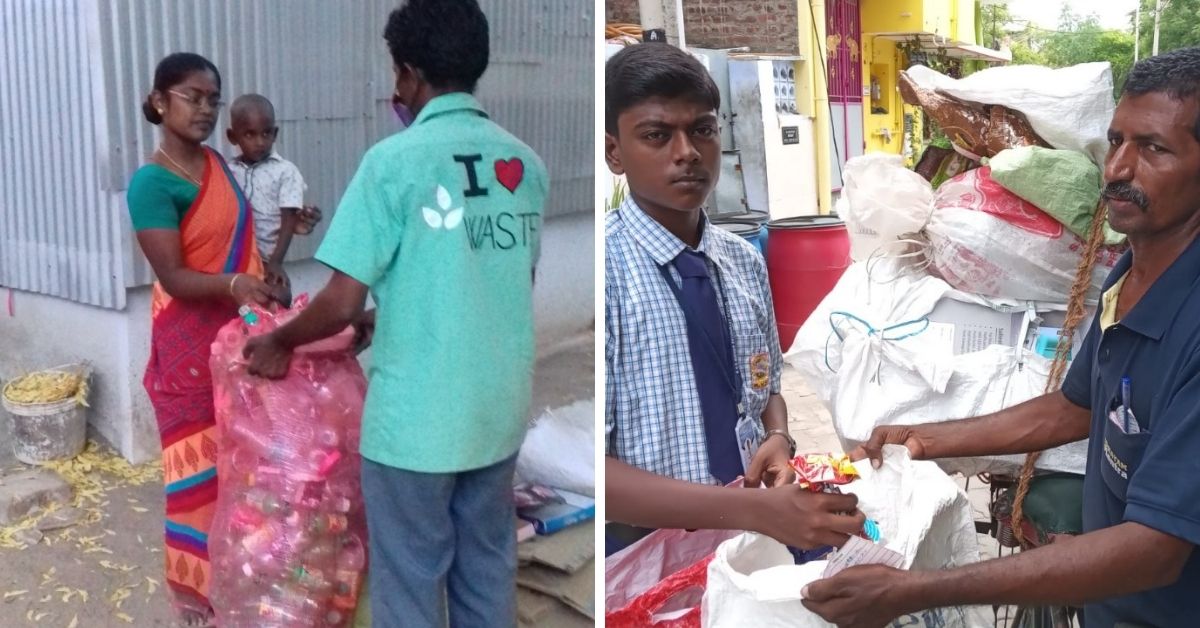
Everything that M Malar owned was washed away in December 2004. After eking out a bare subsistence for four years, this mother of three has finally been shown a ray of hope. She and 37 other Tsunami survivors like her can begin life afresh working as permanent staff members of “Green Friends” at the new vermin-compost yard set up at Sholinganallur by the town panchayat.

The yard has been set up with the help of an NGO Hand-In-Hand (HIH), which runs 19 yards in Kancheepuram district with the participation of the local bodies.

D Madhavan reports in this article in The Times of India:

Two years ago, Malar, originally a resident of Odaikuppam in Besant Nagar, was accommodated in one of the 6,700 quarters built by the Tamil Nadu Slum Clearance Board for tsunami survivors in Semmancherri.

But this was not enough for Malar. She had to feed her children and give them an education – she did several odd jobs, from working as a maid to hawking goods.

Two months ago, there came another turn in her life. She and 37 other tsunami survivors of Semmancheri were offered a permanent job by HIH in the new yard.

A self-help group was formed to help them sustain their livelihood. “It is a second life for me. Now I can ensure that my three children get a good education. I want to ensure at least one of them pursues medicine,” Malar told The Times of India.

The tsunami-survivors were given free training on all aspects of maintaining the yard. These women in turn will teach the residents about the need to segregate their waste into biodegradable and non-biodegradable parts. Initially, the “Green Friends” will receive monthly compensation, but after a year they will be in charge of sustaining the project.

Read the complete article here.

Image Courtesy: Inmotion Magazine, AREDS Team

Calendar

March 2010
M T W T F S S
« Feb    
1234567
891011121314
15161718192021
22232425262728
293031  

PROMOTION

"Neumonia and Other Sketch Stories" - A collection of sketch stories. Download the e-book for free. Click on the book cover below.
"The observations are acute: the sound of high heels on asphalt, the bit about how all BPO employees lose their hair very fast are spot-on. This book is a better, shorter alternative to any Sunday movie on TV. It's a little jewel" - Hindustan Times