Where the earth meets the sky – Timbaktu Collective

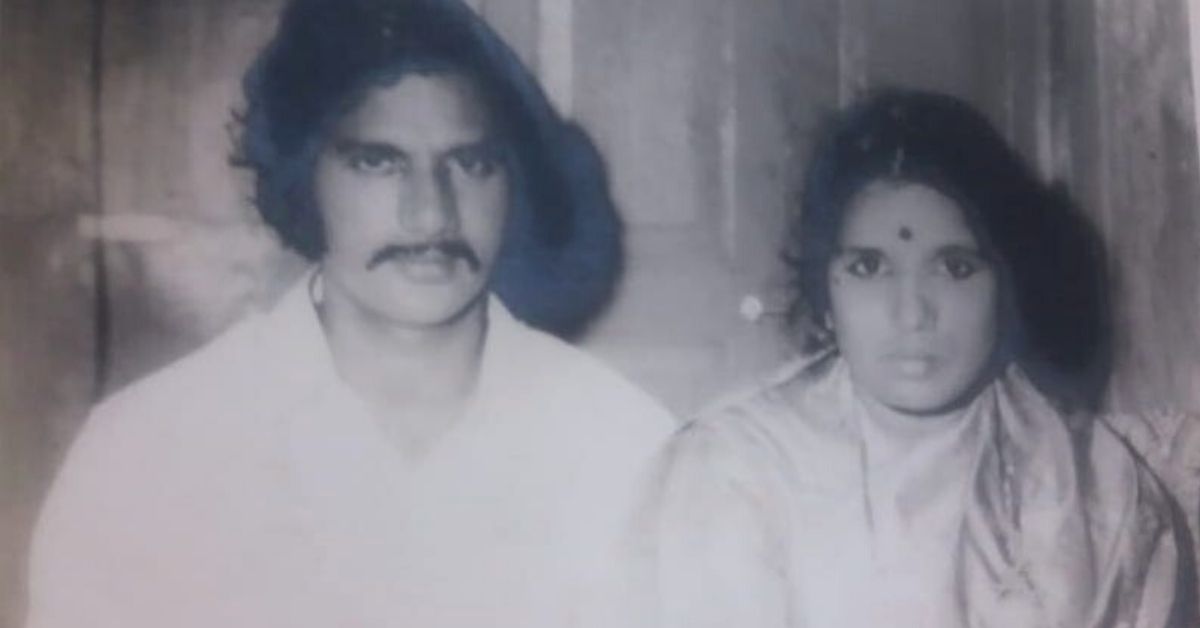
This is the story of a land that was at one time lying ravaged, drought stricken and forsaken. It was a committed revolution led by a couple, Bablu Ganguly and Mary Vattamattam, which has now transformed this land into an agro forest habitat. The unproductive soil was rejuvenated, rain water was harvested, trees were planted, crops were cultivated and the entire land blossomed.

Timbaktu in 1990

Twenty years ago, Bablu and Mary set their foot on this barren land in the district of Anantapur in Andhra Pradesh. People had given up on this land, of which Bablu and Mary decided to buy 32 acres; probably the last thing one would expect from a young couple.

The spark that triggered this initiative was a book – ‘The One-Straw Revolution’, by a Japanese author Masanobu Fukuoka. The book carried a very special message on how humanity can live an enriching life hand in hand with the nature. Bablu and Mary carried this spirit and conceived their vision for this land that they called ‘Timbaktu’, meaning ‘Where the earth meets the sky’. Their aspiration was humble and they wanted to keep everything simple – get closer to the land and help it regenerate itself.

They knew there was potential in the land of Timbaktu which was once part of the rich and powerful Vijayanagara Kingdom. Its forests were considered to be the finest, its fruits were savored across the country and various armies fought to keep control of this once fertile land. But everything was destroyed by ruthless deforestation and use of environmentally damaging pesticides and fertilizers.

Over the years, villages in this region have been tormented by chronic drought, unproductive land, unemployment and poor infrastructural facilities. Bablu and Mary decided to build the Timbaktu land by engaging with the villages around and formed an NGO called The Timbaktu Collective. “Our vision is to stop the degradation of the land in Anantapur district and to find ways to reverse it. We want to green the hills and the land. We want to develop alternative lifestyles. Lifestyles that are sustainable and provide more liberty and happiness, than those based on exploitation. The farmers see their land degrade and the wells drying up, but they don’t know what to do, so they just continue their patterns of self-destruction. We want to find a path that leads out of this vicious circle, not without but together with them” – they say.

Timbaktu today

In 1991, the couple decided to put their first crop in the land of Timbaktu and as everyone around them said, the crop failed. That became even more instigating – Bablu went ahead and bought 7000 saplings. He and Mary brought farmers from the villages to build creative water harvesting structures ensuring that every drop of water was judiciously used. Seed dibbling and such traditional farming methods were practiced – and the colour of the land started changing. Timbaktu was transformed from a barren earth to a lush green forest. It’s heartening to see that birds, snakes and butterflies have come back to Timbaktu and a lost glory is reinstated. This is a true success story of eco-restoration and the experiment is being replicated with community support in a 10,000 acre waste land named as Kalpavalli.

The Timbaktu Collective grew to become a 105 member strong team who serve over 140 villages in Chennekothapalli, Roddam and Ramagiri mandals of Anantapur district. The organization runs two schools, one of which is a residential school for children from disadvantaged families. There is also a thrift credit system for the women which has now grown into a well established alternative banking system. Farmers in the villages are given training in organic farming methods and the Collective supports a Cooperative Society that assists the farmers in marketing their organic produce. With youth development, child rights activities, helping the disabled, cultural activities and many such programmes, the Timbaktu Collective has changed the face of humanity here.

Bablu and Mary stay in Timbaktu, in a house that is built with mud, built by them and built using things available in the land of Timbaktu. Their children studied in the school run by the NGO for the villagers. Their organization has made a difference to the lives of over 12,500 marginalized families. How much more purposeful can their lives get? How much bigger role models do we need to start doing our bit for the world around us?

Visit Timbaktu to know the true spirit of this land. Find information about them on their website www.timbaktu.org. Also, watch this video where Bablu and Mary take you through the 20 years of Timbaktu. You can also write to them at timbaktu.info@gmail.com

Agastya: Sparking Creativity in Rural India

Spread over a vast area of 170 acres of rocky wasteland in Kuppam, a deprived rural area in Andhra Pradesh, Agastya International foundation believes that complete learning is a combined form of shiksha (education), samskara (values) and sansara (world). It focuses on transforming the critical and much neglected area of primary and secondary education of the rural masses in India, including children and teachers.

Agastya runs one of the largest hands-on science education programs in the world!

Agastya does this by bringing hands-on science education to the rural masses through the use of outreach programs like “Science on Wheels” (Mobile Labs), Science Fairs, Teacher Development Program and Young Instructors Programs. Agastya seeks to fill the gaps in the Indian education system that threaten its socio-economic development. The conventional Indian education system instills little creativity in children and teacher education is generally divorced from classroom realities. Agastya’s projects overcome these problems with their unique features which involve idea generation and testing through the Creativity Lab, creativity generation for poor and disadvantaged through interactive and engaging learning methods, learning linked to environmental goals, emphasis on developing behavioral skills and a close link between teacher education and the classroom system.

Agastya: Science on Wheels

If you ever hear Ramji Raghavan (Founder, Agastya International Foundation) speak, you would certainly hear him talk about the learning pyramid as he strongly believes in the fact that we learn about 5% of what is taught to us in a lecture, 10% of what we read, 50% of what we see and hear, 70% of what we discuss with others, 80% of what we experience and 95% of what we teach. Ramji Raghavan, a former NRI banker came back to India with a vision of providing education to poor children and teachers – education that would be the opposite of conventional techniques and this led to the birth of Agastya, named after Mahirshi Agastya, famous for spreading sacred knowledge to south India, as a charitable trust in 1999.

Agastya has started off successfully on the path of building a creative India of ‘tinkerers, solution seekers and creators’ that are ‘ humane, anchored and connected’ by impacting over 3 million children and 120,000 teachers from vulnerable and disadvantaged communities. The model is scalable and replicable anywhere in the world.

You can take a look at Agastya’s visual documentation here.

Website: http://www.agastya.org/

This article has been contributed by Chandrika Maheshwari. Chandrika is a student in her 3rd year of engineering in BITS, Pilani and holds a vision to do something for the country and contribute in its development. Her interests include social entrepreneurship, traveling, reading and writing.

Bamboo House India: A Journey towards Green Livelihoods

So what are the options you look at when you go out to buy furniture? Wood, metal, even plastic? How about getting home some bamboo furniture the next time you go shopping? Not only will you be making an environmentally friendly choice, you will also be providing employment opportunities to millions of rural and tnribal artisans living in abject povevrty in the bamboo belt of India. Thanks to the research and efforts by two young entrepreneurs, Prashant Lingam and Aruna, this is now a possibility.

With the idea germiating from their own search for an eco-friendly furniture option, Bamboo House India came into being officially in May 2008, after the founders spent about 9 months on study and experimentation. In this time, Prashant and Aruna Kappagantula were exposed to the miserable living conditions of the bamboo artisans of North-East India and decided that the aim of their enterprise would not only be to create a space for bamboo in the Indian furniture market, but also to generate employment for 5 million artisans. Lofty as it might sound, they went ahead and created a tangible business plan which included building expertise and spreading awareness about bamboo and its uses, creatively utilizing bamboo in multiple scenarios including furniture, structure and flooring, and setting up a chain of bamboo showrooms all across the country for retailing the products created by these artisans.

Why Bamboo?

  • Renewable Resource
  • Absorbs Greenhouse Gases
  • Amazing Growth Rate
  • Very little waste
  • Versatility
  • Soil Protection
  • Economic Development
  • Grows in variety of conditions
  • Minimizes CO2 gases and generates upto 35% more oxygen than equivalent stand of trees
  • Can be harvested annually
  • Helps mitigate water pollution due to its high nitrogen consumption
  • Requires only a modest capital investment to generate a steady income

Their journey towards creating “green livelihoods” was not an easy one. There were several hurdles faced by these entrepreneurs, and not just from one source. Firstly, there is not much information available on bamboo and its properties and uses, and the duo had to almost start from scratch and build their own data bank through study and experimentation. They lost almost 4 lakh rupees on bamboo furniture they built initially because they were not aware that bamboo traps moisture and cracks. They gained a lot of knowledge from the artisans in North East who have been in the trade from centuries. However, communicating with these artisans and uniting them under one banner posed its own callenges. The severe lack of infrastructure in the areas where they reside caused great delays in execution. It sometimes took 25 days for the furniture design to reach the artisan by post, and he had to travel 40kms to inform Prashant or Aruna that he had received it. The provision of mobile phones, the internet and cameras has eased the situation now.

Not the least of the problems was convincing the government authorities and finding support for the venture. After considerable persuasion, Bamboo House India managed to get support from Confederation of Indian Industries (CII-Hyderabad) for setting up the stores, starting the first one in Hyderabad. They have also partnered with institutions like IIT-Delhi, National Institute of Design and National Mission on Bamboo Application to set up model homes and instill confidence in the utility of bamboo. Aid from entities like IL&FS and APTDC went a long way in providing the impetus and helping them to spread the word about their work.

Bamboo Furniture by Bamboo House India

Prashant and Aruna have great plans for the future. They hope to set up 3-5 exclusive bamboo outlets in the next 3-5 years and also expand into niche segments like bamboo flooring and clothing. We wish them luck and encourage you to support their cause by visiting their store today. Find out more about them on their website: http://www.bamboohouseindia.org/

<div style=”color:#fff;background-color:#888;padding:5px;font-family:Arial;font-size:12px;width:250px;float:right;”>

<strong>Why Bamboo?</strong>
<ul>
<li>Renewable Resource</li>
<li>Absorbs Greenhouse Gases</li>
<li>Amazing Growth Rate</li>
<li>Very little waste</li>
<li>Versatility</li>
<li>Soil Protection</li>
<li>Economic Development</li>
<li>Grows in variety of conditions</li>
<li>Minimizes CO2 gases and generates upto 35% more oxygen than equivalent stand of trees</li>
<li>Can be harvested annually</li>
<li>Helps mitigate water pollution due to its high nitrogen consumption</li>
<li>Requires only a modest capital investment to generate a steady income</li>
</ul>
</div>

Seek A Miracle Ataxia Group – SAMAG

samag ataxia group

SAMAG is a registered, Non-Profit support group which is relentlessly working for the cause of “Ataxia” and “Muscular Dystrophies”- a set of Neuro Muscular degenerative disorders resulting in body imbalance and heart problems which gradually worsens until the victim becomes totally incapacitated. At present, there is no known cure in this world for this disorder.

SAMAG was founded by Chandu George in 2006 in Hyderabad, India with a vision to spread awareness about Ataxia and to provide information and counseling to families coping with Ataxia. Journey has been difficult for this budding organization but thanks to the positive efforts of volunteers led by Chandu, SAMAG has slowly and steadily created awareness on Ataxia and has successfully paved the way to create a forum for Ataxians thus bringing in hope and voice for Ataxians in India.

Chandu George, belonging to a middle class family in Hyderabad, has grown from being a shy and introvert guy into a confident personality leading the way for better life for Ataxians. Diagnosed with Friedreich’s ataxia from the tender age of 14, Chandu realized very early that living with Ataxia was a part of his life and a reality. Over the years he has accepted this hard bitter truth in life and maintaining an ever optimistic attitude, he has strived relentlessly in building SAMAG, an effort to better the lives of families coping with this rare condition.

Chandu George, founder of SAMAG, was diagnosed with Frederick Ataxia at the young age of 14. His amazing sense of optimism has led to the creation of SAMAG.

Completing 4 years of operation, SAMAG has been successful in getting attention from local organizations and volunteers who have come forward to help in its efforts by tree plantations, donation of wheelchairs, organizing fundraising activities etc. SAMAG has also been featured in local channels like Saakshi TV and TV9 along with getting published in local newspapers. It continues to act as an advocacy and lobby group for Ataxians and continues to prepare volunteers who can contribute their time and energy for the welfare of Ataxia patients and help them in obtaining essential commodities like wheelchairs, walkers, medicine etc.

However, despite all its achievements, SAMAG is still in need of funds as well as volunteers to realize many of the pending projects. One such project is SAMAG Rehabilitation Center. SAMAG aspires to build a disabled friendly rehabilitation centre where it can bring the Ataxian families together along with care givers and volunteers. Chandu truly believes that spending a weeks time in a direct interactive environment , Ataxian families can share their concerns, reduce their worries and also develop a feeling of ” togetherness” which can bring them new hope in life.

This project is yet to be realized due to the lack of funds and resources.

Another project is to open a branch of SAMAG in Bangalore which is again not been realized because of lack of volunteers and like-minded people.

I take this opportunity to remind The Better India readers that SAMAG is a registered non-profit support group which entirely depends upon donation, charity, grants and fund raising events. It needs helping hands to support the cause and funds to implement projects. Even a little help can make a huge difference.

So, please feel free to contact Chandu at sam_ataxiaindia[at]yahoo[dot]com in order to find out ways of help, how to become a volunteer, how to conduct fund-raising activities, sponsor a victim or make a donation.

Please visit www.samataxiagroup.org to know more.

Read more about Ataxis here: Ataxia on Wikipedia

This article has been written and contributed to The Better India by Ashwini Rao.

Cooking stove that saves lives

envirofit-stoveA cooking stove that not only cooks faster, saves fuel but also reduces harmful emissions by 80%. This is the promise of the stoves manufactured by Envirofit India Pvt. Ltd, part of the Shell Group. And they have already found 50,000 takers in the southern states of Karnataka, Tamil Nadu, Andhra Pradesh and Kerala.

Eliminating the dependence of poor people on gas and electricity, both of which are expensive and hard to come by in rural areas, the Envirofit stoves work on wood which is easier to collect. By working on a fuller combustion model and using heat insulating material, they reduce cooking time by as much as 40% as compared to traditional three stone stoves. However, at a retail price of a minimum of Rs.700 for a single pot burner, they might still be a little unaffordable for the large population living below poverty line. Envirofit aims to bring down this price to Rs. 500 in order to cater to this segment as well.

Poornima Mohandas reports in Mint:

The retail channel in south India sure seems ready. Sadathulla, a home appliances retailer in Gundalpet, says he sells more Envirofit stoves in a month than kerosene, electric or gas stoves.

With a reported 1.6 million deaths globally due to the use of solid biomass fuels, 400,000 of which are in India itself, it appears that the Envirofit stove could not have arrived sooner.

Read the complete article here.

Photo Courtesy: www.livemint.com

Synergy India Foundation

logoA non-profit and secular organization currently working in Andhra Pradesh, Synergy India Foundation or SIF has impacted the lives of more than 8500 people in the areas of Health, Environment, Safety and Education. Their main aims include:

  1. Making available basic and emergency medical facilities to the poor
  2. Disseminating information on clean and green environment
  3. Bringing about a social change in Education and Healthcare
  4. Ensuring compulsory primary education for children

With these objectives in mind, SIF has launched a number of projects in each of its area of focus. These include:

Healthcare:

With their main intention of spreading greater awareness among people about diseases and their cures, SIF undertakes several informative programs in a year. One of these was “Unite for Diabetes”, a Diabetes awareness walk organized in Hyderabad in November 2008. Another ongoing project of theirs is the “ESI Project” in which they sensitize the beneficiaries on available corporate health services of ESI and to increase efficiency of the ESI program by setting up Helpdesks, Helplines, Blood Donation Camps and Medical Camps.

Environment:

By developing pollution-free and healthy colonies in select areas, SIF aims to create “model colonies” that can be replicated in other parts of the nation and help sensitize the population about environmental ills. This is achieved by engaging the local populace in tree planting activities, assessing the pollution levels and educating the residents on pollution hazards and healthy practices of sanitation, etc.

Safety:

safetyWith the help of NCC cadets, Bharat Scouts and Guides, NSS, Institutions, Schools and Government support, SIF has initiated the “Safer Society” Project for implementing road safety, school safety and environmental safety in a model zone. With this initiative, they have undertaken several awareness drives to promote greater safety standards among the general public.

Education:

In collaboration with the Government of AP on the Sarva Siksha Abhiyan program, SIF has undertaken the construction of two model schools in Tirumalagiri. Serving as an example of Public-Private Partnership with the government contributing 80% financially and SIF the other 20%, these 2 schools (one for girls and the other for boys) will actively seek people’s participation in providing all facilities appropriate for the overall development of each student in Academics, Sports and Community Services.

educationThe organization has also started a “Security Guards Training and Employment Program” to promote employment and capacity building of unemployed youth and find them jobs in the security sector.

Contact:

To know further about Synergy India Foundation, their work and ways in which you could volunteer/contribute, visit their website http://www.synergyindiafoundation.org/ or contact them at the following address:

Plot No. 30, Kalyan Nagar, Near Central Bank of India

Hyderabad – 500038

Phone: 040-64601995

Fax: 040-23811192

e-mail: info@synergyindiafoundation.org

Rejuvenation of Forest Land

In one year, the people of Warangal were able to raze to the ground 1,000 acres of forest land! This amazing achievement occured in the wake of the lifting of the ban on naxal groups by the Andhra Pradesh government. Tribals and non-tribals were instigated and encouraged to go on a felling spree and claim the land for agricultual purposes. However, the forest department has been on its toes to prevent the situation from getting out of hand, and reversing the damage. Gollapudi Srinivasa Rao reports in The Hindu:

Taking advantage, a majority of non-tribals engaged labour and felled vast tracts of forest in Pasra, Eturunagaram, Mulug, Tadvai and Bhupalpalli mandals of Warangal north divisions of the Forest Department.

Ever since, the department officials have been spending sleepless nights not only to prevent further damage to the forest, but also to regenerate the destroyed portions.

Lack of cooperation from the public, inadequate staff and danger from naxal groups are some of the problems facing the forest personnel.

Despite the difficult conditions the forest department officials are determined to bring back their forest land and ensure that suxh oversight will not recur in the future.

Speaking to The Hindu , the Conservator of Forests, Md. Ilyas Rizvi, has said the department had initiated a series of steps to prevent the people from entering into the forest area, registering cases against those responsible for felling of forests and plantations. “We have uprooted large trunks and have taken up planting of high yielding variety of eucalyptus saplings with the help of Vana Samrakshana Samithis,” he said.

However, to ensure that such incidents did not recur, the department now proposes to engage `informers’ in villages.

The damage has been done. But atleast there is hope for the future, as people will be better educated on their responsibilities and government officials will be better informed on their duties.

Read the complete article here.
Link Courtesy: Piyush Kheria. Thanks!

Image Courtesy: www.worldproutassemby.org

Sparkles of Joy

At the outset, a very happy Diwali to all our readers. Today’s post, needless to add, is related to Diwali. B. Madhu Gopal writes in this article at The Hindu about how Childline, a voluntary organization, arranged for fireworks for street children:

They were the streetchildren, runaway kids and working children who came from diverse backgrounds to the Railway Institute near the Railway Station. Their common bond was the trauma that most of them faced in their families that made them flee their homes. The very thought of playing with fireworks seemed to make them forget their sorrow at least for a while. They were all grateful to Childline for realising that they too wanted to play like other children on Deepavali day. They had no words to express themselves but the joy in their eyes and on their faces said it all.

The report also notes a very heartening fact that Childline, the voluntary organization, has been arranging Diwali celebrations for street children for the past 6 years now. The event comprised of a cultural program followed by the distribution of packets of fireworks for each child.
Some more excerpts:

One little boy asked: “Sir, can I take these home”? He was a working child who had two more siblings at home. The older boys had a gala time turning the sparklers round and round, as it resembled a ‘Vishnu chakram’. While some of the onlookers looked scared as the children could injure themselves, the boys and even most of the girls didn’t show any signs of apprehension and thoroughly enjoyed their freedom.

Diwali, the festival of lights, truly was about dispelling darkness and bringing in rays of joy and light for these children.

Read the complete article here.

Image courtesy: C.V. Subrahmanyam at The Hindu.

Reaching For The Moon

Amidst much hype and debate, India’s first lunar spacecraft has taken off on this morning from a hazy launch pad in Sriharikota in southern Andhra Pradesh. With the Rain Gods having given just enough respite for Chandrayaan 1 to launch on its 2 year mission, India now enters the league of a select group of nations who have successfully sent satellites to orbit the moon. This is a matter of national pride, and a feather in the cap of the nation’s premier space research laboratory – ISRO.

The goals of this mission are plenty. A special feature on Rediff News lists them as below:
The Chandrayaan-1 mission is aimed at high-resolution remote sensing of the Lunar surface in visible, near Infrared, low energy X-rays and high-energy X-ray regions.

Specific scientific goals are:
• To prepare a three-dimensional atlas (with a high spatial and altitude resolution of 5-10m) of both near and far side of the moon.

• To conduct chemical and mineralogical mapping of the entire lunar surface for distribution of elements such as Magnesium, Aluminum, Silicon, Calcium, Iron and Titanium with a spatial resolution of about 20 km and high atomic number elements such as Radon, Uranium & Thorium with a spatial resolution of about 40 km.

By simultaneous photo geological and chemical mapping we will be able to identify different geological units, which will test the hypothesis for the origin and early evolutionary history of the moon and help in determining the nature of the lunar crust.
Besides the above, there is an additional aim of exploring the possibility of harvesting Helium 3, a key fuel for nuclear fusion, which the moon is said to contain a whopping 5m tonnes.
While these are a few of the reasons for India to undertake this mission, there has been widespread debate and criticism of the Government’s decision to participate in the space race at the cost of development. A lot of critics feel that the budget of Rs.386 crores could have been better deployed in the improvement of basic living conditions. While these are valid arguments, and deserve attention, these are a few aspects of the lunar mission which might work in its favour:

1. The cost of the mission has been kept at a bare minimum. Infact, China’s lunar spacecraft which was launched last year had cost almost twice as much

2. Space programs to date in India, which largely consisted of sending communication satellites into orbit, have greatly benefited remote villages by linking them via tele-links to schools and hospitals in cities and providing education and healthcare facilities

3. The mission helps in strengthening India’s technological prowess and its reputation for research and development, thus opening up many avenues for high value trade and commerce

4. It will reduce the dependence of our nation on foreign superpowers for information, which might be critical in the future. Data collected from the moon mission could help in formulating India’s energy solutions as well as defense programs

Randeep Ramesh of The Guardian reports:

Earlier this year India was ranked by analysts at Futron, a hi-tech consultancy, as only a fraction behind China in global space competitiveness rankings, and well ahead of Japan, Israel and Canada. It is also building a low-cost, hi-tech base. China’s Chang’e I cost nearly double India’s Chandrayaan I bill of $86m.

This thriftiness was born of necessity. With an annual budget of about $1bn – less than a tenth of Nasa’s – Isro has to do a lot with little.

“The whole thrust of [India's space programme] has been to get real benefits,” said Gopal Raj, author of Reach For The Stars, a book about the country’s rocket programme. Raj pointed out that the Madras Institute of Development Studies recently calculated that for every rupee spent on the space programme, two were generated in “indirect and direct returns”.

It is obvious that there are many facets to this debate, and it is difficult for us to decide conclusively what the right path is. However, one thing easy to see is that India is on the path of scientific progress, which we hope will bear astronomical returns for its billions of citizens.

Excerpts from: The Guardian and Rediff News
Image Courtesy: Rediff News

Calling for help?

EMRI - Ambulance on call service

EMRI - Ambulance on call service

Now if you are in Andhra Pradesh or Gujarat, you can dial 108 and immediately get connected to emergency medical, fire and police services. A fully equipped ambulance with technical staff can be at your doorstep in an average time of 20 minutes. And if you do not belong to these two states you should still read ahead as this service, provided by the Emergency Management Research Institute (EMRI) will soon be made available in the rest of the country.


William A. Haseltine, President of Foundation for Medical Sciences and The Arts, has written about the service in this article in The Hindu:
How it works:

EMRI dispatch centres are modern marvels. Addresses and map locations of fixed line callers are displayed on computer screens that summarise their call histories. The lines are then transferred to medical, police and fire professionals for action. By the time the call reaches the doctor, the location of nearby ambulances and local hospitals together with data describing available hospital services is on the screen. Life-saving procedures can become accessible within the golden hour, the crucial first hour following the emergency crisis.

With a fleet of 500 ambulances and 3000 technicians and drivers, it is estimated that the EMRI service helped in saving 22,000 lives in Andhra Pradesh itself last year!

Not only this, there is another service for remote medical care wherein a person can dial 104 and avail of free medical advice from health care professionals managed by Health Management and Research Institute (HMRI). Calls are prioritized and callers routed to appropriate destinations, including 108 if an ambulance is required.

The 104 workers currently operate from a call centre in Hyderabad. The target for the year is to increase the number of doctors in the call centre to about 200 and hire about 2000 paramedics, from about 50 doctors and 250 paramedics currently on staff. About one-quarter of the calls require professional medical advice and about half the calls originate from small farming villages with no permanent medical infrastructure. Shortly EMRI will field-test a mobile hospital.

The 108 and 104 services were the brainchild of three founders: Ramalinga Raju founder Chairman and CEO of Hyderabad-based Satyam Computer Services Ltd.; Dr. Ranga Rao and Dr. Balaji Utla.

Now the EMRI and HMRI models will also be used as role models for setting up similar services in other countries around the world.

On a similar note, residents of Bangalore have long been aware and benefited from an emergency ambulance service called Sanjeevini, which has rescued over 42,000 people till date. Sanjeevini is a part of Comprehensive Trauma Consortium (CTC) established as a non-profit, non-Governmental, voluntary organization by Dr. N. K Venkataramana.


The Sanjeevini helpline number is 1062, and you can visit their website here. Stay tuned to The Better India for a more comprehensive coverage of Sanjeevini.

Read the complete article in The Hindu here.

Image Courtesy: The Hindu

Calendar

September 2010
M T W T F S S
« Aug    
 12345
6789101112
13141516171819
20212223242526
27282930  

Recent Comments

PROMOTION

"Neumonia and Other Sketch Stories" - A collection of sketch stories. Download the e-book for free. Click on the book cover below.
"The observations are acute: the sound of high heels on asphalt, the bit about how all BPO employees lose their hair very fast are spot-on. This book is a better, shorter alternative to any Sunday movie on TV. It's a little jewel" - Hindustan Times