Masoom – Illuminating the Night Schools of Mumbai


Twenty one year old Amol Pashilkar attempted his SSC examination in the year 2004-05. Unfortunately, he could not clear his examinations; he passed only in English. Since his confidence levels suffered a blow, he found it very difficult to reappear. After a four year long gap, in 2009, he took admission in Milind Night High School. With his renewed focus, could he clear the examinations?

Amol got 74% in his SSC. How did this drastic improvement come about? Amol could leap forward in academics because of the extra classes conducted by a Maharashtra based social organization that goes by the name Masoom. Masoom works with night schools in Mumbai, with the aim of improving academic performance of night school students.

Masoom is the first organization in Maharashtra to run a comprehensive intervention program for night schools. Masoom offers a unique approach to planning and implementing a comprehensive program for night schools based on their different needs. Masoom’s strategy for sustainable change is to work in the spirit of partnership with all major stakeholders in the education system. Because of Masoom, many like Amol could complete their education. Their interest in studies increases tremendously.

“I came across students who were largely self-motivated. They worked during the day and would attend classes in the evening. Nobody was forcing them to school. They came because they wanted to learn.” – Nikita Ketkar, Founder of Masoom

Tracing the beginnings

Nikita Ketkar, the founder of Masoom, stumbled upon the idea of helping night schools back in 2001. She was working in the civil services and was appointed on a project to identify child domestic workers, in the night school of Mumbai. Nikita adds, “I came across students who were largely self-motivated. They worked during the day and would attend classes in the evening. Nobody was forcing them to school. They came because they wanted to learn. It was sad to see that justice wasn’t being delivered to their aspirations.”

Masoom - Basic Science Concepts taught in a night school

Masoom - Basic Science Concepts taught in a night school

In 2006, Nikita further undertook research related to problems faced by night school students, under the Pukar Scholarship. Based on the findings, she decided to do something about these issues. She resigned from office and founded Masoom in 2008, her entire research team by her side. To facilitate learning for night school students, Masoom has developed a three pronged approach:

1. Providing Infrastructure such as computers, Science laboratory apparatus, mathematic kits, library books, notebooks, educational charts, workbooks and worksheets, teacher training material, Braille textbooks and audio-visual material

2. Capacity Building by organizing training sessions and workshops for teachers, parents and students, vocational guidance for students, counseling, extra curricular classes such as Life skills, yoga, meditation

3. Advocacy: Masoom works closely with all stakeholders and intend to act as an advocate for all issues concerning night schools

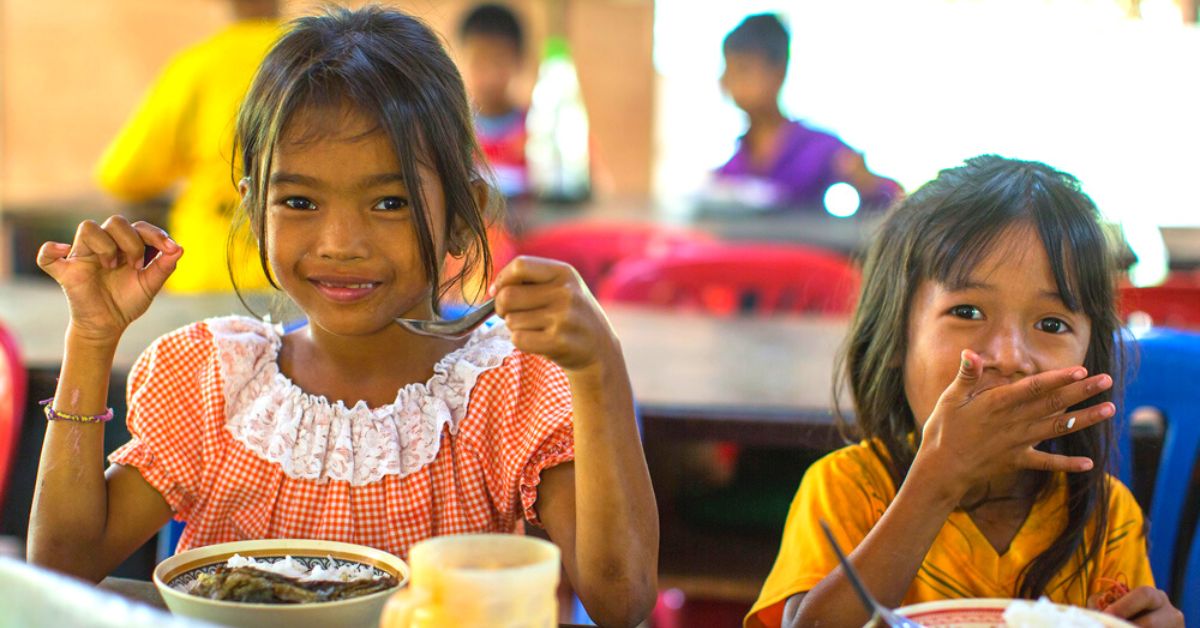
Since night schools are run from 6:30 to 9:30 in the evening, most of these kids come after long hours of work. By providing meals, Masoom ensures that they can study more efficiently. Nikita adds, “We want to build not just academic strength but also employability. Many students who earlier had to study with an empty stomach could not focus. Now we provide meals. The kids call it ‘nashta’ as sometimes it is the only meal they have in the day.”

Sports as part of the night schooling

Sports as part of the night schooling

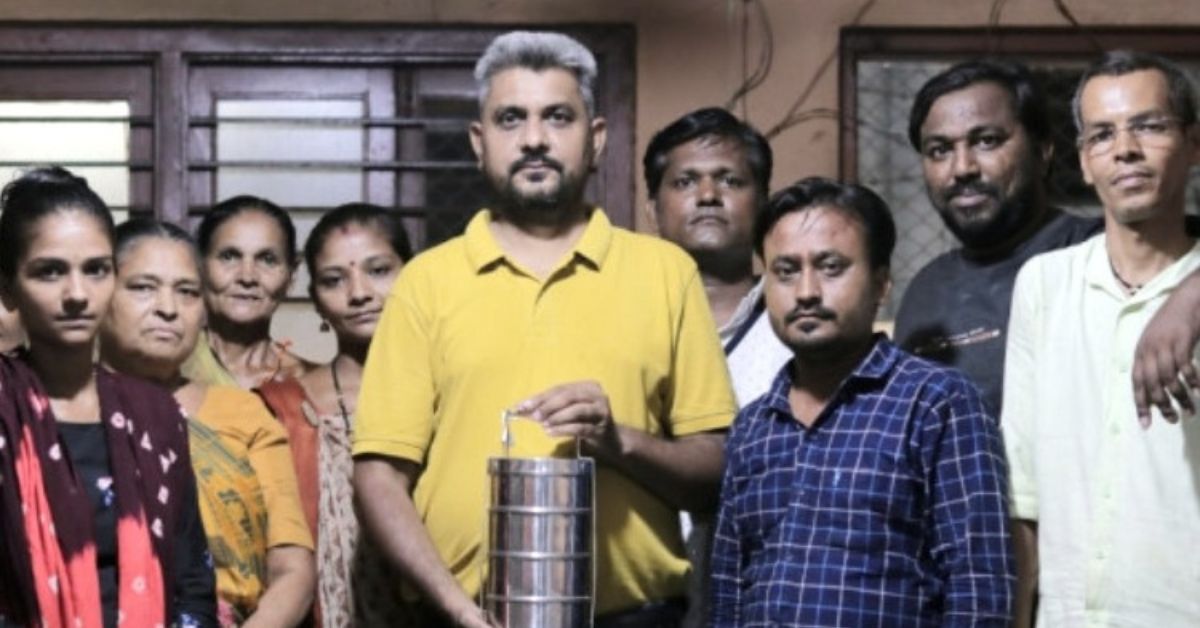
Members of Masoom

In its own unique way, Masoom has touched the lives of many students, growing from just two schools to now ten. There are courses called the ‘bridge courses’ that help drop outs overcome gaps and at the same time, there is facility of psycho counseling for students with learning disabilities. They also help link students to government certified computer courses, for which they have initiated scholarships for part funding. With such personal care and concern for holistic development, there are bound to be many many success stories like Amol’s.

Visit Masoom’s website here: http://masoomforu.org/

A toy in the hands of every child – Toybank

In most of our homes, in some corner, packed inside cardboard boxes, we have toys that lay unused and useless.  Have you thought that they could bring joy to the life of children who never had toys to play with? Take them out of those boxes, wrap them up and send across to Toybank – you’ll feel a silent satisfaction sweep inside you.

Toybank is about gifting toys to those children who have been deprived of so many things, let alone the ‘luxury’ of toys. Agreed there is poverty and misery around, but can we afford to have children around us growing up unhappy? Shweta Chari, a young and energetic Electronics engineer, found a calling inside her and decided that she will bring fun and play into the lives of disadvantaged children. She founded ‘Toybank’ with an honest vision of placing a toy in the hands of every child in India and the world.

Shweta and her team of volunteers at Toybank started off gathering toys for street children in Mumbai. The very innocence of this initiative attracted fabulous response from people. Toys started flooding in and Toybank gift wrapped the donated toys with love and placed them in the hands of these kids. It might seem like a simple toy gifting idea, but there is an enormous mental, emotional and creative development that these toys trigger. Toybank started noticing that the kids were slowly opening up, began to feel important and wanted, and started expressing themselves better. Most of all, they had something that they could say was their own – a strong sense of belonging came along. As they grow, like we all remember some toy or the other that we played with, these children will also have a special toy to remember.

As Toybank takes up the role of an angel, they are very clear about one thing – we are not doing any charity, we are just giving the children access to their right. It’s the right of every child to have an enjoyable childhood and grow in the magical and imaginary world that toys create for them. “We at Toybank think that we are all pieces of a large jig saw puzzle; some fulfill basic needs of food, clothing and education while some like us focus on bringing happiness through play into the lives of children. The day all the pieces are put in perfectly and the picture is crystal clear, will be the day Toybank can shut shop.”

In the last six years, Toybank has made it possible for over 8000 kids to own a toy for themselves. Going one step further, Toybank is also taking initiatives to sensitize privileged kids about giving and joy of giving. They go to various schools and spread the good spirit of Toybank. Now that they have toy banks in Bangalore, Pune, Delhi, Bhutan and in the UK, Shweta wants Toybank to make a difference to the lives of children in rural India.

It’s a simple and beautiful contribution – donate toys and make a child smile. Visit www.toybank.org or write to mail@toybank.org.

Parivartan: Take A Stand

“When I despair , I remember that all through history, the ways of truth and love have always won. There have been tyrants and murderers, and for a long time they can seem invincible, but in the end they always fall. Think of it – always” – Mahatma Gandhi.

Triveni is a resident of a settlement in east-Delhi and is classified by the government as a “low-income” person. She relies on the Public Distribution System (PDS) for her quota of essential food grains. However, Triveni had been unable to obtain her entitled food grains from the PDS shop for the last 3 months and wanted to know what she could do. She was advised to file an application under the RTI (Right to Information) act requesting copies of all PDS records, including cash memos. Before the information could arrive, Triveni was offered Rs. 20,000 and sacks of grains by the PDS shop owner, if she took back her RTI application. When the information did arrive, Triveni was shocked to learn that as per government records, she had been getting grains from the PDS shop for the last 3 months! Triveni is literate and can sign her own name so she was outraged to see thumbprints of varying shapes and sizes against her name in the cash memos .

Parivartan, a voluntary not-for-profit civil society organization which is a “people’s movement against corruption”, had advised and helped Triveni with the RTI. Using this RTI act, Parivartan accessed records for all fair price shops in that area and began to analyse the information. In August 2003, Parivartan organised a jun sunwai (people’s hearing) and over 300 people from across Delhi filed RTI applications to view their food grains records.

As the campaign spread, there were reports of violence against Parivartan volunteers and the fair price shop owners lobbied to increase their commission under the PDS as they argued it was too low to make profits.

All this led Parivartan to push for institutionalising the system of public scrutiny of records. Two Saturdays of every month were designated for public viewing of food grains and for lodging complaints. Parivartan has managed to bring about a relief to hundreds of people who were at the mercy of the fair-price shop owners for their daily food necessities.

Before this, Parivartan had led a successful crusade against bribery in Income Tax department.

Parivartan works on the principle that ‘development’ is a function of both growth and equity. Their focus areas include Research, Training, Development Communication and Implementation. They also have a  training programme for Identifying and Mentoring Micro-Entrepreneurs .

So, if you are facing redtape-ism or if corruption is glaring at you, don’t just close your eyes ignoring it. File an RTI, take a stand and get counted. It is high time the activist in us wakes up from slumber. If you need inspiration, get in touch with Parivartan at their e-mail: parivartan_india[at]rediffmail[dot]com.

People for Change: Spreading Education

Walking on the heat-radiating Delhi road, I noticed a bunch of Government school children clad in their blue uniforms, aiming for the fruits on a ‘Jamun’ tree with stones. Their evening snack was happily hanging from the branches hidden by innumerable leaves growing in all directions. I wondered how these children managed their studies with hardly anybody at home to guide them. It is not that these children are any less intelligent than the children who are economically blessed, but it is just that they don’t the right kind of supervision.

The difference between the organization “People for Change” and me is that I simply thought about it while they worked on it. “People for Change” is an organization that conducts tuition classes for underprivileged children in order to guide them in the right direction and prepare them well for the future. The organization was founded two years back with mere five students in a play school’s building which was lent to them during evening hours. It is now situated in Dayal Bagh, Faridabad where they have an apartment to themselves, the rent of which is paid by one of the many donors. It has children from class third to tenth totalling up to a hundred students at present. They have recruited 2-3 teachers who help the students with their homework, prepare them for lessons in advance and also teach them various crafts like paper bag making, art, origami etc. An addition to the teachers there are a few college students who teach on a voluntary basis. The founders of this organization, Ms. Nellie Dhillon and Ms. Nisha Celly, also come to teach on a regular basis. They believe that it is only when the children get appropriate exposure that they will get encouragement to do better. In order to encourage the children to strive for excellence, the organization rewards the students who perform outstandingly well in their annual examination.

Education has evolved to become a blend of academic excellence and personality development. Working on these lines, “People for Change” conducts an annual function where all the children participate. In addition, they organize stitching, embroidery and other hobby classes during summer in the month of May. The aim of these hobby classes is to inculcate life skills in the children and to make maximum utilization of their free time.

“People for Change” would appreciate more citizens to come forward and help them in spreading education to the needy. As “People for Change” is an expanding not-for-profit organization, it needs more people to help their cause in any little way they can. Anybody willing is welcome to help in their mission to attain hundred per cent literacy. Details can be obtained at the following number: 9899401882

This article has been written by Kanika Gautam. She is currently pursuing Bachelor of Commerce at Delhi University. She has been a part of the Shadow Editorial Board with Faridabad Times, Times of India. She is an alumnus of Mother’s International School, New Delhi and has been on the Editorial Board of her school magazine. She has also made contributions to her college magazine, has a passion for social work and a zeal for writing.

Aseema: Expanding Horizons of Education

Education, we’ve always believed, holds the key to a progressive future. Currently, less than 50% of our children in the age group of 6-14 years attend school. The Right to Education (RTE) bill 2010 provides a necessary foundation for spreading primary education in the country, which should improve the percentage of children attending school. In absolute numbers, this bill could impact 35 million children who are right now deprived of education due to various reasons.

Aseema, a Mumbai based non-profit organization, is working with underprivileged children to provide them a nurturing and stimulating educational environment. By doing so, it aims to bring these children back into the mainstream of society.

Assema Montessori is a first of its kind center for street children in India. Established in August 2000 at Pali Chimbai Municipal School, the Montessori provides children with a firm education foundation.

In 1996 Assema started the Project Igatpuri for educating the tribal children of Awalkheda, a small hilly village situated 5 kilometers from Igatpuri.

The Better India caught up with Aseema and here is an interview with them:

What was the motivation behind starting Aseema?

In 1988, Dilbur Parakh worked with the Union of Civil Liberties in Thailand and was earlier involved with social work in Mumbai. Since 1990, she worked as the legal officer for Asia with the International Commission of Jurists (ICJ) in Geneva. But she always knew that she had to work with children. The introduction of the Convention on the Rights of the Child during Dilbur’s posting in Geneva strengthened her resolve to work for the rights of children. She worked there for over five years and then decided to quit her job and get back to India. On returning to India, she started ‘Aseema’ at the grassroot level with some like-minded people. Aseema was formally started on 15 December 1997.

What is Project Igatpuri? And the challenges you faced while setting up this project?
A systematic study of the people at Awalkheda, Igatpuri and the surrounding villages, has helped Aseema achieve a comprehensive understanding of the educational needs of the children in these villages. The experience gained in conducting educational activities in Mumbai has helped in starting our Education Centre for Tribal Children in Awalkheda. The Education Centre will empower the children with a strong educational foundation and enable them to build a brighter future for themselves and their community.

Construction of the Pre-Primary Section started in February 2009. Owing to the torrential rainfall in Igatpuri from June to September, we have been able to carry out construction activities only from October to May. A classroom and a toilet block at the Education Centre have been constructed. A Solar Energy system has also been installed. This is necessary in Igatpuri as the area faces power cuts ranging from 3 hours to 9 hours a day. We had the Public Works Department construct a paved road up to the village. Tree plantation drives have been carried out with the help of the local people as well as children from our Mumbai projects and a well has been dug which is open to use by the villagers as well. Aseema’s well was the only source of water for some people last year. A water harvesting expert has contoured the land and contour trenches and check dams have been created which will help to recharge the well.

In March 2010, Aseema started pre-primary classes for the first batch of 30 children.

This year we also had 40 children studying in the Sitabai Kavji Mengal Aanganwadi set up by Aseema in the nearby village of Jambhwadi, Igatpuri in July 2007. These schools are the only well-functioning schools in the area and have become centers for further development of the community.

We have recruited local people as teachers and have introduced them to Aseema’s teaching approach. The Aseema approach stems from the belief that all children have an innate love for learning which grows and flourishes when there is a bonding between the teacher and the child. It also lays a lot of emphasis on the holistic development of the child rather than only academic achievement. This approach draws from the Montessori approach to education which gives children the freedom to learn and grow at their own pace. The school has, therefore, been equipped with carefully designed Montessori material and other attractive teaching aids.

The challenges we faced and are still facing are numerous. It will take a while before the local community completely accepts and trusts us. It is only once they see their children learning and doing well at school that they will really believe that education can change their lives. Other challenges like raising funds for the construction and running of the Education Center continue but when we see the little ones regularly coming to school and enjoying their work, we feel it is all worthwhile.

What is the social impact Aseema has been able to make on the community?

Aseema’s Community Center acts as an integral link between the communities the children come from and the schools. It generates awareness about the importance of education, monitors attendance and dropout rates, etc. Through our activities in the school, children are becoming more aware of their rights and responsibilities and subsequently they carry this awareness forward into the community. The parents are thrilled and proud to see their children perform at the Annual Exhibition, Annual Sports Day and Annual Day as well as on Open Days and at PTA meetings.

In June 2009, we introduced a teacher training programme for community women at our Pre-Primary Center located at the Santacruz (W) Municipal School. This in-house integrated training programme draws young women from the local community and gives them intensive training in the Aseema approach to education. This programme has strengthened the student-teacher bond. With both the children and the trainee teachers coming from similar socio-economic backgrounds, they relate better to each other, and the trainee teachers are committed to ensuring that the children grasp all that is being explained in class. It gives them an opportunity to adopt a professional career, contribute meaningfully and gain the respect of the community.
What are the other activities carried out by Aseema to provide holistic education to children?

Since its inception, Aseema has been striving to provide high quality, relevant education to Mumbai’s most neglected children – children living on the streets, or in slums, in inhuman conditions. Today, we are proud to see over 1000 children enrolled in school, learning well and exploring their potential.

In partnership with the Municipal Corporation of Greater Mumbai (MCGM), we are running three schools – Pali-Chimbai Municipal School (PCMS)in Bandra west , a suburb of Mumbai, the Santacruz (W) Secondary Municipal School (SMS) and the Kherwadi Municipal School (KMS)in Bandra East. Our programmes in PCMS and SMS may be regarded as models for education in Mumbai. They have shown how MCGM schools can upgrade their educational programmes and offer better services to children while working in partnership with NGOs and other bodies. We are currently implementing this model at KMS which we have recently adopted and are keen that it be replicated in other municipal schools as well. We are currently working with the MCGM through high level committees and other focus groups to promote the implementation of a well designed public private partnership.

How did the concept of Children’s Art came about? What are the products on offer and how do you plan to take it forward?

A somewhat unique programme at Aseema is the transforming of some of the artistic flair of the children into marketable products. Our children create beautiful art under the guidance of teachers who give them complete creative freedom. The children’s drawings are then used to make high quality products of paper, ceramic, cloth and wood.

We started with selling the children’s paintings at exhibitions and gradually moved to transferring their paintings on to products like crockery, napkins, scarves, paper bags, etc. The popularity of our products drew the attention of the students of the Wharton Business School, who with the help of students of S.P. Jain Institute of Management studied our products and created a business plan to help Aseema become self sustaining. This study led to the establishment of our Products Division.

Our products include greeting cards, ruled books, notepads, art books, gift paper pen holders, combined holders, card holder, memo holder, pin holder, trivets, mugs, key chains, bags, mobile and spectacle cases, pencil pouches, change pouches bed table, coffee table, coasters, trays, etc. Prices range from Rs. 15 to 2000 and all proceeds are ploughed back into Aseema’s educational projects.

Click here to visit the website and to know more about Aseema.

Conserve India: Using Fashion Against Poverty


Urban India is glaring at a huge waste management problem with no clear policy examining waste as a part of the production-consumption-recovery cycle.  In India, over a million people find employment in rag picking and recycling of waste; and this is an unorganized sector.

Most of the rag-pickers are poor, illiterate and belong to rural immigrant families. Many commence their profession at the young age of five to eight years. Most of them have never attended any school. While collecting rags they are subjected to chemical poisons and infections. Due to malnutrition, they suffer from stunted growth and anemia. These rag pickers have been weaned out of our social fabric and as begging is being abolished more and more beggars are becoming a part of this scavenging community.

Conserve  India, an organisation in Delhi founded by Anita and Shalabh Ahuja  was born of a desire to reduce India’s mountain of waste. Their team, after a lot of research, struck upon the idea of Upcycling by washing, drying and pressing plastic bags into sheets.

Handmade Recycled Plastic (HRP) is  made from  polythene bags picked from Delhi’s streets, rubber from old truck tyres’ inner tubes, old denims and saris. The processes used to make ‘Conserve’ bags and accessories have been specifically developed to be as energy efficient as possible and to keep out polluting dyes and chemicals.  This not only helps the environment, it also cuts costs, giving the organisation more money to invest in other social projects.

Santosh Kumar started collecting plastic bags for Conserve India as he could earn three times as much by selling plastic bags to be made into HRP instead of selling the garbage elsewhere.

Ragpickers enjoy working for Conserve as it directly implies that they, perhaps for the first time in their lives, will have enough to feed their families and rent homes that they can be proud of. On an average, a conserve ragpicker earns around $70 a month compared to a ragpicker who earns somewhere around $25.

The ragpicking community is unorganised; it is hard for them to protect their rights. By giving them ‘Conserve Employee Cards’, Conserve India helps them have a voice in the society. Conserve India has also started a campaign called Recognition for Ragpickers. As part of this, the organisation is trying to persuade the Delhi government to create an official register so as to recognize Delhi’s 150,000 ragpickers and give them their right to a fair wage.

Conserve also offers training to its workers so they can do better jobs in their organisation. Conserve supports schools in slums where many of its employees live. With an initial funding from Asian Development Bank, Conserve is now starting two new projects for tracking the general welfare of its workers and providing health clinics for those who have no access to healthcare.

In collaboration with top designers, Conserve India makes high-end fashion items like handbags, wallets, shoes and belts from the handmade recycled plastic.

Conserve India has collaborated with Fair Trade for marketing its products, which are available in stores across US, Japan, Europe . Their products can also be bought online through the Conserveshop.

By buying Conserve’s products one not only gets to be a trend setter in fashion, but also gets to help some of India’s poorest people and its environment.

For more information visit their website http://conserveindia.org. Infact if you want do something about the waste clogging the streets of your city, you can set up your own Conserve and be the change that you want to see in the society. Mail Conserve India at info@conserveindia.org or call on +91 11 43095301.

New! Jobs Listings featuring internships, volunteering opportunities & more. Click here.

Where the earth meets the sky – Timbaktu Collective

This is the story of a land that was at one time lying ravaged, drought stricken and forsaken. It was a committed revolution led by a couple, Bablu Ganguly and Mary Vattamattam, which has now transformed this land into an agro forest habitat. The unproductive soil was rejuvenated, rain water was harvested, trees were planted, crops were cultivated and the entire land blossomed.

Timbaktu in 1990

Twenty years ago, Bablu and Mary set their foot on this barren land in the district of Anantapur in Andhra Pradesh. People had given up on this land, of which Bablu and Mary decided to buy 32 acres; probably the last thing one would expect from a young couple.

The spark that triggered this initiative was a book – ‘The One-Straw Revolution’, by a Japanese author Masanobu Fukuoka. The book carried a very special message on how humanity can live an enriching life hand in hand with the nature. Bablu and Mary carried this spirit and conceived their vision for this land that they called ‘Timbaktu’, meaning ‘Where the earth meets the sky’. Their aspiration was humble and they wanted to keep everything simple – get closer to the land and help it regenerate itself.

They knew there was potential in the land of Timbaktu which was once part of the rich and powerful Vijayanagara Kingdom. Its forests were considered to be the finest, its fruits were savored across the country and various armies fought to keep control of this once fertile land. But everything was destroyed by ruthless deforestation and use of environmentally damaging pesticides and fertilizers.

Over the years, villages in this region have been tormented by chronic drought, unproductive land, unemployment and poor infrastructural facilities. Bablu and Mary decided to build the Timbaktu land by engaging with the villages around and formed an NGO called The Timbaktu Collective. “Our vision is to stop the degradation of the land in Anantapur district and to find ways to reverse it. We want to green the hills and the land. We want to develop alternative lifestyles. Lifestyles that are sustainable and provide more liberty and happiness, than those based on exploitation. The farmers see their land degrade and the wells drying up, but they don’t know what to do, so they just continue their patterns of self-destruction. We want to find a path that leads out of this vicious circle, not without but together with them” – they say.

Timbaktu today

In 1991, the couple decided to put their first crop in the land of Timbaktu and as everyone around them said, the crop failed. That became even more instigating – Bablu went ahead and bought 7000 saplings. He and Mary brought farmers from the villages to build creative water harvesting structures ensuring that every drop of water was judiciously used. Seed dibbling and such traditional farming methods were practiced – and the colour of the land started changing. Timbaktu was transformed from a barren earth to a lush green forest. It’s heartening to see that birds, snakes and butterflies have come back to Timbaktu and a lost glory is reinstated. This is a true success story of eco-restoration and the experiment is being replicated with community support in a 10,000 acre waste land named as Kalpavalli.

The Timbaktu Collective grew to become a 105 member strong team who serve over 140 villages in Chennekothapalli, Roddam and Ramagiri mandals of Anantapur district. The organization runs two schools, one of which is a residential school for children from disadvantaged families. There is also a thrift credit system for the women which has now grown into a well established alternative banking system. Farmers in the villages are given training in organic farming methods and the Collective supports a Cooperative Society that assists the farmers in marketing their organic produce. With youth development, child rights activities, helping the disabled, cultural activities and many such programmes, the Timbaktu Collective has changed the face of humanity here.

Bablu and Mary stay in Timbaktu, in a house that is built with mud, built by them and built using things available in the land of Timbaktu. Their children studied in the school run by the NGO for the villagers. Their organization has made a difference to the lives of over 12,500 marginalized families. How much more purposeful can their lives get? How much bigger role models do we need to start doing our bit for the world around us?

Visit Timbaktu to know the true spirit of this land. Find information about them on their website www.timbaktu.org. Also, watch this video where Bablu and Mary take you through the 20 years of Timbaktu. You can also write to them at timbaktu.info@gmail.com

Pravah: Inspiring Youth Citizenship

Pravah, an organisation based in Delhi works with young people to impact issues of social justice through youth citizenship action . Pravah believes that sustainable change emanates from individuals. “Change them or their orientation and the system will change.”

Pravah works with both adolescents as well as young adults, through two broad interventions, the School Programs and Youth Action.
In Youth Action they basically have 5 programs:
1. SMILE – which stands for Students Mobilisation Initiative for Learning Through Exposure. The aim of this program is to involve the youth in activities which helps them belong to their background and take more responsibility in whatever they do.

2. Youth For Development – is a partnership between Pravah and Voluntary Service Overseas ( VSO) . In YfD , the individual gets to work in a rural area for six months . Also, there is a 2 week training schedule before the commencement and constant mentoring.

3. Global Xchange – is a 6 month long international volunteering exchange programme in collaboration with VSO and British Council.

4. Change Looms – is a leadership and Organisational development programme that supports , encourages young independent projects or organisations working for social change .

5. Campus Catalysts- is for campus based initiatives for the youth involved in social action on or outside their campuses. The aim of the program is to mobilise social action on campuses.

School Programs are :

1. From Me To We – is focussed on inspiring adolescents to take up active leadership in areas of social change. In this , learning and life skills programs are conducted in cooperation with schools under FMTW. Theatre, games, simulation exercises, stories, case studies are a core component of the curriculum. FMTW currently reaches out to 3500 students in over 30 schools mainly in and around Delhi, Rajasthan, Gujarat and Karnataka.

2. Fun Camps – for kids between 13 and 17 , these are 6 day trips to villages, for teachers and various theme based fun trips.

3. Teacher’s Training – Pravah trains teachers for one year to design and conduct life skills program. Educator’s Collective is a network of school teachers, educators working for social transformation.

4. CLAP- Citizen Learning and Action Program is for adolescents between 13 and 17 who feel strongly about a cause. CLAP helps you to take that forward, and develops leadership skills in making social change. CLAP partners with Sanskriti School and Ford Foundation.

Also, they have started the Pravah Jaipur Initiative supported by Sir Ratan Tata Trust. The centre will create knowledge bank for various programmes by offering media fellowships for youth development, workshops, seminars and volunteering placements.

Films With Wings is a collaborative initiative of Pravah and Interactive Resource Centre, a non profit in Pakistan. Founded on the principle that films are a powerful medium in bridging various divides, FWW is an effort which provides a dynamic platform for young minds of both nations to engage, co- create , challenge and capture a variety of experiences and expressions through a serious of Intensive dialogues , workshops between youth of both nations followed by a Film festival.

Website : http://pravah.org

Narayan Seva Sansthan: Helping Polio Victims

Situated in the lake city of Udaipur, since its foundation on 23rd October, 1985, Narayan Seva Sansthan has been working for the “service of suffering humanity”. Since its inception, Narayan Seva has been rendering its services to physically, economically and socially needy people. The organization helps the physically challenged, especially the polio afflicted and those born with disabilities. The help is not only medical, but goes beyond it to ensure that the people are made self-dependent via employment.

Since 1985, over 95000 polio afflicted people have been able to stand on their legs after getting successfully operated under Sansthan’s move towards self-dependence of the handicapped. Besides free distribution of clothes, medicines, food grains etc. to the tribal in remote areas, it also provides free vocational training to the physically disabled and economically weaker sections of the society. It has provided facilities for the training of these people in wood craft, carpentry, black-smith trade, leather work etc. supplying the necessary tools and raw materials to begin with.

The organization has also been running an orphanage taking care of children who become orphan due to ‘Nata-Pratha’ – a social evil prevailing in this region of the country in which after the death of the husband, the wife goes away to stay with some other man leaving the children behind . Over 600 children have been taken care of and sent back to the main social stream.

As a part of its endeavour to make medical care available to poor patients at their door steps, the Sansthan maintains a mobile medical care unit. Equipped with all necessary modern facilities, the mobile medical unit is always kept ready to rush to any spot when urgent medical care is required. Apart from all of this, the Sansthan is also involved in promoting values of Indian culture as enshrined in some of the epics and scriptures. The Sansthan has been organizing expositions on Ramayana, Puranas etc. with the purpose of spreading the message of humanity.

Narayan Seva Sansthan has been creating success stories and looking after a section of the society that most often gets overlooked.
To know more about the organization visit: http://www.narayanseva.org/

This article has been contributed by Chandrika Maheshwari. Chandrika is a student in her 3rd year of engineering in BITS, Pilani and holds a vision to do something for the country and contribute in its development. Her interests include social entrepreneurship, traveling, reading and writing.
Agastya: Sparking Creativity in Rural India

Spread over a vast area of 170 acres of rocky wasteland in Kuppam, a deprived rural area in Andhra Pradesh, Agastya International foundation believes that complete learning is a combined form of shiksha (education), samskara (values) and sansara (world). It focuses on transforming the critical and much neglected area of primary and secondary education of the rural masses in India, including children and teachers.

Agastya runs one of the largest hands-on science education programs in the world!

Agastya does this by bringing hands-on science education to the rural masses through the use of outreach programs like “Science on Wheels” (Mobile Labs), Science Fairs, Teacher Development Program and Young Instructors Programs. Agastya seeks to fill the gaps in the Indian education system that threaten its socio-economic development. The conventional Indian education system instills little creativity in children and teacher education is generally divorced from classroom realities. Agastya’s projects overcome these problems with their unique features which involve idea generation and testing through the Creativity Lab, creativity generation for poor and disadvantaged through interactive and engaging learning methods, learning linked to environmental goals, emphasis on developing behavioral skills and a close link between teacher education and the classroom system.

Agastya: Science on Wheels

If you ever hear Ramji Raghavan (Founder, Agastya International Foundation) speak, you would certainly hear him talk about the learning pyramid as he strongly believes in the fact that we learn about 5% of what is taught to us in a lecture, 10% of what we read, 50% of what we see and hear, 70% of what we discuss with others, 80% of what we experience and 95% of what we teach. Ramji Raghavan, a former NRI banker came back to India with a vision of providing education to poor children and teachers – education that would be the opposite of conventional techniques and this led to the birth of Agastya, named after Mahirshi Agastya, famous for spreading sacred knowledge to south India, as a charitable trust in 1999.

Agastya has started off successfully on the path of building a creative India of ‘tinkerers, solution seekers and creators’ that are ‘ humane, anchored and connected’ by impacting over 3 million children and 120,000 teachers from vulnerable and disadvantaged communities. The model is scalable and replicable anywhere in the world.

You can take a look at Agastya’s visual documentation here.

Website: http://www.agastya.org/

This article has been contributed by Chandrika Maheshwari. Chandrika is a student in her 3rd year of engineering in BITS, Pilani and holds a vision to do something for the country and contribute in its development. Her interests include social entrepreneurship, traveling, reading and writing.
Calendar

September 2010
M T W T F S S
« Aug    
 12345
6789101112
13141516171819
20212223242526
27282930  

Recent Comments

PROMOTION

"Neumonia and Other Sketch Stories" - A collection of sketch stories. Download the e-book for free. Click on the book cover below.
"The observations are acute: the sound of high heels on asphalt, the bit about how all BPO employees lose their hair very fast are spot-on. This book is a better, shorter alternative to any Sunday movie on TV. It's a little jewel" - Hindustan Times