Podcast: Praseeda Kunam, Woman Entrepreneur

We are happy to announce our partnership with Beyond Profit – A New Social Enterprise Magazine. Their mission is to bring you the most interesting and unique stories, people and ideas from the social enterprise sector. We believe this is similar to our objective and hence it made sense to join hands! The following is the first post (podcast infact ) as part of this partnership:

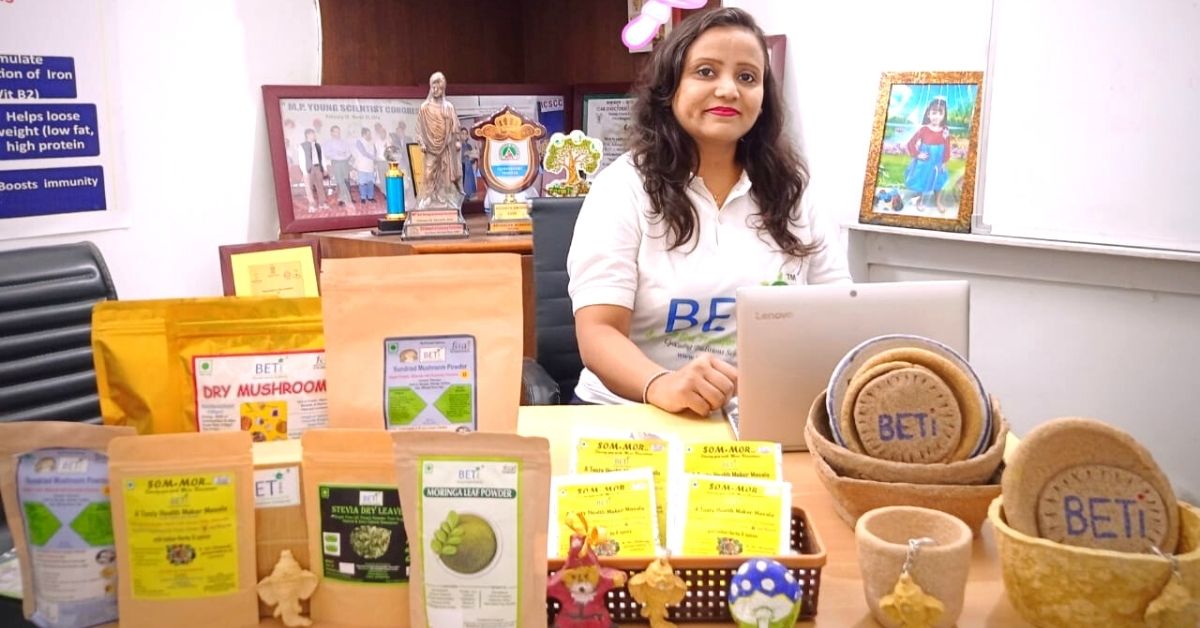
At Beyond Profit, we hold female social entrepreneurs close to our heart (probably because we are a team of mostly women!). Microfinance is a field in which women have long been a majority of customers, but a minority of the leaders. Praseeda Kunam is an exception, a pioneering woman who launched and runs her own microfinance institution. Praseeda left the job market after getting her MBA to start Samhita Community Development Service, which serves poor women in Madhya Pradesh, a particularly impoverished state in India.

In this podcast (link provided below), hear Praseeda speak about the challenges of being a woman entrepreneur in the financial inclusion space, the role of technology in the rapid expansion of Samhita, and the road ahead for her organization and the sector.

Praseeda was the winner of the Srijan 2008 “Most Promising Business Idea Award.” The Srijan Microfinance Forum recognizes emerging and innovative microfinance initiatives in India and serves as a platform for public debate about some of the sector’s most pressing issues.

Click here to hear Praseeda Kunam’s Interview with the Srijan Secretariat.

Srijan Website: www.intellecap.com/srijan2009

Khabar Lahariya – A Weekly Newspaper in Bundeli

Khabar Lahariya a weekly newspaper in Bundeli (local dialect of Bundelkhand) is being run by a group of women from various sections of the society from the interiors of Chitrakoot and Banda in Uttar Pradesh. Their main objective is to reach out to the nearby villages and provide them with ‘infotainment’.

Despite having a limited exposure to the literacy and information, their ability to interact with various people in public sphere and coming up with innovative ideas is extremely remarkable. Their works have been acknowledged and credited by leading National Dailies including The New Indian Express, The Hindu, Hindustan Times, Tehelka and various other dailies and weekly’s.

In 2008, the Khabar Lahariya group registered themselves as an independent organization, Pahal. With the incredible support from Nirantar, which is an acclaimed centre for gender and education, Pahal has now found its place in rural women’s media collectives of our country.

Khabar Lahariya carries out news that is of primary importance to the masses in and around these areas. Although they do have sections regarding current affairs, national and international news, they strongly highlight the cases of violence against women, issues on Dalits and more. This 8-page newsletter also covers issues on institutions like schools, marriage, health care and more.

Although these journalists do not come from strong literary background, they do ensure the quality does not receive a set back. Significant efforts have been made in order to improve their technical skills, their reporting and writing skills and more. Apart from the above, they also encourage public interactions and gather inputs to cater to the specific needs of the women. Meanwhile, frequent workshops are also being conducted by these women to encourage more writers and volunteers to have an in hand practical experience of running a newspaper.

Depending on the need of the hour, they hold meetings at their editorial office to divide their beats and after enormous research and writing they go all the way to the nearest city Allahabad for printing.

Click on the image below to read an issue of Khabhar Lahariya:
khabar_lahariya1

These phenomenal revolutionaries, who have gone beyond their capacity to go on fields, have received the prestigious Chameli Devi Jain Award for Outstanding Woman Mediaperson. Also, three members of the group have received fellowships from the Dalit Foundation in 2004, for reporting on issues related to rights of the Dalit community.

Overwhelming technological cloud has also been bestowed upon the offices of KL as they now work on computers with broadband connections. The challenge of consistently making an outstanding appearance in the face of media and having an unbiased opinion regarding the political scenario of our country comes very easily to them. They aren’t restricted in writing what their leaders want them to write. They write information regarding subjects that pertain to them. Hats off to the women behind this initiative, they have managed to achieve what many of us with enough resources have been unable to do!

Read more details about Khabar Lahariya, including how the paper is produced, edited and distributed at Nirantar’s website: NIRANTAR

This article written by guest reporter Jheel Parekh.
All images courtesy NIRANTAR.

Radio Bundelkhand – Giving Voice to the Voiceless

Azadpura is a village in Bundelkhand region. This area faces acute water scarcity and one problem that the women faced was a faulty well which required urgent repairing. The women aired this problem on Radio Bundelkhand and within four days the concerned authority replaced the missing wheel of the well. This is the power of Radio Bundelkhand, an initiative of Development Alternatives.

Community Radio for facilitating dialogue and interactive communication

The purpose of setting up Radio Bundelkhand, as identified with the help of our communities in the radius of the radio station, is to work along with them to use this communication medium to create awareness, give information, participate in local self governance and provide entertainment – all based on requests and feedback from the community. The audience includes the communities in the radius of the broadcast range – with special attention to women, youth and the marginalised groups.

 
Listening to Radio Bundelkhand

Listening to Radio Bundelkhand

Community Members on the Radio

Community Members on the Radio


The community and DA, jointly manage the station. There are five community reporters and six community coordinators. The villages these reporters represent are Azadpura, Ramnagar, Sitapur, Basova, Bagan, Bhagwantpur, Ghatao, Jamuniya, Gujerra Kalan, Mathrapur and Ghatao. There is also a Management Committee comprising the Sarpanch (elected village-head) of Basova Village, doctors, farmers and Self Help Group members.

Until now, Radio Bundelkhand has the longest duration of programming of four hours a day, seven days a week, in Bundelkhandi and Hindi amongst the government licensed community radio stations in India. The Government of India has given licenses to several NGOs throughout India to start community radios in their project areas. DA is one of the first to set up such a radio with the communities it has been serving for more than two decades in the Bundelkhand region.

The communities have decided that they would like information related to employment and livelihood opportunities, development of women, girl’s education, legal rights, farmers’ issues, training, their culture and history, how to ensure the availability of basic infrastructure such as water, energy and roads, development issues, and any other information sought by the communities. The broadcast timings in the morning and evening have been selected by the communities, with the women preferring the morning and the men the evening.

Programming Content on Radio Bundelkhand
Vandana –Devotional songs broadcast every morning.
Khet Khaliyan – It includes the Jhansi Mandi (unorganized market) prices for farmers so that community gets all the information related to agricultural products. Bundelkhand Radio also
broadcasts discussions about agriculture issues like how to protect seeds, crops & vegetables
from insects. Experts answer question asked by the farmers.
Bal Bandhu – Especially for school-going children. Moral stories, poems and jokes by school
children are included. Story telling through the Radio Jockeys is also a part of this programme.
Bundelo harbolo ke- This is about the Freedom Fighters of Bundelkhand. Stories of the freedom fighters & songs related to freedom fighters are also broadcast.
Aas Paas – In this programme Bundelkhand Radio broadcasts information on Right to
Information (RTI) and any other problem.
Mere Bundeli Mere Geet – is a listener’s programme in which they get the opportunity to listen to their choice of songs.
Amma ke Chauki Se – In this programme community women give their ideas on home receipes and step by step instructions for preparing the dish.
Nuskhe Nani Dadi Ke – In this programme older woman give tips on using home remedies or
Desi nuskhe for common ailments and diseases. Also, give tips of using simple home remedies and alternative herbal medicine, available from the average kitchen shelf.
Radio Drama – On every Sunday Bundelkhand Radio broadcasts a radio drama. In this
programme reporters discuss an issue and convey the messages related to social issues like
dowry, female foeticide, importance of education etc.
Sathin – Sathin is a special programme for women. Women from the community tell their story. They discuss the struggle in their lives and success story too. These women also share their
feelings what they want or wish for themselves.
Chhotou Kam Badou Munafou – This programme is for those people who want to do small business. Small entrepreneurs give tips to take up small business.

The programming, based on issues and content identified by the communities, is broadcast in the formats which they have preferred, that include the use of traditional Bundelkhandi songs, folk music and nataks, discussions, reports, commodity prices, phone-ins, experts speak, coverage of events in villages, jokes and satire, listeners’ letters and feedback. The Wireless Operating License was issued on July 31st, 2008 and the first transmission took place on August 15 2008 with the broadcast of the national anthem. Meanwhile the selected community reporters were trained over three months and a woman from Sitapur village inaugurated the station on the eve of Diwali. Community radio broadcasting/narrowcasting has allowed the rural poor to develop their communication in a language they understand. Community radio fosters debate on issues, facilitates access to government, decision-making and helps community members to organise themselves and evolve to manage their own affairs. Radio Budelkhand is characterised by its signature tune and jingles which declare that it is “Apna Radio Apni Baatein” – Our radio Our conversations.
Reaching our communities

The reach of the community radio is in a wide range of approximately 5-10 kms and 25 villages with a population of 15000 in the coverage area that are benefiting through the infotainment-based programmes. So far, Radio Bundelkhand radio has penetrated to the rural communities settled in and around TARAgram Orchha like the villages of Gundrai, Chandravan, Bagan, Orchcha, Sitapur, Azadpura, Lachmanpura.

The targeted beneficiaries are the marginalised and poorest with special emphasis on women and the unemployed youth who are the most vulnerable but also the potential change-makers. By selecting women community reporters, marginalised community reporters in an average age group of 20 we hope to reach them better.
The Management Committee also has a woman self-help group head. DA aims to ensure the participation of local people for the programming, broadcast and management of the station by the community itself.

The above article was written by Indira Mansingh, Chief Advisor, Development Alternatives.

Thank you Purnima Gupta for sending this across!
Previous article of Development Alternatives – Click here.

Paper Saves Lives

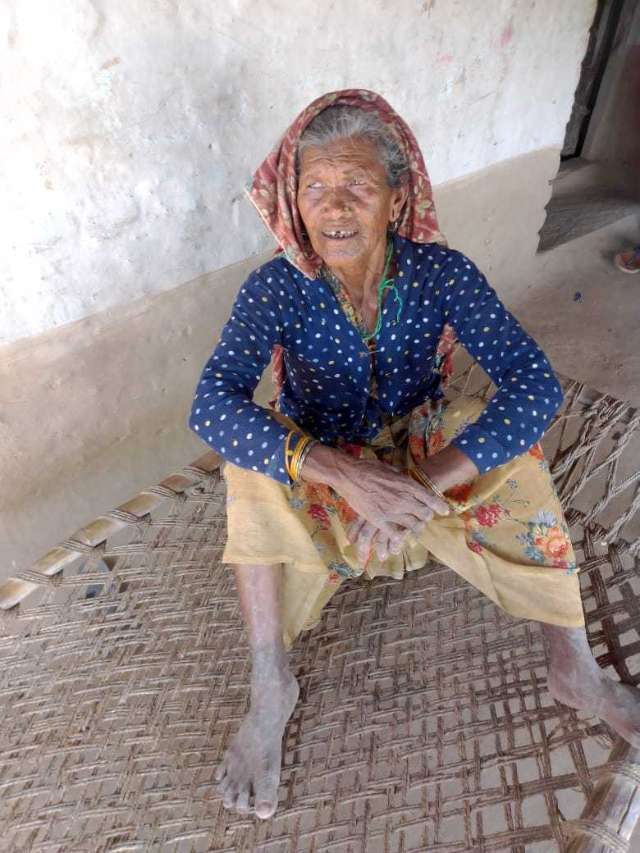
dsc06710Sahariya tribe is a nomadic tribe in Madhya Pradesh that deals with poverty of the magnitude that mothers buy saris and tear them in half so that their daughters have something to wear. These people have little money available for essentials, let alone luxuries like education. The women are typically very badly treated, often turning to prostitution or collecting dry wood to sell to neighbouring towns and villages to make ends meet.

This is when TARA (Technology and Action for Rural Advancement) came to their rescue in 1996 by setting up a handmade paper plant in Orchha, MP. TARA and its parent organization, Development Alternatives (DA) have striven to bring people, environment and technology together – delivering lasting solutions for basic human needs. TARA has done in- house innovations of various green technology and their Paper Recycling unit is one of them.

On observing that the Sahariya women were skilled with their hands, TARA imparted training to 21 women in making paper products like notebooks and file covers, and started the Handmade Paper Unit with 30 women who learnt to convert cotton rags to paper. With 29 surrounding villages as its stakeholders, the paper unit has flourished and now employs more than 60 Sahariya women.

The Handmade Paper Unit has changed the lives of these Sahariya women who can now earn enough to feed and clothe themselves, and have gained sufficient skills to to create innovative products. More so, they have been able to carve out a life of dignity for themselves, and have also established a women’s cooperative – the Sahariya Sangram Samiti, meaning the Struggle of the Sahariya Cooperative. This cooperative not only provides the women with literacy and skills training, but has also become the village node for loans and saving accounts.

Sahariya are truly writing their futures on the paper they make!

About TARA:
TARA Handmade Paper Technology is a unique technology to recycle waste like cotton rags, denim materials, fibres and used paper into high quality handmade paper. Today TARA is a proud producer of an infinite range of high quality handmade paper and paper products. Community groups are able to successfully use the technology to manufacture handmade paper and handcrafted products which are marketed commercially. To know more about them and their technology, contact them at the address below:
29, Ghitorni, Mehrauli, Gurgaon Road, New Delhi – 110030
Tele-fax – +91–11– 26801521, 26804482, 26805826
Website: http://www.tara.in

Progress in Rural Telephone Connectivity under Bharat Nirman

We often wonder what happen to government schemes which are released with huge fanfare and publicity, but somewhere along the way get discreetly swept into neglect, until no trace remains. While there are many schemes that can be cited in the above category, Bharat Nirman, a rural development program announced in 2005 by the Congress Government in power, seems to be still chugging along.


Bharat Nirman is a time bound plan and focuses on 6 main components of rural infrastructure development. These are Irrigation, Roads, Rural Housing, Water Supply, Rural Electrification and Rural Telecommunication connectivity. While the time lines have been largely flouted, it is still comforting to know that the plan is slowly being executed.

 

While you can (and should) read about the tenets of the Bharat Nirman plan here, we would like to focus on one of the goals of the plan, namely, Telephone connectivity in all the remaining 66,822 villages by November 2007. Here is an article from CIOL Network that confirms the inclusion of 54,700 villages under the umbrella of BSNL connectivity. While this is lower than the set target, and behind time, we still appreciate that there is progress. I’m sure the villages that have benefited agree with us.


Excerpts from the article:

The Central Government has provided Village Public Telephones (VPTs) in about 54,700 uncovered villages under Bharat Nirman Programme through subsidy support from the Universal Service Obligation Fund (USOF).

With this, the State owned BSNL has provided telephones to five and half lakh villages across the country said an official press release. The telecom giant has also brought 30,500 villages under the reach of Broadband.


Not all is going great with the scheme though. This article in The Hindu reviews the progress till December 2007, and states that apart from rural telephony, the scheme has displayed unsatisfactory progress in all other sectors of interest.


It is true that we have a long way to go before we can sit back and heave a sigh of contentment on the progress made in improving lives of the Indian rural populace. However, we do believe that every drop in the ocean deserves recognition and accolade.

Calendar

September 2010
M T W T F S S
« Aug    
 12345
6789101112
13141516171819
20212223242526
27282930  

Recent Comments

PROMOTION

"Neumonia and Other Sketch Stories" - A collection of sketch stories. Download the e-book for free. Click on the book cover below.
"The observations are acute: the sound of high heels on asphalt, the bit about how all BPO employees lose their hair very fast are spot-on. This book is a better, shorter alternative to any Sunday movie on TV. It's a little jewel" - Hindustan Times