Zainub Exports: Keeping India’s glory untarnished

In the book ‘What India can Teach us’, Max Muller defines two very different Indias – one is the India of today, of the cities and towns and the other India, thousands of years old, is that of the village communities. As a foreign tourist in India, staying in five star hotelss and travelling by fancy cars, one is most likely to miss out on the second India, the truer of the two. Similarly, as a tourist in my own country, while I had often been to Agra to visit the Taj Mahal, what I did not realise was that I was missing out on a more humble, yet strikingly important part of our heritage.  Located a few miles away from the glorious Taj, on the Fatehabad Road, are the marble factories of Agra. One among these is Zainub Exports.

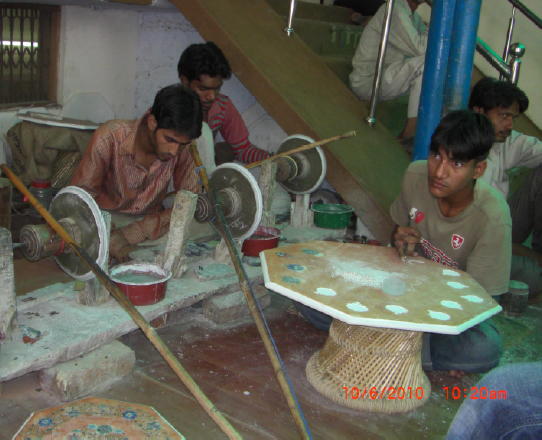
Inlay work in progress

Engaged in a wide range of marble inlay work, workers at the Zainub Exports unit are treated just like family. It is, after all, a family tradition, an invaluable inheritance from the Mughal ancestors. Ask Mr. M. Ajeed Shirazi, a sixteenth generation entrepreneur and he will point out how his family has been running these factories since Mughal times. I listen to his narration but my mind has wandered off to another era, an era when the great ruler Shah Jahan added a grand legacy of structures during his reign. What must it have been like? Mr. Shirazi tells me how precious and semi precious stones used for the Taj Mahal were imported from all over the world, even in the seventeenth century. How much wealth, power and prestige must the royal highness have commanded? Then, I look at the humble figure in front of me. If it weren’t for Mr. Shirazi and his family, I might never have discovered the intricacies of marble structures and how it links us to our glorious past.

The different kinds of marbles on display

As a twenty-first century citizen, even though I am spellbound by the work of the artisans, I can’t help but ask the obvious question. Is there any money in the marble business? Mr. Shirazi hesitates, “This year the business was hit because of the slowdown abroad. Otherwise, we have many foreign tourists and clients who buy our products abroad.” From our discussions, I gauge that the major problem is that of marble sellers in bigger cities. They sell lower quality products, bringing down the price. How can a genuine product compete unless customers can spot and care for the difference? Problems cloud over the horizon. Yet, the satisfaction from this work is unmatched. For Mr. Shirazi, the work represents a culture, a legacy, a history he cannot trample carelessly. He holds it dear. There are always opportunities of work elsewhere, but he chooses to keep the glory of India untarnished. In the process, he helps many workers, who know nothing but marble.

The Final Work!

Take the case of thirty-two year old Mohammad Haneed, one of the workers. Born and brought up in Agra, Haneed joined this work right after high school. Zainub Exports is providing livelihood to many such artisans. They also have a place to train workers and thereafter employ them. I am surprised to see how much these workers know about different types of marbles. They repeatedly tell me that the blue stone is semi precious Lapis lazuli. I can hardly pronounce it right. What was the orange one, I ask for the fifth time. “The orange stone is carnelian. It’s the one that shines when you put a flashlight against it,” comes the answer. While I am filled with awe and pride to see this hardworking group of people, at the back of my head, all I can think of is trying to remember what these stones are called! Next time, I don’t want to feel like a tourist in my own country.

Zainub Exports:

Manufacture of Marble Inlay Work and Indian Handicrafts

Contact Details
Mailing Address:
18/160A, Fatehabad Road, Purani Mandi,
Tajganj, (opp. Kailash Talkies),
Agra-282001, Uttar Pradesh, INDIA

Contact No:
+919319127303
+919927860470

Email Ids:
zainubexport@yahoo.co.in
info@zainubexport.com
www.zainubexport.com

Bamboo House India: A Journey towards Green Livelihoods

So what are the options you look at when you go out to buy furniture? Wood, metal, even plastic? How about getting home some bamboo furniture the next time you go shopping? Not only will you be making an environmentally friendly choice, you will also be providing employment opportunities to millions of rural and tnribal artisans living in abject povevrty in the bamboo belt of India. Thanks to the research and efforts by two young entrepreneurs, Prashant Lingam and Aruna, this is now a possibility.

With the idea germiating from their own search for an eco-friendly furniture option, Bamboo House India came into being officially in May 2008, after the founders spent about 9 months on study and experimentation. In this time, Prashant and Aruna Kappagantula were exposed to the miserable living conditions of the bamboo artisans of North-East India and decided that the aim of their enterprise would not only be to create a space for bamboo in the Indian furniture market, but also to generate employment for 5 million artisans. Lofty as it might sound, they went ahead and created a tangible business plan which included building expertise and spreading awareness about bamboo and its uses, creatively utilizing bamboo in multiple scenarios including furniture, structure and flooring, and setting up a chain of bamboo showrooms all across the country for retailing the products created by these artisans.

Why Bamboo?

  • Renewable Resource
  • Absorbs Greenhouse Gases
  • Amazing Growth Rate
  • Very little waste
  • Versatility
  • Soil Protection
  • Economic Development
  • Grows in variety of conditions
  • Minimizes CO2 gases and generates upto 35% more oxygen than equivalent stand of trees
  • Can be harvested annually
  • Helps mitigate water pollution due to its high nitrogen consumption
  • Requires only a modest capital investment to generate a steady income

Their journey towards creating “green livelihoods” was not an easy one. There were several hurdles faced by these entrepreneurs, and not just from one source. Firstly, there is not much information available on bamboo and its properties and uses, and the duo had to almost start from scratch and build their own data bank through study and experimentation. They lost almost 4 lakh rupees on bamboo furniture they built initially because they were not aware that bamboo traps moisture and cracks. They gained a lot of knowledge from the artisans in North East who have been in the trade from centuries. However, communicating with these artisans and uniting them under one banner posed its own callenges. The severe lack of infrastructure in the areas where they reside caused great delays in execution. It sometimes took 25 days for the furniture design to reach the artisan by post, and he had to travel 40kms to inform Prashant or Aruna that he had received it. The provision of mobile phones, the internet and cameras has eased the situation now.

Not the least of the problems was convincing the government authorities and finding support for the venture. After considerable persuasion, Bamboo House India managed to get support from Confederation of Indian Industries (CII-Hyderabad) for setting up the stores, starting the first one in Hyderabad. They have also partnered with institutions like IIT-Delhi, National Institute of Design and National Mission on Bamboo Application to set up model homes and instill confidence in the utility of bamboo. Aid from entities like IL&FS and APTDC went a long way in providing the impetus and helping them to spread the word about their work.

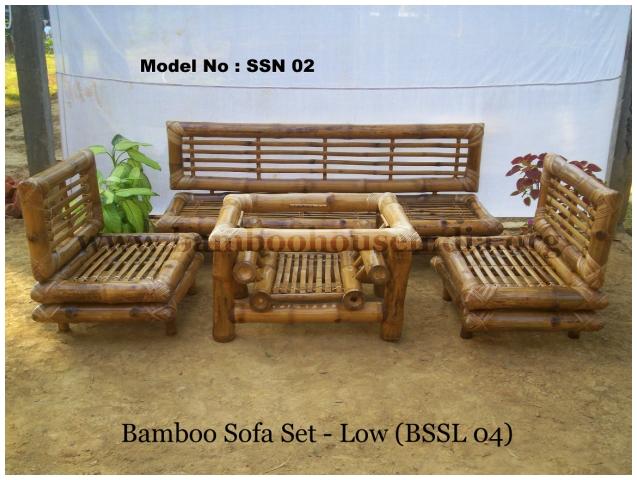
Bamboo Furniture by Bamboo House India

Prashant and Aruna have great plans for the future. They hope to set up 3-5 exclusive bamboo outlets in the next 3-5 years and also expand into niche segments like bamboo flooring and clothing. We wish them luck and encourage you to support their cause by visiting their store today. Find out more about them on their website: http://www.bamboohouseindia.org/

<div style=”color:#fff;background-color:#888;padding:5px;font-family:Arial;font-size:12px;width:250px;float:right;”>

<strong>Why Bamboo?</strong>
<ul>
<li>Renewable Resource</li>
<li>Absorbs Greenhouse Gases</li>
<li>Amazing Growth Rate</li>
<li>Very little waste</li>
<li>Versatility</li>
<li>Soil Protection</li>
<li>Economic Development</li>
<li>Grows in variety of conditions</li>
<li>Minimizes CO2 gases and generates upto 35% more oxygen than equivalent stand of trees</li>
<li>Can be harvested annually</li>
<li>Helps mitigate water pollution due to its high nitrogen consumption</li>
<li>Requires only a modest capital investment to generate a steady income</li>
</ul>
</div>

Rose Computer Academy

Logo_Rose_Academy

Amit Kataria comes from a humble background. Brought up in Choma village, Gurgaon, Haryana by his father, a farmer and mother, a housewife, he always dreamt of making a change in the society. Never having let his walking disability come in the way of his dreams, today he has successfully transformed the lives of many in his village by imparting computer literacy and in the process, setting a precedence worth following.

Amit’s journey began in 2007, “I completed my primary education in Choma but beyond that level of education, there was no opportunity there so I decided to study at a school in West Patel Nagar and passed my tenth and twelfth class there. In my final year, I came back to my village in 2006. I realized that most villagers owned land and money but they had little or no literacy especially in computing. They were ignorant of the need for computer skills. I found that this was the biggest need of my village and its future generations. That was when I decided to start a computer learning institute in my area.”

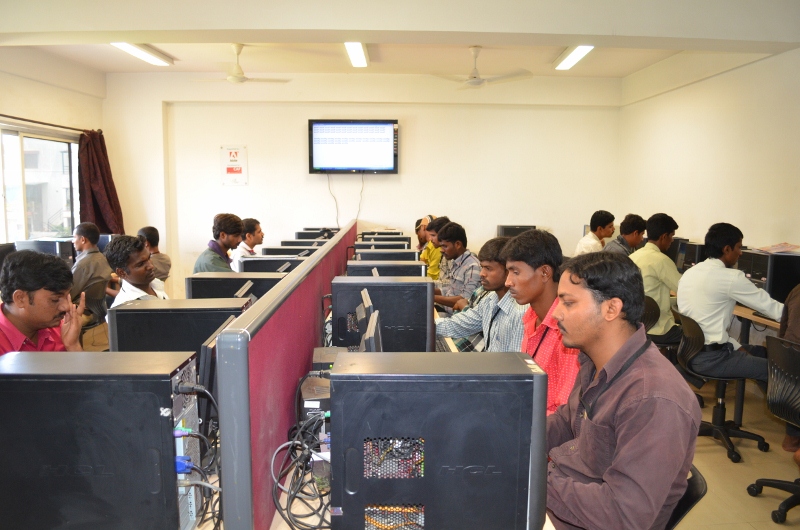
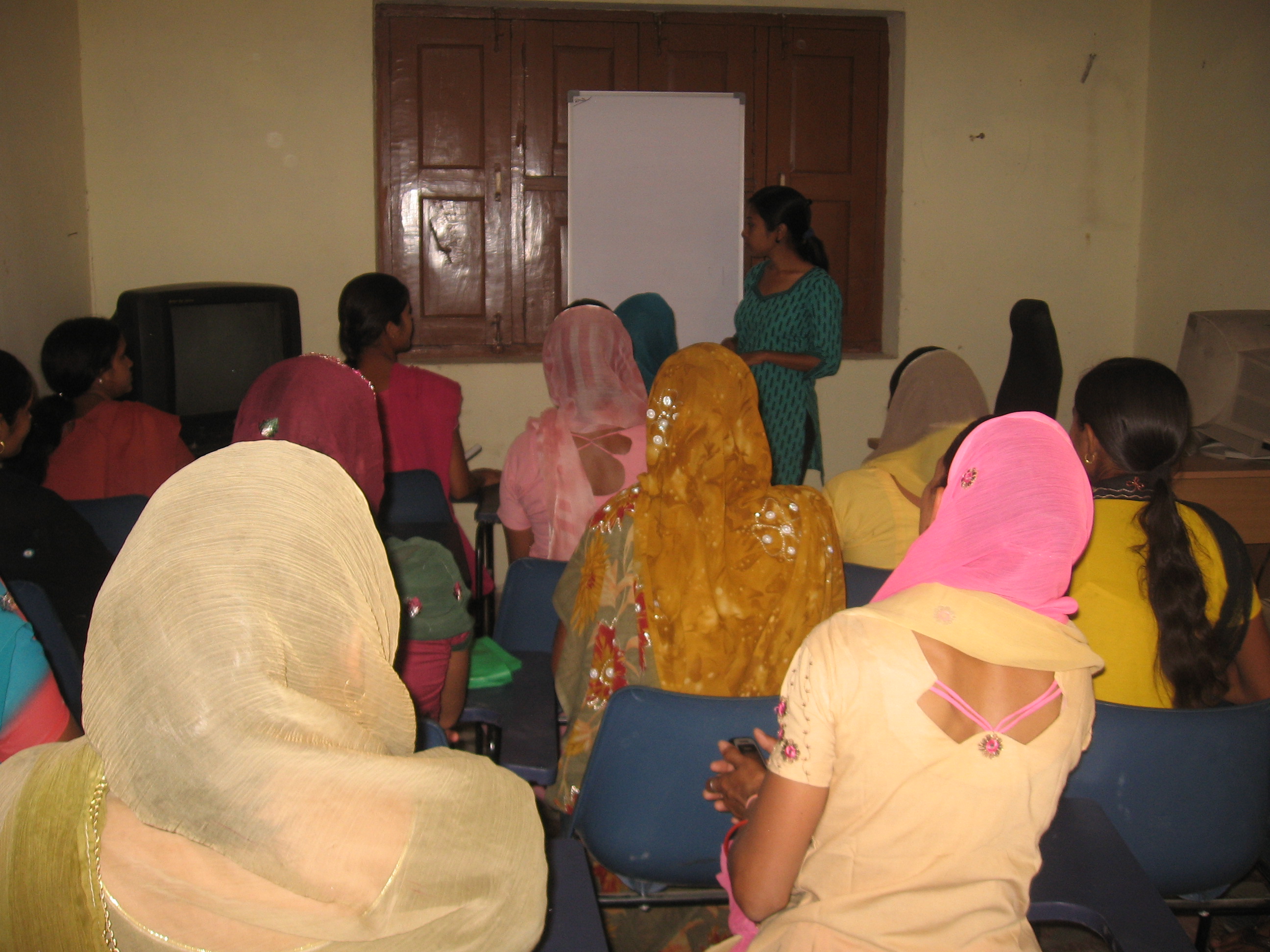
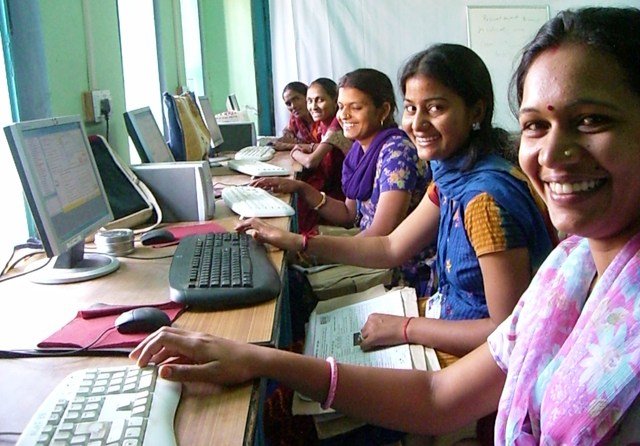
Students in Rose Computer Academy

Students in Rose Computer Academy

With a vision to spread computer literacy throughout India, especially in rural areas, Amit started his venture ROSE Computer Academy in 2007, when he was only nineteen years of age. Having learnt computers, he realized its potential in making his community independent and in the long run, in contributing to strengthening of the economy and the nation at large. At no point of time did Amit lose heart in the face of difficulties even when finances were few and far between, he persisted. “I still remember September 7, 2005, the day when I had earned my first hundred rupees. When I set out to start my institute, I had twenty-three thousand rupees of savings. My maternal uncle agreed to lend me one lakh rupees and I could start my computer lab.”
Amit’s academy has so far trained 300 students from his village, offering courses such as Basic computing, Java, Graphic Designing, Tally, C++ and many others. His is the only academy in Palam Vihar, Gurgaon which offers different kinds of computer courses under one roof, working 18 hours a day. Some of his students have also gone ahead and opened their own enterprises, while others have taken up jobs. Some start working at the academy itself.

One of the students at ROSE Academy is seventeen year old Ashok Silwal. Born in a small village of Nepal, Ashok came to India in 2007. His father is a bus driver at a school in Gurgaon and had no money to support his education so he went back to Nepal and enrolled for a correspondence course in India. “In Gurgaon, my father met Amit Kataria sir. Sir needed an office boy, so I started working with him at the Academy. I soon developed an interest in learning computers. I completed a Certificate Course in Computer Application and Desk Top Publishing and also completed my schooling here. Then I started teaching at the ROSE Academy and earned salary also. Now I am able to contribute to my family too,” Ashok smiles, gleaming with pride.

ROSE COMPUTER ACADEMY
(Behind Sangam Sweets) H. Block Mkt. P.O.
Palam Vihar, Gurgaon – 122017
Haryana
INDIA
Landline: 91-124-4387843
Mobile: 91-9868573124 / 91-9312605558
Website – http://www.rosecomputeracademy.com/index.aspx

ROSE Academy has provided computer skills and employment opportunity to many like Ashok. Besides computer education, ROSE Academy also provides learning assistance to students in their studies, considerably brining down the examination failure rate. As Amit puts it, “ROSE academy is like the rose flower that spreads its fragrance everywhere.” True to its name, the work and virtues of the Academy are an inspiration by every measure!

Dhriiti – The Courage Within: Promoting Micro Enterprises

Ajay Das comes from a poor family in Patla village. The family of six was dependent solely on agriculture. Apart from paddy, they also cultivated vegetables and Assam lemon, earning around Rs.1500 a month, which was barely sufficient. What does Ajay do now? He is an entrepreneur, producing arecanut leaf plates. Initially shy and slow, over a period of time he gained confidence when he saw the money coming in and when he realized that he could independently handle such a complex activity. In the last financial year, he produced around 40,000 products, one of the highest. He has taken up this activity full time and has one of the best raw material supply chains and is earning more than Rs.3000 a month.

Dalimi Patgiri from Bhalaguri village, a mother of two, is married to a teacher in a private school in the village. She came forward to start a similar venture. She not only saw an opportunity to earn additional income but also to set an example for other women. She facilitated setting up the raw material banks through a SHG (Self-Help Group) and helped collect 50,000 pieces of raw material in her area. She led a team of seven women on training visit to Salem at a time when many women did not have the courage to go beyond the precincts of the village. Later when her group did not support her to establish the plates manufacturing unit, she decided to do it alone. She set up the unit with a loan from SBI in January 2007. In spite of many problems and criticism from villagers, she has continued to improve her performance.

These are inspiring stories of just two of the many villagers of North East India, whose lives have been completely transformed by the initiatives of Dhriiti – The Courage Within.

Products

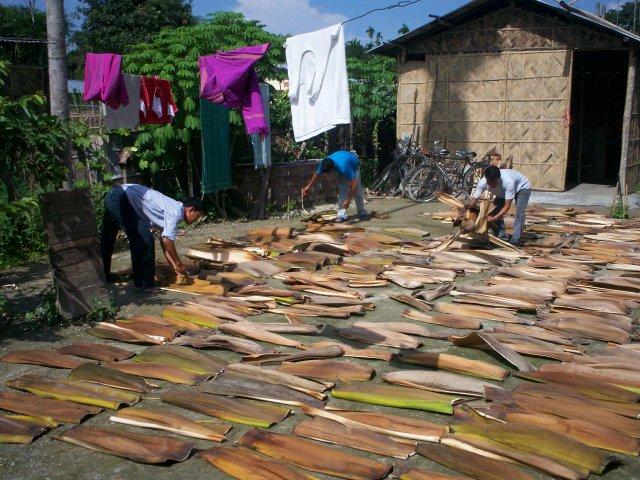
Tambul plates and bowls are made out of the sheaths from the arecanut (supari) tree. These disposable utensils can be used for serving and eating food. Some of the qualities of Tambul plates are as follows:

  • Completely Eco-friendly
  • Bio-degradable and Compostable
  • Chemical free and Non-Toxic
  • Hygienic
  • Natural and attractive appearance
  • Microwave-oven & Refrigerator safe
  • Sturdy and light which makes it possible to use in buffet parties
  • Can hold liquid for 3-4 hours

Dhriiti has set up micro enterprises for Arecanut Leaf Plate Manufacturing. Each arecanut leaf plate manufacturing unit provides direct employment to three persons and indirect employment to ten other persons. At the same time, it produced an eco-friendly alternative to dangerous plastics and polystyrene plates, using dried arecanut sheaths, otherwise wasted in these regions. Since these regions have a huge raw material supply, Dhriiti focuses on the four Bodoland districts of Baska, Chirang, Kokrajhar, Udalguri and the adjoining districts of Barpeta, Nalbari and Bongaigaon to promote this project. Dhriiti operates from its office in Barpeta, Assam and hopes to generate a business of more than 100 crores for rural North East by 2015.

So far, Dhriiti has established 44 units. Not only have over 5 lakhs plates been sold till now but the process has generated income of around 2 lakh for rural people by selling arecanut sheaths which was earlier deemed a waste product. The units, established at the house of the entrepreneurs, offer convenience and ease of self-employment.

The Raw Material Left for Drying

The Raw Material Left for Drying

Raw Material Entering Machine

Raw Material Entering Machine

Final Product coming out of the machine

Final Product coming out of the machine

The percentage of poor in Assam is the highest among the seven sister states of the North East. Around 36.09 percent of the State’s population continues to live below the poverty line. The incidence of unemployment, measured as a percentage of the labour force is increasing in Assam. The way out of the unemployment and insurgency scenario is to promote self employment. This is where the arecanut leaf plate industry comes in. Cheers to an organization that has tapped the opportunity in this sector, providing employment to not just the entrepreneurs but also to many others!

Contact Details

Dhriiti – The Courage Within
57A, Upper Ground Floor
Khizrabad, New Friends Colony
New Delhi 110065
Landline: 91-11-26843527 and 91-11-65963639


Tarani Bhawan,
Nakhanda Road,
Bilartari Hati,
Barpeta.
Assam- 781301
Landline:91-3665-236044, 235022

Email: info@dhriiti.org

Unnati Narang, Co-Founder of Serene Woods portal for authors and photographers, is the author of two books – ‘Drenched Soul’ (poetry) and ‘If At All’ (fiction). She is a freelance journalist for Times Ascent and enjoys blogging (www.l-b-w.blogspot.com) in her free time.

SourcePilani – Bringing the BPO to Rural India

Introducing SourcePilani, a company that is bringing the concept of BPO to rural India, starting off from the small town of Pilani in Rajasthan.

SourcePilani provides high quality and low cost BPO services by leveraging the hitherto untapped talent that rural India has to offer to the growing Indian economy. In addition to providing employment to the local people, SourcePilani is also providing the rural youth an exposure to the paths of progress being witnessed in the bigger Indian cities.

The basic model followed by SourcePilani includes identifying youth from various schools/colleges who are interested in taking up a BPO career. Since most applicants are from Hindi medium of instruction, they are put through an English training course for a period of 3 months. Post this, the recruits are put on the job under the supervision of team leaders who groom the new comers and make them able to handle the tough requirements of a BPO career. As an outcome of all of this, the youth of Pilani have been able to increase their income levels and over a period of time the economic spectrum of the town will also be enhanced. This is a wonderful way of executing inclusive growth and progress. Here is a sample of a couple of recruits who have joined SourcePilani and how their lives has been transformed:

Raju employee of SourcePilani Rural BPO

Rajendar Singh (Raju). Qualification: 10+2 (Hindi Medium) Raju like many of the youth in this part of the country was aspiring to get into the Indian army, unfortunately after several trials he couldn’t get through. His father is a Technician in the workshop in BITS Pilani and he was the only source of Income for a family of 4. Before joining SourcePilani, Raju lived the life of an unemployed for more than 3 years and SourcePilani gave him a chance to build his career in the BPO space. One year back he used to struggle to talk in English and his keyboard skills and computer skills were minimal. After undergoing a 3 month training Raju was put into on-the-job training where he honed his skills and improved upon his language capability. He started off with a petty salary which was <100 rupees a day a year ago and today with his hard work and sincerity he has been promoted to the level of Team Leader, for SourcePilani’s Internet Marketing Team. He manages complex jobs like Search Engine Optimization and Social Media Marketing and he heads a team of 5 members. Currently he draws a Salary of 5000 rupees which is a significant financial support for his family.

Pooja employee of SourcePilani Rural BPO

Pooja. Qualification: BSc. (Hindi Medium)
Pooja has been working with SourcePilani for over a year now. There are very few girls in the organization today and this is mostly because of the cultural aspects in Rajasthan. Pooja and her parents made the right decision to send her to work, by neglecting all the peer pressure from the society. Like Raju, even Pooja started off with a petty salary and today she earns a salary of over 5000 and she is able to fund the education of her two younger sisters.

Check out the following table to get an idea of the impact that SourcePilani is having on the economic progress of the town’s inhabitants:

Number of Employees

Average Salary(Per month)

Amount induced into local market

30(current scenario)

4000

14,40,000

50(By End of this year)

4000

24,00,000

150( in 2010)

4250

76,50,000

To get a visual idea of what SourcePilani is doing and their impact on the society, please check out the video embed below:

If you are unable to see the embed above, please click here to view the video.

You can know more about SourcePilani and contact them at their website: www.sourcepilani.com

Entries Invited – Innovation for India Awards

Mumbai, August 26, 2009: Marico Innovation Foundation announces its 3rd edition of the Innovation for India Awards to be held on 12th March 2010 in Mumbai. A significant initiative by Marico – the “Marico Innovation Foundation” was founded in 2003, with an objective to fuel Innovation in India. Under the leadership of stalwarts like Dr. Ramesh Mashelkar, the Foundation focuses on providing the country with a belief that Innovation is a crucial way to leapfrog into the center stage of global business leadership.

Over years the Foundation has effectively played the role of a catalyst by creating knowledge through years of in-depth research, multiplying this knowledge through various platforms and recognizing breakthrough innovations through its Innovation for India Awards.

The Awards nomination process for this year has started and applications are being invited till September 2009. Click here to Apply Now

Innovation for India Awards is the prestigious recognition for business and Social entities that have done some amazing breakthroughs that could hold lessons across all sectors. This year the Innovation for India Awards has added a new category- Public Services, which includes all innovations by Central or State government or any wing of the government including public-private partnership has innovated and have displayed a ‘clear public impact’.

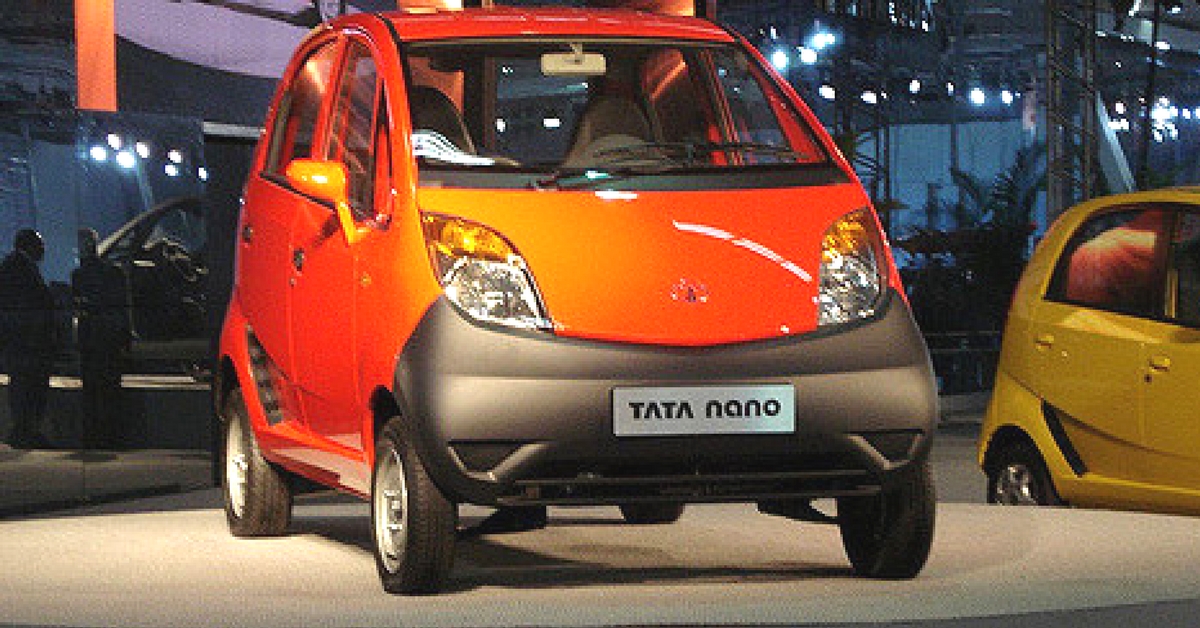
So far the Awards have been recognizing and applauding outstanding leadership with innovative focus in Business and Social arena. Its intent is to reward projects and businesses that make a real difference to India and community at large. Based on the criteria of uniqueness, impact & scalability, ‘India’s Best Innovations” are declared at these Awards. Over the last 3 years, 23 such innovators have been recognized which includes organisations like Kirloskar Brothers, BOSCH MICO and Titan Industries Limited & Azim Premji Foundation, MV Foundation, Trichy Police and Kudambashree, ITC IBD,  Evalueserve. Tata Motors was recognised for their spirit of Innovation – The NANO by being bestowed with the Global Game Changer Award at the 2008 Awards.

What do the Winners Get? The Award winners will get felicitated in Mumbai in the presence of industry stalwarts and some of the best innovators in the country. Besides a a cash prize of Rs 1 lakh, the Foundation would also extend its illustrious Governing Council’s support as mentors to the winners and a platform with VCs and angel investors.

Any Indian company, social organization, government body and/or individuals who have successfully conceptualized and nurtured a brilliant idea, made it work and brought it to market is eligible to participate.

The three categories under which Innovation will be awarded are – Business Innovation (Products/Services, Business Model and Innovation in social space by a business organisation) and Social Innovation (innovation by a social organisation). Public Services Innovation (innovations by Central or State governments or any wing of the government including public-private partnership)

The guiding principles for selection of Awards are transparent, Qualitative, Consistent and Fair. A high profile jury consisting of India’s most respected and eminent personalities, will judge the Innovations on the basis of its uniqueness, sustainability and scalability through a rigorous four-stage selection process.

For the purpose of evaluation of candidates, and architecting the awards process, the Marico Innovation Foundation uses Erehwon Innovation Consulting’s path-breaking innovation methodology and framework. This methodology has been used successfully for innovation evaluation across various platforms globally.

Dr R A Mashelkar,FRS CSIR Bhatnagar Fellow, National Chemical Laboratory & Chairman of The Marico Innovation Foundation states that “The Foundation’s mission is to encourage Innovation in India, by providing the nation with a belief that Innovation is indispensable and is the way to leapfrog India into the center stage of global business leadership. Through these awards we want to commemorate projects and businesses that make a real difference to the country and community at large.”

“Innovation in India is a key theme in India’s global repositioning as an emerging economic superpower. With the second edition of the Innovation for India awards, the Marico Innovation Foundation seeks to continue to fuel innovation in India- amongst other achievements, let Indian businesses build a cascade of successful and enduring Indian Global brands,” believes Mr. Harsh Mariwala, Council Member, Marico Innovation Foundation & Chairman and Managing Director, Marico Limited

Photographs from last year’s event:

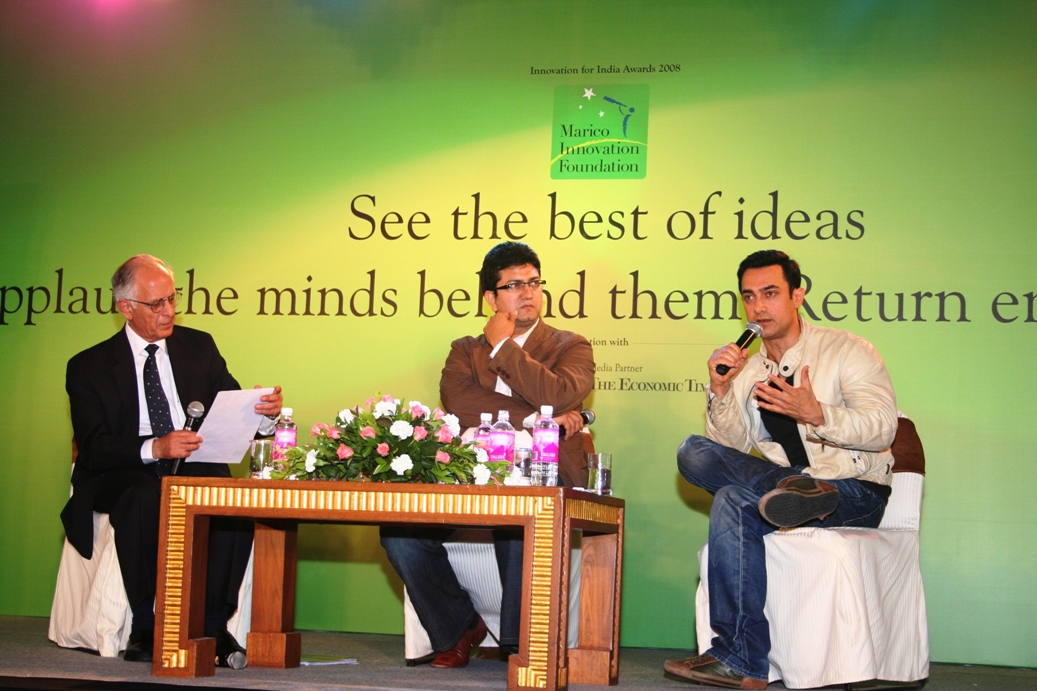
(from the left)-Actor & Director, Aamir Khan, Ad-Guru & Lyricist, Prasoon Joshi in discussion with Mr. Arun Maira, Chairman

(from the left)-Actor & Director, Aamir Khan, Ad-Guru & Lyricist, Prasoon Joshi in discussion with Mr. Arun Maira, Chairman

Mr. Sam Balsara, CEO Madison, awarded Mr. Kunwer Sachdev, CEO Su-Kam Power Systems Ltd. for Innovation in Business Process

Mr. Sam Balsara, CEO Madison, awarded Mr. Kunwer Sachdev, CEO Su-Kam Power Systems Ltd. for Innovation in Business Process

About Marico Innovation Foundation

The Marico Innovation Foundation was created in March 2003 under the stewardship of Dr. Ramesh Mashelkar. The Foundation’s Mission is to Fuel Innovation in India, by providing the nation with a belief that Innovation is possible and is the way to leapfrog India into the center stage of global business leadership. The Foundation also believes that a framework will enable leverage innovation for quantum growth. The foundation is steered by a governing council that oversees both its vision and direction.

The reach is first envisioned to cover the business community, both professional and entrepreneurial.  The reach will soon expand to future business leaders and the general public.  The Marico Innovation Foundation is led by its Council Members, who are visionaries like Dr R A Mashelkar, FRS, CSIR Bhatnagar Fellow, National Chemical Laboratory, Anu Aga, Chairman, Thermax, Sam Balsara, CEO, Madison, Ashwin Dani,  Vice Chairman, Asian Paints, Ranjan Kapur, Country Manager, WPP, Arun Maira, Chairman, Boston Consulting Group, Harsh Mariwala, Chairman & Managing Director,  Marico, K V Mariwala, EX-Director, Marico, Rajiv Narang, Chairman & Managing Director, Erehwon Innovation Consulting, Dorap Sopariwala, Consultant. Visit www.maricoinnovationfoundation.org for more information.

The Channapatna Toy Story

Channapatna. It is the name of a small town between Bangalore and Mysore. But more often than not, the name evokes images of beautiful, colourful toys that had us enthralled as children and still make us remark at their exquisite craftsmanship. If ever toys made a town, this would be it, as the Geographical Indicator tag on Channapatna also confers. Savitha Karthik writes in Deccan Herald of her journey through the town, the changes she witnessed bit had not expected, and the work of Maya Organic – an NGO that helps the toy makers earn a decent living from a dying art.

Expecting to see an old craftsman sitting in a quiet corner and chipping away on a piece of wood that would eventually turn into one of those dolls, Savitha was surprised to find the factory of Maya Organic where workers of varying ages chipped away on power lathes and crafting those toys.

Girish, who has been working on toys for the last 18 years, explains, “We are a family of toymakers. My father, now, 74 years old, my brother, all of us, have been working on making toys.” So, how have things changed over the years? I ask. “Things have changed. Earlier, people would work on hand lathes in their homes, or hire lathes, and then we would go to the toy emporiums and sell our toys. Life was difficult because we had to make ends meet on a daily basis. Now, with the factory, things are more streamlined, and it is no longer a daily wages thing. Also, back then, we would make saada bombe (plain toys).”

Once believed to have been the art of Persian toymakers, who were brought in by the Mysore ruler Tipu Sultan, the skill has undergone a host of changes to cater to the changing environment. With exports being the mainstay of the industry, the toys have also evolved to hold greater appeal to the western markets. The use of vegetable dyes is one such innovation, which makes these toys score over their more controversial lead-containing Chinese counterparts.

However, the picture still isn’t that rosy for these artisans:

An enquiry at a Handicrafts Emporium within the town brought a new perspective to the toy story.

The owner explains that while there are huge export orders, there is always the fear that such bulk orders get rejected even if there is a slight fault in one of the toys. And in the non-tourist season, on ordinary weekdays, there are not many people who actually buy toys from such shops in the town. And so, there is diversification, from the traditional toys to metalware, to incense sticks to sarees.

The Channapatna toys have been more than playthings for the many girls growing up in the town, offering them a means of livelihood and empowerment at the factory. Their story is intricately linked to the toy story of Channapatna.

Read the complete article here.

Image Courtesy: Seattle Times

Future Thinking: E-Waste Management

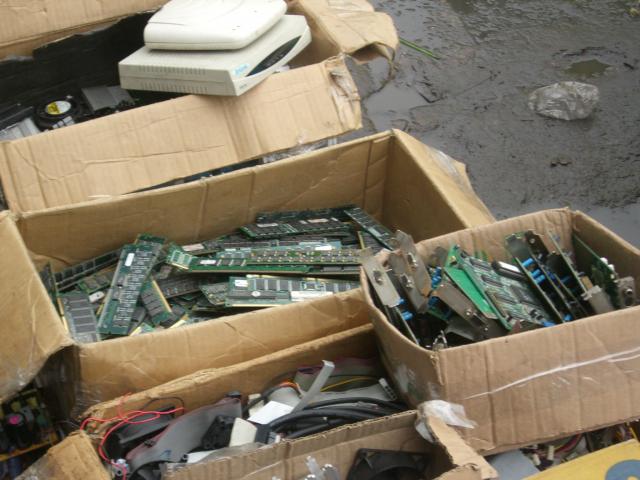
With growing dependencies on computers and related peripherals, the amount of e-waste being generated in India is enormous, running into millions of tons every year. Delhi, Mumbai and Bangalore top the list in terms of total e-waste being generated in the country. Now, the Mumbai Metropolitan Region Development Authority (MMRDA) has decided to create a road map to deal with all the e-waste generated by the city and to prepare for a future e-waste management plant.

Swapnil Rawal reports in this article at the Indian Express:

The core committee would have members from the Maharashtra Pollution Control Board (MPCB), Department of Environment along with officials of the civic bodies in the MMR. 

It is great that the authorities concerned are showing some great foresight with regards to this growing issue:

Shah said that the MMR, especially Mumbai and Navi Mumbai, will face a serious problem over the handling of e-waste in years to come. “It’s something like the scenario the civic body faced around 25-30 years back with solid waste in Mumbai,” Shah stated. 

The article goes on to say:

The core committee, besides locating a site for the proposed processing plant, will also frame guidelines for the collection and transportation of the waste from designated centres to the plant, which would be operated by private players. 

Read the complete article here.

Image courtesy: http://ewasteguide.info (which is also a great site to know more about e-waste management)

India Ahoy for Foreign B-school Grads

For a while our focus has been largely on the social, environmental and other developments happening across India. There has been little, if any, cheer to be found on the economic front with the world as a whole looking at bleak days ahead. However, it is evident that Indians still have a reason for optimism. Compared to the global economy, the Indian financial system is definitely more firmly rooted and toiling along quite impressively. Despite the horror of recession looming large over most other nations, the finance ministry still predicts a growth rate of 7%, and it does not seem unachievable at this point of time.

Another happy news is for the Indian universities and B-schools. In these times of turmoil, foreign grads of reputed business schools like Harvard and INSEAD to name a few have looked towards India for respite and survival. This not only ratifies the strong fundamentals of the Indian economy, but also gives deserved credit to our educational institutions.

Kamayani Singh reports in Hindustan Times about the amazing brain drain that we had not imagined would happen.

Alumni of top B-schools in the US and Europe, especially those focusing on entrepreneurship, strategy and information technology, are stepping up efforts to explore India’s job market.

And why shouldn’t they: When investment bank Lehman Brothers went bankrupt, heads rolled at its trading offices across the world, except in Mumbai, where operations were profitable and bought over by Japan’s brokerage giant Nomura Securities. In fact, the India unit is reportedly hiring now.

Several B-schools are trying to re-habilitate alumni who have lost their jobs in the recent upheaval at places like Lehman Brothers and find suitable jobs for them. India has emerged as a favourite destination for this activity as well, besides being at the top of the list for current MBA students.

“IESE has started a programme called ‘Inside India’ for alumni and executives who want to get an insight into doing business in India. The programme gives opportunities to interact with both major industry players and consumers,” said Anjaney Borwankar, a Mumbai-based associate director for MBA admissions at the Spanish school.

Some more surprises:

“In the last few weeks I have received numerous emails from Harvard alumni looking for jobs in India,” said Surat Singh, who has served as the president of Harvard club of India and Asia in the past.

“Surprisingly, more Americans than Indians have e-mailed me. I have been trying to get them in touch with Indian alumni who are in key positions now,” Singh added.

It has been an interesting turning of tables in the global scenario. And it has been fascinating to watch India’s journey up the value chain from an outsourcing destination for lowering costs of manufacturing and services, to a destination of choice for high profile management careers.

Read the complete article here.
Image Courtesy: EYP DEsigns

Paper from Banana Stem Waste

Banana Plant Stem

In a Banana cultivation farm, once the fruits are sold off, what lies behind are the stems of the plants. Clearing these stems from the land would cost a farmer almost about Rs. 3000 on average. Now, however, a new technology plant has managed to manufacture paper out of these banana stems! So, farmers no longer have to pay to clear their land of stems, but in stead are now making money out of it.


Ranjani Raghavan writes in the Indian Express about Kailash Thate, who set up an agro processing unit to extract fibers from banana stems which are then used to manufacture paper. Over time, Kailash found that more than 400 banana growers were interested in his technology resulting in at least 60 farmers setting up their own plants.

Excerpts from the article:

The driving force behind the project is a Tamil Nadu-based paper manufacturing firm, Eco Green Unit, and a Pune-based NGO Chaitanya Mandal. Eco Green is buying the fibre directly from farmers for its two paper making units in Pondicherry and Chennai. The NGO is coordinating between the farm and the manufacturing unit. 

On the quality of the paper produced:

A study by Eco Green has revealed that the quality of banana stem from the state, compared to those grown in Tamil Nadu or Gujarat, is far superior and is an ideal raw material for manufacturing paper.  

“We have examined the fibre from the stems grown in Solapur, Satara, Sangli, Aurangabad, and Jalgaon. It is of far superior quality and has more brightness and shine when compared to the fibres from Tamil Nadu and Gujarat. We hope to have around 150 growers in this state processing stems for us. We want about 25 to 30 tonnes of fibre from Maharashtra,” S K Babu, project director, Eco Green.

And the benefits?:

Thate is confident his business would grow manifold but he would also have to pay growers from where he gets stems for free now. “It cost me Rs 20,000 to set up the unit but I have nothing to lose as the first consignment that I have already sent would get me Rs 40,000,” he said while supervising the unit. 

It is great to know that in the current state of impending crunch of resources, we have entrepreneurs like Thate and organizations like Eco Green and Chaitanya Mandal who are able to leave a significant impact on not only the environment, but also on people and the economy.

Read the complete article here.

Image courtesy: www.keralabackwater.com

Calendar

September 2010
M T W T F S S
« Aug    
 12345
6789101112
13141516171819
20212223242526
27282930  

Recent Comments

PROMOTION

"Neumonia and Other Sketch Stories" - A collection of sketch stories. Download the e-book for free. Click on the book cover below.
"The observations are acute: the sound of high heels on asphalt, the bit about how all BPO employees lose their hair very fast are spot-on. This book is a better, shorter alternative to any Sunday movie on TV. It's a little jewel" - Hindustan Times