Magic Bus: Sports For Development

For most of us learning means sitting in classrooms and cramming formulas, theories or maybe (if I stretch it) reading and discussing with the teachers. With the current structure of dispersal of education, the outdoors seem to be long-forgotten!

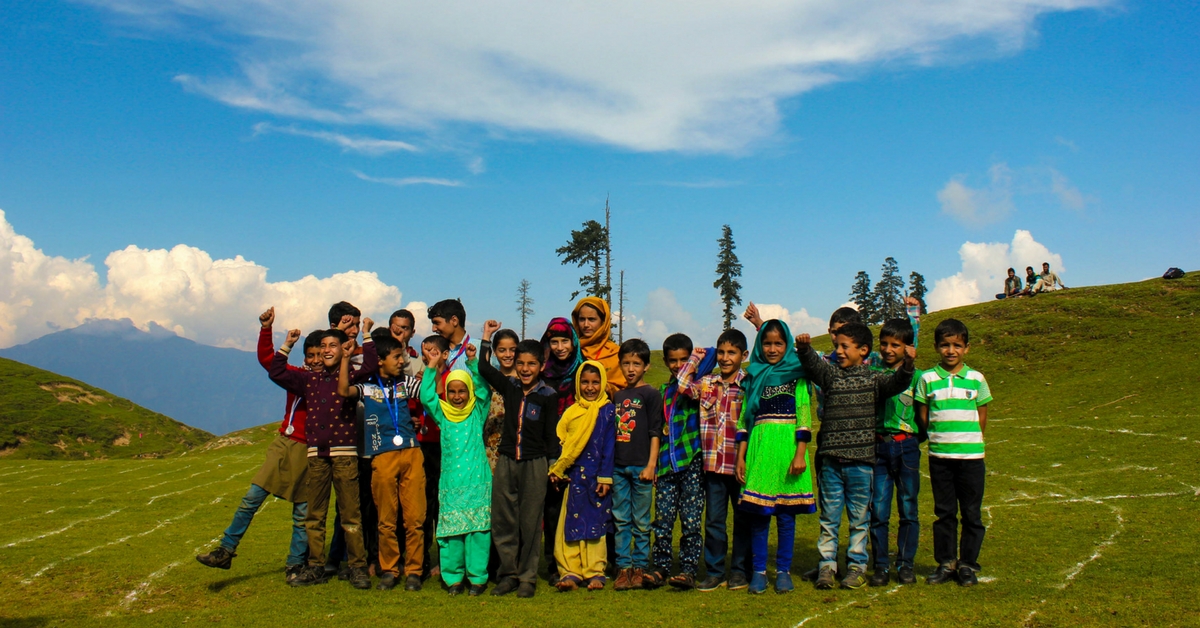
Mathew Spacie understood the importance of outdoors in learning. Once whilst practicing rugby with friends he met some boys from the slum in Fashion Street in South Mumbai and invited them to join his group. Within 6 months a rugby team was formed and within a year the team started competing in national tournaments.

It soon became clear to him that taking a child away from the squalor of his/her immediate environment to a mountain or a sports pitch meant creating a learning environment unparalleled in the child’s life. It was the thought of a ‘vehicle’ picking children up and taking them on a fantastic journey that gave birth to the name Magic Bus. For the children, the journey represented a new adventure to somewhere that was safe and packed with a lot of fun.

The core principle of Magic Bus is Sports For Development. India has the youngest population in the world and it is the youth who are critical for the development of communities. Sport is something that is close to young peoples’ hearts and through its inherent attributes of active participation, energy, empowerment and social inclusion it provides an ideal platform for working with youth and helping them recognize their power and potential.

Magic Bus is working as a technical advisory to a UNICEF program along with the UK sport and Indian ministry for Youth Affairs and Sport to take sport for development to communities across India in a project known as ‘ International Inspiration’.

Magic Bus also works with communities like Dharavi and slums in Mankhurd and Colaba, where the project  is headed by two local community coordinators. These coordinators are primarily responsible for sensitizing the community about sport-for-development and Magic Bus, bringing the children to sessions and further mobilizing community support.

The organization is working with NGOs in Mumbai who are child focused, supporting them to achieve their -objectives with children by integrating those objectives into the sports-for development framework. Magic Bus is also working with juvenile delinquents providing them the much needed space to express themselves and channelize their energies into more creative pursuits.

In Partnership with UNICEF , Magic Bus is implementation a training for trainers programme where they train primary education teachers in Sports for development.

Interested to know more about Magic Bus? Visit their website at http://www.magicbusindia.org/.
There is just so much happening out there!

Parivartan: Take A Stand

“When I despair , I remember that all through history, the ways of truth and love have always won. There have been tyrants and murderers, and for a long time they can seem invincible, but in the end they always fall. Think of it – always” – Mahatma Gandhi.

Triveni is a resident of a settlement in east-Delhi and is classified by the government as a “low-income” person. She relies on the Public Distribution System (PDS) for her quota of essential food grains. However, Triveni had been unable to obtain her entitled food grains from the PDS shop for the last 3 months and wanted to know what she could do. She was advised to file an application under the RTI (Right to Information) act requesting copies of all PDS records, including cash memos. Before the information could arrive, Triveni was offered Rs. 20,000 and sacks of grains by the PDS shop owner, if she took back her RTI application. When the information did arrive, Triveni was shocked to learn that as per government records, she had been getting grains from the PDS shop for the last 3 months! Triveni is literate and can sign her own name so she was outraged to see thumbprints of varying shapes and sizes against her name in the cash memos .

Parivartan, a voluntary not-for-profit civil society organization which is a “people’s movement against corruption”, had advised and helped Triveni with the RTI. Using this RTI act, Parivartan accessed records for all fair price shops in that area and began to analyse the information. In August 2003, Parivartan organised a jun sunwai (people’s hearing) and over 300 people from across Delhi filed RTI applications to view their food grains records.

As the campaign spread, there were reports of violence against Parivartan volunteers and the fair price shop owners lobbied to increase their commission under the PDS as they argued it was too low to make profits.

All this led Parivartan to push for institutionalising the system of public scrutiny of records. Two Saturdays of every month were designated for public viewing of food grains and for lodging complaints. Parivartan has managed to bring about a relief to hundreds of people who were at the mercy of the fair-price shop owners for their daily food necessities.

Before this, Parivartan had led a successful crusade against bribery in Income Tax department.

Parivartan works on the principle that ‘development’ is a function of both growth and equity. Their focus areas include Research, Training, Development Communication and Implementation. They also have a  training programme for Identifying and Mentoring Micro-Entrepreneurs .

So, if you are facing redtape-ism or if corruption is glaring at you, don’t just close your eyes ignoring it. File an RTI, take a stand and get counted. It is high time the activist in us wakes up from slumber. If you need inspiration, get in touch with Parivartan at their e-mail: parivartan_india[at]rediffmail[dot]com.

Conserve India: Using Fashion Against Poverty


Urban India is glaring at a huge waste management problem with no clear policy examining waste as a part of the production-consumption-recovery cycle.  In India, over a million people find employment in rag picking and recycling of waste; and this is an unorganized sector.

Most of the rag-pickers are poor, illiterate and belong to rural immigrant families. Many commence their profession at the young age of five to eight years. Most of them have never attended any school. While collecting rags they are subjected to chemical poisons and infections. Due to malnutrition, they suffer from stunted growth and anemia. These rag pickers have been weaned out of our social fabric and as begging is being abolished more and more beggars are becoming a part of this scavenging community.

Conserve  India, an organisation in Delhi founded by Anita and Shalabh Ahuja  was born of a desire to reduce India’s mountain of waste. Their team, after a lot of research, struck upon the idea of Upcycling by washing, drying and pressing plastic bags into sheets.

Handmade Recycled Plastic (HRP) is  made from  polythene bags picked from Delhi’s streets, rubber from old truck tyres’ inner tubes, old denims and saris. The processes used to make ‘Conserve’ bags and accessories have been specifically developed to be as energy efficient as possible and to keep out polluting dyes and chemicals.  This not only helps the environment, it also cuts costs, giving the organisation more money to invest in other social projects.

Santosh Kumar started collecting plastic bags for Conserve India as he could earn three times as much by selling plastic bags to be made into HRP instead of selling the garbage elsewhere.

Ragpickers enjoy working for Conserve as it directly implies that they, perhaps for the first time in their lives, will have enough to feed their families and rent homes that they can be proud of. On an average, a conserve ragpicker earns around $70 a month compared to a ragpicker who earns somewhere around $25.

The ragpicking community is unorganised; it is hard for them to protect their rights. By giving them ‘Conserve Employee Cards’, Conserve India helps them have a voice in the society. Conserve India has also started a campaign called Recognition for Ragpickers. As part of this, the organisation is trying to persuade the Delhi government to create an official register so as to recognize Delhi’s 150,000 ragpickers and give them their right to a fair wage.

Conserve also offers training to its workers so they can do better jobs in their organisation. Conserve supports schools in slums where many of its employees live. With an initial funding from Asian Development Bank, Conserve is now starting two new projects for tracking the general welfare of its workers and providing health clinics for those who have no access to healthcare.

In collaboration with top designers, Conserve India makes high-end fashion items like handbags, wallets, shoes and belts from the handmade recycled plastic.

Conserve India has collaborated with Fair Trade for marketing its products, which are available in stores across US, Japan, Europe . Their products can also be bought online through the Conserveshop.

By buying Conserve’s products one not only gets to be a trend setter in fashion, but also gets to help some of India’s poorest people and its environment.

For more information visit their website http://conserveindia.org. Infact if you want do something about the waste clogging the streets of your city, you can set up your own Conserve and be the change that you want to see in the society. Mail Conserve India at info@conserveindia.org or call on +91 11 43095301.

New! Jobs Listings featuring internships, volunteering opportunities & more. Click here.

Where the earth meets the sky – Timbaktu Collective

This is the story of a land that was at one time lying ravaged, drought stricken and forsaken. It was a committed revolution led by a couple, Bablu Ganguly and Mary Vattamattam, which has now transformed this land into an agro forest habitat. The unproductive soil was rejuvenated, rain water was harvested, trees were planted, crops were cultivated and the entire land blossomed.

Timbaktu in 1990

Twenty years ago, Bablu and Mary set their foot on this barren land in the district of Anantapur in Andhra Pradesh. People had given up on this land, of which Bablu and Mary decided to buy 32 acres; probably the last thing one would expect from a young couple.

The spark that triggered this initiative was a book – ‘The One-Straw Revolution’, by a Japanese author Masanobu Fukuoka. The book carried a very special message on how humanity can live an enriching life hand in hand with the nature. Bablu and Mary carried this spirit and conceived their vision for this land that they called ‘Timbaktu’, meaning ‘Where the earth meets the sky’. Their aspiration was humble and they wanted to keep everything simple – get closer to the land and help it regenerate itself.

They knew there was potential in the land of Timbaktu which was once part of the rich and powerful Vijayanagara Kingdom. Its forests were considered to be the finest, its fruits were savored across the country and various armies fought to keep control of this once fertile land. But everything was destroyed by ruthless deforestation and use of environmentally damaging pesticides and fertilizers.

Over the years, villages in this region have been tormented by chronic drought, unproductive land, unemployment and poor infrastructural facilities. Bablu and Mary decided to build the Timbaktu land by engaging with the villages around and formed an NGO called The Timbaktu Collective. “Our vision is to stop the degradation of the land in Anantapur district and to find ways to reverse it. We want to green the hills and the land. We want to develop alternative lifestyles. Lifestyles that are sustainable and provide more liberty and happiness, than those based on exploitation. The farmers see their land degrade and the wells drying up, but they don’t know what to do, so they just continue their patterns of self-destruction. We want to find a path that leads out of this vicious circle, not without but together with them” – they say.

Timbaktu today

In 1991, the couple decided to put their first crop in the land of Timbaktu and as everyone around them said, the crop failed. That became even more instigating – Bablu went ahead and bought 7000 saplings. He and Mary brought farmers from the villages to build creative water harvesting structures ensuring that every drop of water was judiciously used. Seed dibbling and such traditional farming methods were practiced – and the colour of the land started changing. Timbaktu was transformed from a barren earth to a lush green forest. It’s heartening to see that birds, snakes and butterflies have come back to Timbaktu and a lost glory is reinstated. This is a true success story of eco-restoration and the experiment is being replicated with community support in a 10,000 acre waste land named as Kalpavalli.

The Timbaktu Collective grew to become a 105 member strong team who serve over 140 villages in Chennekothapalli, Roddam and Ramagiri mandals of Anantapur district. The organization runs two schools, one of which is a residential school for children from disadvantaged families. There is also a thrift credit system for the women which has now grown into a well established alternative banking system. Farmers in the villages are given training in organic farming methods and the Collective supports a Cooperative Society that assists the farmers in marketing their organic produce. With youth development, child rights activities, helping the disabled, cultural activities and many such programmes, the Timbaktu Collective has changed the face of humanity here.

Bablu and Mary stay in Timbaktu, in a house that is built with mud, built by them and built using things available in the land of Timbaktu. Their children studied in the school run by the NGO for the villagers. Their organization has made a difference to the lives of over 12,500 marginalized families. How much more purposeful can their lives get? How much bigger role models do we need to start doing our bit for the world around us?

Visit Timbaktu to know the true spirit of this land. Find information about them on their website www.timbaktu.org. Also, watch this video where Bablu and Mary take you through the 20 years of Timbaktu. You can also write to them at timbaktu.info@gmail.com

Okhai: Empowerment of a truly colorful kind

The region of Gujarat has been home to many a tribal cultures and has nourished them from the earliest known periods of history. The stark monotony of the arid landscape in this region is relieved by the bright shades of handicrafts made by the tribal women. Specifically, the Okhamandal Taluka is home to more than 200 Self Help Groups (SHGs) of men and women. It is from these communities that the Appliqué handicraft under the “Okhai” brand name has been created with the support and guidance of TCSRD (Tata Chemicals Society for Rural Development).

The Self Help Groups in Okhamandal Taluka mainly comprise of the Rabaris, Vagher and Ahirs. The most prominent tribe here, the Rabaris, are a semi-nomadic tribe known for their survival and adaptation in arid regions of Gujarat and Rajasthan – pursuing a pre-agrarian, pastoral lifestyle – found mainly in the Kutch and Saurashtra regions of Gujarat. The Rabaris today lead a quaint, colourful and rugged life which finds a manifestation in the embroidery and crafts made by them.

The TCSRD centre employs the skills of about 200 Rabari women from the various Okhamanda villages and a team of trained tailors. The various products made in Okhai include apparels, accessories and handicrafts. The handicrafts workforce is guided by a full time designer to translate the traditional products into those that are in consonance with the current fashion trends. These products are sold at retail showrooms in Mithapur and Ahemdabad. The products are an amalgamation of the traditional art form of the Tribal Women and the designs of the designer.

As their website puts its, “The Okhai brand has become a powerful statement by the women of Okhamandal villages over the years. A statement that empowers them, a statement that gives them and the region an identity, a statement that make people notice this beautiful form of art and patronize it.”

What we’ve found particularly interesting is the impact that these self-help groups are creating on the community members. Do read the following tales of empowerment at the Okhai website:
Laxmi Bhara – Chief designer. She has been associated with the project for over 8 years and now is a proud owner of a home.
Rami Dula Nangesh – Empowerment personified. Her day with Okhai starts at 5 in the morning and she has been instrumental in bringing about innovative changes to the various products.

More about Okhai here: http://www.okhai.org/
To read about Tata Chemicals Society for Rural Development (TCSRD) click here: http://www.tcsrd.org/

This article has been contributed by Chandrika Maheshwari. Chandrika is a student in her 3rd year of engineering in BITS, Pilani and holds a vision to do something for the country and contribute in its development. Her interests include social entrepreneurship, traveling, reading and writing.
PS: Remember to participate in our logo contest! Click here

AVAZ Giving Voice to Children

Introducing ‘AVAZ’ – a product created by Invention Labs, Chennai. AVAZ provides a ‘voice’ to a non-verbal child with Cerebral Palsy, allowing him/her to communicate with friends, family and teachers. By enabling speech-impaired children to communicate easily, this device is helping them become much more independent and free from their existing barriers.

AVAZ The Product

AVAZ The product

Cerebral Palsy – The Problem

Cerebral palsy (CP) is a congenital condition in which the motor cortex of the brain is damaged. People with cerebral palsy are unable to achieve muscle control and coordination. Cerebral palsy is non-progressive, non-contagious and permanent. The incidence of Cerebral palsy is 2-2.5 persons per 1000 live births, and the estimated population of CP cases in India is approximately 25 lakhs (cited from publicly available information).
Approximately 40-55% of people with CP are affected in all muscles below the head (quadriplegia and diplegia). In most of these cases, these include the muscles that produce speech, and such persons are consequently non-verbal. In conjunction with their inability to move their hands or feet in a coordinated manner, this impairment means that they do not have access to any of the traditional ways of communication.

Most children with CP are of normal intelligence, and are handicapped in education and employment primarily due to their lack of communication abilities.

AVAZ

AVAZ is an Augmentative and Alternative Communication (AAC) device for children with Cerebral Palsy (CP). AVAZ is a portable speech synthesizer which can be controlled by gross motor movements of a child with CP, such as approximate movement of the head or of large muscle groups. These movements are captured by the use of a touch-screen or an external switch to allow the child to create text sentences on the device using predictive software, and this text is read out by the device. AVAZ is thus an artificial voice for the child.

How did AVAZ achieve this?

Invention Labs began engaging with IIT Madras and Vidya Sagar to develop commercially viable Voice Output Communication Aids in 2008. Sustained research and development on the device began in May 2008 in collaboration with Faculty of Electrical Engineering and Computer Sciences Departments at IIT Madras. Invention Labs received a grant of Rs 10 lakhs under the Technopreneur Promotion Programme (TePP) from the Department of Scientific and Industrial Research, Government of India, in February 2009, which was used to fund the development of AVAZ in part.

Invention Labs continuously engaged with Vidya Sagar’s teachers and students to validate the usability and impact of the prototypes of the device. After a couple of rounds of prototyping and based on feedback from children as well as teachers, the design was finalized, and the beta version of the device went into production. AVAZ was launched in February 2010 and has been warmly welcomed by the community of special educators as a step in the right direction.

The Details

AVAZ consists of two components – a wheelchair mountable speech synthesizer and text prediction software that runs on this synthesizer. The speech synthesizer has been designed to be usable by children with different abilities and has the following features:

  • Large 7” LCD display with Touchscreen
  • Speakers and Audio Jack – for voice output and audio prompts
  • USB port – to connect non-contact switches that get activated when they sense motion
  • Mono Jack port – to connect contact switches that get activated when pressed
  • Rechargeable battery (in-built)
  • Wheelchair mount (optional)

The text prediction software helps children do two things – creating sentences and speaking them out. Sentences are created in AVAZ using a technique called ‘scanning’. The user can select an option by pressing anywhere on the touchscreen or by using any contact or non-contact switch that is connected to the speech synthesizer. In order to speed up text creation, AVAZ features learning and prediction. It is able to remember sentences and words used by the child in the past, and it accelerates the entry of commonly used templates. AVAZ currently supports nearly 10000 words in the English language, and many more can be added by the child if needed.

The text prediction software comes with many options to enable children to customize the device to suit their needs:
a. Scan speed can be modified to suit the child’s comfort
b. Audio mode is available to help visually impaired children hear the current position of the highlight
c. New words can be added by the user to the in-built dictionary of AVAZ.
d. Frequently used sentences can be added as a ‘template’ for quick retrieval

Benefits to the Children
Avaz Used by a Child
AVAZ provides a ‘voice’ to a non-verbal child with Cerebral Palsy, allowing him/her to communicate with friends, family and teachers.

  • AVAZ enables these children to express themselves – children can convey virtually any thought in their minds by creating messages dynamically and using the speech synthesizer to ‘speak’.
  • AVAZ helps them become independent – children can interact with the device based on their ability. A number of interaction switches, contact as well as non-contact, are compatible with AVAZ and can be used to operate the device.
  • AVAZ allows them to communicate easily – the software adapts to the child’s vocabulary, using words that are most frequently used by him/her as well as allowing the child to create ‘template’ messages for daily use.
  • AVAZ is also portable, allowing the child to carry it around and even mount it on a wheelchair.

Future Thoughts

Communication plays a very important role in our lives and enables people to make friends, influence others and interact with their communities in meaningful ways. Our goal is to enable non-verbal persons with different abilities to overcome the barriers in communication that they face with the help of assistive devices like AVAZ. Just like a person with mild visual impairment wears spectacles to correct her/his vision, we envision that most non-verbal persons will have access to and use a portable assistive device like AVAZ to ‘speak’ and communicate.
Invention Labs plans to leverage the many features of AVAZ to extend its use to an educational environment, where the children could be taught using AVAZ. Special-purpose applications could also be built that work in specific employment opportunities to help such children take up gainful employment when they graduate. AVAZ could also be interfaced to a PC or a mobile phone in order for non-verbal CP children to use these devices.
Since a child can interact with AVAZ in multiple ways, the same principles used by a child with CP to communicate can be extended to help other non-verbal children. Children with lower levels of CP, Autistic children, children with learning disabilities and children with multiple disabilities could all benefit from having an assistive device that suits their needs. With the appropriate application, AVAZ could potentially be useful by adults who have been temporarily or permanently impaired by accident, stroke, disease or even old age.
About Invention Labs

Invention Labs is a startup based out of Chennai and incubated at IIT Madras. Voted one of the hottest startups in India by Business Today in 2009, Invention Labs was founded by alumni of IIT Madras. With a diversity of experience gained from working for multinational corporations at different locations worldwide, the founding members of Invention Labs returned to India in 2007 to set up Invention Labs as an organization that invents products for the unmet needs of the Indian consumer.
Invention Labs Team

Read more about Avaz (and watch their video) here: http://www.inventionlabs.in/avaz/aboutAVAZ.html

Interview: Smita Ram – Rang De

Rang De

In our lives whenever there is a financial emergency we have the privilege of access to a whole gamut of banking and financial services. We could walk into a bank avail a loan , use our credit cards. But there is a vast majority in our country who don’t even have access to a bank account.

That is where ‘Microcredit’ comes into play. Microcredit refers to providing small loans to low income households – mostly to start a micro-enterprise like livestock rearing, tailoring, grocery store etc. These income generating activities enable poor households to become self-reliant and get out of the vicious circle of poverty.

Rang De is not just any peer to peer micro lending platform. Their field partners are non-profit organizations who believe in the organization’s mission to reach out to the truly undeserved. Their terms and conditions are quite explicitly stated on the portal which includes 1) Every borrower on Rang De is aware that his/her photograph is displayed on the portal 2) All Rang De borrowers pay 8.5%flat p.a. on business loans and 5% flat p.a. on education loans.

One can simply register on rangde.org to become a social investor. Choose borrowers to make a social investment of as little as Rs. 100. At the end of the repayment schedule, the investor receives a 2% interest on the investment.

Here’s an interview with Smita Ram, Co-Founder & COO , Rang De:

What was the whole idea behind starting Rang De?

The idea behind starting Rang De was to create a sustainable initiative that will address a problem at its roots. Prior to starting Rang De, we were dabbling with several ideas relating to child labor, domestic help, media etc.

But soon we realized that most of these problems had poverty as its root cause and unless we address poverty, the rest will continue to exist. While we were researching these problems, Mr. Mohammed Yunus won the Nobel Prize in December 2006. That’s how we were introduced to the concept of micro-credit. Something that intrigued us was the interest rates that the borrower paid and how little people like us knew about the concept.

Thus Rang De was born as an initiative that facilitates small loans (micro-credit) for Indians that do not have access to credit. You can lend from Rs. 100 onwards on www.rangde.org to entrepreneurs identified by our partners across India. Join us to make poverty history in India!

What kind of hurdles you had to face during setting up the organization?

There were plenty of challenges right from registering the entity, to attracting talent to getting funds. We continue to face similar and other challenges but that is what makes working for Rang De enjoyable.

Rang De has a fabulous repayment rate, how do you guys achieve that?

We follow a model that is similar to the one propagated by Mr. Mohammed Yunus. We lend money usually to individuals in groups.The group could be a self help group or a joint liability group. In both cases, the group members vet each other and the group leader signs as a guarantor. The group also agrees to pitching in with the repayments if one of them fails to repay. This is the main reason for the repayment rate. Apart from this, we have a criteria for the selection of the borrowers which our field partners follow.

What has been the response of the social investors?

Our social investor base is growing slowly but steadily. We have a little more than 1000 social investors and in some sense, we are a close-knit community. Those who invested their money first have also now begun to invest their time to make Rang De more efficient.

In how many states does the organization have its presence?

We currently have a presence in 10 states – Karnataka, Andhra Pradesh, Tamil Nadu, Orissa, Kerala, Rajasthan, Uttar Pradesh,Maharashtra, Madhya Pradesh,West Bengal.

Although the impact is quite evident, could you tell us some anecdotes of the social impact of Rang De, on individuals and the community in general?

Women entrepreneurs we are reaching out to in Orissa are getting access to loans for the first time. Their loan size is as small as Rs.1000. They are able to borrow money for the first time because it is affordable.

Any plans of making it a for-profit organization?

No. We do not plan to make it a for-profit organization.

How do you plan to take it forward? Where do you see it 5 years down the line?

We would like to be able to reach out to people across all states in India and go deeper into the territories where we have started to work. We would also like to provide a wide range of social investing options to the investors and make social investing a norm.

The Better India team wishes Rang De all the best of their mission to create a macro impact through micro credit.

Contact Details
Do visit www.rangde.org for more info
Twitter: http://twitter.com/rangde
Facebook: http://apps.facebook.com/causes/127485?m=96aaaf39/

Travel Another India

Discover your heart in another India, an India that is not in any tourist guide, that is rich and vibrant, that possesses an ancient soul, full of contrasts and diversity. Taste another India, discover another way of living, doing and being.

In this maddening hustle bustle of the modern day, most of us dream of a vacation , set in some tranquil abode of nature, a unique experience that enriches the body , mind and soul , full of contrasts and diversity. Something that can’t really be located in a guide book.

Well, if you are looking for all of that and want to contribute to Responsible Tourism in the country Travel another India is the answer.

As traditional sources of income erode , Travel another India aims to provide an alternate means of livelihood to many rural farm and forest fringe communities , artisans and craft persons who are willing to play host.

Travel another India won the Sankalp award for emerging companies in Rural Innovations for 2009.

Here’s an interview with Ms. Gouthami, Co-Founder of Travel another India.

How did you guys get the idea of TravelanotherIndia?

Gouthami: TAI was set up by Vinay Raj and myself. We had both worked with agencies that fund NGOs for several years. And travelled across India visiting some of its most beautiful villages. We felt that responsible tourism could be a viable alternative livelihood option. However, it was only when I was working with Kutch Mahila Vikas Sangathan in between 2005 and 2007, that I was part of the team that implemented the UNDP and Ministry of Tourism’s Rural Tourism Project in Hodka village, that I saw how it could really work. Hodka was the inspiration behind TAI.

What was your background before starting TravelanotherIndia ?

Gouthami: I had 18 years of work experience with international and national development agencies such as ActionAid, Concern Worldwide, Christian Aid, and Kutch Mahila Vikas Sangathan (KVMS). At KMVS, I was a part of the team that set up the Shaam-e-Sarhad Rural Resort in Hodka village, Kutch. I was also a consultant with the UNDP for their Endogenous Tourism Project implemented with the support of the Ministry of Tourism, Government of India (www.exploreruralindia.org), providing support to two of their endogenous tourism projects in Kerala and one in Karnataka.

Mr Vinay Raj is an ardent and intrepid traveller, having served for over two decades in the development, humanitarian and corporate sectors, spanning Asia and East Africa managing large teams, fostering innovations and partnerships. He is passionate about supporting livelihoods of endogenous communities, conscious of their cultural roots and ethos.

How does Travel another India choose the locations for guests to experience and generate revenue?

Gouthami: We basically believe that any village in India can be developed into a tourist destination if they meet these four conditions:
1. Is the village accessible to tourists?
2. Is the village safe – natural and human threats?
3. Is there a “host” in the village – an individual or group who are willing to work to ensure that guests enjoy the experience?
4. Do the weather conditions allow sufficient tourist days so that the venture is financially viable?

What has been the overall feedback of the guests?

Gouthami: Guests have in general been happy with the destinations that we are offering them. A common feedback is – “When we were young, we visited our grandparents in the villages and had a great time chasing cows, stealing mangoes and generally running riot. However, now that our parents also live in the cities, our children don’t get that experience. Your destinations allow us to show them Another India.”
I am putting together feedback from several guests to make that statement.

What is the kind of socio-economic impact the organization is generating?

Gouthami: We are too young to be able to measure the impact. However, in Hodka which has been operation for about 5 years now, we see that about 60 families (out of 250) are getting a direct income because of tourism – either directly employed in the resort, doing laundry service, providing transport, providing milk and milk products, doing mud work that covers the resort, etc. One family has even taken a loan and set up a home stay within the village. Another family has sent their sons to study further so that they can come back and work in the resort.

Of the income of Rs.21 lakhs that the resort generated last year, 40% was spent in the village itself.
In Banavasi, the fact that the “room boy” needs to clean toilets as well as serve guests meant that only one social group could be considered for the job. And now that job has greatly added to that family’s income and we hope in future to their status as well.

How do you plan to take it forward ?

Gouthami: We hope to be able to reach out 50 villages in 3 years time.
In the long term, we hope that those who are guests begin to understand what rural India is all about. Many of these urban guests will be or go on to becoming bureaucrats, politicians, doctors, lawyers, industrialists, policy makers, etc. We hope that this glimpse into another way of life will help them when they form policy or influence policy at the national and global levels to think beyond their immediate reality. We hope that change happens both ways – in the host community, but also in the guests, their families and friends.

Contact Details

Please visit http://travelanotherindia.com to know more
Blog: http://travelanotherindia.blogspot.com
Facebook: http://www.facebook.com/pages/Travel-Another-India/120624356334

This article has been written by Rahul Anand, an IT consultant , entrepreneur and social activist living in Delhi. He has been associated with Udayan care as a volunteer since the last two years; has started a program with cafindia (charity aid foundation) by the name of 100ruppeeclub. Also, his venture www.simplypoet.com is the world’s first multi lingual poetry portal.

Read Rahul’s previous article here.

Rose Computer Academy

Logo_Rose_Academy

Amit Kataria comes from a humble background. Brought up in Choma village, Gurgaon, Haryana by his father, a farmer and mother, a housewife, he always dreamt of making a change in the society. Never having let his walking disability come in the way of his dreams, today he has successfully transformed the lives of many in his village by imparting computer literacy and in the process, setting a precedence worth following.

Amit’s journey began in 2007, “I completed my primary education in Choma but beyond that level of education, there was no opportunity there so I decided to study at a school in West Patel Nagar and passed my tenth and twelfth class there. In my final year, I came back to my village in 2006. I realized that most villagers owned land and money but they had little or no literacy especially in computing. They were ignorant of the need for computer skills. I found that this was the biggest need of my village and its future generations. That was when I decided to start a computer learning institute in my area.”

Students in Rose Computer Academy

Students in Rose Computer Academy

With a vision to spread computer literacy throughout India, especially in rural areas, Amit started his venture ROSE Computer Academy in 2007, when he was only nineteen years of age. Having learnt computers, he realized its potential in making his community independent and in the long run, in contributing to strengthening of the economy and the nation at large. At no point of time did Amit lose heart in the face of difficulties even when finances were few and far between, he persisted. “I still remember September 7, 2005, the day when I had earned my first hundred rupees. When I set out to start my institute, I had twenty-three thousand rupees of savings. My maternal uncle agreed to lend me one lakh rupees and I could start my computer lab.”

Amit’s academy has so far trained 300 students from his village, offering courses such as Basic computing, Java, Graphic Designing, Tally, C++ and many others. His is the only academy in Palam Vihar, Gurgaon which offers different kinds of computer courses under one roof, working 18 hours a day. Some of his students have also gone ahead and opened their own enterprises, while others have taken up jobs. Some start working at the academy itself.

One of the students at ROSE Academy is seventeen year old Ashok Silwal. Born in a small village of Nepal, Ashok came to India in 2007. His father is a bus driver at a school in Gurgaon and had no money to support his education so he went back to Nepal and enrolled for a correspondence course in India. “In Gurgaon, my father met Amit Kataria sir. Sir needed an office boy, so I started working with him at the Academy. I soon developed an interest in learning computers. I completed a Certificate Course in Computer Application and Desk Top Publishing and also completed my schooling here. Then I started teaching at the ROSE Academy and earned salary also. Now I am able to contribute to my family too,” Ashok smiles, gleaming with pride.

ROSE COMPUTER ACADEMY
(Behind Sangam Sweets) H. Block Mkt. P.O.
Palam Vihar, Gurgaon – 122017
Haryana
INDIA
Landline: 91-124-4387843
Mobile: 91-9868573124 / 91-9312605558
Website – http://www.rosecomputeracademy.com/index.aspx

ROSE Academy has provided computer skills and employment opportunity to many like Ashok. Besides computer education, ROSE Academy also provides learning assistance to students in their studies, considerably brining down the examination failure rate. As Amit puts it, “ROSE academy is like the rose flower that spreads its fragrance everywhere.” True to its name, the work and virtues of the Academy are an inspiration by every measure!

A Barefoot Journey to Tilonia

A less traveled track to Tilonia gives one a journey into Indian entrepreneurship and perhaps changes the way our villages are perceived by city dwellers. Tilonia brings you face to face with the real spirit of India. Its misty hopefulness uncovers the nature of the task that is ahead for a social entrepreneur, its uniqueness and challenges.

Tilonia is a small town 25 kms from Kishangarh near Ajmer in Rajasthan. Barefoot College, established in 1972, inspires this town with the conviction that solutions to rural problems lie within the community. These solutions are broadly classified by Barefoot College into solar energy, healthcare, education, water, rural handicrafts, people’s action, communication, women empowerment, income generation, wasteland development, electricity and power as well as social awareness and conservation of ecological systems in rural communities.

Barefoot College was founded by Sanjit ‘Bunker’ Roy, an Indian social activist and educator. Roy was influenced by the philosophy of Mao Zedong, and modeled his organization after Mao’s Barefoot Doctors. Roy has worked all his life with the Barefoot College.

Spread over more than 8 acres of land, the campus of Barefoot College was built between 1980 and 1986, designed by a team of rural ‘barefoot’ architects, masons, blacksmiths, farmers and members of women groups who sat and struggled through the initial basic designing of the campus. This institution believes in imparting informal, non-structured, on-the-job practical training by identifying the poor, unemployed youth who have been unable to finish their formal education and have returned to their respective villages as dropouts. The five principles which are an integral part of the functioning of the college are equality, collectiveness, self-reliance, decentralization and austerity.

Related news about The Barefoot College
Bunker Roy, founder-director of the much talked-about Barefoot College at Tilonia in Rajasthan’s Ajmer district, has been chosen for 2009′s Robert Hill Award for his contribution to promotion of photo-voltaics (solar energy). He is the first Indian to be recognised by the Global Solar Community which had its 24th European Photovoltaic Solar Energy Conference in Hamburg, Germany, this weekend.
Click here to read more about this in The Hindu.

The education program focuses on the overall development of rural children, with literacy being just one part of it. It encourages hands-on or learning-by-doing process of gaining knowledge and skills. Lessons are focused on awareness about the environment and socio-economic and political forces that dominate development. The aim is to provide the children with a right balance of education and literacy so that they choose to stay in their village and work for its development. The college has different programs for children and women. There are Balwadis (rural crèches) established for children between the age of 6 months-5 years for the convenience of working mothers. Night schools have been set up for ‘working children’. There are bridge courses, courses for night school children who aspire to join formal day schools. In these night schools, initiatives like the children’s parliament are established which allow them to participate in the management of their schools through a democratic process. Candidates are selected through a proper election process, giving them an idea of the working of a democracy.
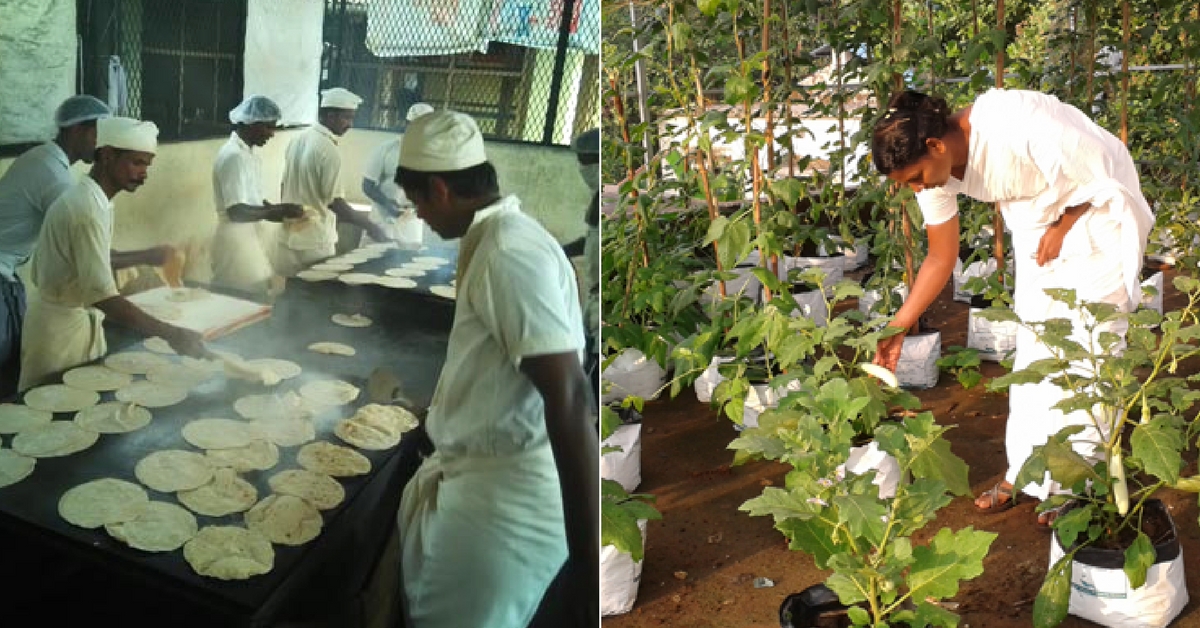


There is also a huge emphasis on the holistic development of women by empowering them socially, financially and politically. In the past 38 years, the college has trained more than 15,000 women in jobs ranging from construction work, education, metal craftsmanship, toy making and solar engineering, to mechanical repair and fabrication, health care, water testing, handicrafts, film making and social activism.

Vocational Training at Tilonia

Vocational Training at Tilonia

The Barefoot College has setup eight field centers in Rajasthan and a society known as SAMPDA (Society for Activating, Motivating and Promoting Developmental Alternatives) through the collective efforts of which the Barefoot approach is replicated in rural communities across 14 states in India.

The global response received by the organization is worth acknowledging. The institute has witnessed semi-literate middle aged woman traveling from places as diverse as Afghanistan, Cameroon, Gambia, Mali and Sierra Leone to undergo training to become barefoot solar engineers.

To know more about this organization and to read on some of its wonderful initiatives, please visit their website at www.barefootcollege.org.

This article has been contributed by Chandrika Maheshwari. Chandrika is a student in her 3rd year of engineering in BITS, Pilani and holds a vision to do something for the country and contribute in its development. Her interests include social entrepreneurship, traveling, reading and writing.

Calendar

September 2010
M T W T F S S
« Aug    
 12345
6789101112
13141516171819
20212223242526
27282930  

Recent Comments

PROMOTION

"Neumonia and Other Sketch Stories" - A collection of sketch stories. Download the e-book for free. Click on the book cover below.
"The observations are acute: the sound of high heels on asphalt, the bit about how all BPO employees lose their hair very fast are spot-on. This book is a better, shorter alternative to any Sunday movie on TV. It's a little jewel" - Hindustan Times