Lighting up lives – Diya Foundation

In our society, the differently-abled and mentally challenged citizens find it extremely difficult to be able to make a living and live a life of dignity. These individuals do need work and subsequently the advantages of work. However, prejudices towards them have caused them to be treated as surplus citizens incapable of being contributing and productive members of society.

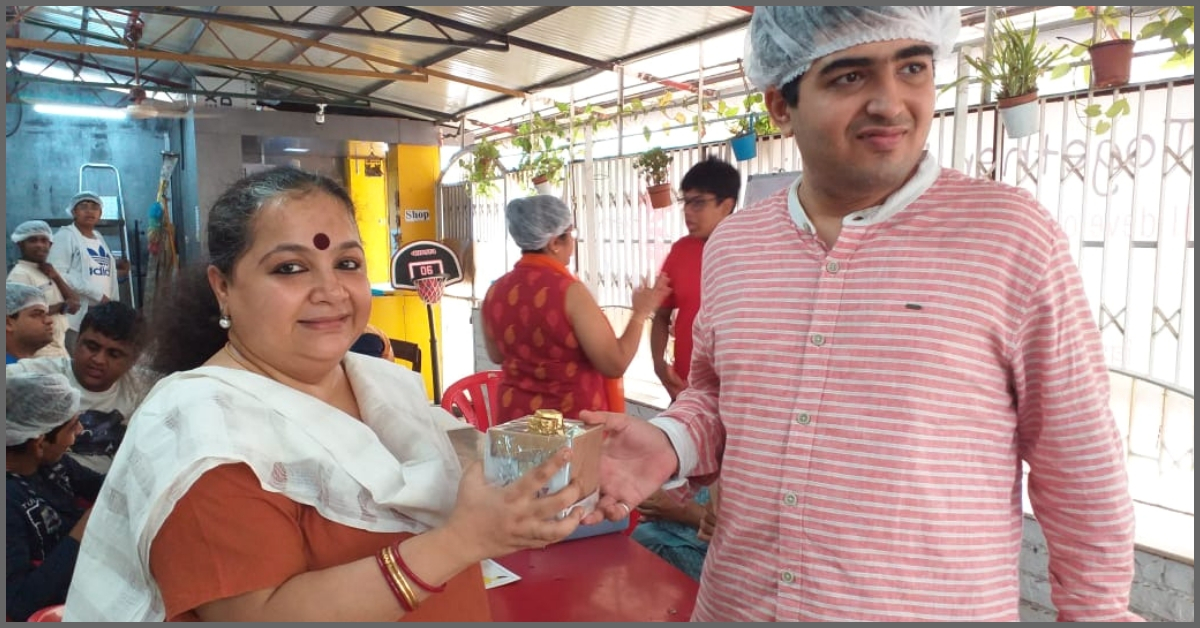
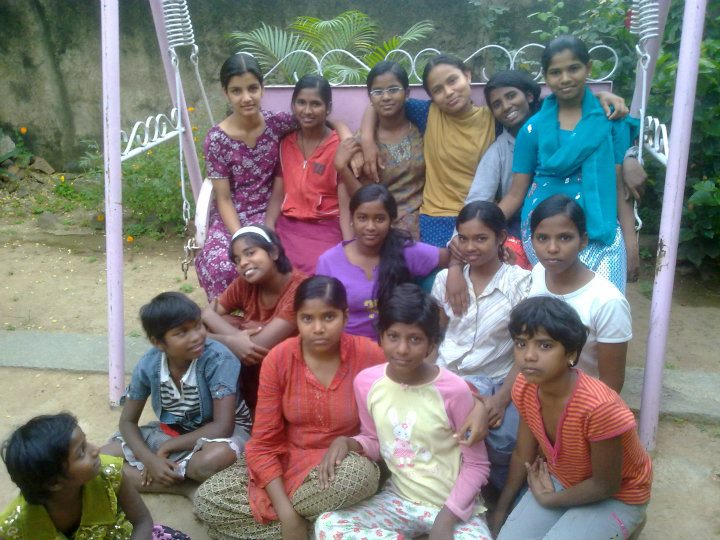
This is where Diya Foundation makes its mark. Started in 1999, Diya Foundation is a vocational training center which provides training and, more importantly, employment to adults who are mentally challenged as well as others who are differently-abled physically.

Sarah Santamaria, founder of Diya Foundation, shares her insights with us:

TBI: How was Diya Foundation started and what was the motivation behind it?
Sarah: Diya Foundation was started 10 years ago in March, 1999. I met several parents of differently abled children who expressed their helplessness and despair in trying to figure out what to do with their child after he/she turned 14 years. Very often schools would ask these parents to take their child out of the school programme because the school could no longer cater to the needs of the child. These parents were at a loss as to what to do with an adult child now full time at home and this is what motivated me to start Diya Foundation. Diya Foundation is the bridge to smoothen the transition from school to work.

TBI: How many people does Diya currently employ and help out?
Sarah: Diya currently employs 4 physically challenged staff, 6 abled staff and 21 mentally challenged trainees.

TBI: Is there any way our readers can contribute or help you out?
Sarah: Yes, we are a small organisation but very committed to the cause of differently abled adults. While making our trainees economically self sufficient, we also have long term plans to set up a residential care facility for the differently abled. We seek support in various forms – patronising the products our trainees make which helps them earn a stipend, donations in cash to support our ongoing projects, voluntary help to teach our trainees income generating skills and also as much support as possible to spread awareness about Diya Foundation and the work we do.

This Diwali, Diya Foundation urges you to add sparkle to your life by doing more. They have a range of delicious chocolates and colourful diyas on sale for individuals and corporates. Handcrafted using imported cocoa, the Chocolyn chocolates are available in a range of flavours and along with the diyas, make for a delightful gift. A gift that will give you double the joy because of the cause it supports.

Diyas for Diwali

Diyas for Diwali


Diya Foundation Chocolates

Diya Foundation Chocolates

The products can be custom wrapped to suit varied preferences and budgets. For more information and to place your orders, contact Diya Foundation here:

Diya Foundation

The Weaving of Hope

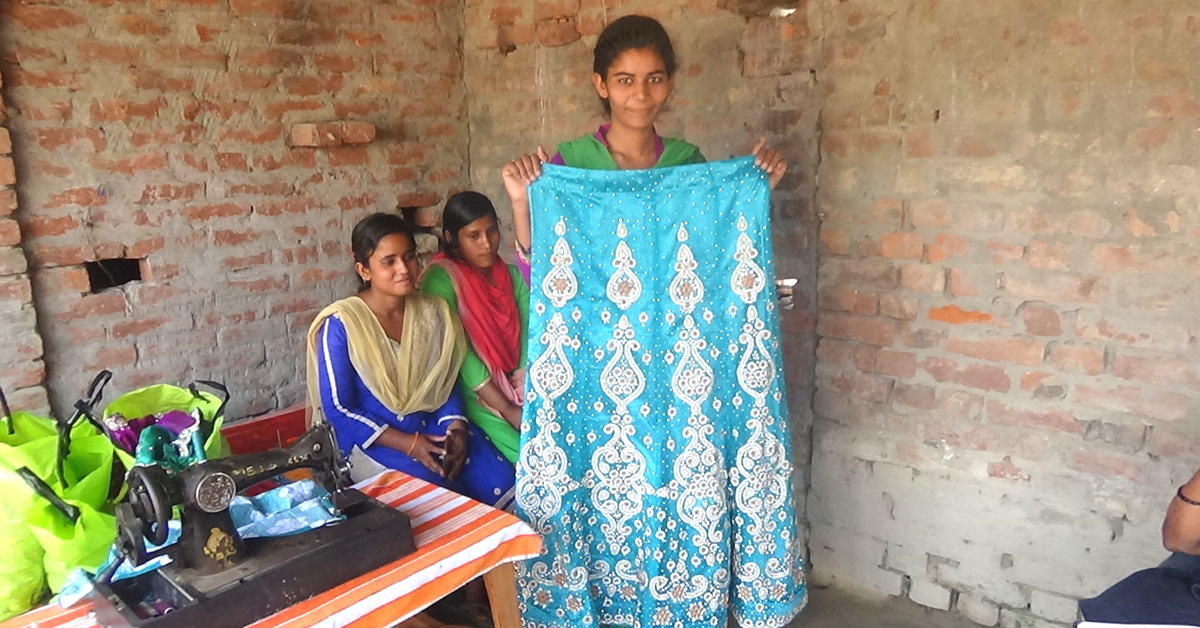
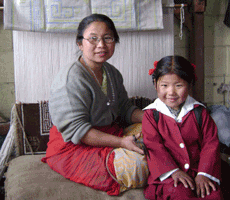
In the 1980s, women in Darjeeling went through a lot of turbulence especially due to the Gorkhaland agitation. Their primary means of earning a living was to work as maids and other petty jobs. But now, all that has changed significantly. The women have now adopted carpet weaving as a primary source of income, thanks to the assistance of Hayden Hall, an NGO based out of Darjeeling town. Tehelka’s Teresa Rehman writes in this article about how a turnaround was achieved in the lives of these women:

Tears roll down her cheeks as she recalls the turbulence during the Gorkhaland agitation of 1980s in Darjeeling in West Bengal. As Shannu Sherpa, 36, gives finishing touches to the new carpet she has woven, she narrates how her uncle and most of the male members fled to the jungles fearing atrocities by the security forces. “There were bandhs for as many as 40 days. The whole economy which had thrived on tourism collapsed and there was no income for many days. Moreover, houses were raided and there were atrocities on women by the security forces,” she says. 

It was during these trying moments that she found succour in carpet-making after she landed in Hayden Hall, an NGO in Darjeeling town. Then it was quite an uphill task for her to traverse the distance of nearly an hour from her village Singmari to reach the place. She says, “But it was worth it. I have brought up my children with these earnings after my husband’s death. I am not always able to fulfill their demands but I am happy that at least I can lead a respectable life here.”

Radha Karky, the administrator of Hayden Hall has been interviewed in the article. Some excerpts of her views:

“The idea behind introducing this alternate way of earning livelihood is because employment opportunities are very few here and there is tremendous pressure on these women. Here, they at least pick up a skill. It’s like being literate, gaining confidence. For illiterate women, coming up with beautiful hand-woven carpet is psychologically uplifting. These women would otherwise be going home to clean dishes. Even their meager wages are cut if they fall sick,” adds Karky. 


Interestingly, and perhaps more importantly, in addition to the wages that these women are able to earn, they also have the added security of medical care and life insurance!
About the economics involved, the article goes on to say:

Carpet making is not a viable option if done independently but Karky says, “Its viable in Hayden Hall. We ensure that a weaver makes at least Rs 1500 per month. While working at Hayden Hall, women are also enrolled in a health program that covers basic medical expenses, a lunch schemes, and their children benefit from the many children’s schemes, from day-care and health care to after-school tutoring to help with public or private school fees.” These women make carpets, which are then marketed by Hayden Hall in the two stores located in Darjeeling. These stores are also have an overseas shipping licence. Hayden Hall’s carpet weavers spend roughly a month on a three-by-six-foot carpet. 

Read the entire article here to get a sense of the freedom that these women have managed to earn for themselves. It is truly heartening to see an organization being able to achieve such a turn around for people, who only a decade ago, were grappling with uncertainty and turmoil.

Image courtesy: www.tehelka.com

Job Fair for the Differently Abled

It is true that the differently-abled get a raw deal in the economy of the country. However, this is changing as steps are being taken to include them in the India growth story. EnAble India, a Bangalore-based NGO working for the uplift of physically challenged people, together with Confederation of Indian Industry (CII), organized a job fair with a difference.

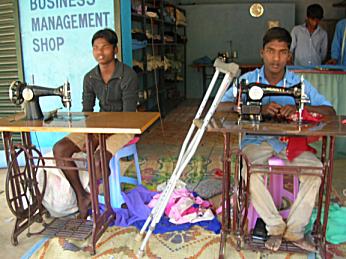
Companies like Integra Garments, ITC Hotels, ITC Agarbatis, Coffee Day and IBC Hotels and Resorts participated in the fair, and employed 70 people with low vision or hearing disability or mild mental retardation and other physical disabilities. They are not highly qualified people, and have been given vocational training by EnAble to allow them to be usefully employed and earn a living.

We can see what a difference it has made in their lives form the following article in Thaindian:

“I am happy that I got a job. I am no more dependent on my parents,” said an excited Bina Prasad, 22, who is hearing impaired and was chosen by Bangalore-based Integra Garments as a tailor.

Echoing Bina’s emotion, 23-year-old Sourav Shukla, who has locomotive disorder and was offered a job by ITC Agarbati, said the job would help him lead life with dignity. Sourav is a trained incense maker.

According to the World Bank report, there is a great difference between the opportunities and economic conditions of the disabled people in India from their healthy counterparts:

People with disabilities are among the most excluded in Indian society, according to “People with Disabilities in India: From Commitments to Outcomes”, a report prepared by World Bank in collaboration with the central Ministry of Social Justice and Empowerment in 2007.

The report states that disabled adults have far lower employment rates than the general population and this fell from 43 percent in 1991 to 38 percent in 2002, even in the midst of high economic growth.

This is a commendable step forward for inclusive growth, and we hope the beginning of many similar initiatives in the future in order to bridge the gap.

Read the complete article here.

Image Courtesy: www.newhopeaustralia.org

Calendar

September 2010
M T W T F S S
« Aug    
 12345
6789101112
13141516171819
20212223242526
27282930  

Recent Comments

PROMOTION

"Neumonia and Other Sketch Stories" - A collection of sketch stories. Download the e-book for free. Click on the book cover below.
"The observations are acute: the sound of high heels on asphalt, the bit about how all BPO employees lose their hair very fast are spot-on. This book is a better, shorter alternative to any Sunday movie on TV. It's a little jewel" - Hindustan Times