







Khabar Lahariya – A Weekly Newspaper in Bundeli

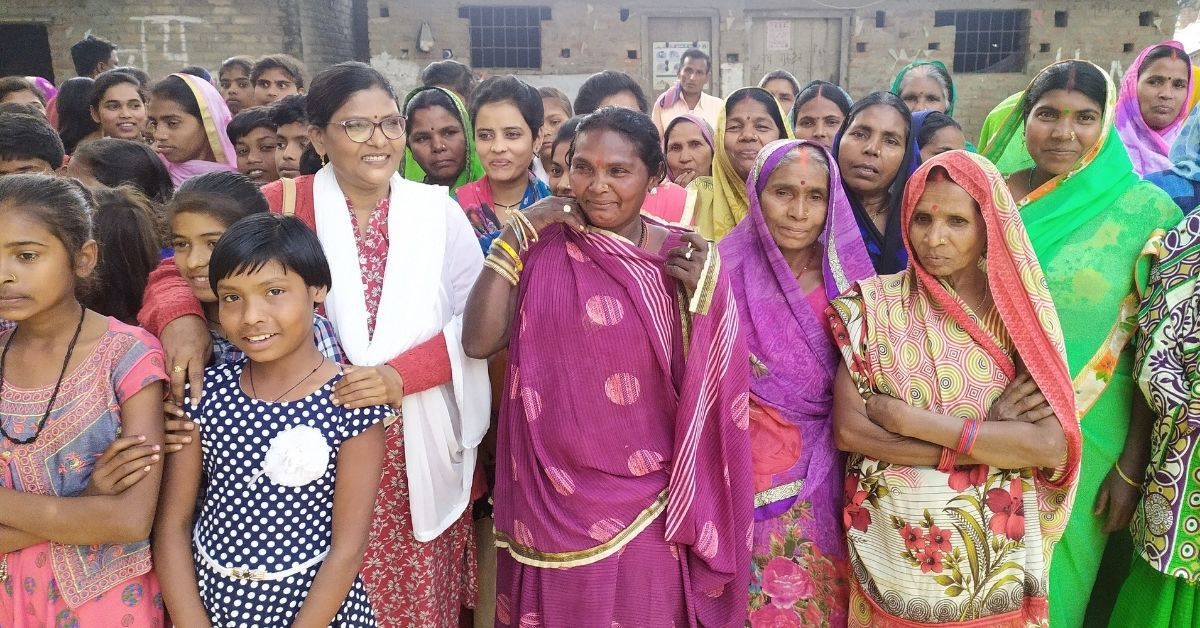
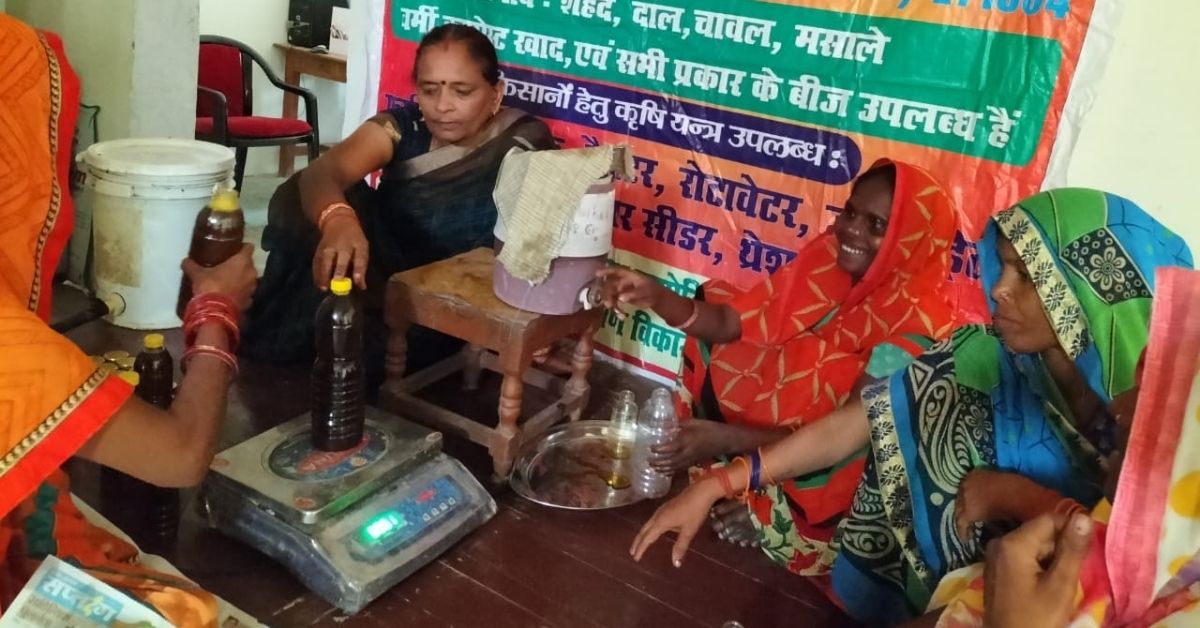
Khabar Lahariya a weekly newspaper in Bundeli (local dialect of Bundelkhand) is being run by a group of women from various sections of the society from the interiors of Chitrakoot and Banda in Uttar Pradesh. Their main objective is to reach out to the nearby villages and provide them with ‘infotainment’.

Despite having a limited exposure to the literacy and information, their ability to interact with various people in public sphere and coming up with innovative ideas is extremely remarkable. Their works have been acknowledged and credited by leading National Dailies including The New Indian Express, The Hindu, Hindustan Times, Tehelka and various other dailies and weekly’s.

In 2008, the Khabar Lahariya group registered themselves as an independent organization, Pahal. With the incredible support from Nirantar, which is an acclaimed centre for gender and education, Pahal has now found its place in rural women’s media collectives of our country.

Khabar Lahariya carries out news that is of primary importance to the masses in and around these areas. Although they do have sections regarding current affairs, national and international news, they strongly highlight the cases of violence against women, issues on Dalits and more. This 8-page newsletter also covers issues on institutions like schools, marriage, health care and more.

Although these journalists do not come from strong literary background, they do ensure the quality does not receive a set back. Significant efforts have been made in order to improve their technical skills, their reporting and writing skills and more. Apart from the above, they also encourage public interactions and gather inputs to cater to the specific needs of the women. Meanwhile, frequent workshops are also being conducted by these women to encourage more writers and volunteers to have an in hand practical experience of running a newspaper.

Depending on the need of the hour, they hold meetings at their editorial office to divide their beats and after enormous research and writing they go all the way to the nearest city Allahabad for printing.

Click on the image below to read an issue of Khabhar Lahariya:
khabar_lahariya1

These phenomenal revolutionaries, who have gone beyond their capacity to go on fields, have received the prestigious Chameli Devi Jain Award for Outstanding Woman Mediaperson. Also, three members of the group have received fellowships from the Dalit Foundation in 2004, for reporting on issues related to rights of the Dalit community.

Overwhelming technological cloud has also been bestowed upon the offices of KL as they now work on computers with broadband connections. The challenge of consistently making an outstanding appearance in the face of media and having an unbiased opinion regarding the political scenario of our country comes very easily to them. They aren’t restricted in writing what their leaders want them to write. They write information regarding subjects that pertain to them. Hats off to the women behind this initiative, they have managed to achieve what many of us with enough resources have been unable to do!

Read more details about Khabar Lahariya, including how the paper is produced, edited and distributed at Nirantar’s website: NIRANTAR

This article written by guest reporter Jheel Parekh.
All images courtesy NIRANTAR.

Divya Chaya Trust

The Divya Chaya Trust (DCT) was established in 1984 mainly to help destitute children and women. Their main aim was to support educational and vocational activities at schools in rural areas and encourage educating the orphans and school drop outs.

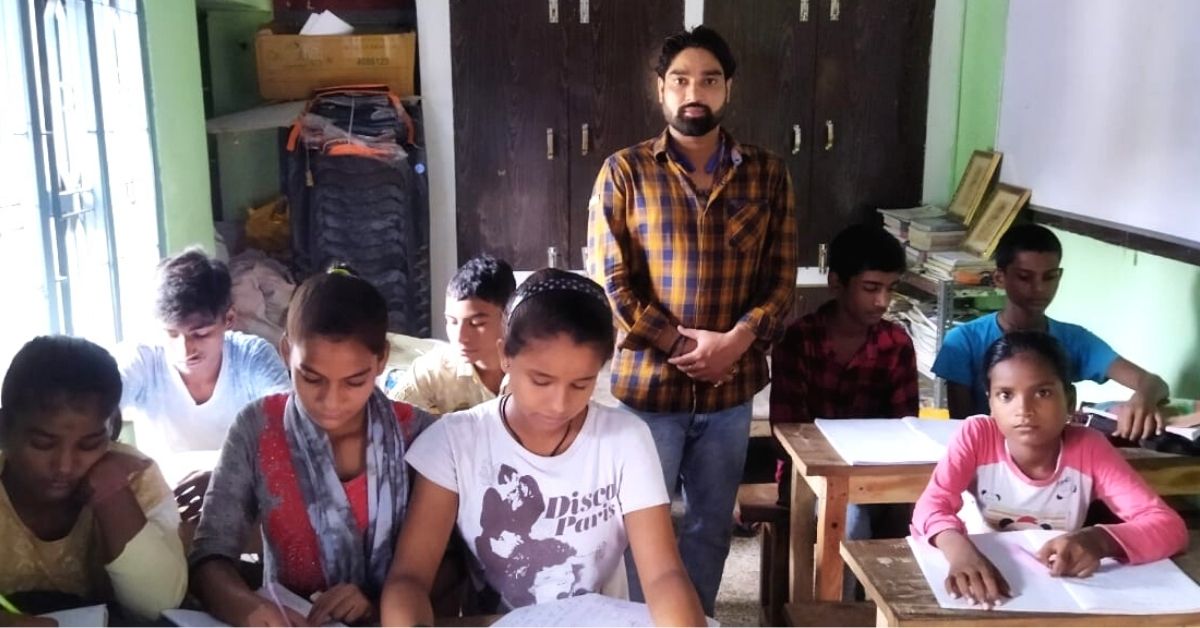
Their work is significantly differently as they impart career counseling and provide students with opportunities for further studies. The trust holds confidence building therapies in order to enable women to support themselves financially.

Divya Chaya Trust is located at various states across the northern part of India including West Bengal, New Delhi, Uttar Pradesh and Haryana and is currently working with various child care homes and ashrams. These include the SD Jain Mahila Ashram and Arya Bal Griha at Delhi, Ramakrishna Vivekananda Mission situated in West Bengal and Delhi.

The trust has around 49 employees who work full time for the establishment and betterment of their reach. Apart from the above, there are approximately 50 volunteers who are working for the same mission.

Their remarkable achievement for the year 2007-2008 is that they have sponsored educational expenses for 500 children. They also had organized seven career counseling sessions for more than 150 children who had graduated and were looking out for jobs.

Their contribution towards the growth of special children with various disabilities is also outstanding. Although the government claims that of the total disabled population only 2% are educated and very few are employed, the DCT is doing their best overcome these figures and make them more presentable for the country. To achieve the same, the trust has various services which are solely for the disabled. They have a range of options to reach the disabled, which include financial aids, or even providing them with simple basic necessities like a hearing aid, a wheel chair or even a Braille kit. A contribution from our end towards supplying these necessities would definitely be of immense support to them.

The most disappointing fact, however, remains that their total income is severely lower than their expenditure. The trust did loose a significant amount which could have been well avoided, had there been enough contribution made towards the trust from citizens.
Despite this, the trust did not loose hope and has recently built a residential home for the elderly at Haryana.

It is truly incredible to know that citizens of our country are going beyond their reach to dissolve the bridge between the privileged and under privileged by ensuring that primary education and fundamental living necessities are being provided to significant section of people.

Read more about Divya Chandra Trust here: http://www.divyachayatrust.org.in/

NGO write up done by guest reporter Jheel Parekh.

On The Eve Of Development

scatec-solarNeetu (13) is a student of class seven. Her village, Rampur located in Jhansi district of Uttar Pradesh, has a primary school (up to standard five), so she has to go to the adjoining village Mathanpura for her schooling. She has two sisters and one brother. All of them go to school.

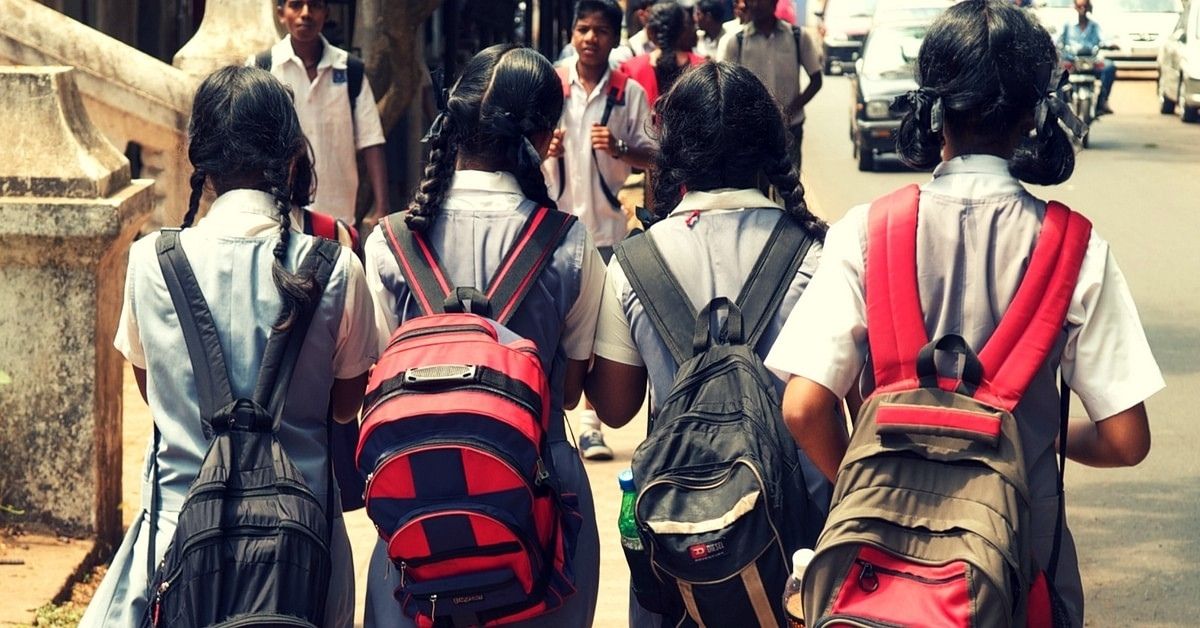
Her cousin Rinkoo studies in class eight. But she does not go to the school and would appear for the exams only (because of the social constraints). Almost all boys in the village go to school but girls study up to class 7 or 8 only, because after 5th they have to go to the school in adjoining village.

Neetu’s mother, Girija devi works at home and helps her husband in the field. Both the Neetu’s parents can not help her in her studies. Neither do they have any tuition facility. Neetu has to do her home work by her own and she does it under the kerosene lamp, as the village has no electricity.

Most of the energy demands in Rampur depend on the fossil fuels. Here kerosene lamps are used for the lighting purpose, diesel pumps are used for irrigation, cow dung for cooking and so on. There is no TV, fan etc in the village (although they can afford it). Children study under the kerosene lamps in unhealthy conditions. Women try to finish their cooking etc before it gets dark in the evening.

Although the village is economically sound – Rampur has a good groundwater table and acres of cultivable land are being transformed into a model farm with multiple cropping (three crops in a year) – it is still backward with harsh living conditions and no electricity.

There is a lack of knowledge about the importance of education, water management, health and hygiene etc.

But then there came a ray of hope.

The village was electrified under the village energy security plan of Development Alternatives in collaboration with the Scatec Solar, a Norway based company to promote Solar Energy. The goal of the project was to provide electricity by tapping renewable energy (solar energy), as well as provide educational and training support to the villagers in the areas of Education, healthcare, raising agricultural productivity, and improving water management.

A Village Energy Committee has been formed with local people’s representatives plus experts actively involved in the development of the area. This committee plans, implements, monitors and controls the project activities. The committee is helping to construct, operate and maintain the center as well as to mobilize the rural masses for various community activities.

Sports equipments have been provided in school for the children by Development Alternatives.
The work on the power plant has been completed on a fast track and it was inaugurated on 26th Jan 2009.

So after this republic day Neetu and all her friends haven’t been studying under the kerosene lamp. They now study under CFL. Girija devi watches TV and has installed a fan to get relief from heat and mosquitoes.

But, still, there is a lot to be done.

There is a need of a program for the children specially girls to improve pre-school, middle school and high school education plus need for vocational training in skills development.

A need to teach villagers water management practices such as the use of holding ponds, provision of potable water, sustainable agricultural practices, and health services.

Rural transformation in India rests in the hands of women. You may have heard that if you give money to the woman of the house, she takes care of the family. If you give the same money to the man of the house (in rural India), the woman and children will see little of it.

The idea is to encourage and promote women empowerment by providing them basic necessities, resources and income generating skills that will go on to improve the quality of their life.

Article submitted by: Suman Raina. Thanks for your contribution!

Picture Courtesy: Scatec Solar

Calendar

September 2010
M T W T F S S
« Aug    
 12345
6789101112
13141516171819
20212223242526
27282930  

Recent Comments

PROMOTION

"Neumonia and Other Sketch Stories" - A collection of sketch stories. Download the e-book for free. Click on the book cover below.
"The observations are acute: the sound of high heels on asphalt, the bit about how all BPO employees lose their hair very fast are spot-on. This book is a better, shorter alternative to any Sunday movie on TV. It's a little jewel" - Hindustan Times