Paper Saves Lives

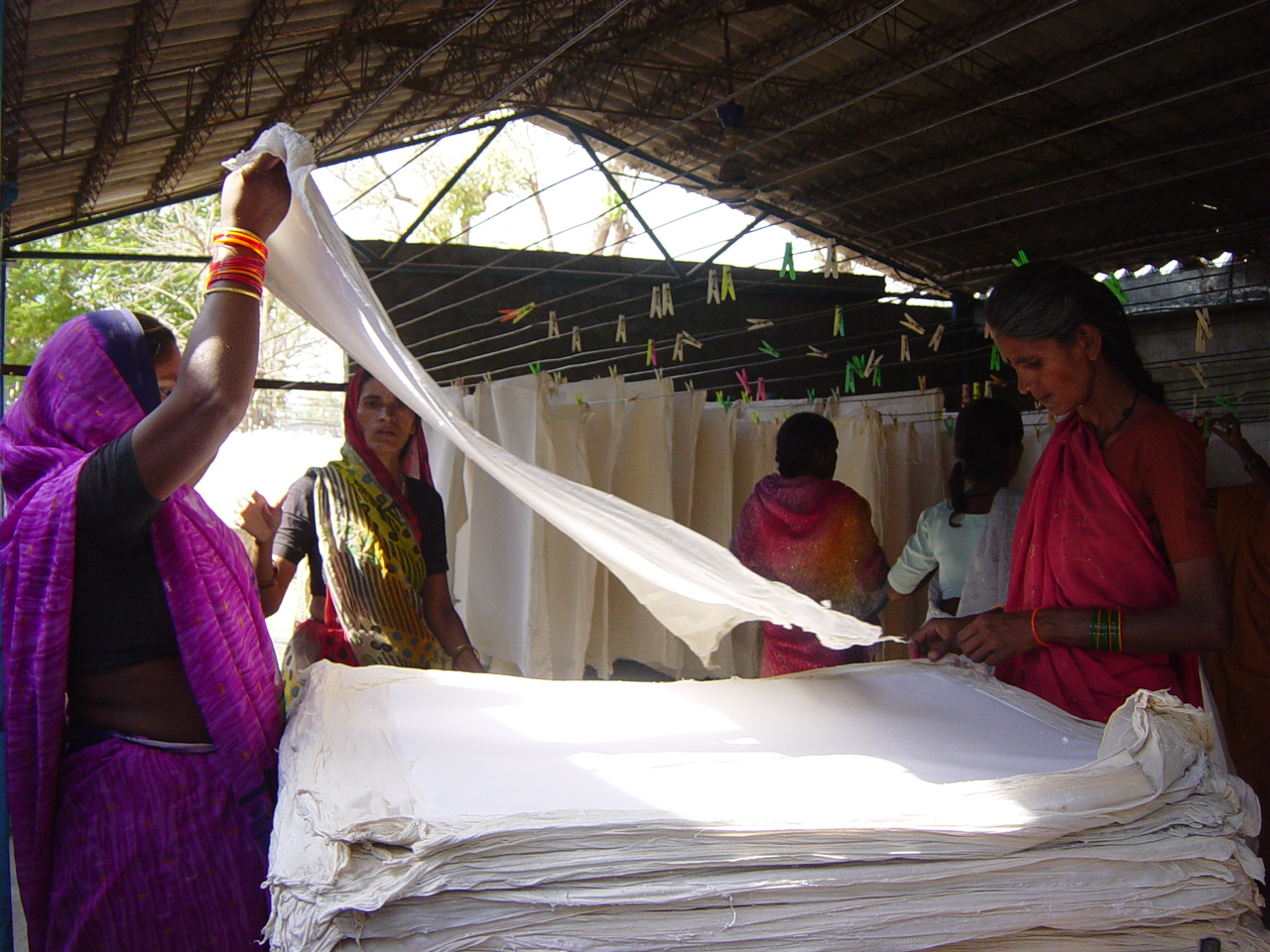
dsc06710Sahariya tribe is a nomadic tribe in Madhya Pradesh that deals with poverty of the magnitude that mothers buy saris and tear them in half so that their daughters have something to wear. These people have little money available for essentials, let alone luxuries like education. The women are typically very badly treated, often turning to prostitution or collecting dry wood to sell to neighbouring towns and villages to make ends meet.

This is when TARA (Technology and Action for Rural Advancement) came to their rescue in 1996 by setting up a handmade paper plant in Orchha, MP. TARA and its parent organization, Development Alternatives (DA) have striven to bring people, environment and technology together – delivering lasting solutions for basic human needs. TARA has done in- house innovations of various green technology and their Paper Recycling unit is one of them.

On observing that the Sahariya women were skilled with their hands, TARA imparted training to 21 women in making paper products like notebooks and file covers, and started the Handmade Paper Unit with 30 women who learnt to convert cotton rags to paper. With 29 surrounding villages as its stakeholders, the paper unit has flourished and now employs more than 60 Sahariya women.

The Handmade Paper Unit has changed the lives of these Sahariya women who can now earn enough to feed and clothe themselves, and have gained sufficient skills to to create innovative products. More so, they have been able to carve out a life of dignity for themselves, and have also established a women’s cooperative – the Sahariya Sangram Samiti, meaning the Struggle of the Sahariya Cooperative. This cooperative not only provides the women with literacy and skills training, but has also become the village node for loans and saving accounts.

Sahariya are truly writing their futures on the paper they make!

About TARA:
TARA Handmade Paper Technology is a unique technology to recycle waste like cotton rags, denim materials, fibres and used paper into high quality handmade paper. Today TARA is a proud producer of an infinite range of high quality handmade paper and paper products. Community groups are able to successfully use the technology to manufacture handmade paper and handcrafted products which are marketed commercially. To know more about them and their technology, contact them at the address below:

29, Ghitorni, Mehrauli, Gurgaon Road, New Delhi – 110030
Tele-fax – +91–11– 26801521, 26804482, 26805826
Website: http://www.tara.in

The Man With The 100 Million Jobs Idea

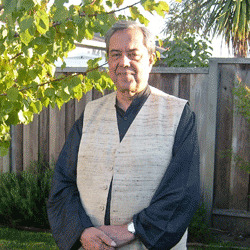
Perhaps not many Indians know him, but he is widely credited to have been the inspiration for Nobel laureate Al Gore’s interest in climate change. Now, renowned environmental scientist Dr. Ashok Khosla has plans for creating 100 million jobs by 2018 in rural India. As founder and chairman of Development Alternatives, a New Delhi-based non-profit involved in the creation of micro-factories that would make basic facilities available to the village-dwellers, and enable them to generate employment. The initiative has already created 3 million jobs over the past 15 years.

Sunita Sohrabji writes in indiawest.com about the ideas and ideals of the man who is the brain behind the successful $120 million venture:

“Poor people are seeing more products, but have little access to them. The poor do not have purchasing power,” said Khosla, the 2002 winner of the United Nations’ Sasakawa Environmental Prize, and the Schwab Foundation’s outstanding social entrepreneur award in 2004. Khosla, an alumnus of Cambridge and Harvard, was recently made an Officer of the British Empire.

Development Alternatives uses a market based approach to further its cause, rather than relying on charity. Wondering how it works?

In a typical model, the village will form a cooperative to purchase the equipment needed for the project, and determine wages for the workers, typically slightly above the area’s minimum wage. Development Alternatives’ social enterprise arm, Technology and Action for Rural Advancement, markets the products created by the villagers.

The organization’s compressed earth block technology is being used throughout the country to ease the shortage in housing for rural dwellers. More than half a million homes have been built using the technology, in which villagers mix raw earth with a stabilizer to create a brick, with a mechanized or manual soil press.

The organization believes in innovating to create new opportunities for the poor, and lays particular emphasis on social as well as environmental sustainability.

TARA and Development Alternatives have also created a new-generation weaving machine that allows its user to be more productive and create higher-quality handlooms.

The organization has also created a paper-making machine, which recycles wastepaper and cotton rags into high-end paper goods, or standard paper for use in classrooms.

This is not all. Besides helping the villagers in improving their agricultural output, Development Alternatives has now started a new project – franchised village cyber kiosk. Called Tara-kendras, these centres can impart vocational training, career counseling, agricultural and medical advice, a market place for buying and selling as well as accessing government services.

“This is one of the most revolutionary things we’ve developed,” said Khosla. “It brings the village into the global economy and the global economy into the village.”

“It’s extreme value at very low cost and one of the major solutions to solving the problem of poverty in India,” he asserted. Three hundred Tara-kendras are currently in operation throughout the country, and the enterprise will become profitable when 1,000 kiosks are established.

The efforts of Development Alternatives and Dr. Khosla are laudable. He has several awards and achievements to his name, not the least of which is that as a Harvard teaching fellow, he was responsible for designing and teaching the very first class on the environment! Yes, the same that Gore took during his first year there!! In spite of all his success, Dr. Khosla’s heart lies with India’s rural poor, and his endeavors speak highly of his commitment.

Development Alternatives and TARA have taken some innovative steps in promoting rural employment. Read more on these in the article here.

Image courtesy: indiawest.com

Act Now For The Better India.

Calendar

August 2010
M T W T F S S
« Jul    
 1
2345678
9101112131415
16171819202122
23242526272829
3031  

PROMOTION

"Neumonia and Other Sketch Stories" - A collection of sketch stories. Download the e-book for free. Click on the book cover below.
"The observations are acute: the sound of high heels on asphalt, the bit about how all BPO employees lose their hair very fast are spot-on. This book is a better, shorter alternative to any Sunday movie on TV. It's a little jewel" - Hindustan Times