Radio Bundelkhand – Giving Voice to the Voiceless

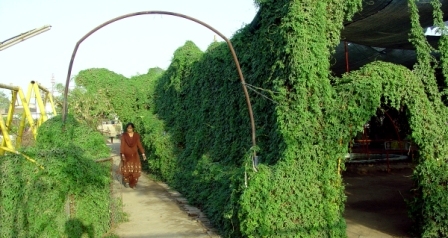
Azadpura is a village in Bundelkhand region. This area faces acute water scarcity and one problem that the women faced was a faulty well which required urgent repairing. The women aired this problem on Radio Bundelkhand and within four days the concerned authority replaced the missing wheel of the well. This is the power of Radio Bundelkhand, an initiative of Development Alternatives.

Community Radio for facilitating dialogue and interactive communication

The purpose of setting up Radio Bundelkhand, as identified with the help of our communities in the radius of the radio station, is to work along with them to use this communication medium to create awareness, give information, participate in local self governance and provide entertainment – all based on requests and feedback from the community. The audience includes the communities in the radius of the broadcast range – with special attention to women, youth and the marginalised groups.

 
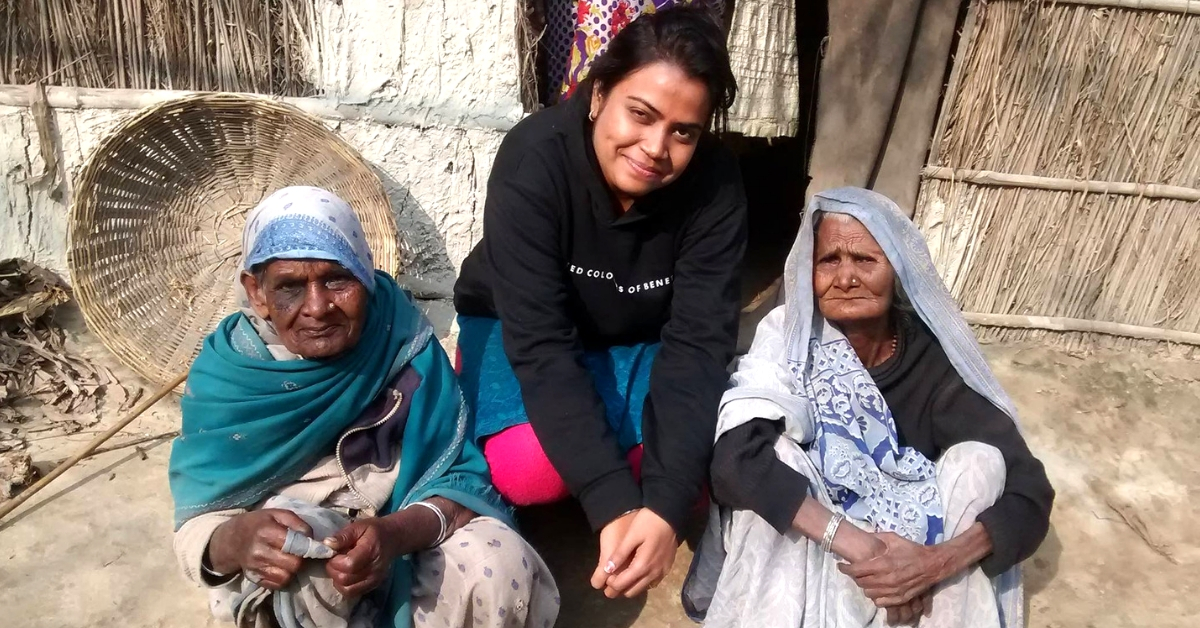
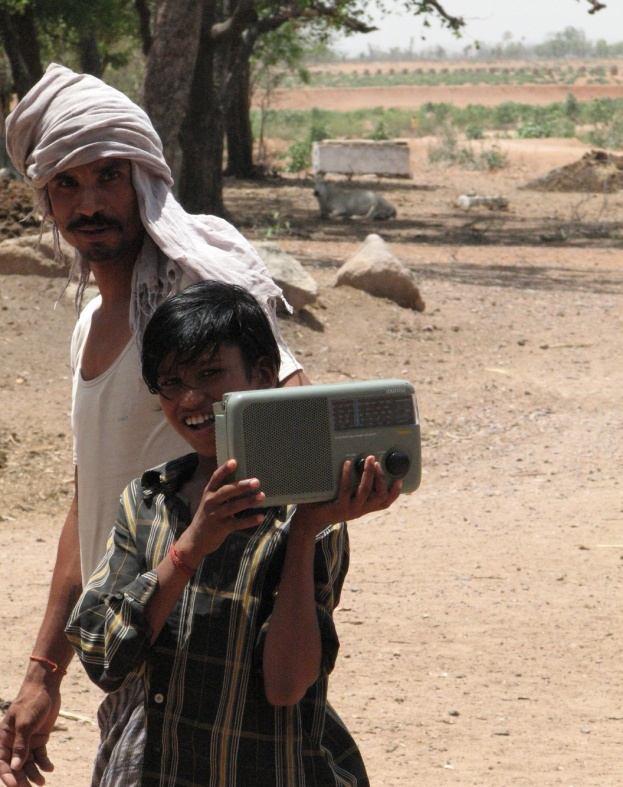
Listening to Radio Bundelkhand

Listening to Radio Bundelkhand

Community Members on the Radio

Community Members on the Radio


The community and DA, jointly manage the station. There are five community reporters and six community coordinators. The villages these reporters represent are Azadpura, Ramnagar, Sitapur, Basova, Bagan, Bhagwantpur, Ghatao, Jamuniya, Gujerra Kalan, Mathrapur and Ghatao. There is also a Management Committee comprising the Sarpanch (elected village-head) of Basova Village, doctors, farmers and Self Help Group members.


Until now, Radio Bundelkhand has the longest duration of programming of four hours a day, seven days a week, in Bundelkhandi and Hindi amongst the government licensed community radio stations in India. The Government of India has given licenses to several NGOs throughout India to start community radios in their project areas. DA is one of the first to set up such a radio with the communities it has been serving for more than two decades in the Bundelkhand region.

The communities have decided that they would like information related to employment and livelihood opportunities, development of women, girl’s education, legal rights, farmers’ issues, training, their culture and history, how to ensure the availability of basic infrastructure such as water, energy and roads, development issues, and any other information sought by the communities. The broadcast timings in the morning and evening have been selected by the communities, with the women preferring the morning and the men the evening.

Programming Content on Radio Bundelkhand
Vandana –Devotional songs broadcast every morning.
Khet Khaliyan – It includes the Jhansi Mandi (unorganized market) prices for farmers so that community gets all the information related to agricultural products. Bundelkhand Radio also
broadcasts discussions about agriculture issues like how to protect seeds, crops & vegetables
from insects. Experts answer question asked by the farmers.
Bal Bandhu – Especially for school-going children. Moral stories, poems and jokes by school
children are included. Story telling through the Radio Jockeys is also a part of this programme.
Bundelo harbolo ke- This is about the Freedom Fighters of Bundelkhand. Stories of the freedom fighters & songs related to freedom fighters are also broadcast.
Aas Paas – In this programme Bundelkhand Radio broadcasts information on Right to
Information (RTI) and any other problem.
Mere Bundeli Mere Geet – is a listener’s programme in which they get the opportunity to listen to their choice of songs.
Amma ke Chauki Se – In this programme community women give their ideas on home receipes and step by step instructions for preparing the dish.
Nuskhe Nani Dadi Ke – In this programme older woman give tips on using home remedies or
Desi nuskhe for common ailments and diseases. Also, give tips of using simple home remedies and alternative herbal medicine, available from the average kitchen shelf.
Radio Drama – On every Sunday Bundelkhand Radio broadcasts a radio drama. In this
programme reporters discuss an issue and convey the messages related to social issues like
dowry, female foeticide, importance of education etc.
Sathin – Sathin is a special programme for women. Women from the community tell their story. They discuss the struggle in their lives and success story too. These women also share their
feelings what they want or wish for themselves.
Chhotou Kam Badou Munafou – This programme is for those people who want to do small business. Small entrepreneurs give tips to take up small business.

The programming, based on issues and content identified by the communities, is broadcast in the formats which they have preferred, that include the use of traditional Bundelkhandi songs, folk music and nataks, discussions, reports, commodity prices, phone-ins, experts speak, coverage of events in villages, jokes and satire, listeners’ letters and feedback. The Wireless Operating License was issued on July 31st, 2008 and the first transmission took place on August 15 2008 with the broadcast of the national anthem. Meanwhile the selected community reporters were trained over three months and a woman from Sitapur village inaugurated the station on the eve of Diwali. Community radio broadcasting/narrowcasting has allowed the rural poor to develop their communication in a language they understand. Community radio fosters debate on issues, facilitates access to government, decision-making and helps community members to organise themselves and evolve to manage their own affairs. Radio Budelkhand is characterised by its signature tune and jingles which declare that it is “Apna Radio Apni Baatein” – Our radio Our conversations.

Reaching our communities

The reach of the community radio is in a wide range of approximately 5-10 kms and 25 villages with a population of 15000 in the coverage area that are benefiting through the infotainment-based programmes. So far, Radio Bundelkhand radio has penetrated to the rural communities settled in and around TARAgram Orchha like the villages of Gundrai, Chandravan, Bagan, Orchcha, Sitapur, Azadpura, Lachmanpura.

The targeted beneficiaries are the marginalised and poorest with special emphasis on women and the unemployed youth who are the most vulnerable but also the potential change-makers. By selecting women community reporters, marginalised community reporters in an average age group of 20 we hope to reach them better.
The Management Committee also has a woman self-help group head. DA aims to ensure the participation of local people for the programming, broadcast and management of the station by the community itself.

The above article was written by Indira Mansingh, Chief Advisor, Development Alternatives.

Thank you Purnima Gupta for sending this across!
Previous article of Development Alternatives – Click here.

Granthayan – Mobile Book Stores for Rural India

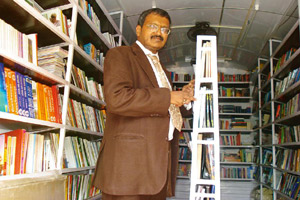
Urban India has it easy in terms of access to literature and good books. We have our malls and online book shops. However, it is not so easy for people in rural India to get access to vernacular literature. Majority of the rural population get access only to newspapers and textbooks. One man, Pankaj Kurulkar, aims to change this scene with his wonderful initiative – Granthayan.

Aruna Viswanatha reports about Granthayan in this article at The Mint:

An electrical engineer by training, 45-year-old Kurulkar ran a networking and hardware solutions company for 15 years, before he put Rs3 crore of his own into Granthayan, a chain of mobile bookstores that travels the length and breadth of Maharashtra selling mostly Marathi books. Kurulkar says he plans to later replicate his business model in other states, focusing on books in their regional languages. 

As one can easily imagine, the roadblocks and problems that such an initiative would face are significant:

Only 59% of India’s rural population can read, according to the 2001 census, and reading material itself is limited outside the cities. Local languages have also had to face the growing popularity of English. “The situation is pathetic. People are migrating from vernacular language to English medium, and not at all passionate about reading Marathi,” says Kurulkar, who writes novels and short stories as well.
“Rural areas don’t see anything other than newspapers and textbooks. So good, affordable reading material, which is simple, is the need for the day,” says Rukmini Banerji, a programme director at non-government organization Pratham, which prepares an annual report on the status of education measuring student literacy. “Nothing is easily available like you can go to the paan (betel) shop and get gutka.” Pratham’s publishing arm, Pratham Books, which prints cheap children’s books, also has plans to enter the rural retail market next month, according to managing trustee Ashok Kamath. 

Kurulkar, however, is confident that this initiative of his will make an impact on the current scenario. His progress so far has been very impressive:

To date, Kurulkar says, his trucks have visited 28 out of the 35 districts in Maharashtra, and covered 80% of the state. The trucks follow pre-set routes—up and down the Mumbai-Goa highway for instance—and stay in a neighbourhood from a few days up to a week, depending on the amount of local business. Each truck has a staff of three, with a driver, an accountant and a helper on board.
According to Kurulkar, Granthayan has sold around 100,000 titles in the first three months of operation, and stocks both Marathi and English titles, though, he says, 75% of the company’s stock and sales are in Marathi. 

To know more about what are the bestsellers in the rural areas and what are the other problems faced by Granthayan, please do read the entire article here.

Image courtesy: Mint

Transforming lives in the Shimla Hills

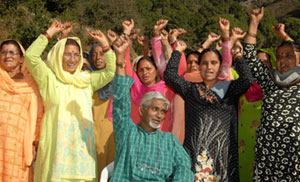
The hills of Shimla are rich and fertile. All major agricultural products are grown here, including  wheat, rice, pulses, potatoes, ginger, turmeric and many other fruits and vegetables. However, in the early 1970s, the problem was that the menfolk of this area would squander away all their income on liquor. Women were deserted and led miserable lives. Enter Subhash Mendhapurkar who transformed the lives of the women in the Shimla Hills.

Kallol Bhattacherjee of The Week writes this extensive report on Subhash Mendhapurkar and how he brought about a revolution in the hills of Shimla:

Mendhapurkar knew it was not going to be easy in Shimla. He started off in a room in a youth hostel near Jagjit Nagar village. The chain-smoking young man punching the keys on a rickety Remington intrigued the local people. He started introducing the women to feminist thoughts. “Sometimes he would stay up for weeks as people came continuously to consult him,” said Vimla Devi. 

Under his guidance, the women learnt of a rule that every liquor vendor needs to seek permission from the Gram Panchayat to open a store.
This then led to more active involvement from the women:

The hills were changing. In 1983, Mendhapurkar ended his association with SWRC and started Sutra (Social Uplift Through Rural Action) with rural women as members.
“We told liquor vendors to seek permission of the panchayat members before vending liquor in the neighbourhood,” said Leela Devi, one of the pioneers of Sutra. The panchayat was still under the thumb of the menfolk, and female panchayat members’ role was limited to making tea and pakodas for the male members. Mendhapurkar asked the women to decide if they required a liquor vendor in their neighbourhood. “If not, you should form majority in the panchayat meetings and convey your opposition through mahila mandalis,” he told them. The women just did that and nixed every attempt to open new liquor shops. “We mobilised all the women suffering from alcoholic husbands and ensured that they formed majority in every panchayat meeting,” said Vimla Devi, who emerged as a prominent anti-liquor crusader. 

Subhash just didn’t stop there. He also looked actively in to the issues faced by the women who were deeply reliant on the mountain lands for their living:

The forest department had been planting thousands of pine trees on the hill slopes to prevent soil erosion. But it was of no help to small women entrepreneurs. “What is good for the forest department is often not useful for women. They want small fruit trees that hold soil, and grass which is good for their cows,” said Mendhapurkar. How to use mountains for social benefit without triggering landslides in the rains was a challenge that pushed him to understand them better. Now he visits the International Centre for Integrated Mountain Development, Kathmandu, to deliver an annual lecture in December. According to Mendhapurkar, since women control the rural economy in the Shimla Hills, and since they benefit from forestry, the Shimla-Kassauli region of the Shivalik ranges should be utilised for female health and their economy. 

Subhash then went ahead and introduced the concept of water harvesting to help women manage water resources better. The association started by him, Sutra, became immensely popular. After focusing on these livelihood issues, Subhash then turned to healthcare and micro-credit to make them more independent:

“Denied care and affection, and always illiterate, these women did not know how to improve their condition,” he said, narrating a campaign he began in the mid-1980s for single women. It is known as Ekal Naari Shakti Sangathan or simply ‘ekal’ in the hills. 

Hearing of the campaign in the hills, women from all over Himachal Pradesh sent requests for similar help. In Hamirpur and Una districts, a large number of single women were HIV+ thanks to their husbands who were migrant workers. In April this year, around 3,000 single women from rural Himachal marched to Shimla, and Chief Minister Prem Kumar Dhumal promised them that the rural single women would get free treatment for all ailments in government hospitals. “We want respect for single women of Himachal villages. We should not be treated differently,” said Nirmal Chandel, leader of Ekal. By 2009, Ekal will launch its pan-Indian avatar.

The impact of all that Subhash has done is there for everyone to see. The article says:

The impact of Mendhapurkar’s work is best felt in the way the sex ratio in Solan district has stabilised at 940 females to 1,000 males, which was much lower earlier. 

Truly, what Subhash has managed to achieve is a lot and beyond what can be put in words in a single article. And of course, the hills have changed. The Better India salutes the spirit of Subhash Mendhapurkar and all his associates who helped bring about this change.

Read the complete article which covers the initial days of Subhash and how he managed to bring about these transformations.

Image courtesy: Arvind Jain of The Week.

Act Now For The Better India.

A new application of SMS – Providing prenatal care and advice to women in villages

Gurgaon-based mobile gaming company ZMQ Software Systems has come up with a new offering that will enable women in villages to register their date of pregnancy, and avail of weekly tips on topics like what to eat, what vaccines to get and when to get the next check up. Founders Hilmi and Subhi Quraishi, inspired by many of their formative years spent in socialistic environment of Soviet Union, have been redirecting 12% of ZMQ’s profits into social development programmes, and this is a project they are certain will succeed as it is mobile-based and independent of economic criteria.


Aruna Viswanatha reports in Mint:


ZMQ’s new programme also complements other initiatives around the country to pay women to have their children delivered by professionals, rather than by the untrained midwives more popular in rural areas. “There could be a programmed SMS before the day of the next check-up,” says Chauhan, “and reminders for the first tetanus, the first ultrasound, this would be a real great benefit if it is done.”


Also find what other companies like Enable-M and the venture capital firm Acumen Fund are doing in this space. Biju Mohandas, India business manager for Acumen Fund says he is considering many business plans that intend to use SMS technology in rural health care. Read the complete article here.

Calendar

March 2010
M T W T F S S
« Feb    
1234567
891011121314
15161718192021
22232425262728
293031  

PROMOTION

"Neumonia and Other Sketch Stories" - A collection of sketch stories. Download the e-book for free. Click on the book cover below.
"The observations are acute: the sound of high heels on asphalt, the bit about how all BPO employees lose their hair very fast are spot-on. This book is a better, shorter alternative to any Sunday movie on TV. It's a little jewel" - Hindustan Times