SourcePilani – Bringing the BPO to Rural India

Introducing SourcePilani, a company that is bringing the concept of BPO to rural India, starting off from the small town of Pilani in Rajasthan.

SourcePilani provides high quality and low cost BPO services by leveraging the hitherto untapped talent that rural India has to offer to the growing Indian economy. In addition to providing employment to the local people, SourcePilani is also providing the rural youth an exposure to the paths of progress being witnessed in the bigger Indian cities.

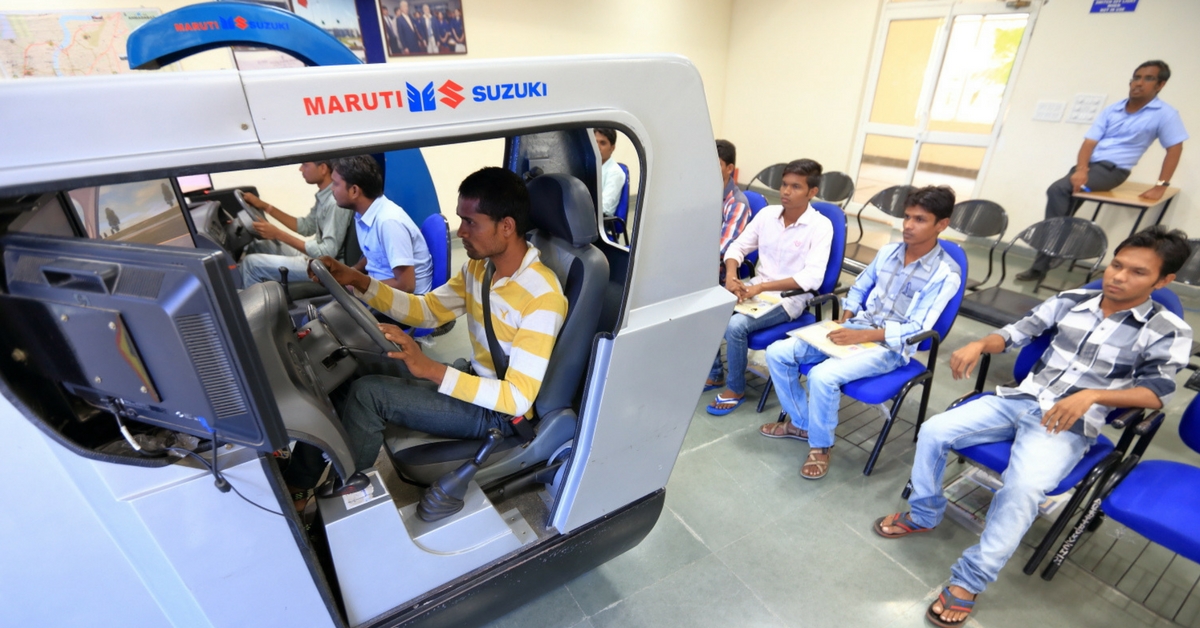
The basic model followed by SourcePilani includes identifying youth from various schools/colleges who are interested in taking up a BPO career. Since most applicants are from Hindi medium of instruction, they are put through an English training course for a period of 3 months. Post this, the recruits are put on the job under the supervision of team leaders who groom the new comers and make them able to handle the tough requirements of a BPO career. As an outcome of all of this, the youth of Pilani have been able to increase their income levels and over a period of time the economic spectrum of the town will also be enhanced. This is a wonderful way of executing inclusive growth and progress. Here is a sample of a couple of recruits who have joined SourcePilani and how their lives has been transformed:

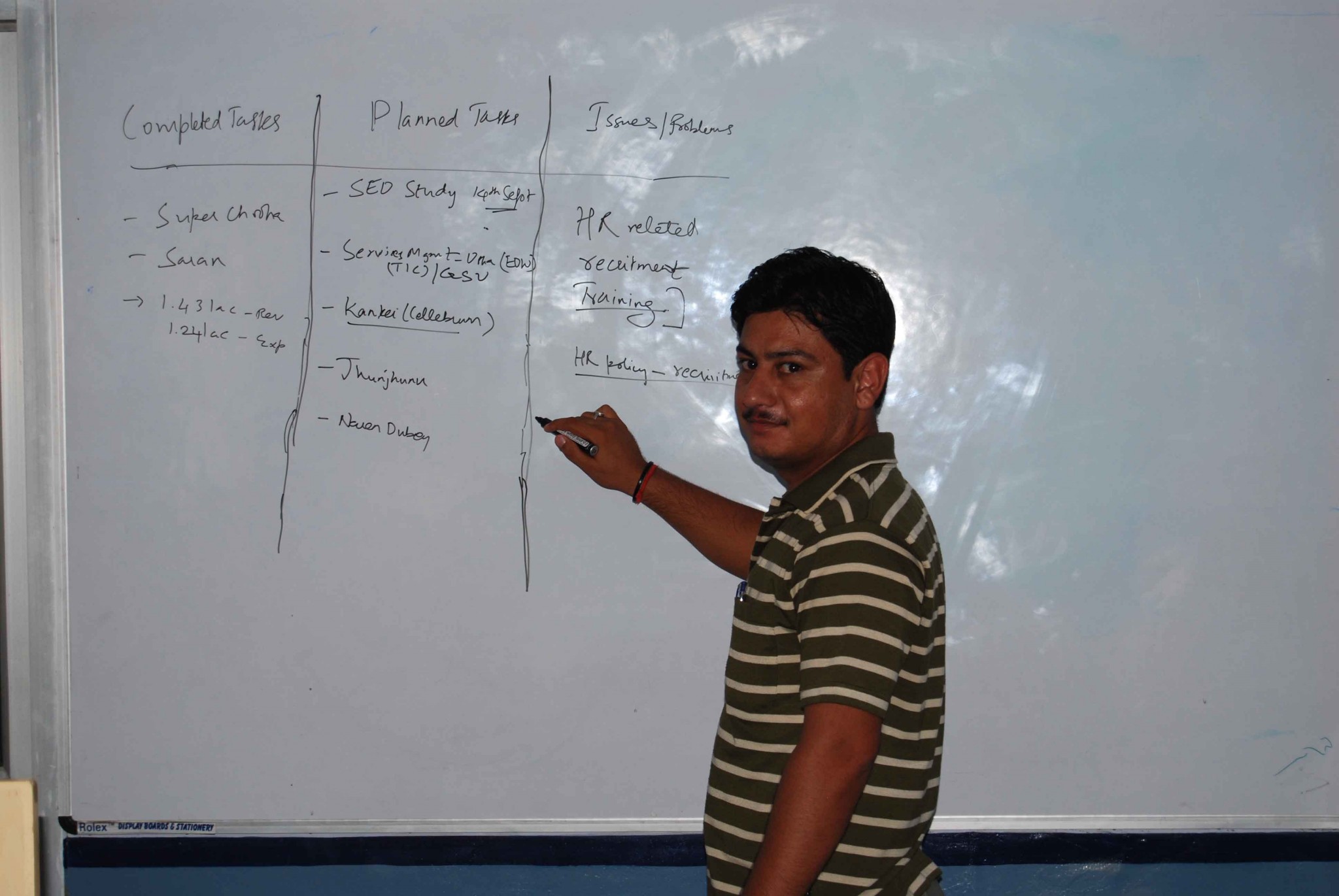
Raju employee of SourcePilani Rural BPO

Rajendar Singh (Raju). Qualification: 10+2 (Hindi Medium) Raju like many of the youth in this part of the country was aspiring to get into the Indian army, unfortunately after several trials he couldn’t get through. His father is a Technician in the workshop in BITS Pilani and he was the only source of Income for a family of 4. Before joining SourcePilani, Raju lived the life of an unemployed for more than 3 years and SourcePilani gave him a chance to build his career in the BPO space. One year back he used to struggle to talk in English and his keyboard skills and computer skills were minimal. After undergoing a 3 month training Raju was put into on-the-job training where he honed his skills and improved upon his language capability. He started off with a petty salary which was <100 rupees a day a year ago and today with his hard work and sincerity he has been promoted to the level of Team Leader, for SourcePilani’s Internet Marketing Team. He manages complex jobs like Search Engine Optimization and Social Media Marketing and he heads a team of 5 members. Currently he draws a Salary of 5000 rupees which is a significant financial support for his family.

Pooja employee of SourcePilani Rural BPO

Pooja. Qualification: BSc. (Hindi Medium)
Pooja has been working with SourcePilani for over a year now. There are very few girls in the organization today and this is mostly because of the cultural aspects in Rajasthan. Pooja and her parents made the right decision to send her to work, by neglecting all the peer pressure from the society. Like Raju, even Pooja started off with a petty salary and today she earns a salary of over 5000 and she is able to fund the education of her two younger sisters.

Check out the following table to get an idea of the impact that SourcePilani is having on the economic progress of the town’s inhabitants:

Number of Employees

Average Salary(Per month)

Amount induced into local market

30(current scenario)

4000

14,40,000

50(By End of this year)

4000

24,00,000

150( in 2010)

4250

76,50,000

To get a visual idea of what SourcePilani is doing and their impact on the society, please check out the video embed below:

If you are unable to see the embed above, please click here to view the video.

You can know more about SourcePilani and contact them at their website: www.sourcepilani.com

The Man With The 100 Million Jobs Idea

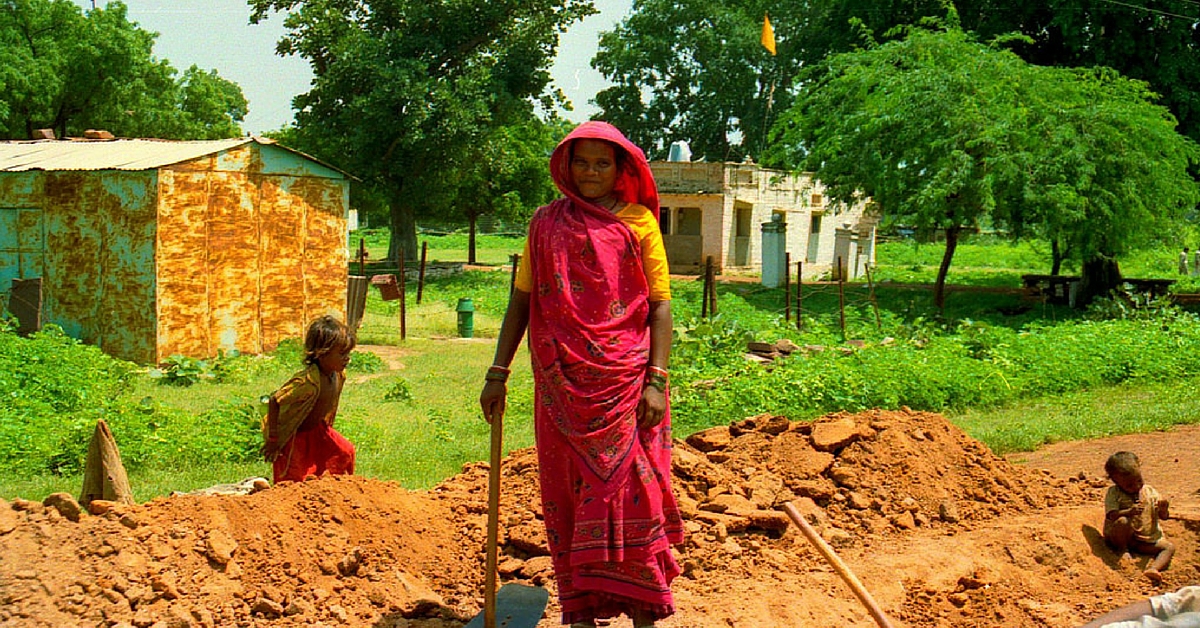
Perhaps not many Indians know him, but he is widely credited to have been the inspiration for Nobel laureate Al Gore’s interest in climate change. Now, renowned environmental scientist Dr. Ashok Khosla has plans for creating 100 million jobs by 2018 in rural India. As founder and chairman of Development Alternatives, a New Delhi-based non-profit involved in the creation of micro-factories that would make basic facilities available to the village-dwellers, and enable them to generate employment. The initiative has already created 3 million jobs over the past 15 years.

Sunita Sohrabji writes in indiawest.com about the ideas and ideals of the man who is the brain behind the successful $120 million venture:

“Poor people are seeing more products, but have little access to them. The poor do not have purchasing power,” said Khosla, the 2002 winner of the United Nations’ Sasakawa Environmental Prize, and the Schwab Foundation’s outstanding social entrepreneur award in 2004. Khosla, an alumnus of Cambridge and Harvard, was recently made an Officer of the British Empire.

Development Alternatives uses a market based approach to further its cause, rather than relying on charity. Wondering how it works?

In a typical model, the village will form a cooperative to purchase the equipment needed for the project, and determine wages for the workers, typically slightly above the area’s minimum wage. Development Alternatives’ social enterprise arm, Technology and Action for Rural Advancement, markets the products created by the villagers.

The organization’s compressed earth block technology is being used throughout the country to ease the shortage in housing for rural dwellers. More than half a million homes have been built using the technology, in which villagers mix raw earth with a stabilizer to create a brick, with a mechanized or manual soil press.

The organization believes in innovating to create new opportunities for the poor, and lays particular emphasis on social as well as environmental sustainability.

TARA and Development Alternatives have also created a new-generation weaving machine that allows its user to be more productive and create higher-quality handlooms.

The organization has also created a paper-making machine, which recycles wastepaper and cotton rags into high-end paper goods, or standard paper for use in classrooms.

This is not all. Besides helping the villagers in improving their agricultural output, Development Alternatives has now started a new project – franchised village cyber kiosk. Called Tara-kendras, these centres can impart vocational training, career counseling, agricultural and medical advice, a market place for buying and selling as well as accessing government services.

“This is one of the most revolutionary things we’ve developed,” said Khosla. “It brings the village into the global economy and the global economy into the village.”

“It’s extreme value at very low cost and one of the major solutions to solving the problem of poverty in India,” he asserted. Three hundred Tara-kendras are currently in operation throughout the country, and the enterprise will become profitable when 1,000 kiosks are established.

The efforts of Development Alternatives and Dr. Khosla are laudable. He has several awards and achievements to his name, not the least of which is that as a Harvard teaching fellow, he was responsible for designing and teaching the very first class on the environment! Yes, the same that Gore took during his first year there!! In spite of all his success, Dr. Khosla’s heart lies with India’s rural poor, and his endeavors speak highly of his commitment.

Development Alternatives and TARA have taken some innovative steps in promoting rural employment. Read more on these in the article here.

Image courtesy: indiawest.com

Act Now For The Better India.

Calendar

March 2010
M T W T F S S
« Feb    
1234567
891011121314
15161718192021
22232425262728
293031  

PROMOTION

"Neumonia and Other Sketch Stories" - A collection of sketch stories. Download the e-book for free. Click on the book cover below.
"The observations are acute: the sound of high heels on asphalt, the bit about how all BPO employees lose their hair very fast are spot-on. This book is a better, shorter alternative to any Sunday movie on TV. It's a little jewel" - Hindustan Times