With His Heart In The Right Place

Prof. AV Ramani

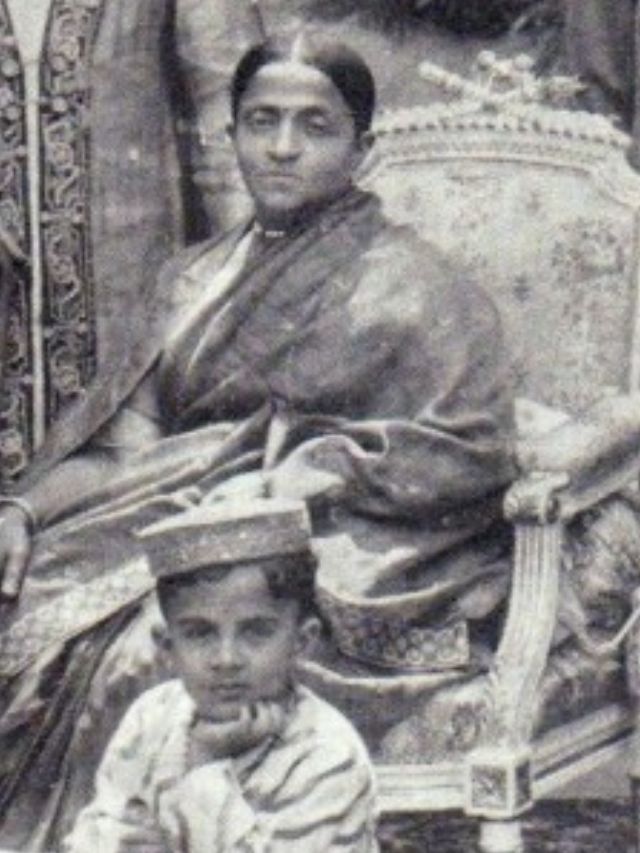
A Chemical Engineer and lecturer at IIT Madras is an unusual candidate to have worked on a heart valve that has drastically reduced the cost of such a medical procedure, in turn bringing relief to millions of poor cardiac patients in Asia. However, Professor AV Ramani has done just this.

A former professor of metallurgy at IIT and later an employee of National Aeronautical Laboratories (NAL), he quit his government job and put his vast materials knowledge to the development of one device that will change the lives of millions of children in India who are affected by rheumatic fever and suffer permanent
The Heart Valve Prosthesis

The Heart Valve Prosthesis

damage to their heart valves. The device – an indigenous heart valve, which costs a fraction of the imported ones in use at the time, has been created after years of research and hard work.


 

Developed at the Chitra Thirunal Institute (CTI) under the patronage of Dr.Valiathan and Prof. S. Ramaseshan, the heart valve adheres to all international standards and has a titanium-based metal cage that is long-lasting and wear-resistant. The engineering demands of such a valve were very high. Deepa Mohan tells us more about the requirements of such a machine in this article for Citizen Matters, a Bangalore based news magazine:

“It is worth remembering,” points out Prof. Ramani, “that the life of the heart valve IS the life of the patient”. The human heart beats about 80,000 times a day. For even a ten year life-span, the valve would have to function for at least 400 million cycles, which means a very high-precision engineering requirement, and, because the heart valve, typically, would be surgically implanted in younger people, it needs to be something that would last for a ‘normal’ lifetime.

Important decisions like allowing contributing partners to retain their intellectual property rights under a concept of joint ownership, and designing the valve specifically for Asian anatomy, where the valve dimensions are different from those of the western population, were other factors contributing to the success and prominence of the venture. Once developed, the challenge of marketing and large-scale manufacture of the product was undertaken by the TTK group, which set up a unit for this in Bangalore.

The indigenous heart valve is, in the words of Deepa Mohan:

..a living proof of how academicians, government officials and business people can work together with great synergy to bring out a product that is both profitable and beneficial.

Read the complete interesting article here.
Image Courtesy: Deepa Mohan in Citizen Matters

Link Courtesy: Uday Arya. Thanks a ton!

Laptop for 500 Rupees

Update: The ToI today carries an article stating that this entire piece of news does not seem to be validated. Most likely the device is just capable of simple computing operations and not as full-fledged as a laptop. End of update

Laptops and the internet are more or less ubiquitous for most urban high school students. However, the cost barrier is still high and hence only a limited section of the student population can afford it. This is poised to change in the near future with the advent of a new Rs. 500 laptop (currently in prototype phase)
This Rs. 500 laptop prototype will be on display on February 3rd at Tirupati. This prototype is a joint effort by the students of Vellore Institute of Technology, scientists in Indian Institute of Science, Bangalore, IIT-Madras and involvement of Public Sector Units like Semiconductor Complex.

Akshaya Mukul writes in this article at the Times of India:

The $10 laptop project, first reported in TOI three years ago, has come as an answer to the $100 laptop of MIT’s Nicholas Negroponte that he was trying to hardsell to India. 

“At this stage, the price is working out to be $20 but with mass production it is bound to come down,” R P Agarwal, secretary, higher education said.

Another very interesting launches on this day will be those of an e-classroom, a virtual laboratory and an improved version of the existing ‘Sakshat’ portal.
The following is an interesting turn of events:

Sources also said that the ministry has entered into an agreement with four publishers — Macmillan, Tata McGraw Hill, Prentice-Hall and Vikas Publishing — to upload their textbooks on ‘Sakshat’. Five per cent of these books can be accessed free. 

Of course, all these initiatives also require that the current infrastructure be improved significantly. The article mentions that:

In this context, government would give Rs 2.5 lakh per institution for 10 Kbps connection and subsidise 25% of costs for private and state government colleges. 

The mission would seek to extend computer infrastructure and connectivity to over 18,000 colleges in the country, including each department of nearly 400 universities and institutions of national importance.

It is wonderful to see that the government and other institutions are coming together to herald in a new age of education and making use of technology to drive positive change.

Read the complete article here.
Image courtesy: incasoftware.co.uk

Eliminating Pesky Pesticide Residues

Pesticides may have helped in controlling crop damage and increasing yield, but their usage has become so widespread in India as to pose significant health risks to its population. After extensive application, pesticides like DDT and Aldrin have been banned to check further damage to health and environment. However, most of these chemicals have a considerably long lifetime, and are present in the environment for hundreds of years.

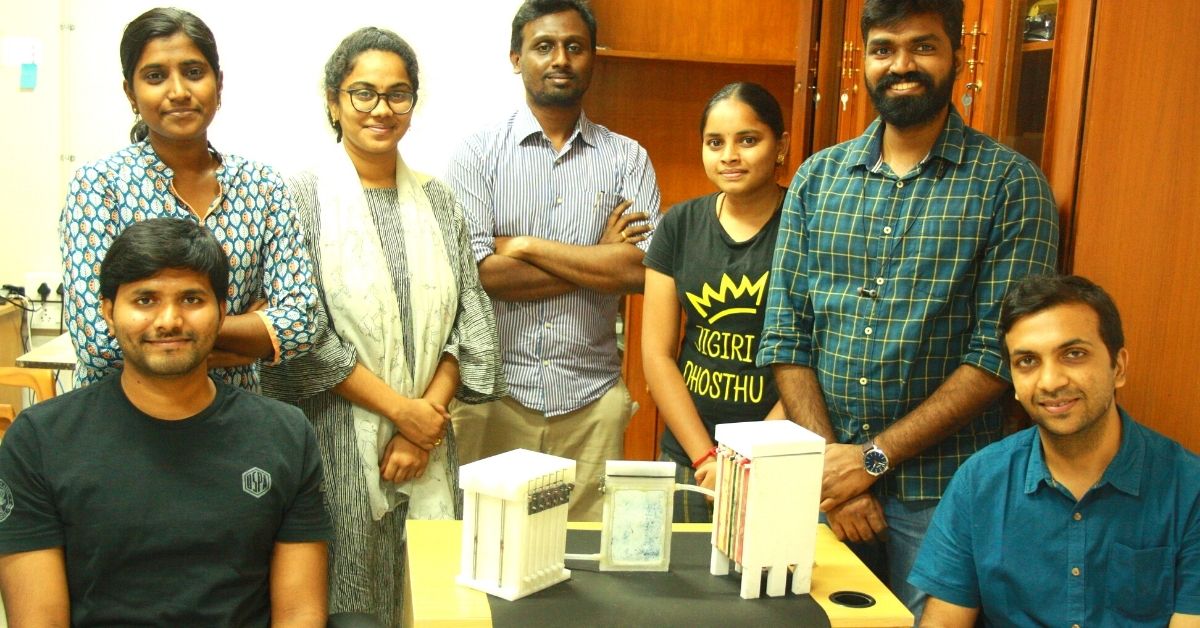
A team of researchers in IIT-Madras has developed a technology called nanoparticles that can effectively treat and eliminate one of the most obstinate chemicals in pesticides called organochlorine, present in the unpopular pesticides like DDT, endoulfan, dioxin and aldrin. Seema Singh reports about this successful experiment in Mint:

“Even though some of these pesticides have been banned, they are very much present in the environment. For instance, endosulfan has an environmental lifetime of 100 years,” says T. Pradeep, professor of chemistry at IIT Madras. His nanoparticles, mostly from gold, silver, copper and several oxides, are effective on endosulfan even at very low concentration. “Efficient chemistry at low concentration is important so that even if one molecule of the pesticide passes by, it gets removed by the nanoparticle,” adds Pradeep.

The next challenge for the research team is to formulate ways to make the technology percolate to the people who need it most, in rural areas. The costs need to be brought down to a large extent to make it accessible to the country’s poor.

Eureka is interested in taking this technology to rural population but the high cost of manufacturing could hinder the outreach for some time. “We intend to take this up as a no-loss, no-profit venture but that will have to wait until production goes up (and cost comes down),” says Abhay Kumar, general manager of water technologies division at Eureka in Bangalore. A community water purifier prototype, using nanotechnology filter, is under construction. It is scheduled to be installed in Kasargod district, one of the endosulfan-affected areas in Kerala, by March.

“This effort has to multiply, through all possible channels – industry, non-governmental organization and most importantly, government machinery,” says Pradeep, whose interaction with the Central water resources ministry turned out to be a one-way affair. Under the US Clean Water Act of 1972, the extent of contaminants in a glass of water is decreasing, but the number of contaminants entering potable water is increasing, says Pradeep.

It is sad to know that India ranks among the lowest in drinking water quality standards set by the UN (120 out of the 122 nations judged). However, these rankings should be taken as an eye-opener that imminent action is necessary. And we are glad to hear this piece of good news from one of the premier educational institutes of the country. We wish them luck in successfully taking their findings to the masses so that many can benefit from the advances in technology.

Read the complate article here.
Image Courtesy: RSC.org

Calendar

September 2010
M T W T F S S
« Aug    
 12345
6789101112
13141516171819
20212223242526
27282930  

Recent Comments

PROMOTION

"Neumonia and Other Sketch Stories" - A collection of sketch stories. Download the e-book for free. Click on the book cover below.
"The observations are acute: the sound of high heels on asphalt, the bit about how all BPO employees lose their hair very fast are spot-on. This book is a better, shorter alternative to any Sunday movie on TV. It's a little jewel" - Hindustan Times