FreMo: India’s First Bicycle Sharing Program

Every one of us living in these bustling metropolises has always dreamt of a city devoid of traffic snarls, incessant honking and pollution. FreMo, India’s first bicycle sharing programme is a step in that direction.

FreMo derived from ‘Freedom To Move’ gives the commuter freedom to move from one place to another, without depending on the public transport or using their own car/ bike. Various FreMo depots have been established in Thane . All one has to do is register with them, take a cycle from one of these depots and deposit it in the depot nearest to his/her destination.

They have various membership plans, depending on the usage. Every FreMo member is entitled to a personal accident assurance of Rs. 5 lakh.

Here’s an interview with V. Ramesh , Founder CEO & Director of FreMo.

Q: What triggered you to start Freedom to Move?

After visiting Barcelona in early 2008, when I came to India, there was a huge petrol price hike.  And I saw many people trying to cut down their expenditure on petrol as much as possible.  This prompted me to think that making the use of bicycles convenient would make people accept the idea of cycling for daily activities.  Once a person signs up with us, he need not depend on autos or buses and has the freedom to move.  Thus, FreMo (short form for Freedom to Move) was born.

Q :Tell us about the  hurdles you came across while setting up the venture?

The hurdles started with people being surprised that I am moving out of a comfortable job as a CEO in a NBFC (Non-banking finance company) to become a “cyclewalla” and telling me not to do it.

Then came the struggle to get people to accept this as a workable idea.  Getting funds was the worst experience of my life.  All so called ‘venture’ capitalists never wanted to venture in to this social concept.  They were only interested in two things (a) How much will I make out of this investment (b) what is the exit route for me.  This gave me a confirmation that all those guys are only “investors” and not ‘venture capitalists’.  Even the requirement of a small amount of Rs. 2 crores did not find donors. Then I started looking to banks to support this project.  All of them, except one were unresponsive. Finally, Bank of Baroda supported this project.

Then there was a struggle to try and meet up with the government authorities like TMC whose support is vital for the success of this programme.  I drew a blank in their response.

Finally, the struggle was to get staff.  Many of them did not feel that this was a business they wanted to be associated with.  Most of them wanted to work in a call centre or IT or other such businesses which are well known.

FreMo has been designed to work in conjunction with other modes of transport, to get around the problem of transporting bikes on buses and autos etc.

Various depots are established at strategic locations across the city. Register yourself with FreMo and take a membership. With your membership card just pick up a cycle from any depot convenient to you. Just cycle to your station / bus stop / shopping / or any short trip. Return the cycle to any depot of your choice; the one you hired from or at a depot close to your destination.

Q: What is the general feedback of the customers?

Both customers and potential customers have excellent words to say about this project.  All of them feel that we need this project in the current context since the environmental situation is getting from bad to worse.  Besides, the traffic issues are so many that people traveling short distances are fed up with them.  They are also victims of high unpredictability on their travel time.  If one day they get an auto or a bus in 5 minutes, the next day they may end up waiting for 25 minutes.  Their plans often go awry.

The best aspect of this service is the predictability for a person to reach a station.  Every day, one reaches the station in 15 minutes.  Besides saving time and money.

Q: What is the kind of social impact your organization has succeeded in bringing about?

Social impact from this project is multi-pronged.

  1. We will reduce the traffic congestion when more and more people start taking the bicycle route to travel.  Reduction in traffic means immediate reduction in pollution, both air and noise.
  2. Health of the people will improve as they will be exercising daily as a part of their travel and also they will start breathing cleaner air.  Besides, since the unpredictability is removed, the stress level of people also reduces.
  3. Due to reduction in travel expenses (which is at least 30-40 rupees daily, i.e. about 1000 rupees every month), the purchasing power of the people will increase, thereby improving their living standard.
  4. It will release some  parking space in the city because, there will be less and less people using cars for the local 3-4 kms travel.
  5. People will save time (perhaps at least one hour daily) and be able to do more things.
  6. Finally it will also change the way we live.

Q : What are the future plans for FreMo ?Are you thinking of expanding to other states?

Yes.  Fremo intends to move to all other cities and make this a phenomenon across various cities.  Next we would look at launching it in Pune, Bangalore, Chennai and New Delhi.

*****

We hope the idea is a runaway success and we all get to reap its immense benefits at the earliest.
For further details, please visit their website: http://www.fremo.in/

The Common Man

A 16-year old who teaches 600 students in his backyard. A single man who led to an entire city being declared smoke-free, a year before the nation enforced it as a law. The saviour of the endangered whale shark who has rescued as many as 50 so far. A former Tisco employee who gave up her secure job to help poor tribal families in a remote Maoist-infested village build a new life. And a Physics professor who learnt all there is about rain water harvesting and then made it mandatory for all official buildings in Tamil Nadu. These are just some of the everyday heroes that are doing their bit to change lives, whether they are recognized for it or not.

Babar Ali is a class XI student in Berhampore, West Bengal. Moved by the plight of poor parents who could not afford to send their children to school, this youngster has been conducting classes after his school hours since he was 11. His students come from nearby villages, some even walking four km to reach his house. In order to induce better attendance, Ali also managed to get government officials to distribute free rice at the end of the month.

Besides lessons, the children are drawn by the free rice distributed at the end of each month. “Attendance was falling drastically. That is when I hit upon this idea. As my school is not recognised by the government, I couldn’t have got free rice. But government officials helped me,” says Ali.

Ali has big dreams for the future. “I dream that my school will grow and expand to other parts of the state and country where children want to but can’t go to school.” But for now, he will be content if his students get a proper classroom.

——

Hemant Goswami had been committed to act against tobacco since a school project he did in 1987. In 2004 he filed a writ petition with the Chandigarh High Court, following which the government was instructed to follow the tobacco Act in letter and spirit.

In 2005 when the Right to Information Act (RTI) came into force, Hemant decided to use it to make Chandigarh the first smoke-free city. He filed over 300 RTI petitions with all government departments and offices, raising questions about their adherence to tobacco control laws. In a year, more than 1,800 signboards warning people of the health implications of smoking were up in all government offices. Educational institutes too fell in line.

Hemant’s efforts finally resulted in Chandigarh being declared smoke-free in July 2007. But he didn’t rest even after that. He continues to monitor the proper enforcement of the law, and smokes out the violators.

——

Dinesh Goswami is a daily wage earner in Junagadh district of Saurashtra in Gujarat. But every time he hears of the whale shark being indiscriminately hunted by fishermen on the rough and choppy sea off the coast of Saurashtra, he rushes to their rescue.

Describing his most dangerous rescue so far, Goswami recounts, “State officials called me after reports that a shark was trapped in a net. After we set off, the sea got very rough and every minute, we thought the boat would overturn. Thankfully, we managed to save the whale shark and return safely.” Goswami now runs Paryawaran Mitra, an NGO for the protection of sea animals.

Having learnt about the whale sharks and their plight in a documentary by environmentalist Mike Pandey, Goswami decided to make it his mission to save them every time they are in danger.

——

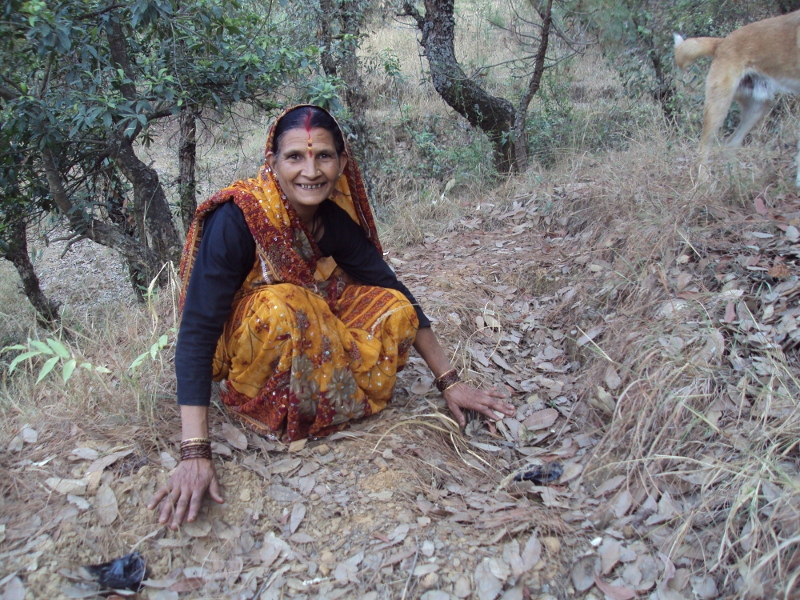
In Purulia, along the Bengal-Jharkhand border, Jayati Chakraborty has started a school to help a tribe called santhals build a better future. Inspired by an NGO run by Kamalesh Chakraborty for developmental work in the area, she decided to stay on and make a difference.

She quit her job, faced down appalled friends and family. “They found it hard to believe that I would be better off working with poor people in a godforsaken village.” And she tried new things — linseed and tomato farming — finally deciding the area needed a school. “We converted a hall into a classroom and started with 66 students in 2001. It seemed the school was waiting to happen,” she says. Students pay Rs 30 a month. But paid pupil or not, no one is turned away.

—–

Chennai-based professor Sekhar Raghavan’s passion for saving and harvesting water found an outlet when he worked with the Centre for Policy Studies, which examines traditional ways of living.

He says he found “we had the complete records of Chengelpet district for 200 years and realized rain-water harvesting is not new, it’s just something we had forgotten”.

His Akash Ganga Trust eventually led to rainwater harvesting becoming compulsory for all buildings in Tamil Nadu in 2002.

—–

Thus we see that it is possible for a single person to change the lives of many, even while performing normal duties like going to school or earning a daily wage. All our barriers are just imaginary.

Read the complete article in Times of India here.
Image Courtesy: jyothsnay.wordpress.com

Calendar

September 2010
M T W T F S S
« Aug    
 12345
6789101112
13141516171819
20212223242526
27282930  

Recent Comments

PROMOTION

"Neumonia and Other Sketch Stories" - A collection of sketch stories. Download the e-book for free. Click on the book cover below.
"The observations are acute: the sound of high heels on asphalt, the bit about how all BPO employees lose their hair very fast are spot-on. This book is a better, shorter alternative to any Sunday movie on TV. It's a little jewel" - Hindustan Times