Interview: Ruma of Noida Deaf Society

Meet Anil kumar who has a hearing disability. He used to work in a papad factory earning Rs.1500 a month for a daily workload of 10 hours. Then he came to know about Noida Deaf Society and enrolled for their English course in the year 2007. Eventually he got placed in Leela Kempinski Hotels, Gurgaon much to his joy and satisfaction. “I have learnt to commit to my job from NDS, and the value of having a good job and a regular salary,” says Anil.

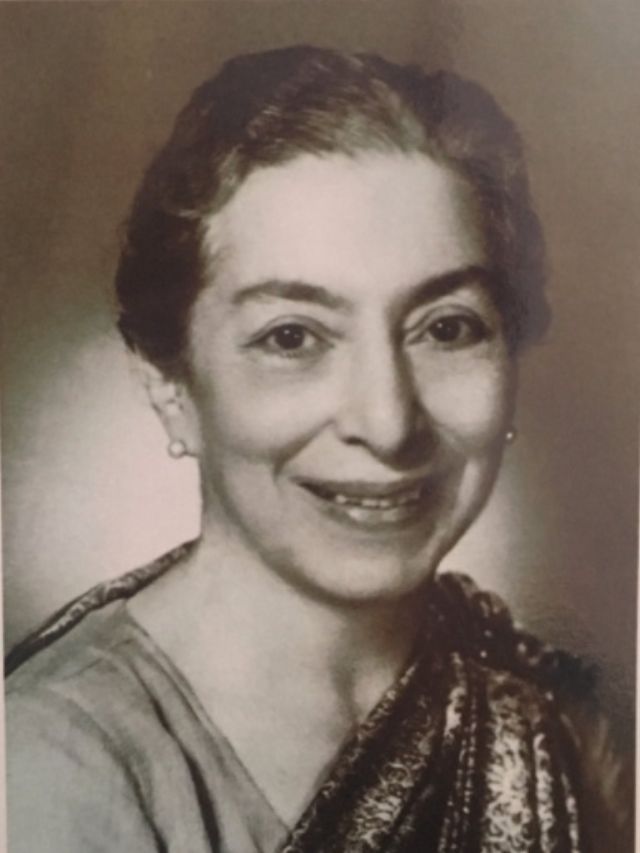
Noida Deaf Society was started in the year 2005 single-handedly by Ruma Roka and now this organization is impacting over 300 students through its various courses. Here is an interview of Ruma on NDS, her inspiration and the impact she is creating:

How did Noida Deaf Society start? What was the inspiration behind it?

Ruma: I always wanted to do something for the less privileged in our society. In 2004 I learnt the Indian Sign Language. This got me in touch with the deaf community and I started researching about the deaf, their issues and the needs. The more time I spent with the deaf, the more I realized the need to do something. There was no looking back from that point. I realized that there were complex issues facing the deaf in the country including lack of education facilities, lack of resources especially designed keeping the needs of the deaf in mind, no avenues for holistic development and so on. Most importantly there is no access to quality training leading to sustainable livelihood.

I found that in India deaf education was in a bad condition. Deaf students are often forced to speak and use of sign language is discouraged. I also found that since schools are not really preparing the deaf for a responsible and independent life, the deaf end up in menial jobs and get deeply frustrated.

To address some of these issues and to bring about a positive change in this marginalized community, I started an organization called Noida Deaf Society (NDS) in 2005. I started from a small two bed room flat belonging to my husband. I just had five students and I was the only trainer. Through word of mouth the organization started growing. We started teaching English using sign language – since we believe that if the deaf picked up English, they could communicate in the workplace with the written word and hence be employable in multiple professions. Thereafter we started training in basics of IT and subsequently expanded trainings to include Life Skills, Grooming, Desktop publishing and graphics and work ethics. When I started, I was the only trainer but today we are a strong team of 15 which includes 12 deaf trainers and support staff.

What are the projects NDS adopts? How does it go about executing them?
Ruma: Our goal is to enable the complete integration of the deaf into the mainstream through education and specialized vocational programs leading to gainful employment. At Noida Deaf Society we understand the constraints of the Deaf and focus on their abilities to bring out the best in them. We have used the visual medium of IT to enable learning. Training programs are conducted by Deaf trainers as we feel that they best understand the needs of the Deaf and also act as role models for the community. Training is conducted in Indian Sign Language using visual aids and multimedia based material. Our trainings have been developed based on market research and are job oriented in nature.

Training in Life Skills and Work Ethics is a key focus area towards preparing the youth for employment. Regular exposure to the industry is provided through guest lectures by professionals, industry visits and workshops. We are also actively engaging with the industry to build sensitivity and raise awareness about the Deaf through workshops, mentoring programs, collaborative industrial training, employee volunteering and sign language orientation. We have so far been able to employ over 170 youth in leading organizations in profiles such as Graphic Designing, Backend IT and Data Entry, Retail, Hospitality, Teaching, Export Houses, Production Units and so on.

Could you share with us some of the success stories of NDS?
Rumi:
Anil Kumar, whom you have already noted about, is one such story. The other is that of Rattan Kumar. Rattan joined the MS Office course at Noida Deaf Society in January 2009. Opportunity knocked when he was close to finishing his course in the form of a contract data entry job at Mobile Creches. They wanted a part time data entry operator. Rattan worked hard and managed well to switch between his roles of a student and of a data entry operator. After his contract got over he was placed in ITC Maurya in Delhi in August 2009. His performance there has been so good that ITC has asked for more candidates from NDS. He has truly been a role model for the deaf and has made us very proud. Despite of coming from a weak family background (separated parents) he has given the best of himself to society.

We have many such success stories put up on our website too.

What are your future plans with NDS?
Ruma:
Our student strength is increasing day by day and it is becoming difficult for us to operate from the current facilities. We would like to build a state of the art vocational training insitute for the Deaf, the only one of its kind in the country where we can offer training in multiple trades and enable the deaf to access employment. A permanent facility will also help us to reach out to the many Deaf in the country and enable them to lead meaningful lives. Introduction of new training programs like computer networking and hardware is also on the cards. Another thing that I would like to see happen in the near future is a digitized teaching & learning material for improving English literacy.

Do you have any volunteer or employment requirements that might interest our readers?
Ruma:
Yes we do have a vibrant volunteer program where people from all walks of life especially professionals are contibuting towards skill development of our students. We also have employee volunteering programs with many corporates including NIIT and Mphasis.

However, we first encourage people to learn Sign language as then they will be able to contribute in a more meaningful manner. We essentially need help in employment linkages, fundraising, specialized training in computer networking and hardware.

Here is a photograph of Ruma with the entire NDS family:

To know more about NDS and to go through their work, please visit their website: http://noidadeafsociety.net/

Mitra Jyothi – Changing the lives of visually impaired

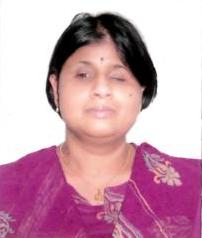
madhu singhalIn our busy lives where our abilities are taken for granted, we forget that living along with us are challenged people who have special needs. Who could better understand the needs of the visually challenged than someone who has suffered it herself? Madhu Singhal is visually impaired by birth. Born into an upper middle class family in Haryana, Madhu had the affluence to lead a comfortable life. But she chose not to be laid back and wanted to do something on her own.

After completing her MA in Hindustani Classical Vocal Music, Madhu came down to Bangalore to undergo specialized training in communication and counseling. To her surprise and much difficulty, she found that there was very little support for her learning needs. In the North, audio recordings of text books were made available for students like her, but here in Bangalore Madhu couldn’t find any such help. Fighting this difficulty she completed her studies and got out only to find that it was extremely difficult for her to get a job. This is when Madhu decided that no one else should suffer what she suffered. And Mitra Jyothi was conceived.

Mitra Jyothi is aimed at empowering the visually impaired by supporting their educational needs, finding suitable jobscassettes and making them independent enough to take charge of their lives. The organization’s most popular initiative is its Talking Book Library. Text books and books for general reading are given a voice by volunteers, and cassettes and CDs are recorded for circulation. Over 22,000 cassettes of more than 2000 books have been recorded till date. Mitra Jyothi set up its own recording studio to provide this service professionally. Notably, Mitra Jyothi’s effort in this front was the first of its kind in Karnataka and over 5000 people have benefited from the library.

The organization is also extensively involved in Braille transcription and providing computer education to the visually impaired. Mitra Jyothi runs a full-fledged job placement cell for its members, a service that has helped its members find suitable jobs in corporates and manufacturing units. Another admirable service is that the organization runs special courses for women to impart independent living skills.

Mitra Jyothi has been serving the needs of the visually challenged for over two decades now. It has extended its services to Kerala, Andhra and Tamil Nadu. Madhu Singhal has nurtured the organization with her selfless commitment that grew beyond her impairments.  Madhu lives independent, travels abroad on her own, spearheads an organization and chairs important positions in various social service organizations – a true role model. What she has achieved can be made possible for more visually challenged people. Help spread the cause.

Visit http://www.mitrajyothi.org/

Job Fair for the Differently Abled

It is true that the differently-abled get a raw deal in the economy of the country. However, this is changing as steps are being taken to include them in the India growth story. EnAble India, a Bangalore-based NGO working for the uplift of physically challenged people, together with Confederation of Indian Industry (CII), organized a job fair with a difference.

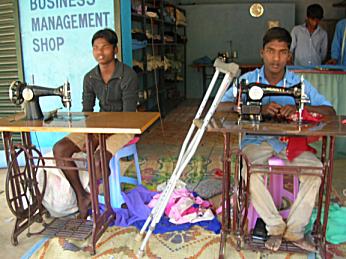
Companies like Integra Garments, ITC Hotels, ITC Agarbatis, Coffee Day and IBC Hotels and Resorts participated in the fair, and employed 70 people with low vision or hearing disability or mild mental retardation and other physical disabilities. They are not highly qualified people, and have been given vocational training by EnAble to allow them to be usefully employed and earn a living.

We can see what a difference it has made in their lives form the following article in Thaindian:

“I am happy that I got a job. I am no more dependent on my parents,” said an excited Bina Prasad, 22, who is hearing impaired and was chosen by Bangalore-based Integra Garments as a tailor.

Echoing Bina’s emotion, 23-year-old Sourav Shukla, who has locomotive disorder and was offered a job by ITC Agarbati, said the job would help him lead life with dignity. Sourav is a trained incense maker.

According to the World Bank report, there is a great difference between the opportunities and economic conditions of the disabled people in India from their healthy counterparts:

People with disabilities are among the most excluded in Indian society, according to “People with Disabilities in India: From Commitments to Outcomes”, a report prepared by World Bank in collaboration with the central Ministry of Social Justice and Empowerment in 2007.

The report states that disabled adults have far lower employment rates than the general population and this fell from 43 percent in 1991 to 38 percent in 2002, even in the midst of high economic growth.

This is a commendable step forward for inclusive growth, and we hope the beginning of many similar initiatives in the future in order to bridge the gap.

Read the complete article here.

Image Courtesy: www.newhopeaustralia.org

Calendar

September 2010
M T W T F S S
« Aug    
 12345
6789101112
13141516171819
20212223242526
27282930  

Recent Comments

PROMOTION

"Neumonia and Other Sketch Stories" - A collection of sketch stories. Download the e-book for free. Click on the book cover below.
"The observations are acute: the sound of high heels on asphalt, the bit about how all BPO employees lose their hair very fast are spot-on. This book is a better, shorter alternative to any Sunday movie on TV. It's a little jewel" - Hindustan Times