The Tree Planter

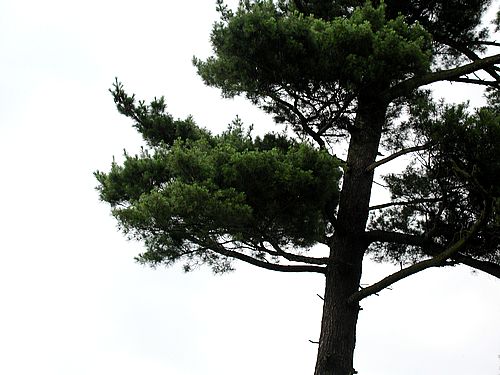
pine-2Global Warming. Unemployment. How do you come up with a solution that addresses both these issues? S M Raju, a civil servant in Bihar has done just that. Raju has started a campaign to encourage unemployed village folk to start planting trees. This campaign has been linked with the government’s NREGA (National Rural Employment Guarantee Act) and thus the village people earn money by planting these trees.

Amarnath Tewary writes in this article at the BBC:

An Indian civil servant, SM Raju, has come up with a novel way of providing employment to millions of poor in the eastern state of Bihar.

The article quotes that about 44% of Bihar’s population is under the poverty line. And Bihar has not been able to successfully spend the NREGA funds allocated to them mostly due to lack of awareness. Here comes Raju’s idea of bringing in tree plantation as part of NREGA.

Raju’s program has brought in significant benefits, as he says:

“So the idea struck to my mind, why not involve families below the poverty line in social forestry and give them employment under this scheme for 100 days?

“Under the scheme, each family can earn a minimum of 10,200 rupees ($210).”

Read the complete article here, which lists how Raju conceptualized and executed this successful idea. A special thanks to reporter Amarnath Tewary for writing about this.

Link to original article: http://news.bbc.co.uk/2/hi/south_asia/8257563.stm
Link submitted by: Deepak and Prakash

Meeting The World Challenge

World Challenge is a global competition aimed at selecting the best projects or small businesses from around the world that have shown innovation and enterprise at grass roots level and provide them a financial aid. It is organized by BBC World News and Newsweek. This year, there were two finalists from India who we feel deserve a mention for their efforts in helping different sections of the society.

One of the finalists was Keystone Foundation, which helps the Adivasi honey-collectors in southern India to get better value for their products. These tribals excel in the art of wild honey collection from bee colonies in the most dangerous sections of cliffs. However due to exploitation by commercial planters, they do not get the right price for their efforts, threatening their ancient way of life and livelihood.

Keystone Foundation has helped them with the processing and packaging of the honey, so as to fetch a better market value. It has also taught the Adivasi hunters to make candles and balms from beeswax, which was earlier thrown away. A range of products are sold in Keystone’s shops, the proceeds helping Adivasis of around 50 villages. Below is described the humane and sustainable way in which these hunters extract honey from the honeycombs on cliffs:

For generations the Adivasi people of Southern India have specialised in collecting honey from wild bee colonies on cliffs. The hunters are lowered by ropes towards the colonies, where they waft smoke to calm the bees before breaking off a chunk of comb. Even in times of hunger, the hunters are always careful to leave enough of the nest for the bee colonies to recover. “They have been able to come up with systems that respect the bees and the environment,” explains Keystone’s Matthew John. “There are certain areas where they do not touch the combs at all, because they feel they are holy cliffs. But for us they are gene pools that they are preserving.”

The other Indian finalist is an organization called She Hope Society, which helps rehabilitate and bring dignity to the disabled in the Kashmir Valley. With help from a New Zealand charity, Sami Wani set up a Centre offering physiotherapy, corrective surgery and low-cost prosthetic legs for all who need it. In its two years of existence, the Centre has already reached out to around 700 disabled people. Sami explains the need that drove him to undertake this initiative:

Two decades of conflict in Kashmir have left a dearth of basic services. The disabled, in particular, have precious little support. “We don’t have big donors and we don’t have any government help over here to rehabilitate disabled children”, explains 27-year-old physiotherapist Sami Wani. Social factors such as poverty and prejudice add to the problem.

She Hope also provides basic education and micro-loans to its patients, helping them stand on their feet in more ways than one.

These are just two of the several thousands of organizations working towards the improvement of conditions of some of the neglected and weaker sections of society, bringing about change in their own ways. Though they have not been selected as winners in this competition, we do hope that they will receive help and support from many other quarters and continue with their good work.

Read more about the competition and all 2008 finalists here.
Link Courtesy: Amita Chauhan from GiveIndia. Thanks!
Image Courtesy: World Challenge 08

Calendar

September 2010
M T W T F S S
« Aug    
 12345
6789101112
13141516171819
20212223242526
27282930  

Recent Comments

PROMOTION

"Neumonia and Other Sketch Stories" - A collection of sketch stories. Download the e-book for free. Click on the book cover below.
"The observations are acute: the sound of high heels on asphalt, the bit about how all BPO employees lose their hair very fast are spot-on. This book is a better, shorter alternative to any Sunday movie on TV. It's a little jewel" - Hindustan Times