







Science Is Fun!

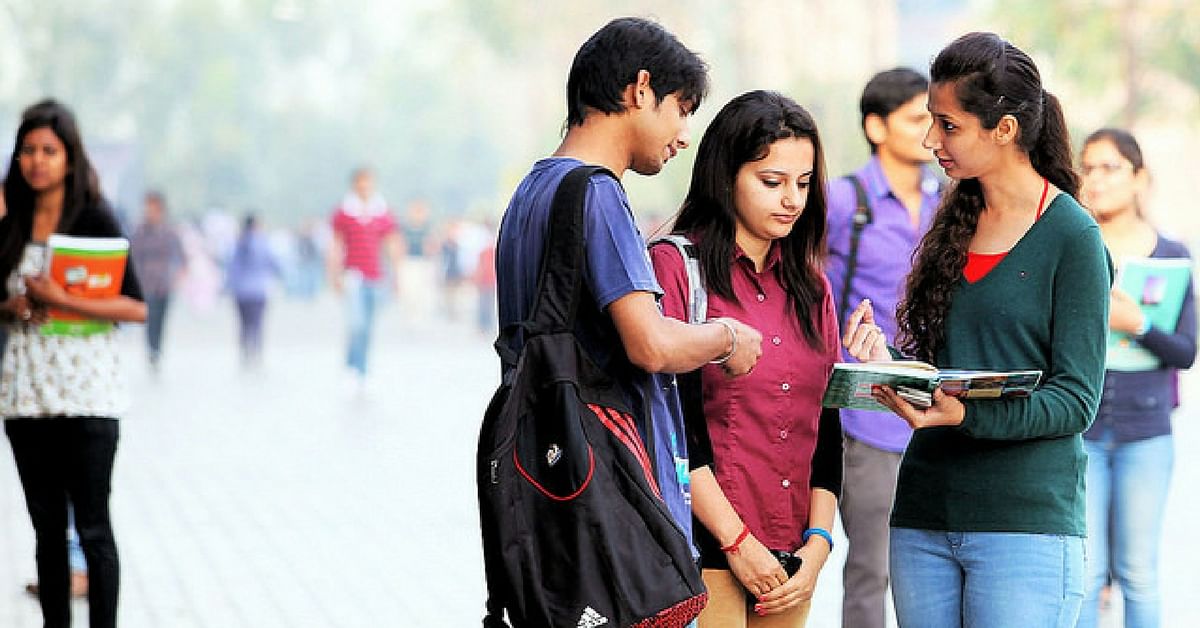
science-classHow much fun can Science be, you ask? Lots, if it is taught with the help of a simple rocket experiment and other practical applications! The techie duo of Udaya M V and Adithya B, who visit select government schools in Bangalore on weekends, do precisely this.

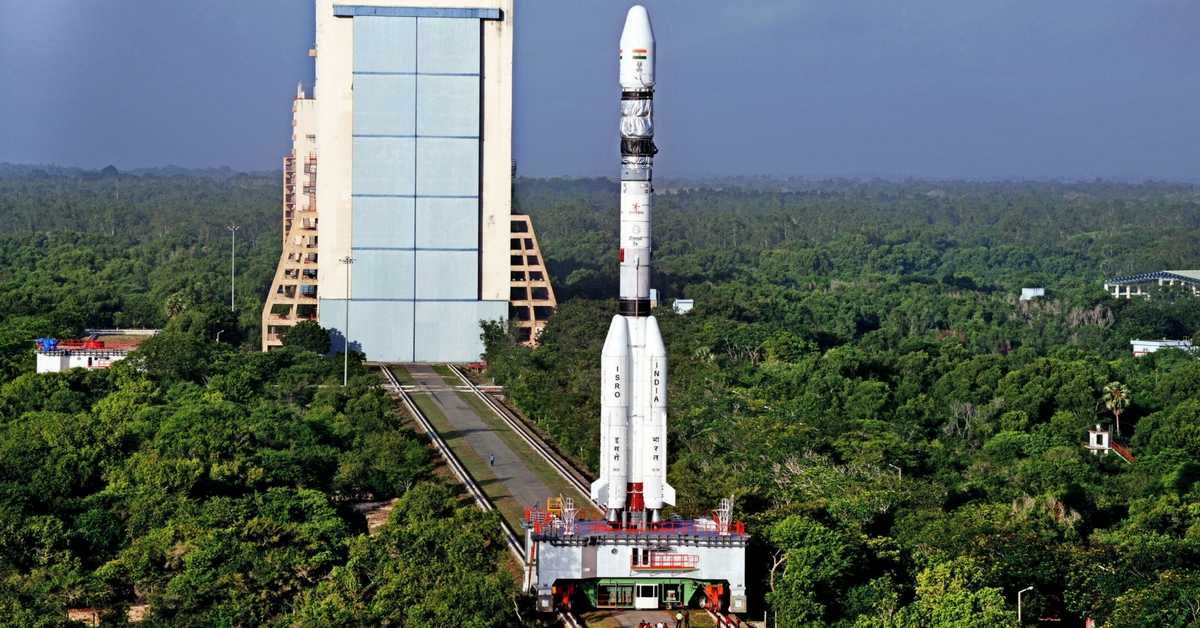
Both young software engineers who are in their early twenties realized that Indian students need to break away from the traditional mould of “mugging” and start taking a greater interest in their learning, with the aid of science projects. While educating themselves on the internet, they came across a demonstration on how to make Water Bottle Rockets. Taking off from that, they haven’t looked back. After successful programmes in six schools and a summer workshop as well, they are overwhelmed by the tremendous response. So much so that it has inspired them to create an NGO called Education Informal for improving the education process.

Handling everything by themselves, the two techies have so far funded their little experiment on their own. They do hope however that if they were to come across some talented student in need of financial backing, they will be able to source help.

Read the complete article in Bangalore Mirror.
Image Courtesy: Bangalore Mirror
Link Courtesy: Rithish. Thanks!

Yuva Bengaluru

flagOn Sunday, I was invited by a volunteer to visit the premises of a school which is crumbling in terms of infrastructure. The school is Deena Seva Sangha, located close to the old Kino theater.

We first entered a small room termed as ‘hostel’. It was a dark room, perhaps 20 feet by 7 feet wide. Aluminium chests were stacked wall high in one corner. Various pants and shirts hung on top of one makeshift wooden wall which served as a provider of privacy.

Going ahead, we were taken to the main hall that served as the dining and sleeping area for the 65 students who study and live here. Then we were shown the store room, where the food rations are kept. The school sends its students to the city market once a week to get vegetables, which are given free to them by some generous and charitable vendors.
Moving on to the school building, which lay adjacent to this ‘hostel’, we were shown a pipe jutting out of the wall, gaping with its outlet wide open. In the past, the volunteers have put a tap on it to facilitate drinking of water, but every time they have done that, someone has stolen the tap overnight. A measly 10 rupees for us, but perhaps a meal for someone else. I then entered the building, which is two storeyed. Walking through the corridors, I see the empty classrooms with wooden benches strewn around. I reach the last classroom and look at the blackboard. Someone has scribbled the famous four letter ‘f’ word on the board, in cursive handwriting.

I move back towards the entrance and by now one of the volunteers has managed to get the door to the library opened. I enter the library and find that it is being used more as a junk yard, with all sorts of things lying around. There are broken tubelights jutting out of brown dusty cardboard boxes, a broken abacus lying in the middle of the room. In one corner, is a small two door cupboard that has the much sought-after books (much sought after by the visitors, since this was a libary after all). The books are few and most are torn. I then get out of the building and look at a smaller building in front of me. This one has the words ‘War on Want, UK’ engraved on top of it. “Why would someone provide war when you want it”, I wondered to myself. It took me a few more moments before realizing that the word “want” was used as a noun, not as a verb. Which meant that the word “want” here referred to the property of being in need of something. A little google-ing later gave me the website of this organization – War on Want.
We then get out of the building and there is a tea session held by the volunteers. Their aim? To showcase the state of the school and garner some funds.

If you would like to visit the school or donate, contact these folks: Yuva Bengaluru

(This post originally appeared on Dhimant’s personal blog with the title War on Want: www.dhimantparekh.com)
Image Courtesy: http://yuvabengaluru.org

With His Heart In The Right Place

Prof. AV Ramani

A Chemical Engineer and lecturer at IIT Madras is an unusual candidate to have worked on a heart valve that has drastically reduced the cost of such a medical procedure, in turn bringing relief to millions of poor cardiac patients in Asia. However, Professor AV Ramani has done just this.

A former professor of metallurgy at IIT and later an employee of National Aeronautical Laboratories (NAL), he quit his government job and put his vast materials knowledge to the development of one device that will change the lives of millions of children in India who are affected by rheumatic fever and suffer permanent
The Heart Valve Prosthesis

The Heart Valve Prosthesis

damage to their heart valves. The device – an indigenous heart valve, which costs a fraction of the imported ones in use at the time, has been created after years of research and hard work.


Developed at the Chitra Thirunal Institute (CTI) under the patronage of Dr.Valiathan and Prof. S. Ramaseshan, the heart valve adheres to all international standards and has a titanium-based metal cage that is long-lasting and wear-resistant. The engineering demands of such a valve were very high. Deepa Mohan tells us more about the requirements of such a machine in this article for Citizen Matters, a Bangalore based news magazine:

“It is worth remembering,” points out Prof. Ramani, “that the life of the heart valve IS the life of the patient”. The human heart beats about 80,000 times a day. For even a ten year life-span, the valve would have to function for at least 400 million cycles, which means a very high-precision engineering requirement, and, because the heart valve, typically, would be surgically implanted in younger people, it needs to be something that would last for a ‘normal’ lifetime.

Important decisions like allowing contributing partners to retain their intellectual property rights under a concept of joint ownership, and designing the valve specifically for Asian anatomy, where the valve dimensions are different from those of the western population, were other factors contributing to the success and prominence of the venture. Once developed, the challenge of marketing and large-scale manufacture of the product was undertaken by the TTK group, which set up a unit for this in Bangalore.

The indigenous heart valve is, in the words of Deepa Mohan:

..a living proof of how academicians, government officials and business people can work together with great synergy to bring out a product that is both profitable and beneficial.

Read the complete interesting article here.
Image Courtesy: Deepa Mohan in Citizen Matters

Link Courtesy: Uday Arya. Thanks a ton!

Citizen Cop

He is 66 years old. He has recently had a bypass surgery and a cataract operation. He is a retired senior executive at Mico. And he is a voluntary traffic cop at a very busy junction near his house. He is B M Ramachandra of Bangalore.

Having undertaken these duties for the past six months, Ramachandra has managed to restore some sanity to one of the busiest and most chaotic junctions in the city. At an age when most men his age would enjoy a life of leisure and retirement, spending more time with friends and family without having major commitments anymore, Ramachandra has been dutifully executing his duties as a ‘traffic cop’, controlling and directing the traffic flow during peak hours everyday. Clad in tee and Bermudas, and blowing his whistle furiously, he is present at the junction in Arakere-Mico Layout locality off Bannerghatta Road at 7.30 am everyday till 9am, and then again from sunset till 8.30 pm.

The impact of his dedicated service is plain to see. Here is feedback from one of the shopowners in the locality, who has been a witness to this phenomenon:

“Honking and road rage incidents were on the rise and it took more than an hour to reach our homes through this road. It was real hell. After this man took over control of traffic, there is order and there is smooth flow of vehicles,” said Srilakshmi Anand, who owns a commercial establishment in the area.

Not just this, Ramachandra also wakes up very early and cleans the street outside his house. And on his way to the junction, he picks up litter and drops it into the box. So what makes this model citizen tick?

“I am blessed in that I am immune to dust, sound and pollution related allergies. So, this traffic work has not taken a toll on me. I see it as a game and enjoy it. To my surprise, my health has dramatically improved after I took this up. After heart surgery, I was advised to do respiratory exercises. Whistle blowing compensated for that”, he said.

MK Ashoka and Hemant Kashyap report in Bangalore Mirror about what inspired this amazingly positive man to take up this mission:

One day, the local residents’ welfare association president R N Baliga casually spoke about the traffic issue to Ramachandra and how difficult life had become after the apartments had come up.

Ramachandra went the very next day to the spot, stood in the middle of the road and started directing the traffic. Initially, the motorists ignored him, but his persistence and obvious sincerity soon made them fall in line. Later, he politely requested shop owners near the junction not to park their vehicles, and they were more than willing to oblige. Soon, the situation improved so much that motorists started giving him flowers, some even garlanding him.

A responsible citizen, a man of action and not just words, a problem solver, an inspiration – there are many ways to describe B M Ramachandra. Most of all, he is a person we can all attempt to emulate in our own lives.

Read the complete article on this remarkable personality here.
Image Courtesy: Bangalore Mirror
Link Courtesy: Sridhar Raman. Thanks!

King Of The Homeless

His name is Raja, but he is more popularly known as “Auto Raja”. Once a youth given to gambling, drinking and even stealing money from his home, Raja left home when he was 15, and experienced first hand the hardships of living on the streets. Sleeping on the roads and eating from dustbins on the streets of Bangalore taught him about the realities of life. Now, at 41, he has rescued over 3000 people from the rough streets over the past 12 years, and offers them hope and rehabilitation at his New Ark Mission of India, also called the Home of Hope.

Auto Raja, as the name suggests, took to driving an auto rickshaw to earn a living. However, as he plied his way around the city, he was struck by the sufferings of the homeless on the streets. Though he had meager means of income himself, he was so moved by the plight of these people that he had to give in and start helping them. Madhumitha B writes more in Deccan Herald about the inspiration behind this man and his mission:

Most people feel the need to help the underprivileged but it’s always only a select few who go the entire mile. For Raja, it was a constant struggle with his conscience until he gave in one day to help a person on the street and from then on, he gradually set up a place they can call home. “I began to realise that this was my calling. I felt a sense of satisfaction, an inner bliss everytime I helped someone. It was very difficult but I strongly believe that if you help the poor, God will help you and that keeps me going,” says Raja.

It doesn’t stop with providing a place to stay. Raja also provides three wholesome meals a day, medical care as well as round-the-clock presence. “While the men and women have separate areas to stay, I have moved in here along with my immediate family where we stay together with the children we have sheltered,” he says. In return, daddy as he is referred to by all of them, is blessed with lots of love and affection. This, he says, is a reward in itself.

Surviving mainly on charity and grants, the home is housing 300 inmates at present, with a capacity for only a 100. With limited help, Raja has still been managing to provide food, clothes and medical help to his inmates. The home has about 15 staff members, some of whom are senior inmates. What about the inmates themselves? ThaIndian News reports in this feature:

The oldest inmate of the home is Tatha, a 101-year-old man, who is fondly called “anna” – meaning elder brother in the Kannada language – by other inmates and staff.
“I am almost blind and had been roaming the city’s roads without food for days. I was rescued from the streets by Raja’s team members almost a year back and since then I have been staying here. I am lucky to get a home, many are still suffering and dying on the streets,” said Tatha.
The youngest inmate is a one-year-old girl who is yet to be named. She was rescued by the team almost a year ago.
“We rescued her as a newborn from a garbage bin in the city. She is cute and we will celebrate her birthday Jan 30, the day she was brought to the home. We will also name her on that day,” smiled Padma, a staff member.
Some inmates trained in various vocations at the home are now leading independent lives. Around 1,000 destitutes have died in dignity in the home in the last 12 years.

While the going is tough for this Home of Hope, we do hope that “Auto Raja” goes a long way in his noble cause and receives greater support from various individuals and organizations along the route.

Read more about this personality and his work in Deccan Herald and ThaIndian News.

Image Courtesy: www.newarkmission.org

An Urban Bird Sanctuary

Feeding Birds

A few residents in a locality in Bangalore have created a safe haven for birds to nestle and feed. For over a period of 16 years, almost 30 households of 5th Cross, Pipeline on Magadi Road have been actively involved in feeding over 50 kilos of food grains to hundreds of birds daily. This has helped to create a ‘sanctuary’ in the heart of the city, where many species rendered rare in other urban areas, find a habitat. Subhash Chandra N S and Chethan Kumar write about this citizen initiative for the Deccan Herald News Service:

Not just a few but hundreds of various kinds of birds come to this citizen-created ‘sanctuary’. “There are parakeets, sparrows, pigeons, mynas and other birds which descend at a self-scheduled time, once in every mornings and evenings”, said C Umadevi, the lady who began this noble work. Over a fifty kilos of food grains goes to the chirping friends every month, a ritual in practice for the past 16 years.

Despite being a densely populated area full of traffic and people, the residents have taken care that the avian visitors are not disturbed and receive their daily due on time.

“We have restricted people from going up to the terrace when the birds are there,” says another lady. The practice has resulted in holding back sparrows, almost extinct in urban environment. “More than 20 are coming here now while the numbers were much more earlier” a resident informed.

The simple initiative of these residents has gone a long way in teaching habitat conservation and co-existence among species, besides the added benefit of nurturing fast disappearing species in the urban landscape. While we applaud their efforts, we urge all our readers to adopt this easy and do-able practice in your daily lives. The pleasant chirping of the sparrow sitting on your ledge will be worth it.

Read the complete article here.
Image courtesy: Pigeons by Pratosh Dwivedi at imgoftheday.blogspot.com

Harvest Rainwater to wash away your worries

In a city plagued by water and electricity shortages, a housing community has taken steps to make itself ecologically independent of the vagaries of rains and borewells. Rainbow Drive Layout in Bangalore has undertaken Rain Water Harvesting since February 2008, and now boasts of 20 rooftop water-harvesting systems and 10 groundwater-recharging systems. Jayashree Nandi reports in The Times of India:

Rainbow Drive Layout on Sarjapur Road has put in place over 20 rooftop water-harvesting systems and 10 groundwater-recharging systems in stormwater drains since February 2008. The residents are delighted that they no more have to depend on the uncertain supply of borewell water or spend on tankers. They are ecologically storing abundant water to sustain themselves. Added to this is the incentive that their layout doesn’t flood after rain, because all the water gets stored in stormwater drain recharge wells.

Committee member of the Resident Welfare Association (RWA) of Rainbow Drive Layout, Jayawanth Bharadwaj, was one of the first to take up rainwater-harvesting project. “We were completely dependent on borewell water till a year ago. When the borewell used to dry up, we would get tankers, which are very expensive. I realized there has to be a way out. That is when I started a door-to-door campaign in my layout to get people to set up rainwater harvesting systems. Some understood its importance, while some were wary of the investment. Gradually, it picked up.”

Besides the environmental benefits of recharging groundwater and financial savings, there are also huge energy savings, as explained below by Nathan Stell, a member of Rainwater Club in the city:

Nathan Stell, a member of Rainwater Club, points out the larger bounty from rainwater harvesting. Bangalore pumps water from the Cauvery, which is around 100 km away from the city and 500 metres below the city’s elevation. The amount of energy required to pump water to the millions of households is enormous, while an important feature of rainwater harvesting is saving energy. The water supply is far less expensive than tankers, that costs about Rs 50 per kilolitre. Groundwater recharging helps replenish borewells and raises the groundwater table. He also added that the quality of rainwater from the roof is high, and can be used for all kinds of household work and even filtered for drinking.

So go ahead and install that rainwater harvesting unit. And start reaping the benefits, besides feeling good about contributing to the environment!

Read the complete article here.
Home Page Image Courtesy: www.rainwaterharvesting.org/

Calendar

September 2010
M T W T F S S
« Aug    
 12345
6789101112
13141516171819
20212223242526
27282930  

Recent Comments

PROMOTION

"Neumonia and Other Sketch Stories" - A collection of sketch stories. Download the e-book for free. Click on the book cover below.
"The observations are acute: the sound of high heels on asphalt, the bit about how all BPO employees lose their hair very fast are spot-on. This book is a better, shorter alternative to any Sunday movie on TV. It's a little jewel" - Hindustan Times