




Women Entrepreneurs Go Organic!

share this story

Mumbai (Women’s Feature Service)

Organic food is eco-nutritionist Kavita Mukhi’s passion. First as the founder of Conscious Food and now as the person behind Mumbai’s first weekly organic farmer’s market, she has consciously spread the word on nutritionally healthy foods.

Of course, now with the ‘Go Organic!’ mantra finding favour with many eco-conscious city women – simply because the advantages of choosing natural over adulterated are far too many – it’s little wonder that the number of organic product companies and consumer stores across Indian metros is only growing. Behind these ventures are successful women entrepreneurs for whom ‘healthy’, ‘farm-fresh’ and ‘chemical-free’ are the magic words.

Organic food is eco-nutritionist Kavita Mukhi's passion.

Organic food is eco-nutritionist Kavita Mukhi's passion.

“Consuming planet-friendly food is not just about feeding our body. It is about taking care of our earth. Our bodies move on but our earth is here to stay and nourish the generations to come. Every choice we make towards the way we decide to live makes a difference to the air we breathe, water we drink and soil we depend on,” writes Mukhi in her blog.

Though she moved on from Conscious Food years back, she put her energies into setting up the farmer’s market. “I started this market to help our farmers get their due. The response has been good if not overwhelming. But as I see it, we have a long way to go. People who come to visit this market are those who truly believe in organic,” she says.

Organic fruit and vegetables apart this market, located in Mumbai’s western suburb of Bandra, also has goodies like organic sugar candy floss, organic tea and coffee, auro natural wall paints and macrobiotic food.

“It is not easy for farmers in India to get organic certification for their produce especially when standards for hygiene maintenance and transportation are high and when there is copious paperwork involved. There are many certification agencies that label organic produce; in our case, we have tied up with EcoCert, an international agency that certifies organic products,” she adds.

But is organic really the “real thing”? “Yes,” says Mukhi, “Organic foods are those that are grown without chemical fertilisers and pesticides, on land that has not been contaminated for at least three years. I have been using the term planet-friendly to indicate produce grown with natural manure and natural pesticides only.”
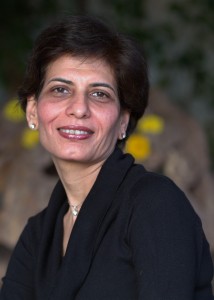
Nutritionist Ishi Khosla is the founder and director of Whole Foods.

Nutritionist Ishi Khosla is the founder and director of Whole Foods.

Nutritionist Ishi Khosla is only too happy to spell out the benefits of organic eating. The founder and director of Whole Foods says, “Growing food organically doesn’t alter the nutritional content but avoids the synthetic pesticidal and insecticidal residues. Besides the fact that these foods contain fewer chemical residues, they also retain phenolic compounds – chemicals that act as a plant’s natural defense – that also happen to be good for our health. These plant compounds are lost or significantly reduced in conventional farming.”

According to the World Health Organization (WHO), by 2015, India is likely to incur a loss of $236.6 billion due to unhealthy lifestyle and faulty diet. Khosla points out, “As Indians are genetically predisposed to chronic diseases such as diabetes and coronary artery disease (CAD) it is necessary to be conscious of the food choices we make. With many more people now indulging in dietary indiscretions – given the plethora of processed foods at our disposal – and eventually inviting serious health disorders, going organic is a sensible way of bringing about the much needed healthy changes in not just food but our overall lifestyle.”

Though Khosla continues to spread the word on organic foods through Whole Foods, she believes that a sea change in the attitude towards health can only take place with government intervention: With the help of necessary policy changes that will promote the consumption of healthy food.
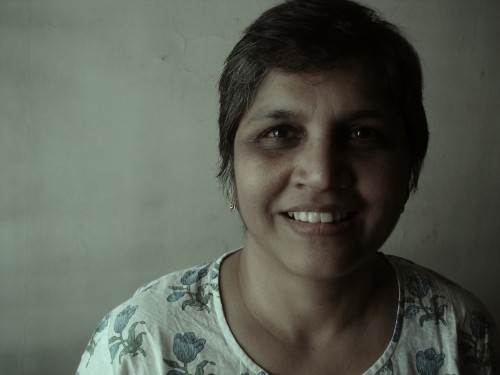
Reetha Balsavar, director of Navdanya, has seen the change in consumer patterns and vouches for the growing popularity of all things organic.

Reetha Balsavar, director of Navdanya, has seen the change in consumer patterns and vouches for the growing popularity of all things organic.

But as the director of Navdanya, a three-and-a-half-year-old store in Andheri, Mumbai, Reetha Balsavar has seen the change in consumer patterns and vouches for the growing popularity of all things organic. She says, “People are picking up the organic mantra slowly and steadily. Primarily, it is the womenfolk leading the way. Our clientele has grown steadily over the years. We have broadly four different categories of clients – young mothers, who want to start their children on an organic diet and slowly convert the entire household; the second are people who have had a taste of the organic lifestyle while living abroad and want to continue with the same trend back home; the third category consists of people who have been, or have had a family member affected by serious ailments such as diabetes or cardiovascular disease, and the fourth are those who are already eco conscious and believe in living a planet-friendly life. I believe there is always a trigger for people to start off. The campaigns against the BT Brinjal last year have made that tangible difference in making people aware and understand the importance of natural (read organic).” Navdanya retails a variety of agricultural produce, including dals (pulses), attas (flours), spices, rice, squashes, dry fruit, herbal teas, and so on.

Urvashi Mody, partner of Eco Corner Mumbai, a store that encourages living a healthy and eco-friendly lifestyle

Urvashi Mody, partner of Eco Corner Mumbai, a store that encourages living a healthy and eco-friendly lifestyle

Despite the knowledge and obvious benefits of chemical-free food items, perhaps the one reason that is keeping many people away from these outlets are the higher prices of these products. Says Urvashi Mody, partner of Eco Corner Mumbai, a store that encourages living a healthy and eco-friendly lifestyle, “Although organic products are available for a premium, the current environmental climate consciousness is leading more and more people to go organic when they can afford it. It is our mission to place our product range within the reach of every eco-conscious citizen of India. The good news is that there is large scale awareness already; our regular clientele apart, first-time visitors do not walk away without the knowledge of why it is necessary to adopt an organic lifestyle.” Home accessories, aroma products, natural bath and body products, jute handbags and exclusive handmade stationary products are available at Eco Corner.

Khosla adds to this hopeful attitude, “The market for organic products is growing rapidly and although some of these, particularly organic foods, cost 10 to 15 per cent more than that of conventional food items – which are anyway not cheap, given the current economic climate in the country – with higher demand and consumption of organic products, the prices are likely to come down eventually.”

In fact, Navdanya’s organic foods prices are more or less in line with regular market rates: A 500 gram packet of Toor dal comes at Rs 65 or Masoor dal at Rs 60; flours like besan (gram flour) and ragi (finger millet) are sold for Rs 47 and Rs 42, respectively, for 500 grams.

The price difference was also visible at Mukhi’s farmer’s market recently. According to media reports, a few weeks back when the onion prices shot up, retailing in the regular markets from anywhere between Rs 60 to Rs 70 per kilo, at the organic market, they sold for Rs 40. The vegetables at the farmer’s market are supplied by a co-operative of over 2,000 farmers in the Nashik region near Mumbai, whose practices are attested by Ecocert. The farmers harvest and transport the produce to the city at their own expense while the market provides them with the space to sell. Prices are set depending on the farming labour, costs and a fair return.

But while this market may not be exactly a fair comparison price-wise – since there are costs involved for regular retailers which are not included into the price of the vegetables here (they have the support of the market organisers) – what it does demonstrate, is that organic foods can soon actually become a viable alternative.

Article and images copyright: Women’s Feature Service (WFS). Published here based on an arrangement between WFS and The Better India
Related Posts Plugin for WordPress, Blogger...

Leave a comment

Liked this article?

« Prev: Zero: Mobile Platform for Branch-less Banking
Next: Indian Gastrodiplomacy to Help Feed Perceptions of an Emergent India »
  • Mrs Kamini Gairola

    Actually ,there are many women Enterpreneurs are yet to get their market for unbrand products produce by them.The Pictures which are shown is totally different.

    Mrs Kamini Gairola
    Chief Cordinator
    Self Help Groups & Micro Enterpreneur Developmant Cell
    Himalaya Vikas Sansthan
    Dehradun
    9412988172
    gairolakamini@gmail.com

  • http://www.palamngo.org Palamsenthil

    PROFILE OF OUR ORGANIZATION
    1. Name Of Organization : PEOPLES AWARNESS AND LEGAL AID MOVEMENT (PALAM)
    2. Address of the Organization : 23/1, PERIYANAYAKIPURAM,
    THIRUTHURAIPOONDI-614713
    THIRUVARUR DISTRICT.
    TAMIL NADU, INDIA.
    3.
    Contact Phone : 04369 – 314768. 295182
    Cell 0-9842607609
    Fax : 04369- 220124
    E.Mail : palamsenthil@yahoo.com
    . Website : http://www.palamngo.org
    4. Chief Functionary Details : K.SENTHILKUMAR, Managing Trustee

    5. Address : 23/1- Periyanayakipuram,
    THIRUTHURAIPOONDI – 614713,
    Thiruvarur District,
    Tamil Nadu India.
    0-9842607609
    6. Type of organization : Registered Trust
    7. Register Number : 03/2006 Date: 03.01.2006
    8. Registered Under which act : Indian Trust Act
    9. Area of functioning : Thiruvarur District and Nagapattinam Dt.

    INCOME TAX RELAXATION
    12 AA : Yes Register No: 186
    80G Applied Awaited
    PAN card No : Yes No: AABTP3018J
    FCRA : Yes
    BANKING DETAILS
    Name of the Bank : KARUR VYSYA BANK
    NEERMULAI – 614711
    Nagapattinam –Dist, TamilNadu, India

    Account Number : SB No : 1225.155.9923
    FCRA : 1225.155.196
    Bank MICR Code : 914053002
    Swift Code : KVBLINBBIND
    IFSC Code : KVBL0001225
    PLANNING COMMISION
    GOVERNMENT OF INDIA
    REGISTER NO :
    :
    :

    TN/2009/0008432
    GENTRAL SOCIAL WELFARE BOARD
    REGISTER NO
    :
    3320794752008
    INFRASTRUCTURE AVAILABILITY
    1. Office Building : Yes
    2. Meeting Hall : yes
    3. AV equipment : Yes
    4. Computer : Yes
    5. Four wheeler, Two Wheeler : Yes
    6. Training Materials : Yes

    STAFF AVAILABLITIES REGULAR PART TIME
    1. Male 2 2
    2. Female 3 2
    3. Volunteers 3 10
    TOTAL 8 14

    OUR VISION
    1. Natural Disaster relief and rehabilitation work
    2. To improve the Living Condition of our area People of Self Help and Skill Development.
    3. To educate the children, primary and Higher secondary Level
    4. To improve Agriculture practices with professional/Technical expert guidances.
    5. To enhance the Awareness on STD, TB and HIV among youth adolescent and Adult in our are area.
    6. To Promote organic farming and sustainable Agricultural and involve farmers.
    7. To form and facilitate women development skill development and living condition.
    8. To promote Health program for women and children.
    9. To Facilitate housing for the House less People in our area.
    10. To arrange Micro Credit for restoration of Livelihood.
    11. To enhance awareness an environment, Tree planting, Horticulture and Bio-diversity conservation.
    12. To Conduct awareness training on Global warning and climate change
    13. To guide the people to protect them from the global warning and climate Change
    14. To promote Income generation programme (IGP) among the rural poor women to Eredicate the poverty
    15. To empower suitable well being of the rural poor women
    16. To create the IGP- activities to raise the rural women standard of living and Socio- economic level/ status

    MISSION
    To create a world wide peace & harmony through welfare & Development activities without among any kind of discrimination of Religion, colour, gender, race and etc., the mission of the “PALAM” which is conscious of the concerned with liberation not oppression freedom not slavery, light not darkness health not disease, life not Death
    1. Natural Disaster relief and rehabilitation
    2. To protect the women from eve teasing sexual Exploitation and Traffic ling.
    3. To give Vocational Training for Youth and Adult in the rural area for in come generation.
    4. To do relief and rehabilitation services for the welfare of disabled persons.
    5. To arrange for Health education and Health camps for Women to prevent cancer / HIV infection.
    6. To promote cultivation of medicinal herbal Plantation and Bio-diversity conservation..
    7. To do welfare activities for fisher man and ensure the protect the sea resources.
    8. To Organize Rural youth to protect the people against any national calamity and disaster.
    OBJECTIVES
    1. To provide Disaster Relief and Rehabilitation assistants to the public due to Natural calamities
    2. To work for Disaster Risk & battle management
    3. To implement sustainable agriculture and Environment programs by conducting seminars, workshops, trainings to the Agriculture sector.
    4. To start and technical training centers for the poor and medical Aids relief and medical advises to poor village mass
    5. To start and run dispensaries hospital and medical Aids relief and medical advises to poor village mass
    6. To start and Run baby care centers and night schools to meet the private tution of the poor village mass
    7. To start child welfare care project/ programme to the children
    8. To provide training and job opportunity to the rural youth, girls and women
    9. to construct the Houses for the House less poor people
    10. To construct the schools and hospital those where are the reality Needs

    BOARD OF TRUSTEE’S AND OFFICE BEARERS

    1. Managing Trustee/Chief Functionary : Mr.K. SENTHILKUMAR
    2. Financial Trustee : Mrs P. MANONMANI
    3. Deputy Managing Trustee : Mr A. SHANMUGAM
    4. Trustee : Mr. M. DANAPAL
    5. Trustee : Mrs. J. VALANDEENA

    COMMUNITY ORGANIZATION AND AWARENESS ENHANCEMENT IN
    1. Natural Disaster relief and rehabilitation
    2. Sustainable Agriculture
    3. Environment Protection – Biodiversity Conservation – Tree Planting.
    4. Organic Farming / Horticulture.
    5. Vermin Compost Manure – Name Pesticide Usage
    6. Alternate Crops – Pulses grams
    7. Livelihood Restoration For Fisheries and Non-Fisheries
    8. New Housing Construction and Renovation of old Houses.
    9. Women Welfare living condition improvement micro fiancé.
    10. Livelihood Trainings for SHGs.
    11. Disability Rehabilitation
    12. Computer Training education
    13. Child and Women Development
    14. Women Awareness Program
    15. Aids Prevention Awareness program
    16. Aids Vaccine Awareness program
    17. Road Safety
    18. Micro Finance for poor families food security and poverty alleviation.
    19. Environmental Security.
    INTERESTED PROJECT TO BE UNDER TAKEN:
    1. Natural Disaster relief and rehabilitation
    2. Clean atmosphere keeping environmental protection
    3. Sustainable Agriculture nature based Agriculture/Organic farming practices.
    4. Livelihood restoration for SHGs
    5. Training of Vocational camps for Youth.
    6. Child Development and Education program.
    7. Houses for the Houseless poor people
    8. Children welfare and care project
    9. Medical Support and Hospital Project
    10. Training & Self Employment to the rural Youth
    11. Income generation programes / Activities to the rural Youth and women

    FINANCIAL ASSISTANCE REQUESTED FROM DONAR AGENCIES FOR
    1. Sustainable Natural Disaster relief and rehabilitation.
    2. Establishment of rural community training centre.
    3. Organic Agriculture development.
    4. Micro credit, livelihood restoration Loan for SHGs.
    5. Child and Women Development
    6. New housing construction and renovation of old houses.
    7. Poor People’s living condition improvement.
    8. HIV and AIDS prevention and control measures.
    9. Child Care Centre (Balwadis) Infrastructure Development.
    10. Rehabilitation project to the Disabled
    11. Vocational Course for employment opportunity.
    12. Educational development and Economic development income Generation.
    Thanking You .

    Submitted by
    K.SENTHILKUMAR
    Managing Trustee
    .

  • Mehar sultana

    i am interested to know more about this group

  • Guest

    Wonderful to hear. More of your ilk – http://arogyamorganics.com/ . Cheers!